
Selecting a bunk bed frame and mattress combination for your children requires a careful balance of space-saving utility and rigorous safety verification. Because bunk beds elevate sleeping surfaces, they introduce unique structural and height-related risks that standard beds do not present. To ensure a safe sleeping environment, you must verify the structural integrity of the frame, confirm that the mattress dimensions perfectly match the bed’s specifications to eliminate entrapment gaps, and position the unit safely within your room layout.
In Singapore’s high-rise residential landscape, where compact bedrooms and high-density layouts are common, these safety checks are especially critical. Factors such as ceiling height, the placement of ceiling fans, and the structural composition of your walls directly influence how safely a bunk bed can be installed and used. By systematically evaluating the frame, the mattress, and the room environment, you can create a secure and comfortable space for your children.
Inspecting the Bunk Bed Frame for Structural and Entrapment Risks
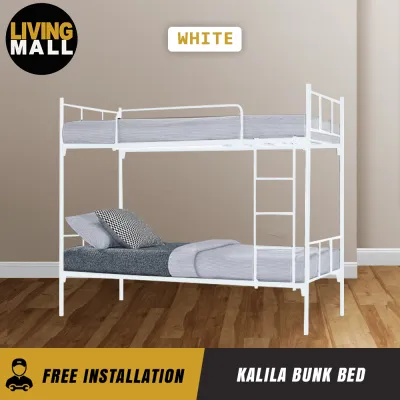
Before purchasing or assembling a bunk bed frame, you must thoroughly inspect its design to eliminate structural vulnerabilities and entrapment hazards. The top bunk requires continuous guardrails on all sides, including the side adjacent to the wall. A common oversight is leaving the wall-facing side open, which can lead to a child slipping between the bed and the wall. When evaluating a frame, check that the guardrails are robustly constructed and securely fastened to the main posts. You must also calculate the remaining guardrail height after the mattress is placed; the barrier must extend significantly above the top of the sleeping surface to prevent a child from rolling over the edge.
Products mentioned in this guide
Prices are valid at publication and may change. Please refer to the product page for the latest price.
Slat spacing and structural gaps require precise measurement to prevent head, neck, or limb entrapment. Examine the distance between individual slats on the mattress support platform, as well as the gaps between the guardrail bars and the main frame. These openings must be narrow enough that a child’s torso or head cannot slip through. Refer to the manufacturer’s technical specifications to verify that all gaps comply with recognized safety standards, and physically inspect the frame for any sharp edges, exposed bolts, or rough finishes that could cause injury.
The ladder is another critical safety component that demands close inspection. It must be permanently attached or securely locked to the bed frame so that it cannot slip, slide, or tip over while a child is climbing. Look for a ladder with wide, flat steps rather than narrow rungs, as these provide better traction and support for small feet. Additionally, locate the manufacturer’s weight capacity labels. These labels must clearly state the maximum weight limit for both the top and bottom bunks, and you must ensure your children’s weights fall well within these specified limits.
Finally, consider the physical logistics of bringing the frame into your home. In Singapore apartments, lift dimensions and doorway clearances can restrict the transport of large, pre-assembled furniture pieces. Verify the flat-packed dimensions of the bed frame before ordering to ensure the components can be safely transported up your building’s lift and through your front door. Choosing a frame that is designed for straightforward, secure assembly in tight spaces will reduce the risk of structural damage during the installation process.
Selecting a Compatible Mattress to Maintain Guardrail Effectiveness
An otherwise safe bunk bed frame can become hazardous if paired with an incompatible mattress. To prevent dangerous gaps, the mattress must match the inner dimensions of the bed frame precisely. If a mattress is too small, it can shift and create a void along the sides or ends of the bed. A child can easily slide into these gaps, leading to severe entrapment or suffocation risks. Always measure the interior length and width of the bed frame’s mattress deck and compare these measurements directly with the mattress specifications before purchasing.

Mattress thickness is equally vital for maintaining the protective function of the top bunk’s guardrails. Standard bedroom mattresses are often too thick for bunk beds, elevating the sleeping surface to a point where the guardrails can no longer prevent falls. Bunk bed manufacturers specify a maximum allowable mattress thickness for the top bunk. You must select a low-profile mattress that respects this limit, ensuring that the remaining guardrail height above the mattress surface meets or exceeds the manufacturer’s safety recommendations.
In addition to dimensions, evaluate the firmness and material composition of the mattress. A mattress that is too soft can conform to a child’s face, posing a suffocation risk, particularly for younger children. Look for firm, supportive mattresses that maintain their shape under weight. Rather than relying on subjective product descriptions, check the product labels and safety certifications to verify that the mattress materials are free from harmful chemicals and meet flame-retardant standards. Choosing a certified, firm mattress designed specifically for bunk beds is the most reliable way to ensure compatibility.
Safe Assembly, Room Placement, and Anchoring Practices
Safe installation begins with a strict adherence to the manufacturer’s assembly instructions. Do not attempt to skip steps, leave out structural braces, or substitute hardware. Every dowel, screw, bolt, and bracket supplied by the manufacturer serves a structural purpose. Use the correct tools for assembly, and double-check that all connections are tightened securely. However, avoid over-tightening screws in wooden frames, as this can split the timber and permanently compromise the joint’s strength.
Room placement requires careful spatial planning, especially in Singapore bedrooms where space is at a premium. Position the bunk bed completely clear of ceiling fans, light fixtures, and air conditioning units. A child sitting up or climbing onto the top bunk must have ample clearance from any overhead hazards. Additionally, keep the bed far away from windows, even if window grilles are installed. Ensure that window blind cords, curtain pull strings, and electrical cords are completely out of reach from both the top and bottom bunks to eliminate strangulation risks.
Because bunk beds have a high center of gravity, anchoring the frame to the wall is highly recommended to prevent tipping. This is especially important if children attempt to climb the outer frame of the bed. The anchoring method must match your wall type:
- Concrete or Brick Walls: Common in HDB flats; require heavy-duty wall plugs, masonry drill bits, and robust anchor screws.
- Drywall or Partition Walls: Require locating the structural wall studs and securing the anchoring brackets directly into the studs using wood screws.
If the manufacturer’s anchoring instructions conflict with your wall type, or if you lack the specialized tools required for secure mounting, stop the installation and consult a professional handyman or furniture assembly service.
Establishing Maintenance Routines and Household Usage Rules
Bunk bed safety does not end once assembly is complete; it requires ongoing maintenance and clear household rules. Singapore’s high humidity can cause wooden frames to expand and contract slightly, which may loosen hardware over time. Establish a monthly inspection routine to check the bed’s structural integrity. Tighten any loose bolts, inspect the wood for cracks or splinters, and ensure the ladder remains firmly attached. If you discover any broken slats, worn hardware, or structural instability, immediately stop using the bed until replacement parts are obtained from the manufacturer.
Strictly observe the age and weight restrictions specified by the manufacturer. The top bunk is generally unsuitable for children under six years of age, as younger children may lack the coordination and spatial awareness needed to climb safely and avoid falling. Do not make assumptions about your child’s readiness based solely on their size; always respect the manufacturer’s guidelines and assess your child’s maturity and climbing ability before permitting top bunk use.
Finally, establish clear, non-negotiable household rules for using the bunk bed. Educate your children on these rules and enforce them consistently:
- No Rough Play: Prohibit jumping, wrestling, or playing tag on or under the bunk bed.
- One Person Only: Ensure that only one child is on the top bunk at any given time.
- Use the Ladder: Insist that children always use the ladder to climb up and down, rather than climbing the frame or jumping from the top bunk.
- Keep the Area Clear: Keep the floor space around the ladder free of toys, books, and clutter to prevent trips and falls.
Frequently Asked Questions (FAQ)
At what age is it safe for a child to sleep on the top bunk?
Generally, the top bunk is not recommended for children under six years of age. However, age limits depend heavily on the specific design of the bed frame and your child’s individual development. Before allowing your child to sleep on the top bunk, consult the product manual for the manufacturer’s age recommendations. You must also assess whether your child can safely navigate the ladder in the dark and whether they consistently understand and follow safety rules.
How do I verify if a bunk bed meets recognized safety standards?
To verify safety compliance, look for recognized safety certification marks on the product packaging, the frame’s warning labels, or the manufacturer’s official website. These certifications indicate that the bed has undergone testing for structural stability, entrapment hazards, and material safety. Additionally, check online consumer protection databases for any product recall notices, and register your purchase with the manufacturer to ensure you receive prompt safety updates or recall alerts.
Can I use a standard bedroom mattress on a bunk bed frame?
Using a standard bedroom mattress on a bunk bed frame is highly discouraged unless its dimensions perfectly match the frame’s specifications. Standard mattresses are often too thick, which reduces the effective height of the guardrails and increases the risk of falls. They may also fail to fit the frame’s inner dimensions precisely, creating dangerous gaps where a child could become trapped. Always use a mattress that is specifically sized and approved for bunk beds according to the frame’s instruction manual.
Community discussion
Share your experience or ask a question. Comments are reviewed before publication.