
Fitting a bunk bed inside a Singapore HDB household shelter—commonly referred to as a bomb shelter—requires a careful balance of precise spatial planning and strict adherence to safety regulations. Because these reinforced spaces are designed to protect occupants during emergencies, any furniture placed inside must not compromise the structural integrity of the room or block critical access points. To achieve this, you must select a completely freestanding, low-profile bunk bed frame that fits comfortably within the usable floor area without interfering with the heavy steel blast door, ventilation sleeves, or emergency exit paths.
Understanding HDB Household Shelter Space and SCDF Restrictions
The household shelter in a Housing & Development Board (HDB) flat is a structurally reinforced compartment built with thick concrete walls, a gas-tight steel blast door, and dedicated ventilation sleeves. The Singapore Civil Defence Force (SCDF) mandates strict guidelines to ensure these shelters remain functional for their intended lifesaving purpose at all times. Before planning any furniture layout, you must understand that the shelter’s protective features cannot be altered, covered, or compromised in any way.
One of the most critical restrictions is the absolute prohibition against drilling, nailing, or screwing into the reinforced concrete walls, floor, or ceiling. Piercing the concrete can damage the internal steel reinforcement bars and compromise the blast-resistant capabilities of the structure. Additionally, you are not permitted to modify, paint over, or tamper with the rubber gaskets and locking mechanisms of the steel blast door, as these elements ensure a gas-tight seal during an emergency.
Products mentioned in this guide
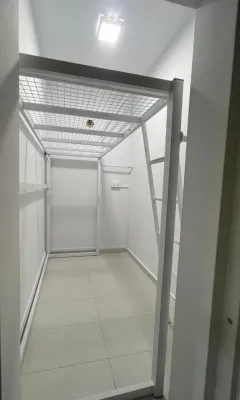
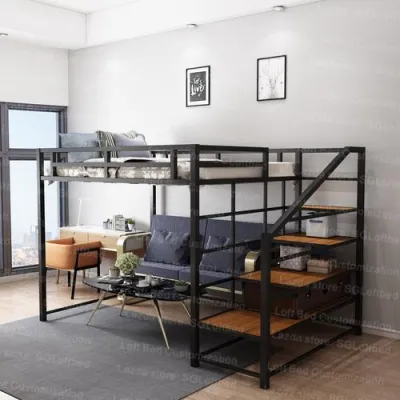
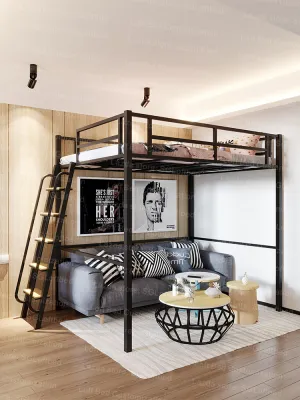
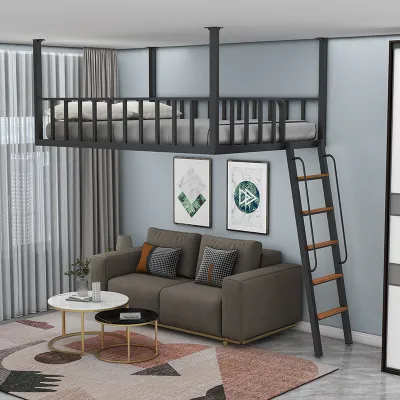
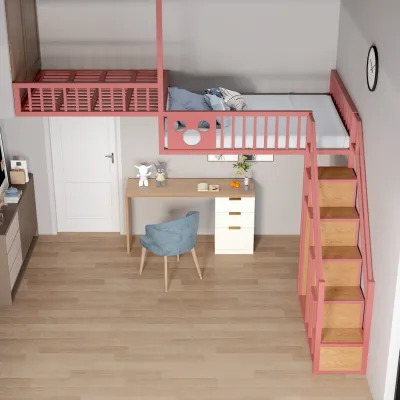
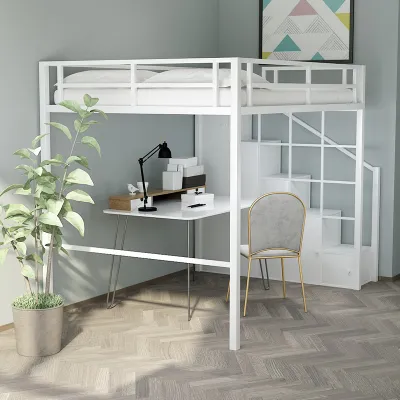
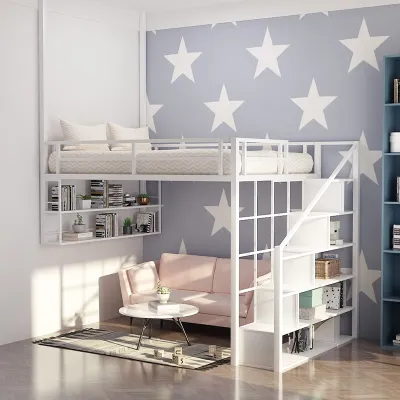
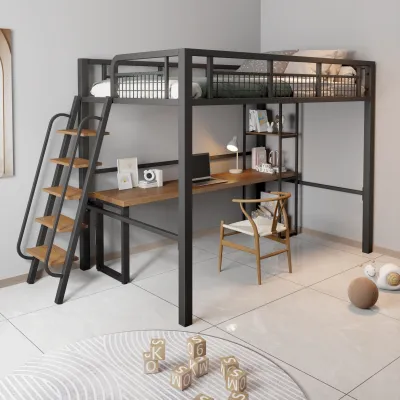
Prices are valid at publication and may change. Please refer to the product page for the latest price.
Physical obstructions within the shelter further limit where you can place a bunk bed. Ventilation sleeves, typically located near the top of the walls, must remain completely unobstructed to allow air circulation. Exposed utility pipes, electrical conduits, and the wide swing radius of the heavy blast door also dictate the boundaries of your usable space. Any furniture installation must leave these features fully accessible and functional.
How to Measure the Usable Footprint for a Bunk Bed
To find a bunk bed that fits safely inside your HDB shelter, you must conduct a highly detailed measurement of the room’s actual usable footprint. Start by measuring the total length and width of the floor space, but do not use these raw dimensions as your guide. You must subtract the entire swing path of the steel blast door. Because the door opens inward in many layouts, you must map out this “dead zone” on the floor and ensure no part of the bed frame enters it.

Next, measure the vertical clearance from the finished floor to the lowest point of the ceiling. Do not assume the ceiling height is uniform throughout the shelter. Measure near the corners and around any overhead obstructions, such as ventilation boxes, light fixtures, or structural beams. This vertical measurement is crucial because standard bunk beds often require a ceiling height that exceeds the compact dimensions of a typical HDB shelter, leaving insufficient headroom for the top bunk occupant.
Finally, account for the difference between standard mattress sizes and the actual external dimensions of the bunk bed frame. In Singapore, a standard single mattress measures 190 cm in length and 91 cm in width. However, the supporting frame, guardrails, headboard, and ladder will add several centimeters to both the length and width. If the bed features an angled ladder, it will extend significantly further into the room’s floor space; opting for a vertical ladder or an integrated climbing frame is highly recommended for tight shelter layouts.
Selecting a Compliant Bunk Bed Design for Restricted Spaces
Because SCDF regulations prohibit wall anchoring, you must prioritize freestanding bunk bed designs that rely entirely on their own structural engineering for stability. Look for frames constructed from heavy-duty materials, such as solid wood or thick-gauge steel, which provide a lower center of gravity. The frame should feature robust, interlocking joints, wide corner brackets, or cross-bracing to prevent swaying and tipping without the need for wall screws.
Low-profile bunk beds, sometimes referred to as junior bunks or floor bunk beds, are highly suitable for the restricted vertical space of a household shelter. These designs position the bottom mattress directly on or very close to the floor, which lowers the overall height of the entire structure. This configuration maximizes the headroom between the top mattress and the ceiling, reducing the risk of the top sleeper bumping their head against the ceiling or overhead ventilation sleeves.
When shopping for a suitable model, carefully review the manufacturer’s specifications and product labels. Verify the recommended weight capacities for both the top and bottom bunks, and check if the manufacturer explicitly states that the frame is stable as a standalone unit. Choosing a model with a wide, stable base and anti-slip rubber feet will help distribute the weight evenly and prevent the bed from shifting on the smooth shelter floor.
Common Space Planning and Compliance Mistakes to Avoid
A frequent mistake when furnishing an HDB shelter is placing the bunk bed too close to the blast door frame. Even if the door can technically close, a tight fit can pinch or wear down the rubber gas-tight gasket over time, rendering the seal ineffective. Furthermore, in an emergency, a poorly positioned bed frame can obstruct rapid entry or exit, creating a dangerous physical bottleneck.
Another serious error is attempting to bypass the no-drilling rule by using heavy-duty chemical adhesives, industrial mounting tapes, or high-tension poles to anchor the bed to the walls. These methods can damage the protective paint coatings of the shelter, leave stubborn residues that are difficult to remove, or exert unsafe pressure on localized areas of the wall. Stick strictly to freestanding furniture that achieves stability through its own weight and balanced design.
Lastly, homeowners often overlook the impact of mattress thickness on safety clearances. Installing a thick, plush mattress on the top bunk significantly reduces the effective height of the safety guardrails, increasing the risk of accidental falls. It also brings the sleeper closer to the ceiling, where they might accidentally strike their head against concrete surfaces or ventilation fixtures during the night.
Frequently Asked Questions (FAQ)
Can I drill into the shelter walls to anchor a bunk bed?
No, drilling into any part of the HDB household shelter’s reinforced concrete walls, floor, ceiling, or blast door is strictly prohibited. Doing so compromises the structural integrity and blast-resistant capabilities of the shelter, which violates SCDF regulations and can result in penalties. To ensure the bunk bed is safe and stable without wall anchors, you should select a heavy-duty, freestanding frame with a wide base, robust interlocking joints, and anti-slip rubber pads on the feet to prevent sliding.
Does the mattress thickness affect the allowable bunk bed height?
Yes, mattress thickness directly impacts both safety and comfort in a low-ceiling environment like an HDB shelter. A thick mattress on the top bunk reduces the effective height of the safety guardrails, making it easier for a sleeper to roll over the edge. It also reduces the remaining headroom between the mattress surface and the ceiling. For safety, you should use a low-profile mattress—typically between 10 to 15 cm deep—on the top bunk to maintain adequate guardrail protection and comfortable clearance from the ceiling.

Community discussion
Share your experience or ask a question. Comments are reviewed before publication.