
Selecting the right drawer system is a critical step when designing or renovating a kitchen, especially when aiming for highly functional, long-lasting cabinetry. Homeowners and designers frequently search for the blum tandembox system to elevate their kitchen storage. However, navigating the various models, configurations, and specifications can be challenging. While the TANDEMBOX line comprises distinct variants like the Antaro and Intivo, the premium LEGRABOX is a completely separate system altogether. Understanding these differences, along with their load capacities, heights, and runner systems, ensures you select the correct hardware for your kitchen’s layout and daily demands.
Understanding Blum Drawer Lines: Tandembox vs. Legrabox
To plan a kitchen cabinet layout effectively, you must first understand how Blum structures its premium drawer systems. A common misconception is grouping all of Blum’s double-walled metal drawers under the “Tandembox” umbrella. In reality, TANDEMBOX and LEGRABOX represent two distinct product families with different engineering foundations and design languages.
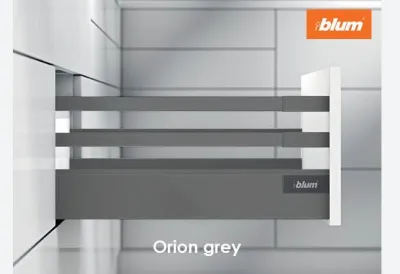
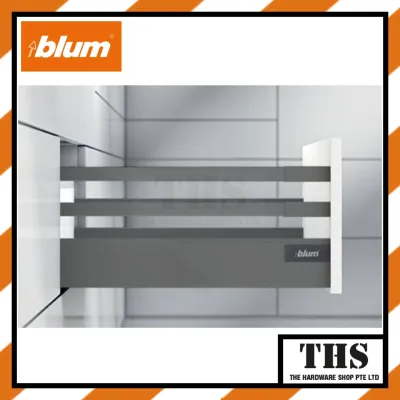
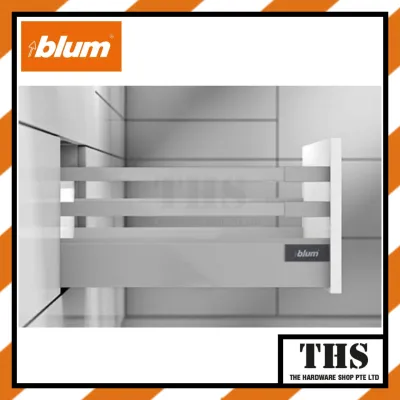
The TANDEMBOX line, which includes the popular antaro and intivo models, relies on the classic TANDEMBOX runner system. This runner mechanism has long been a benchmark for smooth, quiet sliding action in modern kitchens. The side panels of Tandembox drawers feature a slightly curved or angled interior profile, which is a key identifying characteristic of this line.
Products mentioned in this guide
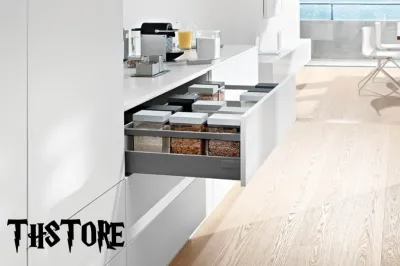
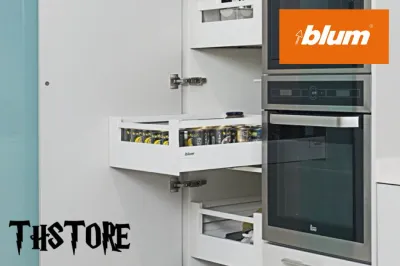
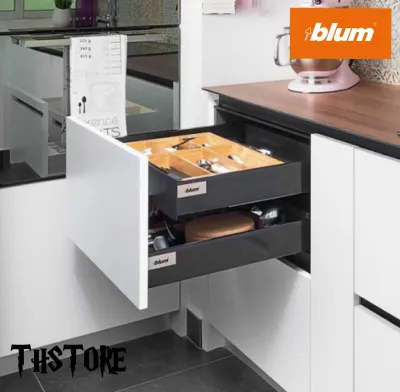
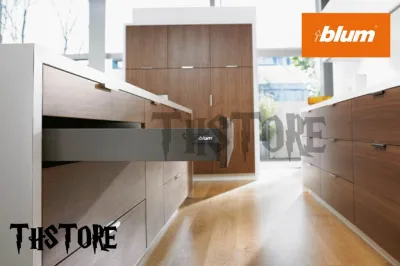
Prices are valid at publication and may change. Please refer to the product page for the latest price.
Conversely, LEGRABOX is a separate, highly contemporary system engineered on a sophisticated runner platform. LEGRABOX is distinguished by its exceptionally slim, straight side panels that measure just 12.8 mm in thickness. This ultra-thin profile maximizes the interior drawer space, offering a sleek, minimalist aesthetic that aligns with high-end, handleless kitchen designs.
Distinguishing between these two product families is essential for early-stage kitchen planning. Because they use entirely different runner profiles and cabinet mounting positions, they are not interchangeable. Your choice between them will dictate your cabinet carcass preparation, drilling patterns, and overall kitchen design direction.
Key Specifications That Dictate Your Drawer Choice
Selecting the right drawer configuration involves translating technical hardware specifications into practical everyday utility. You must evaluate how physical dimensions and mechanical ratings impact your storage capacity and the overall structural integrity of your cabinetry.

Load Capacity and Drawer Depth
Weight limits and physical depth are fundamental to the safety and longevity of your kitchen cabinets. Blum systems are typically rated for specific dynamic load capacities, commonly categorized into 30 kg and 65 kg tiers. It is critical to verify the exact load rating on the manufacturer’s product label or official specification sheets, as actual weight limits can vary based on drawer width and assembly quality.
Drawer depth—often referred to as nominal length—typically ranges from 270 mm to 650 mm, with 300 mm to 600 mm being the most common sizes for standard kitchen layouts. You must match the drawer depth to your cabinet’s internal carcass depth while allowing for necessary rear clearance. For instance, shallow drawers are ideal for compact cutlery inserts, whereas maximum-depth drawers are required to fully utilize deep base cabinets for heavy pots and pans.
Side Panel Heights and Organization
The height of the drawer side panels directly affects what you can store without items spilling over the edges. Blum utilizes standard letter codes to denote different side panel heights, such as N (very low), M (medium/standard), K (medium-high), and C or D (high).
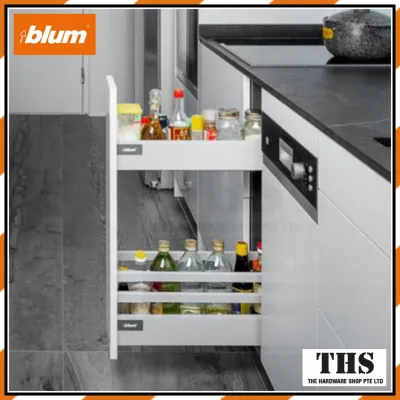
Low side panels (like height M) are the standard choice for cutlery, spice trays, and shallow utensil organization. High side panels (like height C or D) are designed for deep drawers housing pots, food containers, or integrated waste bins. To prevent items from slipping out of high drawers, you can add design elements like gallery rails or solid lateral inserts. Additionally, you must check the compatibility of internal organization systems; the classic ORGA-LINE dividers are designed for Tandembox systems, whereas the sleek AMBIA-LINE system is specifically tailored to fit the straight walls of Legrabox.
Model Comparison: Intivo, Antaro, and Legrabox
To help you decide which system aligns with your kitchen’s aesthetic and functional requirements, it is helpful to compare the three most prominent options side by side.
The TANDEMBOX antaro represents a clean, minimalist design with a clear focus on rectangular shapes. It features a square gallery rail and can be configured with classic metal sides or with glass design elements using a holding bracket. It is highly versatile, making it suitable for modern kitchens that require clean lines without a premium price tag.
The TANDEMBOX intivo is the ultimate choice for bespoke customization. It allows you to design highly personalized drawer sides by using various materials—such as glass, wood, leather, or customized metal panels—as seamless lateral inserts. This model is ideal if you want your drawer interiors to match your kitchen’s unique cabinetry finishes or contrasting accent colors.
The LEGRABOX sits at the top of the range, offering a sleek, linear design with completely straight interior and exterior side walls. Because the sides are perfectly vertical and incredibly thin, it provides the maximum possible internal storage width. It operates on a high-performance runner system that ensures an ultra-smooth glide, even when fully loaded, making it the premier choice for luxury, minimalist kitchens.
The following table outlines the key differences across these three options to simplify your selection process:
| Model | Design Language | Runner System | Side Panel Customization | Best Kitchen Application |
|---|---|---|---|---|
| TANDEMBOX antaro | Rectangular with square gallery rails | TANDEMBOX runner | Metal sides or glass inserts with brackets | Standard modern kitchens seeking clean, reliable utility |
| TANDEMBOX intivo | Seamless, customized side panels | TANDEMBOX runner | High customization with glass, wood, or leather inserts | Bespoke, high-end custom kitchens with matching interior accents |
| LEGRABOX | Ultra-slim (12.8 mm), straight vertical walls | LEGRABOX runner platform | Elegant matte metal finishes (e.g., carbon black, stainless steel) | Luxury, minimalist kitchens requiring maximum internal drawer space |
Matching Specs to Your Kitchen Storage Needs
To get the most out of your kitchen cabinetry, you should tailor the specifications of each drawer to its intended contents. This ensures that you do not overspend on heavy-duty hardware where it is not needed, while ensuring heavy-use areas are sufficiently reinforced.
For cutlery and utensil drawers, standard 30 kg load capacity runners are more than sufficient. You should opt for low side panels (height M) to keep small items easily accessible. Both Tandembox antaro and Legrabox work exceptionally well in this scenario; your choice will depend primarily on whether you prefer the ultra-slim look of Legrabox or the cost-effective reliability of Antaro.
For heavy pot and pan drawers, you must prioritize structural stability. It is highly recommended to specify high side panels (height C or D) to support stacked cookware. Furthermore, you should verify that the runners are rated for a 65 kg dynamic load capacity. This ensures the drawer glides smoothly and does not sag or warp over years of heavy use.
For sink pull-outs, spatial constraints around plumbing pipework present a unique challenge. You will need specialized U-shaped drawer configurations that curve around the pipes. Before ordering hardware, measure the exact internal cabinet width and plumbing clearance. Legrabox and Tandembox both offer dedicated sink drawer solutions, but you must verify that the chosen runner depth fits comfortably in front of your kitchen’s specific plumbing layout.
Cabinet Compatibility and Installation Checks
Before finalizing any hardware order or cabinet fabrication, several critical dimensional checks must be performed to avoid costly installation errors.
First, you must verify the exact internal cabinet width (clearance) required for your chosen drawer system. Legrabox and Tandembox have different spacing requirements between the drawer side panel and the cabinet carcass wall. A discrepancy of even a few millimeters can prevent the runners from engaging correctly or cause the drawer front to align poorly.
Second, ensure that your cabinet maker’s drilling system—such as the standard 32 mm system—is compatible with the specific runner mounting patterns. You must also confirm that the nominal length of the drawer box matches the internal cabinet depth, leaving at least 10 mm to 15 mm of clearance at the rear of the cabinet carcass.
Finally, always consult with your professional cabinet maker or a qualified kitchen installer to confirm the structural integrity of your cabinet carcasses. They can verify that the cabinet walls are strong enough to support heavy-duty 65 kg runners and ensure the exact fitting requirements are met before the hardware is ordered.
Frequently Asked Questions (FAQ)
Can I upgrade my existing Tandembox drawers to Legrabox?
A direct swap is generally not possible without significant modifications. Because Tandembox and Legrabox utilize entirely different runner systems, their cabinet drilling patterns, mounting points, and internal carcass clearance requirements differ. To upgrade to Legrabox, you will typically need to replace both the runner mechanisms and the entire drawer box assembly, and potentially modify or replace the cabinet carcass itself. You should consult a professional cabinet maker to evaluate the feasibility of such an upgrade.
What is the main difference between Tandembox antaro and intivo?
While both models are built on the same underlying TANDEMBOX runner system and share identical structural installation dimensions, the primary difference lies in their side panel aesthetics and customization options. Tandembox antaro features a clean, rectangular design with a square gallery rail. In contrast, Tandembox intivo offers a seamless side panel design that allows you to slide in custom design elements made of glass, wood, or other materials, offering a much higher degree of visual personalization.
Community discussion
Share your experience or ask a question. Comments are reviewed before publication.