
Selecting the right umbrella stand for a compact Singapore entryway requires balancing strict spatial limits with practical water management. In high-density housing like Housing & Development Board (HDB) flats and modern condominiums, the foyer is often a high-traffic bottleneck where every square centimeter counts. A poorly chosen stand can block pathways, damage sensitive flooring, or become a safety hazard during the monsoon seasons.
To keep your entryway organized and dry, you must evaluate how much physical space you can spare and how many umbrellas you need to store. Choosing between a wall-mounted unit and a compact freestanding model depends on your wall structure, tenancy status, and the typical weather gear your household uses. By focusing on smart installation, proper materials, and efficient water drainage, you can maintain a clean, dry, and welcoming entrance to your home.
Assessing Entryway Space and Capacity Needs
Before browsing online marketplaces or local home decor shops, you must measure your available entryway space. Use a measuring tape to determine the clear walkway width when your main door and safety gate are fully open. Note the door swing radius, as a stand placed even slightly within this arc will constantly be struck, leading to scratches or tipping. If your entryway features a built-in shoe cabinet or an electrical distribution board (DB) box, ensure the stand does not block access to these essential features.
Products mentioned in this guide
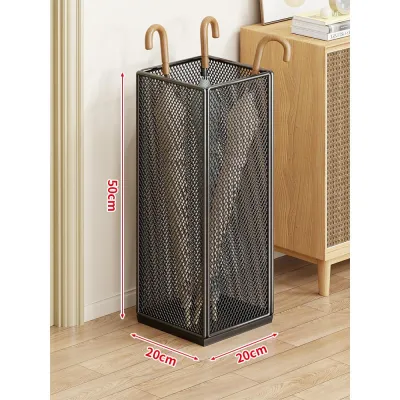
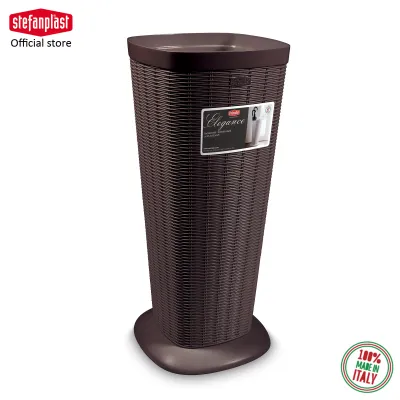
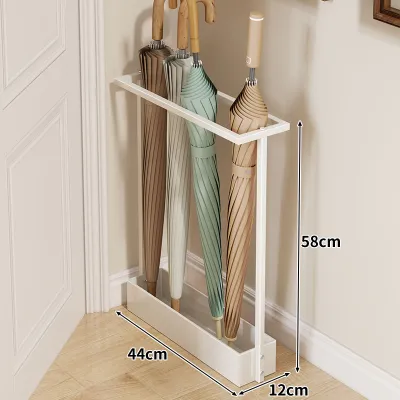
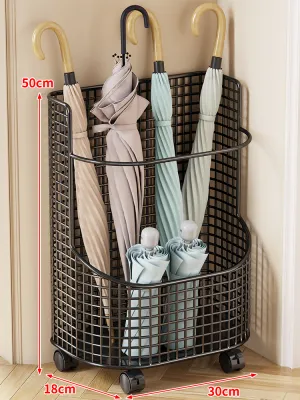
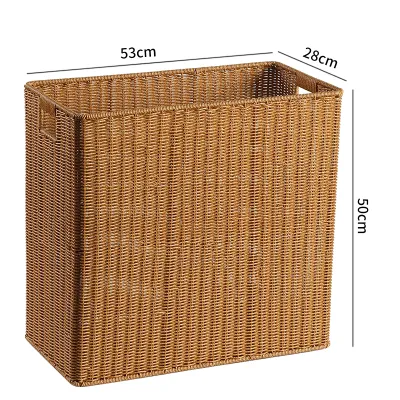
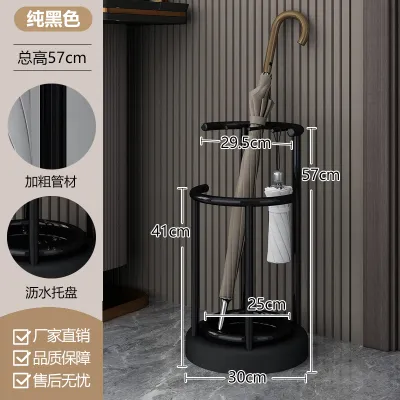
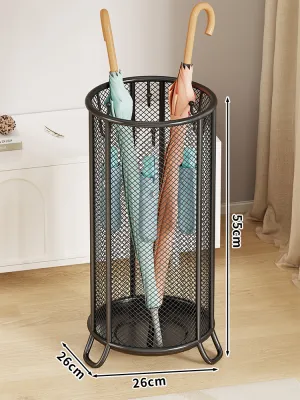
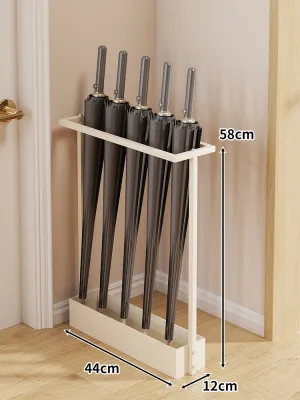
Prices are valid at publication and may change. Please refer to the product page for the latest price.
Capacity planning requires analyzing your household’s actual umbrella usage. Count the number of long-handled golf umbrellas, standard walking umbrellas, and compact folding models your family uses regularly. A family of four may need a stand that accommodates at least four long umbrellas and has hooks or dedicated slots for several folding units. If you primarily use short, telescopic umbrellas, a deep, traditional cylinder stand will make them difficult to retrieve, meaning a multi-tiered or slotted design is more appropriate.
Avoiding common sizing mistakes will save you from daily frustration. Homeowners often forget to account for the extra clearance required when umbrellas are actually inserted into a wall-mounted stand; long handles can lean outward and block narrow passages. In Singapore, HDB escape routes must maintain a minimum clear width of 1.2 meters to comply with fire safety guidelines, so any corridor-facing storage must respect these boundaries. Additionally, ensure that the placement of the stand does not interfere with door handles, keys, or wall-mounted light switches.
To help you decide which configuration fits your home, consider this basic decision matrix based on physical space and installation preferences:
| Feature | Wall-Mounted Stands | Compact Freestanding Stands |
|---|---|---|
| Floor Footprint | Zero floor space required | Small footprint (typically 15-25 cm wide) |
| Installation Effort | Requires drilling or strong adhesives | Ready to use immediately, no tools needed |
| Ideal Wall Type | Solid concrete, brick, or reinforced panels | Any location, independent of wall strength |
| Portability | Fixed in place once installed | Easy to move for cleaning or seasonal storage |
| Best Suited For | Ultra-narrow corridors, households with pets | Renters, tiled floors, flexible layouts |
Wall-Mounted Options: Maximizing Floor Space in Tight Corridors
Wall-mounted umbrella stands are the ultimate space-saving solution for homes with virtually no foyer floor space. By lifting the storage unit off the ground, you keep your entryway floor completely clear, making it easier to sweep, mop, or allow a robotic vacuum to navigate. This configuration is particularly beneficial in narrow HDB barrier-free access routes or compact condo walkways where floor-standing items create physical obstacles.

Design variations for wall-mounted models range from minimalist magnetic brackets to folding multi-slot organizers. Magnetic stands are incredibly popular in Singapore because they can attach directly to the steel household shelter (bomb shelter) doors commonly found near entryways, completely eliminating the need for drilling. Other designs include slim vertical racks with individual slots that hold umbrellas flush against the wall, or foldable hook systems that tuck away flat when not in use.
Before installing a wall-mounted unit, you must verify your wall construction and its load-bearing capacity. Solid concrete walls, typical of HDB structural columns and bomb shelters, provide excellent support but require heavy-duty masonry drill bits and wall plugs. If you are mounting onto a drywall partition often found in newer condominium layouts, you must locate the internal studs or use specialized hollow-wall anchors. Wet, heavy golf umbrellas can weigh over 500 grams each, and a fully loaded stand will pull downward with significant force, risking wall damage if poorly anchored.
An effective wall-mounted stand must feature integrated drip management to protect your walls and baseboards. Because the unit is suspended, any water dripping from wet umbrellas can run down the wall or pool on the floor below if the drip tray is too shallow or poorly positioned. Look for models with deep, detachable plastic cups or slide-out trays at the base that capture every drop of runoff and can be emptied easily without unmounting the entire frame.
Compact Freestanding Stands: Stable and Drill-Free Alternatives
For renters or homeowners who prefer not to drill into their walls, compact freestanding stands offer an excellent combination of stability and flexibility. These units can be placed exactly where they are needed and relocated as your entryway layout changes. The key to a successful freestanding design lies in its physical balance, ensuring it remains upright even when holding top-heavy, long-handled umbrellas.
When evaluating a freestanding umbrella stand, closely examine the base weight and center of gravity. A high-quality stand should feature a heavily weighted bottom, often constructed from cast iron, dense resin, or thick ceramic, to counteract the weight of tall umbrellas leaning to one side. Avoid lightweight, all-plastic cylinders that easily tip over when a single large umbrella is placed inside, as this can lead to broken umbrellas or damaged floor tiles.
Footprint shapes play a crucial role in how well a freestanding stand integrates into a tight entryway. Rectangular and semi-circular bases are highly space-efficient because they can sit completely flush against a wall, the side of a shoe cabinet, or right behind an entry door. Square bases fit neatly into unused corners, while circular bases, though classic, often create dead space behind them and may stick out further into your walking path.
Some compact stands incorporate multi-functional designs to maximize their utility within a small footprint. You can find models that feature integrated hooks for keys, shoehorns, or small reusable shopping bags, alongside dedicated slots for folding umbrellas. When considering these hybrid designs, verify that the added features do not make the stand top-heavy or expand its physical dimensions beyond what your entryway can comfortably accommodate.
During dry spells or the low-rainfall months in Singapore, portability becomes a major advantage of freestanding models. Lightweight metal wire or collapsible plastic stands can be easily emptied, wiped dry, and stored away inside a shoe cabinet or household shelter. This flexibility keeps your entryway looking clean and uncluttered when rain gear is not required.
Essential Features for Rain Protection and Indoor Hygiene
To manage Singapore’s heavy tropical downpours, an umbrella stand must have an effective water collection system. Standing water on entryway floors is not just a slipping hazard; it can also warp laminate flooring, discolor grout, and create a breeding ground for mosquitoes, which is a significant concern under local National Environment Agency (NEA) guidelines. Look for stands equipped with deep, removable drip trays that collect water efficiently and can be slid out, emptied, and washed without hassle.
Because these storage units are constantly exposed to moisture, verifying rust and corrosion resistance is vital. Generic terms like “metal” or “steel” do not guarantee longevity in Singapore’s humid climate. Check the manufacturer’s specifications for high-grade 304 stainless steel, powder-coated iron, or anodized aluminum, which are chemically treated to resist rust. If choosing a plastic or ABS resin stand, ensure the material is thick enough to resist cracking under the weight of heavy metal-tipped umbrellas.
Proper ventilation is another critical factor in maintaining indoor hygiene and preventing unpleasant odors. Enclosed, solid-walled cylinder stands trap moisture inside, creating a humid microclimate where mold and mildew thrive on damp umbrella fabric. Opt for open-wire, mesh, or slatted designs that encourage continuous airflow, allowing wet umbrellas to air-dry naturally and quickly while stored.
Finally, pay close attention to floor protection features on freestanding models. Metal or rough ceramic bases can easily scratch polished homogeneous tiles, marble, or vinyl flooring when the stand is moved or bumped. Ensure the product includes pre-applied rubber feet, silicone pads, or felt glides on the underside to cushion the contact points and prevent unsightly floor damage.
Safe Installation and Routine Maintenance
If you decide to install a wall-mounted umbrella stand that requires drilling, safety must be your top priority. Before boring any holes into your entryway wall, use a digital wall scanner to check for hidden water pipes or electrical conduits. This step is especially critical if you are mounting the stand near your home’s main DB box, light switches, or adjacent bathroom walls where utility lines are commonly routed.
Always match your mounting hardware to the specific wall material in your home, strictly following the product manual instructions. For solid concrete walls typical of HDB flats, use high-quality masonry wall plugs (rawplugs) and heavy-duty steel screws that can handle shear force. For partition walls, choose toggle bolts or expansion anchors designed for drywall, and avoid mounting heavy stands on thin plywood paneling or decorative laminates that cannot support structural loads.
Maintaining your umbrella stand takes only a few minutes a week but significantly extends its lifespan and keeps your entryway hygienic. Empty the drip tray after every rainy day to prevent stagnant water buildup and mineral deposits. Wipe down the entire frame with a soft, damp cloth and a mild, non-abrasive detergent to remove dirt and salt residue carried in by rainwater, then dry it thoroughly with a clean towel.
If you encounter unexpected resistance while drilling, such as hitting a hard steel rebar or structural metal plate, or if the wall material crumbles and cannot hold an anchor, stop immediately. Do not attempt to force the installation or use makeshift adhesives that might fail later. In these situations, consult a professional handyman to complete the installation safely, or pivot to a high-quality freestanding alternative.
Frequently Asked Questions (FAQ)
Can I mount an umbrella stand on a hollow block or partition wall?
Mounting an umbrella stand on a hollow block or partition drywall is possible, but it carries risks due to the dynamic weight of wet umbrellas. You must avoid using standard concrete wall plugs, which will not expand properly in hollow spaces and can pull out easily. Instead, check the manufacturer’s instructions and use specialized heavy-duty hollow-wall anchors, such as toggle bolts or self-drilling drywall anchors, which grip the back of the wall panel. If the stand is designed to hold multiple heavy golf umbrellas, it is safer to opt for a freestanding unit to prevent structural damage to your partition walls.
How do I clean a built-in drip tray without removing the whole stand?
To clean a non-removable or built-in drip tray, first use a dry microfiber cloth or a highly absorbent sponge to soak up any standing water. Mix a few drops of mild dishwashing liquid with warm water, dip a soft cloth into the solution, and gently wipe down the interior of the tray to remove dirt, dust, and mineral rings. Avoid using harsh chemical bleach, steel wool, or abrasive scrubbing pads, as these can strip away rust-resistant coatings or scratch plastic liners. Finish by wiping the tray with a clean, damp cloth to remove soap residue, and leave the stand in a well-ventilated area to dry completely.
Community discussion
Share your experience or ask a question. Comments are reviewed before publication.