
Finding the right single mattress (床垫单人) in Singapore involves balancing personal comfort with long-term financial value. With a multitude of local and international mattress brands competing in the Singapore market, selecting a bed is no longer just about picking the lowest price tag. True value is found when the mattress’s structural integrity, materials, and support profiles align perfectly with your physical needs and sleeping habits over years of continuous use.
Whether you are furnishing a compact guest room, upgrading a child’s bed, or optimizing a studio apartment, understanding how mattress construction translates to actual sleep quality is essential. This guide breaks down the critical components of mattress value, examines how different firmness levels cater to specific sleep profiles, and outlines the practical logistics of ordering a single mattress in Singapore.
Matching Firmness Levels to Your Sleep Position and Weight
The industry-standard mattress firmness scale ranges from 1 to 10, where 1 represents an extremely soft, cloud-like surface with no resistance, and 10 represents a rigid, unyielding surface. In retail settings, these numbers are generally grouped into three main consumer labels: soft (levels 1 to 3), medium or medium-firm (levels 4 to 6), and firm or extra-firm (levels 7 to 10). Understanding where you fall on this scale is the first step toward making an informed purchase.
Products mentioned in this guide
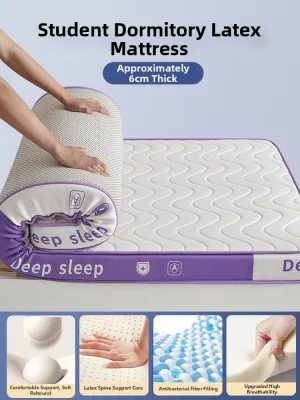
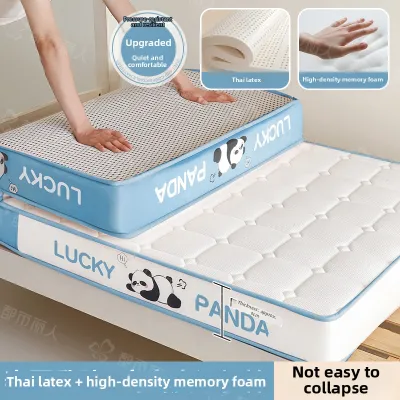
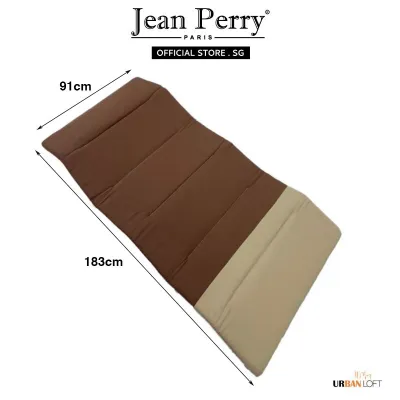
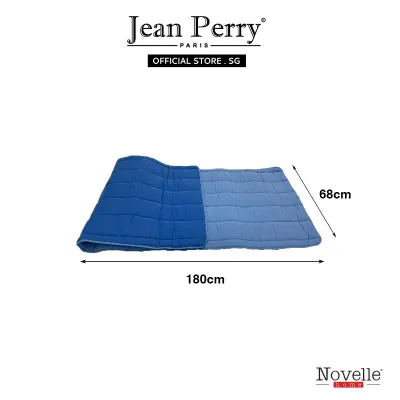
![[3S FURNITURE] Foldable Portable Palm Coconut Mattress Antibacterial For Student and Worker * FREE DELIVERY *](https://img.lazcdn.com/g/p/1018fb0ec35164fc8f6b18bf2d8ef227.jpg_400x400q80.jpg_.webp)
![[1-2 day delivery] Foldable Foam Mattress 3-Fold Mattress](https://img.lazcdn.com/g/ff/kf/Se38f308a460b4ba3aef73a3da6703c621.jpg_400x400q80.jpg_.webp)
Prices are valid at publication and may change. Please refer to the product page for the latest price.
Your primary sleep position dictates the level of contouring and support your body requires to maintain a neutral spinal alignment. Side sleepers typically require a softer mattress (rated 3 to 5) because their body weight is concentrated on narrower contact points—specifically the shoulders and hips. A softer surface allows these joints to sink sufficiently, relieving pressure while keeping the spine straight. Conversely, back and stomach sleepers require a firmer mattress (rated 7 to 9). For these positions, a soft mattress causes the pelvis or midsection to sag too deeply, arching the spine unnaturally and leading to chronic lower back pain.
Body weight is another critical variable that alters how you perceive firmness. A lighter sleeper (typically under 60 kg) exerts less downward force and will perceive most mattresses as firmer than they are rated. To experience pressure relief, lighter individuals often need to opt for a softer model. An average-weight sleeper (60 to 90 kg) will find standard medium-firm mattresses true to their rating. Heavier sleepers (over 90 kg) exert significant downward force, compressing the comfort layers quickly. They require a firmer mattress with a thicker, more robust support core—such as heavy-gauge pocketed coils or high-density base foam—to prevent them from “bottoming out” against the hard structural base.
To perform a quick self-assessment before shopping, consider your current sleep setup. If you regularly wake up with sore shoulders or hips, your current mattress is likely too firm. If you wake up with a stiff lower back or a dull ache in your lumbar region, your mattress is likely too soft and failing to support your midsection. Combine these observations with your primary sleeping posture and weight category to determine your target firmness range.
How to Evaluate True Value Beyond the Price Tag
When searching for a high-value single mattress in Singapore, it is easy to fall into the trap of prioritizing the lowest upfront cost. However, true value is calculated by dividing the purchase price by the mattress’s usable lifespan. A cheap S$150 mattress that sags within two years costs significantly more per night than an S$800 mattress that maintains its structural integrity for a decade.

To assess durability, you must look past marketing buzzwords and examine verifiable technical specifications. For foam mattresses, the most important metric is foam density, measured in kilograms per cubic meter (kg/m³). High-quality polyfoam should have a density of at least 30 kg/m³, while durable memory foam should range between 45 and 60 kg/m³. For spring mattresses, pay close attention to the coil count and the wire gauge. A lower gauge number indicates thicker, more durable steel wire (e.g., 12-gauge is thicker and firmer than 15-gauge).
Warranty terms and sleep trials are also major components of a mattress’s value proposition. A reputable brand should offer at least a 10-year warranty that explicitly covers structural defects, such as permanent sagging or indentations deeper than 2.5 cm. Be sure to read the fine print, as some warranties are prorated, meaning the brand covers less of the replacement cost as the mattress ages. Additionally, look for brands that offer a risk-free sleep trial of 90 to 120 nights. Because your body takes up to a month to adjust to a new sleeping surface, a trial period is the only way to guarantee the mattress is a correct fit.
Finally, factor in the cost of after-sales services in Singapore. Some brands bundle free delivery, in-home setup, and old mattress disposal into their retail price, while others add these as separate charges at checkout. These services can easily add S$100 to S$200 to your total bill, so comparing “all-inclusive” prices is essential for finding the best overall deal.
What to Look for in Brands Offering Soft and Plush Single Mattresses
Soft and plush mattresses are engineered to provide maximum pressure relief and a “hugged” sensation. To achieve this plush feel without sacrificing spinal support, reliable brands utilize specific multi-layered constructions. Look for models that feature thick memory foam or natural latex comfort layers on top, often paired with a pillow-top or Euro-top design. A pillow-top consists of an extra layer of padding stitched directly to the top of the mattress, while a Euro-top is flush with the sides, offering a cleaner look and slightly more structural stability around the edges.
When evaluating a soft mattress, check the manufacturer’s spec sheet for the thickness and density of the top comfort layers. A high-quality soft single mattress should have at least 5 to 8 cm of high-density comfort foam. If the comfort layer is too thin or made of low-density foam (under 24 kg/m³), it will compress completely under your body weight, causing you to feel the rigid support core underneath—a common issue known as bottoming out.
There are inherent trade-offs associated with soft mattresses that buyers must address. The first is heat retention. Soft foams contour closely to your body, restricting airflow around your skin. To combat this in Singapore’s warm, humid climate, look for brands that incorporate cooling technologies. These include open-cell foam structures, gel-infused memory foam, phase-change materials, or breathable fabric covers made from Tencel, bamboo, or cool-to-the-touch polyethylene fibers. The second trade-off is reduced edge support. Soft mattresses tend to compress deeply when you sit or sleep near the perimeter. To prevent a rolling-off sensation, look for models with reinforced foam encasement or thicker, firmer coils around the outer edge.
This category is highly suited for lightweight individuals (under 60 kg) who do not sink deeply enough to get pressure relief from firmer models. It is also the ideal choice for strict side sleepers who need deep cushioning for their shoulders and hips to prevent joint numbness during the night.
Identifying Reliable Medium-Firm Mattress Constructions
Medium-firm mattresses, typically rated between 5 and 7 on the firmness scale, represent the most popular and versatile category in Singapore. This firmness level is often referred to as the “universal sweet spot” because it successfully balances deep pressure relief with robust upward support. To achieve this balance, manufacturers generally use hybrid constructions or sophisticated multi-layer foam designs.
A high-value medium-firm hybrid mattress combines a responsive support core of pocketed springs with transitional cushioning layers. Pocketed springs are individually wrapped in fabric sleeves, allowing them to compress independently of one another. This design provides targeted support that contours to your body’s curves while offering the classic bounce of an innerspring. Above the spring unit, brands typically place a transitional layer of high-resilience polyfoam or natural latex. This layer prevents you from sinking directly onto the springs and helps distribute your body weight evenly across the surface.
If you are selecting a single mattress for a guest room or a restless sleeper, edge support and motion isolation are critical specifications to verify. Even though a single mattress is designed for one person, superior edge support maximizes the usable sleeping surface, allowing you to sleep right up to the edge without feeling like you are sliding off. Look for brands that use double-row pocketed coils of a thicker gauge around the perimeter. For motion isolation, pocketed coils and memory foam are excellent at absorbing localized movement, ensuring that if the sleeper tosses and turns, the mattress remains stable and quiet.
The ideal audience for a medium-firm mattress includes combination sleepers who rotate between their back, side, and stomach throughout the night. It is also perfectly suited for average-weight individuals (60 to 90 kg) who require a balanced blend of body contouring and spinal alignment.
Evaluating Firm Mattresses for Spinal Alignment and Support
Firm (7 to 8) and extra-firm (9 to 10) mattresses are designed for sleepers who prioritize structural support, stability, and a flat, lifted sleeping surface over deep cushioning. Brands that specialize in high-quality firm mattresses construct them with robust support cores and minimal, high-density comfort layers.
The support core of a firm mattress typically consists of high-density polyurethane foam or heavy-duty coil systems. While pocketed coils can be engineered for firmness by using thicker wire gauges (such as 1.8 mm to 2.0 mm), some traditional firm mattresses utilize Bonnell or continuous coil systems. These interconnected spring networks provide an exceptionally rigid, highly durable base that resists sagging under heavy loads. Above this structural core, the comfort layers are kept relatively thin—usually between 2 and 5 cm—and are made from high-ILD (Indentation Load Deflection) materials like natural latex or high-density firm polyfoam.
It is crucial to differentiate between a “firm” mattress and an “extra-firm” mattress. A standard firm mattress offers robust support but still features a thin comfort layer that provides a small amount of give for your shoulders and hips. An extra-firm mattress, on the other hand, has almost no contouring and feels akin to sleeping on a carpeted floor. Back and stomach sleepers, heavier individuals (over 90 kg), and those who require rigid spinal alignment due to orthopedic recommendations benefit most from these categories.
However, buyers must be careful not to confuse a hard, unyielding surface with proper ergonomic support. A mattress that is completely devoid of comfort layers can create painful pressure points on your hips and shoulders, leading to poor blood circulation and frequent tossing and turns. Even the firmest mattress must have a minimal comfort layer to fill the gap in your lumbar curve when lying on your back. To verify the long-term durability of a firm mattress, check the density of the base foam layers (aim for 35 kg/m³ or higher) and ensure the spring unit uses double-tempered steel coils to prevent premature sagging in the center.
Logistics and Sizing Checks Before Ordering in Singapore
Before finalizing your purchase, it is vital to perform a series of localized checks to avoid delivery delays, sizing mismatches, and unexpected return fees. The Singapore mattress market has specific standards that differ from other regions, making precise measurements essential.
First, verify the exact dimensions of the mattress you are ordering. In Singapore, a standard Single mattress measures approximately 91 cm wide by 190 cm long (91 x 190 cm). A Super Single mattress measures approximately 107 cm wide by 190 cm long (107 x 190 cm). Do not assume that international sizes (such as US, UK, or Australian singles) will fit your bed frame, as they often differ by several centimeters in both width and length. Measure the inner recess of your bed frame carefully, ensuring there is a 1 to 2 cm margin on all sides for tucking in bedsheets.
Next, evaluate the logistical constraints of your residential building. In Singapore, delivering a mattress to an HDB flat, a high-rise condominium, or a landed property requires careful planning. Measure the height, width, and depth of your building’s passenger lift. If the mattress cannot fit inside the lift, delivery staff will have to carry it up the stairs, which almost always incurs a steep “staircase surcharge” (typically S$10 to S$20 per floor). Additionally, check the turning radiuses of your home’s entryways, corridors, and bedroom doors to ensure a flat, unbendable mattress can clear the corners.
You must also scrutinize the brand’s return policy and sleep trial terms. While many direct-to-consumer brands offer free returns, some require the customer to pay a restocking fee (ranging from S$50 to S$100) or cover the cost of return transportation. Furthermore, check if the brand requires you to keep the mattress for a mandatory adjustment period (usually 14 to 30 days) before initiating a return.
Finalize your purchase by confirming the delivery timelines and potential surcharges. Some brands offer free weekday delivery but charge extra for Saturday slots or specific time windows. Surcharges may also apply to deliveries in restricted zones or remote areas, such as Sentosa or Jurong Island. Always clarify these terms on the checkout page to ensure a smooth, stress-free delivery process.
Frequently Asked Questions (FAQ)
Is a super single mattress worth the upgrade for one person?
Yes, if your bedroom space and budget allow. A super single mattress provides an extra 16 cm of width compared to a standard single, offering significantly more room to roll over without falling off. It is highly recommended for active sleepers, teenagers, or taller adults. However, keep in mind that it requires a larger bed frame and will reduce the available floor space in smaller bedrooms.
How long should a budget-friendly single mattress last?
A budget-friendly single mattress (typically priced under S$300) generally has a lifespan of 3 to 5 years under regular use. Because these models often use lower-density foams or thinner-gauge springs, they wear out faster than premium models. Observable signs of wear that indicate it is time for a replacement include visible sagging deeper than 2.5 cm, persistent body impressions, squeaking springs, or waking up with physical stiffness.
Do mattress brands in Singapore offer old mattress disposal?
Many mattress brands and retailers in Singapore offer old mattress disposal services, but policies vary. Some brands include disposal as a free promotional add-on, while others charge a service fee ranging from S$30 to S$80. If the brand does not offer this service, HDB residents can contact their local Town Council to arrange free bulk household waste removal, whereas condominium and landed property residents must typically hire private disposal services.
Community discussion
Share your experience or ask a question. Comments are reviewed before publication.