
Finding the right upholstered headboard for a Singapore Housing & Development Board (HDB) bedroom requires balancing personal comfort with strict spatial realities. Because HDB master bedrooms and common bedrooms have shrunk in newer Build-To-Order (BTO) flats, every centimeter of floor space and wall clearance counts. A plush, well-padded headboard adds a touch of luxury and provides a comfortable backrest for reading or working in bed, but choosing the wrong brand or design can easily crowd your walk-around space, block essential power sockets, or succumb to Singapore’s relentless tropical humidity.
The ideal brand for your home depends on whether you prioritize bespoke dimensions, immediate delivery, or premium materials. To make an informed decision, you must compare how different retail categories handle the unique constraints of local apartments—from narrow entryways and concrete walls to limited bedroom footprints.
Quick Answer: Matching Brand Types to Your HDB Needs
When shopping for an upholstered headboard in Singapore, there is no single brand that fits every home perfectly. Instead, the market is divided into three primary categories, each serving different spatial layouts, timelines, and budgets. Your choice should align with your specific bedroom layout and how much you are willing to compromise on custom dimensions versus immediate availability.
Products mentioned in this guide
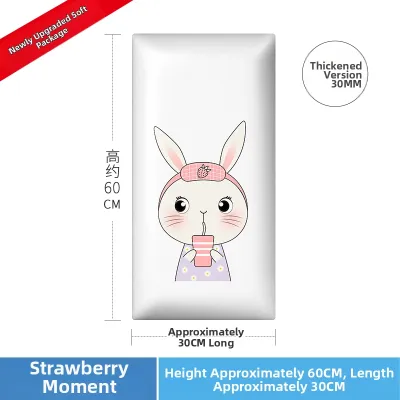
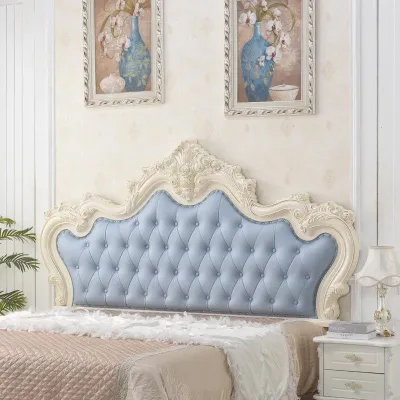
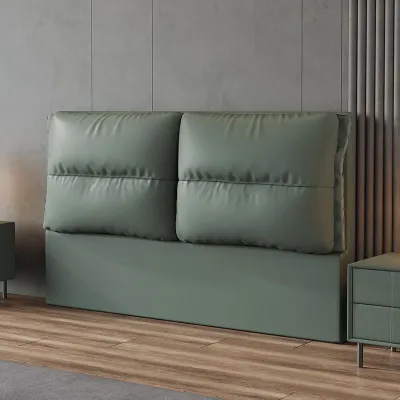
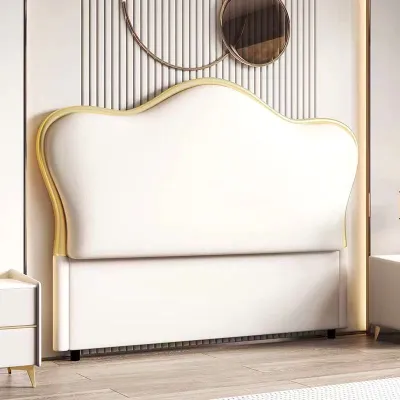
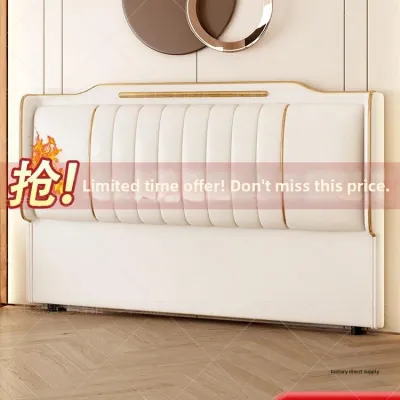
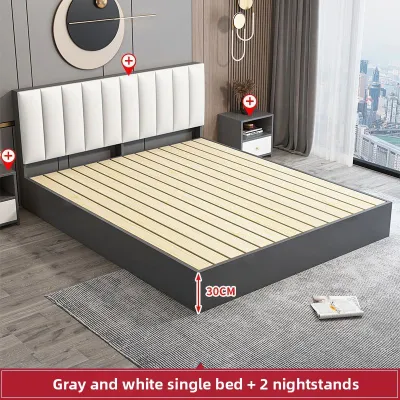
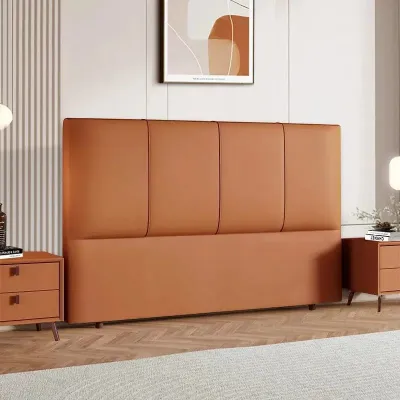
Prices are valid at publication and may change. Please refer to the product page for the latest price.
Choose local custom studios if you need exact wall-to-wall dimensions, have non-standard wall shapes, or want to integrate hidden storage and bedside reading lights directly into the headboard. These bespoke makers are ideal for tight HDB master bedrooms where standard-sized furniture would block wardrobe doors or leave awkward, dust-gathering gaps.
Choose regional online furniture retailers if you prioritize modern, trendy aesthetics, budget-friendly pricing, and fast delivery. These platforms are excellent for rental units or standard common bedrooms where you can easily work around fixed dimensions and standard Queen or King sizes without needing permanent modifications.
Choose premium showroom brands if you require high-end fabric options, dense foam padding, and robust structural warranties. This option is best for homeowners who want to test the comfort in person and are willing to pay a premium for long-lasting frame construction, provided they have the floor space to accommodate slightly deeper profiles.
Ultimately, the “best” brand is the one that respects your room’s physical limits. While a jumbo HDB flat might easily accommodate a deep, floor-standing designer headboard, a compact 3-room BTO bedroom will likely require a slim, wall-mounted panel or a highly customized local build to preserve precious floor clearance.
Critical Comparison Dimensions for HDB Headboards
Comparing upholstered headboard brands requires looking far beyond surface-level aesthetics. In the context of Singapore’s compact housing and tropical climate, physical dimensions, material performance, and visual proportions dictate whether a headboard remains a comfortable sanctuary or becomes a logistical headache.

Spatial Fit and Depth Constraints
The primary challenge in any standard HDB bedroom is the clearance between the foot of the bed and the opposite wall, wardrobe, or en-suite bathroom door. A standard BTO bedroom wall is often only three meters wide, meaning a thick headboard can severely restrict your walk-around space. When evaluating brands, always check the depth (thickness) specification of the headboard, which can range from a slim 5 cm to a bulky 25 cm or more.
Floor-standing headboards sit directly on the floor and are clamped to the bed frame or wedged against the wall, adding several centimeters of depth to the overall length of your bed. If your wardrobe doors swing outward rather than slide, a thick floor-standing headboard might prevent you from opening your closet fully.
In contrast, floating or wall-mounted headboards hang directly on the wall using brackets or French cleats. This design saves valuable floor space and allows the bed frame to sit closer to the wall, but it requires careful planning. You must verify whether your HDB wall is a solid concrete structural wall or a hollow drywall partition, as the latter requires specialized anchors and finding internal metal studs to support the weight safely. Furthermore, drilling into walls may require landlord approval if you are renting.
Fabric Performance in a Humid Climate
Singapore’s high year-round humidity and ambient moisture pose a significant challenge for upholstered furniture. Generic material names like “velvet,” “linen,” or “leather” do not inherently guarantee performance, durability, or resistance to environmental wear. Without proper treatments, organic fibers can easily trap moisture, leading to musty odors, mold growth, or fabric sagging.
When comparing brands, look past the basic fabric name and inspect the technical specifications. Check if the brand uses performance fabrics treated with moisture-repellent, stain-resistant, or anti-microbial coatings. These treatments prevent sweat, hair oils, and ambient humidity from sinking deep into the foam and fibers.
Another critical metric is the Martindale rub count, which measures fabric durability. For a headboard that you will lean against daily, look for a rub count of at least 15,000 to 20,000 rubs to ensure the fabric will not pill or wear thin over time. Additionally, prioritize brands that offer removable, dry-cleanable, or washable fabric covers. Being able to strip the cover off for cleaning is a massive advantage in a tropical climate, helping you maintain a hygienic sleeping environment without needing professional steam cleaning services.
Visual Weight and Room Proportions
A headboard is often the visual anchor of a bedroom, but in a compact HDB space, a design that is too heavy or tall can make the entire room feel cramped and claustrophobic. Deeply tufted Chesterfield-style headboards with thick padding and heavy wings look grand in spacious landed properties, but they tend to swallow the visual volume of a standard 10-square-meter HDB room.
To maintain an airy, open feel, look for brands that offer streamlined, low-profile designs. Flat-panel headboards, vertical or horizontal channel tufting, and slim, curved silhouettes provide the comfort of an upholstered backrest without the unnecessary bulk.
Consider the height of the headboard relative to your ceiling. Standard HDB ceilings are typically around 2.6 meters high. A headboard that is too tall (exceeding 1.2 meters from the top of the mattress) can make the ceiling feel lower than it actually is. Opting for a wider, lower-profile headboard can visually stretch the room horizontally, making the space feel broader and more relaxed.
Evaluating Furniture Brand Categories in Singapore
Navigating the furniture market in Singapore reveals a wide array of retailers. To simplify your search, these brands can be categorized into three distinct business models, each offering unique trade-offs in terms of customization, price, and quality.
Local Custom and Carpentry Studios
Local custom upholstery studios and carpentry workshops offer the highest level of flexibility. The primary advantage of choosing a bespoke maker is the ability to customize your headboard to the exact millimeter. If you have a specific wall width or need to work around an awkward structural pillar, a custom studio can design a headboard that fits perfectly flush without leaving unsightly gaps.
Bespoke makers also allow you to integrate functional features directly into the upholstered panels. You can request built-in electrical cutouts for power sockets, integrated LED strip lighting, or slim bedside shelves. This integration eliminates the need for separate bulky bedside tables, saving precious floor space in tight HDB layouts.
However, these benefits come with notable trade-offs. Custom-made headboards require significantly longer lead times, often taking anywhere from four to eight weeks for fabrication and delivery. They are also the most expensive option, as you are paying for manual labor, personalized design, and low-volume material sourcing. When working with local studios, it is crucial to verify their fabric sources, ask about the density of the polyurethane foam they use, and clarify what their structural warranty covers, as smaller workshops may not offer the same robust guarantees as established retail chains.
Regional Online Furniture Retailers
Online-first furniture retailers have gained immense popularity among Singaporean homeowners seeking modern, Scandinavian, or minimalist designs at highly competitive prices. These brands typically source their products regionally, allowing them to offer trendy upholstered headboards with relatively fast delivery times—often within a week or two if the item is in stock.
The main appeal of regional online retailers is convenience and affordability. They provide clear digital catalogs, detailed product dimensions, and customer reviews that help you visualize the product. Many of these brands also offer budget-friendly assembly services, taking the hassle out of setting up your bed frame.
The primary limitation of online retailers is the lack of customization. Their headboards come in standardized sizes (such as standard Singapore Queen or King dimensions). If your HDB bedroom wall has a specific architectural quirk, a fixed-size headboard might overlap with a light switch or block a power socket. Additionally, because you cannot touch the fabric or test the padding before buying, you must rely heavily on the product description. Always check their return policies, restocking fees, and whether assembly is included in the initial price, as hidden costs can quickly narrow the savings.
Premium Showroom and Designer Brands
For those who value tactile quality and long-term durability, premium brick-and-mortar showrooms and designer furniture brands are the go-to option. Visiting a physical showroom allows you to run your hands over the fabrics, inspect the quality of the stitching, and test the density of the foam backing in person. This hands-on experience is invaluable when choosing a material that you will interact with every single night.
Premium brands typically construct their headboard frames from high-grade solid hardwoods or engineered multi-ply birch, ensuring excellent structural stability and preventing warping over time. They also tend to offer superior foam density that retains its shape and cushioning properties for years, backed by comprehensive structural warranties that cover frame defects.
The main drawback is that premium brands often design their collections with larger, open-concept homes in mind. Their headboards can be exceptionally deep, heavily padded, or feature wide, sweeping silhouettes that may not easily fit into a standard HDB bedroom layout. Before purchasing from a high-end showroom, you must meticulously measure your room and verify that the product’s physical scale will not overwhelm your space.
Pre-Purchase Verification Checklist for HDB Homes
Before finalizing your upholstered headboard purchase, it is essential to run a series of practical checks. Because HDB flats have strict structural rules and tight spatial boundaries, verifying these details beforehand will save you from costly return fees or installation disasters.
Measurements
- Wall Width: Measure the exact width of the wall where the headboard will sit. Ensure there is enough space for the headboard without overlapping window frames, wardrobe doors, or bedroom entryways.
- Wardrobe Clearance: If you have swing-out wardrobe doors, measure the distance between the edge of the wardrobe and the front face of the proposed headboard. Ensure you have at least 60 cm of clearance to stand and open the doors comfortably.
- Ceiling Height: Verify your ceiling height, especially if you are considering a tall, dramatic headboard. Standard HDB ceilings are 2.6 meters, but false ceilings or structural beams can reduce this clearance.
Obstructions
- Power Sockets: Locate all wall outlets and light switches. A thick headboard can block sockets, preventing you from plugging in bedside lamps or phone chargers. Note if you need to select a headboard with a lower profile or a built-in cutout.
- Air-Con Trunking: Look up and check if any air-conditioning copper pipes or drainage trunking run along the wall where the headboard will be mounted. Tall headboards can collide with trunking, preventing them from sitting flush against the wall.
- DB Box and DB Door: In some HDB layouts, the electrical distribution board (DB box) or utility meters might be nearby. Ensure your headboard does not block access to these critical utility points.
Logistics
- Lift Dimensions: Measure your HDB block's passenger lift door height, interior width, and depth. Oversized, non-modular headboards (especially solid King-size panels) may not fit inside standard lifts, requiring delivery staff to carry them up the stairs, which often incurs manual handling fees.
- Stairwell Clearance: If the headboard must be carried up the stairs, verify that the stairwell corners and ceiling heights are wide enough to allow the delivery team to maneuver the item safely.
Installation
- Wall Type: Determine if your mounting wall is concrete (structural) or drywall partition (non-structural). Concrete walls require masonry drilling, plastic wall plugs, and heavy-duty screws. Drywall partitions require locating the internal metal studs or using specialized hollow-wall toggle bolts.
- Brand Services: Confirm whether the retailer provides professional wall-mounting services. Many brands only deliver the item to your room and do not perform wall drilling due to liability reasons. If they do not, you will need to hire a licensed local handyman to secure the headboard safely.
Frequently Asked Questions (FAQ)
To help you navigate the final stages of selecting and installing your new headboard, here are answers to some of the most common questions faced by HDB homeowners.
Can I install an upholstered headboard over an HDB power socket?
It is highly recommended that you do not completely block access to wall power sockets with a solid headboard. Blocking a socket can create a fire hazard if plugs are bent or compressed against the wall, and it limits your ability to use bedside electronics.
If your headboard must overlap with a socket, consider choosing a model with a built-in cut-out panel or a floating design that mounts high enough to leave the sockets exposed underneath. Alternatively, you can consult a licensed electrician to safely relocate the socket further up the wall, or install a low-profile extension cord that routes the power out to your bedside tables before the headboard is pushed into place.
How do I clean and maintain an upholstered headboard in a humid climate?
Maintaining an upholstered headboard in Singapore’s humid climate requires regular, low-risk care to prevent dust mites and musty odors. Use a vacuum cleaner equipped with a clean upholstery attachment once a week to gently remove dust, skin flakes, and pet dander from the fabric surface.
To manage ambient moisture and prevent mold, ensure your bedroom is well-ventilated by opening windows during dry days, or run a dehumidifier or air conditioner regularly to keep indoor humidity levels below 60%. Always check the manufacturer’s specific care label on the headboard before applying any liquid cleaners or fabric refreshers. If you need to spot-clean a spill, always test the cleaning solution on a small, hidden area of the fabric first to ensure it does not cause discoloration or fabric damage.
Community discussion
Share your experience or ask a question. Comments are reviewed before publication.