
To choose the right UCO TV cabinet for your 55-inch, 65-inch, or 75-inch television, you must balance visual proportions, physical dimensions, and structural safety. A well-matched cabinet does more than hold your screen; it anchors your living room, conceals clutter, and keeps your expensive electronics secure. Selecting the perfect fit from the uco furniture collection requires comparing your television’s actual physical width—which is always smaller than its diagonal screen size—against the cabinet’s load capacity and length.
For a 55-inch television, a cabinet with a width of 150 cm to 180 cm provides an ideal aesthetic balance and functional clearance. If you are upgrading to a 65-inch screen, look for consoles measuring between 180 cm and 200 cm to prevent a top-heavy appearance and accommodate soundbars. For a massive 75-inch display, you will need a heavy-duty cabinet or modular unit spanning at least 200 cm to 240 cm, with verified structural reinforcement to support the substantial weight.
By understanding the specific spatial constraints of Singapore homes, such as HDB living room layouts and lift dimensions, you can avoid common installation pitfalls. Let’s look at the core rules of television-to-cabinet sizing and how to evaluate different configurations for your home.
Products mentioned in this guide

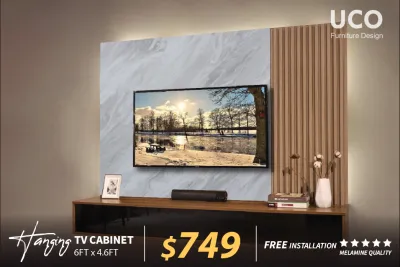




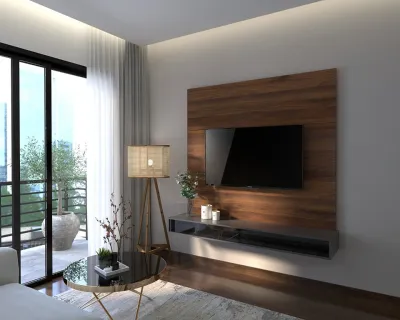
Prices are valid at publication and may change. Please refer to the product page for the latest price.
Core Sizing Rules for Matching UCO TV Cabinets to Your Screen
To create a balanced and safe entertainment setup, you must look beyond the diagonal screen size of your television. Diagonal measurements do not represent the actual horizontal space a television occupies on your wall or console. Before browsing uco furniture options, you must master three fundamental metrics: the width proportion, the viewing height, and the weight capacity of the furniture.
The ‘width rule’ is the most critical aesthetic guideline for living room design. Your TV cabinet should extend at least 10 cm to 20 cm beyond the outer edges of your television frame on both sides. This extra width prevents the setup from looking top-heavy or cramped. It also provides essential physical space for external speakers, media players, or decorative items without crowding the screen. A television that overhangs the edges of its cabinet is highly vulnerable to accidental bumps, which can lead to costly damage.
Calculating the ideal viewing height is equally important for long-term comfort and neck health. When you are seated on your sofa, your eyes should align naturally with the center of the television screen or the bottom third of the display. To determine the correct cabinet height, measure the distance from the floor to your eye level while seated in your typical viewing position. Subtract half of your television’s physical height from this eye-level measurement; the resulting number is the target height for your cabinet’s top surface.
Weight capacity is a structural safety factor that must never be overlooked. A television’s weight is concentrated on either a central pedestal stand or two wide-set feet, creating high-pressure contact points on the cabinet’s top panel. You must verify that the maximum load rating of the cabinet’s top shelf comfortably exceeds the combined weight of your television, soundbar, and any media consoles. Always check the manufacturer’s official specifications for weight limits rather than assuming a solid-looking cabinet can support heavy electronics.
Spatial and Structural Checks for 55-Inch TVs
A standard 55-inch television has a physical width of approximately 123 cm, making it a highly popular choice for modern Singapore apartments. To achieve a balanced look, the recommended minimum cabinet width for this screen size is 150 cm, though a 180 cm console offers a more premium, spacious appearance. In compact HDB living rooms, selecting the right cabinet configuration requires a careful balance of storage capacity and visual weight.

When evaluating uco furniture options for a 55-inch screen, pay close attention to the internal dimensions of the cabinet compartments. Measure the depth and height of shelves to ensure they can accommodate your specific electronics, such as gaming consoles, media boxes, and internet routers. Some modern electronic units require at least 35 cm to 40 cm of depth to sit comfortably with their power cables plugged in. Additionally, ensure there is sufficient vertical clearance for heat dissipation to prevent your devices from overheating during extended use.
For smaller living rooms, a low-profile TV cabinet is highly effective at reducing visual clutter and making the ceiling appear higher. Consider models with sliding doors rather than traditional swing-out doors, as sliding mechanisms do not require extra clearance space in narrow walkways. Open-shelf designs or cabinets with glass doors can also make a small room feel more open, though they require more diligent cable organization to maintain a tidy appearance.
If you plan to place a soundbar on the cabinet surface, verify that the space in front of the television stand is deep enough. A standard soundbar needs a flat, unobstructed surface to project audio clearly into the room. If the television feet are wide-set, measure the distance between them to ensure they will sit fully on the flat top panel of the cabinet without resting on any decorative bevels or edges.
Upgraded Proportions and Cable Management for 65-Inch TVs
Stepping up to a 65-inch television introduces a physical width of approximately 145 cm, which demands a much more substantial base to anchor the display. For a screen of this scale, a TV cabinet measuring 180 cm to 200 cm is highly recommended. This size ensures that the screen does not dominate the entire wall, creating a more harmonious and integrated look within your living area.
With a larger television setup, the number of peripheral devices and cables typically increases, making cable management a top priority. Look for cabinet designs that feature built-in rear cutouts, dedicated cable channels, or hollow legs designed to route wires out of sight. Proper cable management not only improves the appearance of your living room but also prevents dust buildup and makes it much easier to swap out electronic components in the future.
The structural demands of a 65-inch television are significantly higher than those of smaller models. You must verify the load-bearing capacity of the cabinet’s top panel, particularly if you use a heavy center-channel speaker or multiple gaming systems. Check that the center of the cabinet has adequate vertical support, such as a central divider or support leg, to prevent the top surface from bowing over time under continuous weight.
If the cabinet uses a veneer or laminate finish, ensure it is resistant to scratches and heat from your electronics. Placing hot media boxes directly on sensitive surfaces can cause bubbling or discoloration over time. Using small rubber feet under your electronic devices can help improve airflow beneath them while protecting the cabinet’s finish from scratches during installation and adjustments.
Heavy-Duty Requirements and Safety for 75-Inch TVs
A massive 75-inch television features a physical width of approximately 168 cm and carries substantial weight, requiring a specialized heavy-duty cabinet setup. To support a screen of this magnitude visually and structurally, you should look for a cabinet or modular entertainment unit that is at least 200 cm to 240 cm wide. A cabinet that is too short will make the massive screen look unstable and visually overwhelming, disrupting the balance of the entire room.
Before purchasing a cabinet for a 75-inch television, conduct rigorous structural checks on the furniture’s construction. Look for thick top panels—ideally 2.5 cm or thicker—and verify that the internal framing features robust vertical partitions. Solid wood, high-density fiberboard, or reinforced metal frames are preferred materials for supporting heavy loads. Avoid cabinets made of thin, unsupported particle board, as they are prone to sagging under the weight of large screens and heavy audio equipment.
Anti-tip safety is a crucial consideration for large televisions, especially if you have children or pets in the home. Even if your 75-inch television is wall-mounted, the cabinet below must be highly stable and properly anchored. If the television is placed directly on the cabinet using its stand, verify that the cabinet’s depth is at least 45 cm to 50 cm to provide a wide, stable footprint. Use safety straps to secure both the television and the cabinet to the wall studs to prevent accidental tipping.
For extremely wide setups, modular or multi-piece entertainment units offer excellent flexibility. These systems allow you to combine a central low-profile console with matching side towers or shelving units. This approach distributes the visual weight across a larger wall area and provides versatile storage options for books, media, and decorative items, creating a cohesive custom-built appearance.
Pre-Purchase Logistics for UCO Furniture in Singapore
Buying a large piece of furniture in Singapore requires careful planning to ensure smooth delivery and installation. Before finalizing your purchase, you must measure your intended wall space with high precision. Do not rely on floor plans alone; use a physical measuring tape to verify the actual dimensions of the wall, taking into account the thickness of skirting boards. Skirting boards can prevent a flat-backed cabinet from sitting flush against the wall, which may leave an awkward gap or interfere with cable routing.
Delivery and access verification are critical steps that are frequently overlooked. Measure the packaged dimensions of the cabinet and compare them against the entryways of your home. Check the height, width, and diagonal clearance of your HDB or condominium passenger lift, as well as the width of your main doorway and any tight turns in your hallways. If the furniture cannot fit into the lift, it may have to be carried up the stairs, which often incurs significant extra handling fees or may even result in a failed delivery.
Proper assembly and floor leveling are essential for the long-term durability of your cabinet. Many large cabinets require professional assembly to ensure that all joints are securely fastened and structural integrity is maintained. Once the cabinet is in place, use a spirit level to check the floor’s levelness. Singapore floors can sometimes have minor slopes or unevenness, which can cause cabinet doors to misalign, drawers to stick, or the frame to experience uneven structural stress.
If your floor is uneven, look for cabinets with adjustable leveling feet that allow you to compensate for minor floor variations. If the model you choose does not have adjustable feet, you may need to use discreet shims to level the unit. Taking the time to ensure the cabinet is perfectly level during installation will prevent warping and keep all moving parts functioning smoothly for years to come.
Frequently Asked Questions (FAQ)
Can I use a UCO TV cabinet that is exactly the same width as my TV?
Using a cabinet that is the exact same width as your television is not recommended for both aesthetic and practical reasons. Visually, a matching width makes the entire setup look top-heavy and boxy, as the television screen will appear to overwhelm the furniture supporting it. Practically, it leaves absolutely no surface space for essential peripheral devices, remote controls, or decor, and increases the risk of the television being accidentally bumped or knocked over.
How do I clean and maintain the surface of a UCO TV cabinet?
To keep your cabinet looking its best, dust the surface regularly with a dry, clean microfiber cloth to prevent abrasive dust particles from scratching the finish. For deeper cleaning, use a slightly damp cloth with mild soapy water, then immediately wipe the surface dry with a separate clean cloth to prevent moisture damage. Avoid harsh chemical cleaners, abrasive pads, or wax polishes unless they are explicitly recommended by the manufacturer, and always check the care label on your specific furniture piece before applying any cleaning solutions.
What should I do if my living room wall is shorter than the recommended cabinet width?
If your living room wall cannot accommodate a wide cabinet, you can optimize your space by mounting your television directly to the wall. This allows you to use a much slimmer, low-profile media console below solely for housing your electronic devices and managing cables, freeing up valuable floor space. Alternatively, you can look for compact cabinets that utilize vertical storage towers or wall-mounted shelving to maximize your storage capacity without requiring a wide horizontal footprint.
Community discussion
Share your experience or ask a question. Comments are reviewed before publication.