
Singaporean homes are known for their efficiency, but modern HDB flats—especially BTO layouts—often feature compact entryways or narrow corridors that leave little room for traditional, bulky wardrobe storage. When you step inside after a sudden tropical downpour or a long day at work, you need a convenient spot to shed your daily gear without creating visual clutter. A freestanding cloth tree hanger provides an elegant, vertical storage solution that keeps your frequently used bags, umbrellas, and light jackets organized right at the threshold. Unlike wall-mounted racks, these freestanding units require absolutely no drilling, making them a highly flexible and damage-free addition to your home.
By utilizing vertical space rather than horizontal square footage, you can keep your entryway tidy while preserving a clear walkway. Selecting the right coat tree involves finding a balance between physical stability, material durability, and a compact footprint that fits your specific household habits.
Choosing a Cloth Tree Hanger for Tight HDB Entryways
When shopping for a cloth tree hanger to fit a tight HDB entryway, you must carefully weigh the base footprint against its overall hanging capacity. A smaller base diameter naturally occupies less floor space, which is ideal for tight corners, but it also reduces the physical stability of the unit when heavily loaded. If you choose a model with an ultra-narrow base, you will need to be much more selective about how many items you hang at any one time to prevent the unit from tipping over.
Products mentioned in this guide
![[Beauty Warehouse] High-Grade Wooden Tree Coat Rack Stand Clothes Hanger Stand Hat Free Standing Coat Rack Wooden Coat Rack/Clothing Rack Hat Stand/for room or office](https://img.lazcdn.com/g/p/ac1a1eec7e471fcbcc209a01bd1ffafc.jpg_400x400q80.jpg_.webp)

Prices are valid at publication and may change. Please refer to the product page for the latest price.
Height is another critical factor that is often overlooked until the furniture is assembled. Standard HDB ceilings typically range from 2.6 to 2.8 metres, which easily accommodates most standard coat trees that stand between 1.7 and 1.9 metres tall. However, you must verify that the top of the hanger does not obstruct nearby ceiling fans, wall-mounted air conditioning units, or the path of your entryway lighting. Always measure the vertical clearance if your entryway features low-hanging aircon trunking or decorative false ceilings.
The structural material of the hanger dictates both its self-weight and its long-term durability in Singapore’s humid climate. While many shoppers assume that solid wood is inherently superior, a material name alone does not guarantee resistance to warping, moisture, or joint failure. For wooden hangers, look for a smooth, protective lacquer finish that seals the wood against humidity, and check that the joints are secured with metal-to-metal hardware rather than simple wood screws. Metal hangers, typically made of powder-coated steel, offer a slimmer visual profile and excellent structural strength, but you should inspect the welds and the quality of the rust-resistant coating before purchasing.
Top Space-Saving Tree Coat Hanger Designs for Compact Flats
Maximizing vertical storage is the most effective way to optimize a small floor plan. By utilizing the vertical space extending up to your shoulder height, a well-designed coat tree allows you to store multiple items over a tiny patch of floor that would otherwise go unused. Different tree designs cater to specific spatial constraints and storage needs.

Minimalist Slim-Base Tree Hangers
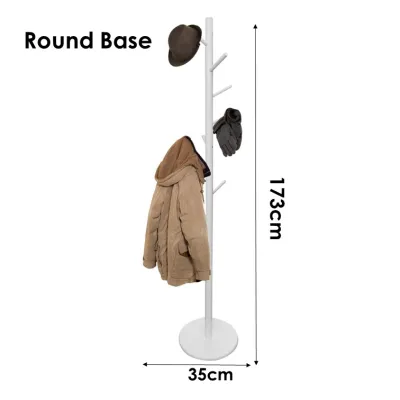
Minimalist slim-base hangers are designed specifically for the tightest spots, such as the narrow gap between your main door frame and the adjacent wall. These units typically feature either a compact tripod base or a single vertical pole anchored by a heavy, flat circular or square base. When selecting a flat-base model, check the manufacturer’s specifications to ensure the base is heavily weighted—often with concrete or solid iron inserts—to compensate for its small diameter.
To visualize how a slim-base hanger will fit in your space, you can use your HDB floor tiles as a practical reference guide. Standard HDB floor tiles are commonly 60cm by 60cm; a minimalist hanger with a 30cm base will occupy exactly one-quarter of a single tile’s surface area. While these ultra-compact designs are incredibly space-efficient, they are best reserved for lighter daily essentials such as cardigans, reusable shopping bags, sun hats, and lanyards, rather than heavy, bulky winter coats or packed laptop backpacks.
Multi-Functional Hangers with Shoe or Umbrella Storage
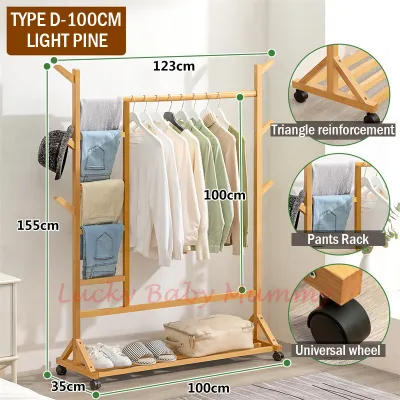
In a compact flat, multi-functional furniture is highly valuable because it consolidates multiple storage needs into a single footprint. Many modern tree hangers feature integrated lower shelves for shoes, wire baskets for keys and mail, or dedicated ring holders designed to hold umbrellas. Combining these functions into one unit saves you from having to purchase and arrange separate organizers, keeping your entryway looking clean and cohesive.
Given Singapore’s frequent afternoon monsoons, having a built-in umbrella stand at the base of your coat tree is exceptionally practical. However, because these multi-functional designs often have a slightly wider base or lower shelf assembly to accommodate shoes, you must measure the total footprint carefully. Ensure that the added width of the shoe shelves or umbrella rings does not encroach on your main walking path or interfere with the smooth operation of your front door.
Measuring Your Entryway and Avoiding Common Sizing Mistakes
To avoid the frustration of buying a piece of furniture that blocks your entryway, you should conduct a thorough physical measurement of your space before making a purchase. Start by measuring the exact width and depth of the floor area where you plan to place the coat tree. Next, open your HDB main door and your external metal gate completely to map out their full swing paths. You must ensure that the hanger sits entirely outside these operational zones, leaving a safety margin of at least 10 to 15 centimetres to prevent the door handles or the door itself from striking the hanger when opened.
One of the most common sizing mistakes is measuring only the static base of the hanger while ignoring the dynamic “hanging footprint.” When you hang bulky items like tote bags, jackets, or umbrellas, they will naturally drape outward and extend the effective diameter of the unit by an additional 15 to 30 centimetres. If your physical base is placed right up against a narrow corridor wall, the hanging clothes may end up brushing against people as they walk past, or worse, obstructing the clear pathway required for daily movement.
Additionally, consider the delivery and assembly conditions of the unit. While most space-saving coat trees are delivered flat-packed and require self-assembly, you should still verify that the packaged dimensions can easily fit through your doorway and lift access. If you are purchasing a fully assembled vintage or solid-wood model, double-check that its maximum height and base width can clear your HDB lift doors and any tight turns in your corridor.
Stability and Safety Tips for Freestanding Coat Trees
The tall, narrow structure of a freestanding coat tree makes it inherently susceptible to tipping if it is loaded incorrectly. Understanding the physics of a high center of gravity is crucial for keeping your household safe. When you place heavy items on the topmost hooks, you shift the entire unit’s center of gravity upward, making it highly unstable and prone to falling over at the slightest nudge.
To maintain optimal stability, always practice proper weight distribution by placing your heaviest items on the lowest hooks or shelves. Items such as heavy work bags, laptop cases, or wet umbrellas should be stored near the bottom of the unit to act as an anchor, keeping the center of gravity as low as possible. Save the higher hooks exclusively for lightweight, low-risk items such as hats, light scarves, or empty canvas bags.
To further secure your freestanding hanger, you can apply high-friction, non-slip rubber or felt pads to the underside of the base. These pads help prevent the unit from sliding on smooth HDB floor tiles or vinyl planks when you pull an item off a hook. However, keep in mind that adhesive pads are merely a supplementary measure; they do not replace the fundamental safety requirement of balanced weight distribution and adhering to the manufacturer’s maximum load limits.
Frequently Asked Questions (FAQ)
How many coats can a slim tree hanger safely hold?
The safe load capacity of a slim coat tree depends entirely on its base weight, structural material, and the manufacturer’s official specifications rather than the physical number of hooks. On average, a high-quality slim-base hanger can safely support between 5 to 10 kilograms of evenly distributed weight. Always check the product packaging or instruction manual for the exact maximum load limit, and avoid overloading a single side of the hanger to prevent tipping.
Are wall-mounted alternatives better than tree hangers for small HDBs?
Wall-mounted racks are excellent for saving floor space entirely, but they come with significant trade-offs. Installing a wall rack requires drilling into your HDB walls, which can be challenging due to tough concrete structural columns or the risk of hitting hidden electrical wiring and water pipes. A freestanding cloth tree hanger requires no drilling, offers immediate use, and can be easily relocated to different rooms or repositioned when you decide to redecorate your entryway.
Community discussion
Share your experience or ask a question. Comments are reviewed before publication.