
Selecting the ideal shoe organizer for a small Singapore apartment closet depends heavily on your wardrobe’s layout and the types of footwear you own. For most standard HDB and condominium built-in closets, stackable drop-front boxes and adjustable shelf inserts offer the best balance of space efficiency and protection. They maximize vertical clearance on fixed shelves while keeping dust and humidity at bay. For exceptionally shallow wardrobes or awkward corners, slim tension rod systems and over-the-door hanging organizers provide highly effective alternatives that reclaim underutilized vertical space.
Assessing Your Closet Space and Shoe Collection
Before purchasing any storage solution, precise physical measurements of your closet are essential. Singapore’s built-in wardrobes often feature structural variations, meaning a single measurement can lead to fit issues. Use a metal measuring tape to record the internal depth, shelf height, and floor width at three distinct points: the front, the middle, and the back. This accounts for minor wall warping, uneven baseboards, or protruding hinge mechanisms that could block a rigid organizer.
Next, conduct a thorough audit of your shoe collection. Group your footwear by category, such as flats, heels, sneakers, and boots. Measure the highest and widest pair in each category. For instance, high-top sneakers and platform heels require significantly more vertical clearance than low-profile flats or sandals. Knowing these exact dimensions prevents you from buying a uniform system that leaves some shoes crushed and others with wasted overhead space.
Products mentioned in this guide
![[SG STOCK] Bundle of 2 4 & 12- Shoe Storage Organizer Rack | Space Saving Stackable Shoe Stand | Cabinet Shoe Stacker](https://img.lazcdn.com/g/p/9447d58dd2d053ab9d863de31cb5d4ee.png_400x400q80.png_.webp)
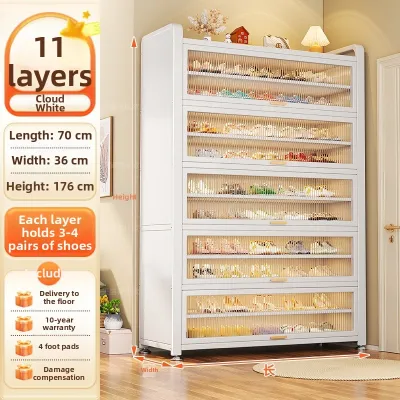
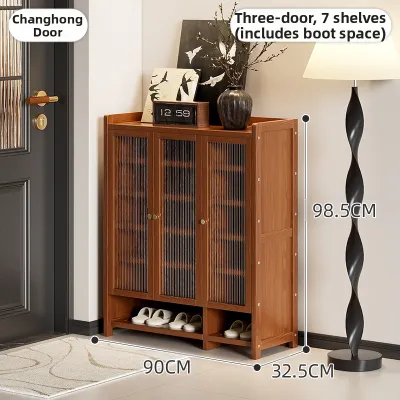
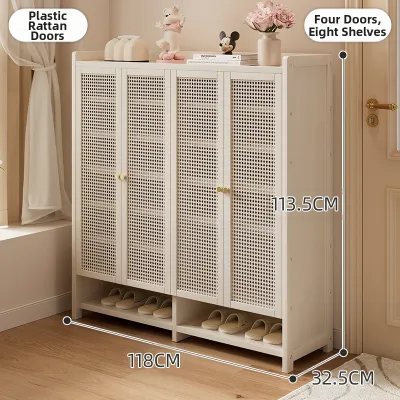
Prices are valid at publication and may change. Please refer to the product page for the latest price.
Finally, scout for “dead space” within your existing layout. In compact apartments, every square centimeter counts. Look closely at the area above the top shelf, the back of hinged closet doors, and the floor gap directly beneath hanging clothes. These zones are frequently overlooked but can easily accommodate specialized hanging pockets or low-profile stackable units without encroaching on your primary wardrobe space.
Top Shoe Organizer Types for Tight Closet Dimensions
Choosing the right organizer type requires matching your specific structural constraints with the physical demands of your footwear. Different designs solve distinct spatial challenges, from maximizing vertical shelves to utilizing bare doors.

Stackable Shelf Inserts and Drop-Front Boxes
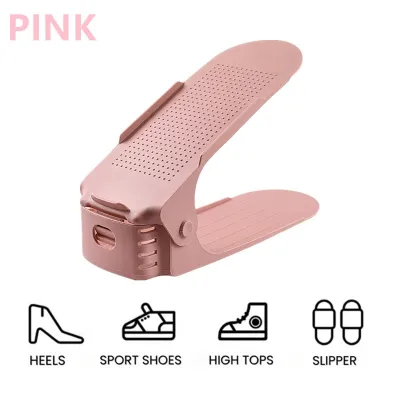
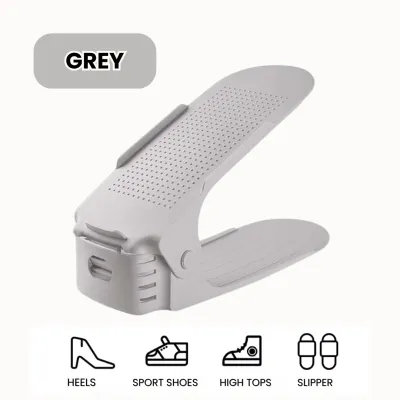
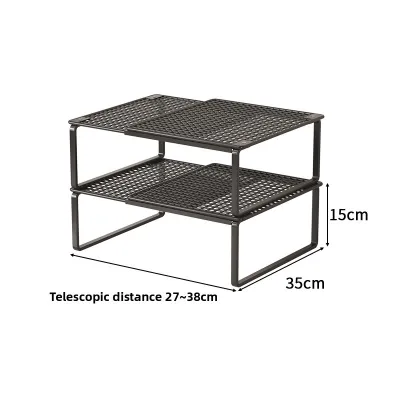
Stackable solutions are excellent for utilizing the high vertical gaps often found in fixed-shelf closet designs. Adjustable shelf risers function as mini-platforms, effectively doubling your shelf capacity by allowing you to store one layer of shoes directly beneath the riser and another on top. These are highly versatile and work best for open shelves where you need quick, daily access to your footwear.
In contrast, clear drop-front stackable boxes are ideal for deep shelves or closet floors. Because they feature a front-opening door, you can retrieve a pair of shoes from the bottom of a stack without unstacking the boxes above. When selecting drop-front boxes, check the weight capacity of both the boxes and your underlying closet shelves. Heavy leather shoes or thick-soled boots stacked five or six high can exert substantial downward force. Always look for boxes with interlocking grooves or non-slip feet to ensure the column remains stable and does not tip over when you open a lower compartment.
Over-the-Door and Hanging Organizers
Over-the-door and hanging organizers are outstanding options for reclaiming vertical dead space without sacrificing floor or shelf area. Before choosing an over-the-door model, measure the gap between the top of your closet door and the frame, as well as the side clearances. Most over-the-door brackets require a clearance of at least 2 to 3 millimeters to allow the door to close smoothly without scraping the frame or damaging the hinges.
Weight distribution is another critical safety factor. To prevent the door from warping over time or putting excessive strain on the hinges, place your heaviest shoes, such as sneakers or heavy wedges, in the lowest pockets or slots. Reserve the upper pockets for lightweight items.
Additionally, consider the material structure of the organizer. Soft fabric hanging pockets are highly space-efficient and perfect for flexible, lightweight footwear like flats, sandals, and canvas slip-ons. However, structured shoes, high heels, or heavy leather footwear require rigid, reinforced compartments or metal wire frames to prevent the organizer from sagging and crushing the shoes inside.
Slim Pull-Out Racks and Tension Rod Systems
For exceptionally shallow closets, narrow alcoves, or awkward corner spaces, custom-fit or modular solutions are highly effective. Tension rods offer a surprisingly simple way to store heeled shoes. By installing two tension rods at slightly staggered heights and depths, you can hang high heels by their heels along the rear rod while the soles rest on the front rod. This angled storage method saves significant shelf depth and utilizes narrow gaps that would otherwise go unused.
Alternatively, slim slide-out tracks can be mounted to shallow shelves to convert deep, hard-to-reach areas into accessible storage. When planning a pull-out rack, ensure you verify the minimum depth required for the slide-out mechanism to fully retract, as well as the clearance needed for the shoes themselves when the closet door is closed.
For any tension rod setup, ensure the rods are securely anchored against solid, structural walls rather than thin wardrobe backings. Check the manufacturer’s weight limits and periodically verify that the tension remains tight to prevent the rods from slipping under the cumulative weight of your footwear.
Critical Measurements and Clearance Rules
To ensure your shoe organizer functions seamlessly day-to-day, you must apply strict clearance rules to your measurements. First, calculate the door swing radius if your closet has hinged doors. A floor-standing shoe rack or stack of boxes must sit entirely outside this swing path; otherwise, you risk denting your doors or crushing the organizer every time you open the wardrobe.
For stackable boxes and shelf inserts, always factor in “finger clearance.” Having a box that fits perfectly into a shelf is useless if you cannot reach your fingers over or around it to open the latch or pull it out. A clearance margin of at least 3 to 5 centimeters above the top box or insert is generally recommended for comfortable hand access.
Sliding closet doors present a unique challenge. Unlike hinged doors, sliding doors always block one half of the closet. Any organizer placed near the center overlap zone or close to the sliding tracks must be shallow enough to clear the door’s glide path. If an organizer protrudes even slightly, the sliding door will strike it, potentially damaging the door tracks or scratching your shoes.
Finally, do not forget to account for the thickness of the organizer’s material. Heavy-duty plastic, wood, or metal frames can reduce the internal usable width of a shelf by several centimeters. In a tight closet, this minor reduction can mean the difference between fitting three pairs of shoes side-by-side or being forced to squeeze only two.
Common Sizing Mistakes to Avoid in Small Spaces
One of the most common mistakes when organizing a compact closet is purchasing a fixed-width, multi-shoe rack based on a visual estimate. Always verify the exact internal width of your closet floor or shelf before buying. A rack that is even half a centimeter too wide will not fit, leaving you with a useless item and a return process.
Another mistake is opting for open, multi-tiered floor racks in highly visible areas. While convenient, open racks filled with mismatched shoes can create intense visual clutter, making a small room feel even more cramped. For a cleaner, more cohesive look, opt for enclosed storage solutions or uniform, solid-colored boxes that hide the shoes from view.
Lastly, never assume all shoes have the same footprint. Many organizers are designed around standard flats or low-profile dress shoes. If you store bulky running shoes, high-top sneakers, or wide-soled boots, these larger profiles will often overhang shallow shelves or fail to fit inside standard-sized compartments. Always measure your largest, bulkiest pair of shoes and use those dimensions as your baseline when evaluating organizer depths and heights.
Frequently Asked Questions (FAQ)
How do I store tall boots in a small closet?
To store tall boots without sacrificing valuable horizontal floor space, use plastic boot shapers or tightly rolled magazines to keep the shafts upright. This prevents them from creasing and falling over onto adjacent shoes. Alternatively, you can attach specialized boot hangers to your main closet rod, allowing the boots to hang vertically in the underutilized space beneath shorter hanging garments like shirts or jackets.
Can I use acrylic shoe boxes on standard apartment closet shelves?
Yes, acrylic shoe boxes are excellent for visibility and dust protection, but you must measure your shelf depth carefully. Rigid acrylic boxes cannot bend or compress like fabric alternatives, and they often feature deeper, fixed dimensions. Additionally, ensure you leave enough vertical clearance above the top box so that the front panel can drop down fully without hitting the shelf above or blocking your access.
Community discussion
Share your experience or ask a question. Comments are reviewed before publication.