
Maximising floor space in a compact Housing & Development Board (HDB) flat requires strategic spatial planning, particularly when managing utility items like mops, brooms, and cleaning brushes. In Singapore’s smaller apartment layouts—such as two-room Flexi, three-room, and four-room build-to-order (BTO) flats—the service yard, kitchen, and bathrooms are often highly congested zones. A dedicated mop holder rack offers a practical solution by lifting wet cleaning tools off the floor, utilizing underused vertical wall space, and promoting rapid drying in our tropical climate.
Selecting the right storage system involves balancing installation constraints, material durability, and spatial limitations. By transitioning from loose floor storage to a secure, wall-mounted or freestanding rack, you can eliminate visual clutter, prevent bacterial growth, and maintain a highly organized household. This guide outlines the spatial challenges of HDB flats, evaluates essential features of high-quality mop racks, and explores the best storage configurations for your home.
Why Standard Mop Storage Fails in Compact HDB Layouts
Standard floor-based storage systems are fundamentally ill-suited for the tight architectural footprints of modern Singaporean apartments. In many newer HDB layouts, the service yard is incredibly narrow, often barely accommodating a washing machine, a condenser dryer, and a clothes drying rack. When mops are left propped against walls or resting inside bulky buckets, they encroach on precious walkway space, making daily chores frustrating and physically restrictive.
Products mentioned in this guide
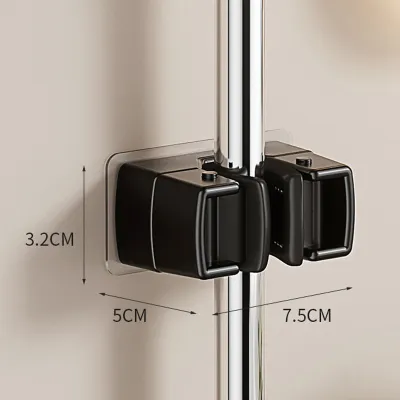
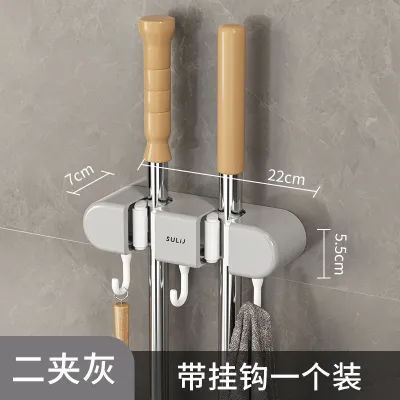
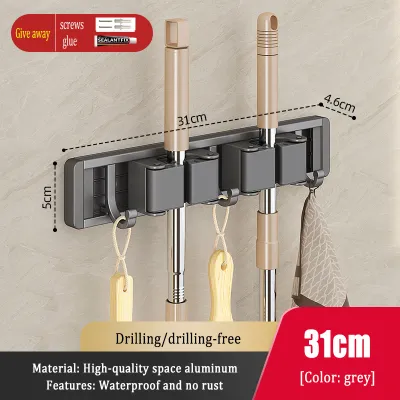
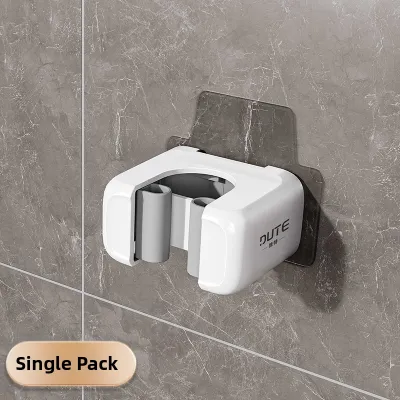
Prices are valid at publication and may change. Please refer to the product page for the latest price.
Singapore’s high relative humidity, which frequently averages above 80% year-round, compounds the issues of floor-based storage. When a wet, dense mop head is left resting on the floor or inside a stagnant bucket, air circulation is severely restricted. This prolonged moisture retention creates an ideal breeding ground for mold, mildew, and bacteria. Over time, this leads to sour, musty odors that can easily drift from the service yard or bathroom into your kitchen and living areas, compromising indoor air quality.
Furthermore, loose cleaning tools present persistent safety hazards in high-traffic household zones. Mop handles and brooms that are simply leaned against corners have a tendency to slip, falling across narrow walkways and creating immediate tripping hazards. This is particularly concerning in tight HDB corridors and bathrooms, where wet floors already increase the risk of accidental slips. Storing cleaning implements in a dedicated, elevated rack ensures they remain securely anchored and out of harm’s way.
Key Features to Evaluate in a Space-Saving Mop Rack
Installation Method and Wall Compatibility
When selecting a mop holder rack, the primary consideration is how it attaches to your wall. Homeowners and tenants must choose between drill-free options and traditional drilled installations, each presenting distinct trade-offs:

- Adhesive Mounts: These use heavy-duty acrylic or polyurethane tapes to bond directly to smooth surfaces. They are ideal for renters and homeowners who want to preserve their walls, but they require perfectly non-porous surfaces like glazed ceramic tiles or smooth glass to hold weight reliably.
- Suction and Tension Systems: These rely on vacuum pressure or mechanical tension, making them highly repositionable and completely damage-free. However, suction cups can lose grip over time due to humidity, while tension poles require stable floor-to-ceiling or wall-to-wall contact points.
- Drilled Screws and Wall Plugs: This method provides the most secure, permanent hold, capable of supporting multiple heavy tools. However, drilling into HDB concrete walls requires a hammer drill, and drilling into bathroom tiles risks cracking the ceramic or puncturing the underlying waterproofing membrane, which can void HDB’s structural warranties in newer flats.
Material Composition and Rust Resistance
Because mop racks are constantly exposed to wet cleaning pads, dripping water, and high bathroom humidity, material selection is critical to ensuring long-term durability. Low-grade iron or untreated steel racks will quickly oxidize, producing unsightly rust stains that can permanently discolor your HDB wall tiles or painted plaster.
To prevent corrosion, prioritize racks constructed from SUS 304 stainless steel, anodized space aluminum, or high-grade ABS plastic. Stainless steel and aluminum offer exceptional structural rigidity and are impervious to rust, making them ideal for wet service yards and bathrooms. High-quality ABS plastic is another excellent, cost-effective alternative that will not degrade or rust when exposed to moisture and household cleaning chemicals.
Weight Capacity and Grip Strength
A dry microfiber flat mop may only weigh a few hundred grams, but a fully saturated cotton string mop or a heavy spray mop can easily weigh between two and three kilograms. The mop holder rack must feature a robust gripping mechanism that can support this weight without letting the handle slowly slide down to the floor.
Look for racks equipped with spring-loaded clamps, silicone roller balls, or rubberized friction teeth. These mechanisms utilize the downward force of the mop’s weight to tighten their grip on the handle. Ensure the rack’s specified weight capacity matches or exceeds the combined weight of your heaviest cleaning tools when wet, and verify that the grip jaw opening is compatible with your specific mop handle diameters.
Water Drainage and Hygiene Design
An effective space-saving rack must do more than simply hold a mop; it must facilitate hygienic drying. Racks designed with integrated hooks that hang mops upside down allow water to drain naturally away from the handle and clamping mechanism.
To protect your floors and walls from dirty water runoff, look for racks that feature built-in, removable drip trays or open-wire frames that position the dripping mop head directly over a bathroom floor trap or service yard drainage outlet. This prevents stagnant water from pooling on your screed or vinyl flooring, keeping your utility zones clean, dry, and free from water damage.
Best Types of Mop Holder Racks for Small Apartments
Adhesive Wall-Mounted Grippers and Hooks
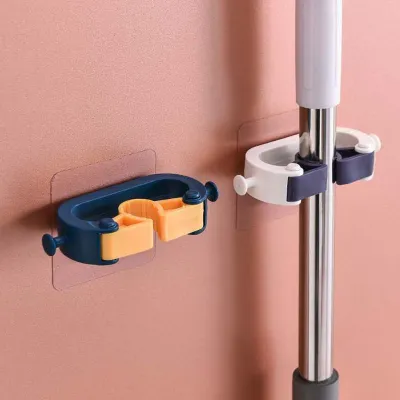
Adhesive wall-mounted grippers are among the most popular space-saving solutions for HDB flats due to their compact footprint and tool-free installation. These individual holders typically feature a self-adhesive backing plate paired with a silicone or rubber roller-ball mechanism that clamps onto a single mop or broom handle.
Pros:
- Extremely compact and can be placed individually in tight, irregular spaces.
- No drilling required, making them completely renter-friendly.
- Highly affordable and widely available in various minimalist designs.
Cons:
- Limited weight capacity, typically maxing out at two to three kilograms per holder.
- Adhesive backing can degrade and fail when exposed to constant steam, direct water spray, or extreme humidity.
- Unsuitable for textured surfaces, painted plaster walls, or wallpaper.
Ideal Locations and Pre-Purchase Checks: These individual grippers are perfect for utilizing the unused space behind bathroom doors, inside narrow utility cabinets, or along kitchen backsplashes. Before purchasing, measure the diameter of your mop handles; most standard adhesive grippers accommodate handles between 18mm and 30mm. Additionally, inspect your intended mounting surface to ensure it is completely flat, smooth, and non-porous.
Over-the-Door and Cabinet-Hung Organizers
Over-the-door and cabinet-hung organizers utilize mechanical hooks that drape over the top edge of standard doors or internal cabinet doors. These multi-tool racks often combine vertical handle clamps with lower hooks, allowing you to store mops, dustpans, and microfiber cloths in a single, consolidated location.
Pros:
- Requires absolutely zero tools, adhesives, or wall modifications.
- Can be easily relocated to different rooms or packed up during a move.
- Keeps cleaning tools hidden from view when hung on the inside of utility cabinet doors.
Cons:
- Requires specific clearance gaps between the top of the door and the door frame to close properly.
- Can cause scratching or wear on wooden door paint and laminate finishes over time.
- May rattle or swing when the door is opened or closed quickly.
Ideal Locations and Pre-Purchase Checks: These organizers are highly effective on the back of bathroom doors or on the interior doors of tall kitchen pantry cabinets. To ensure a proper fit, measure the thickness of your door (standard HDB doors are typically 35mm to 40mm thick) and verify that there is at least a 1.5mm gap at the top to allow the door to latch smoothly. Look for models that include foam padding on the back of the brackets to prevent scratches and dampen noise.
Slim Corner and Freestanding Vertical Racks
For homeowners who prefer not to mount anything to their walls or doors, slim freestanding vertical racks offer an excellent alternative. These units include floor-to-ceiling tension pole systems that wedge securely between the floor and ceiling, as well as ultra-narrow rolling utility carts equipped with integrated mop clips and storage shelves.
Pros:
- Highly stable and capable of holding multiple heavy mops, buckets, and cleaning detergents.
- No wall contact required, eliminating the risk of adhesive damage or tile cracking.
- Tension poles utilize vertical space from floor to ceiling, leaving a negligible physical footprint.
Cons:
- Occupies a small portion of actual floor space, unlike wall-mounted options.
- Rolling carts can be difficult to maneuver in highly congested service yards.
- Requires regular cleaning of the base or bottom tray to prevent water stains and dust accumulation.
Ideal Locations and Pre-Purchase Checks: These freestanding systems are ideally placed in the narrow gap between a washing machine and the service yard wall, or tucked into an unused corner of a bathroom shower zone. Before choosing a tension pole rack, measure your exact floor-to-ceiling height (standard HDB ceiling heights typically range from 2.6 to 2.8 meters) and ensure the ceiling structure at the mounting point is solid concrete rather than a hollow false ceiling.
Safe Installation and Care for HDB Walls and Tiles
Surface Preparation for Adhesive Mounts
To ensure a long-lasting, reliable bond with adhesive-mounted mop holders, meticulous surface preparation is essential. Any trace of dust, grease, moisture, or soap scum on your tiles will severely compromise the adhesive’s chemical bond, leading to premature failure and fallen racks. Follow these steps for a secure installation:
- Clean: Thoroughly scrub the mounting area with isopropyl alcohol or a grease-cutting agent. Avoid using standard household glass cleaners, as they often leave behind a thin, slick residue.
- Dry: Allow the surface to air dry completely, or use a clean microfiber cloth to remove all traces of moisture.
- Apply: Peel the protective backing from the adhesive pad, position the holder carefully, and press firmly against the wall for at least 30 seconds, working from the center outward to expel any trapped air bubbles.
- Cure: Allow the adhesive to cure undisturbed for 24 to 48 hours before hanging any weight on the rack. This waiting period is critical for the adhesive to achieve its maximum bonding strength.
Drilling Precautions in HDB Flats
If you decide to install a heavy-duty, screw-mounted mop rack, you must proceed with caution to avoid damaging your home’s infrastructure. Before drilling into any wall, review your HDB renovation guidelines and tenancy agreement. Drilling is generally permitted on concrete structural walls and brick walls, but you must use a masonry drill bit and high-quality wall plugs that match the screw size.
Never drill directly into bathroom tiles within wet zones, such as the shower enclosure, as this can puncture the waterproofing membrane applied behind the tiles. Puncture damage can lead to water seepage into adjacent rooms or down to the unit below, resulting in costly repairs and structural disputes. If you must drill into tiled dry areas, use a specialized glass-and-tile drill bit at a low speed without the hammer function to prevent cracking the tile, and always consult a professional handyman if you are unsure of the pipe layouts behind the wall.
Routine Maintenance and Hygiene
To keep your mop holder rack functioning safely and hygienically, establish a simple routine maintenance schedule. Periodically inspect adhesive mounts for any signs of lifting, peeling, or cracking around the edges. If an adhesive pad begins to show signs of degradation due to humidity, replace it immediately with a fresh, heavy-duty mounting tape to prevent your tools from falling unexpectedly.
Regularly wipe down the rack’s gripping rollers and hooks with a mild disinfectant to remove accumulated dust, lint, and soap residue, which can make the gripping surfaces slick. If your rack features a drip tray, empty and wash it weekly to prevent stagnant water from attracting pests or becoming a breeding ground for mosquitoes, keeping your home aligned with local National Environment Agency (NEA) guidelines for dengue prevention.
Frequently Asked Questions (FAQ)
Can I use adhesive mop holders on HDB bathroom tiles?
Yes, adhesive mop holders can be highly effective on HDB bathroom tiles, provided the tiles are smooth, non-porous, and glazed. Standard homogeneous or ceramic tiles found in most HDB bathrooms offer an excellent bonding surface. However, you should avoid applying adhesives over textured tiles, matte finishes, mosaic tiles, or directly across grout lines, as these surfaces allow air to seep under the adhesive pad, causing it to fail.
When it comes time to move out or reposition the holder, you can remove the adhesive safely without damaging the tiles. Use a household hairdryer to apply direct heat to the adhesive backing for one to two minutes, which softens the acrylic glue. Gently pry the holder away from the tile using a plastic putty knife or dental floss, and wipe away any remaining sticky residue using a commercial adhesive remover or isopropyl alcohol.
How do I prevent my wall-mounted mop rack from falling?
Preventing a wall-mounted mop rack from falling requires strict adherence to weight limits and proper load distribution. Never exceed the manufacturer’s specified maximum weight capacity, and try to distribute your tools evenly across the rack rather than clustering heavy items on one side. Additionally, always wring out your mops thoroughly before hanging them; a dry mop is significantly lighter and puts far less stress on the mounting system than one saturated with water.
Environmental factors also play a major role in adhesive longevity. In high-humidity environments like Singapore, ensure your bathroom or service yard is well-ventilated to prevent steam from constantly dampening the adhesive backing. Regularly inspect the grip rollers to ensure they are clean and dry; slippery handles or greasy rollers can cause the mop to slide out, creating a sudden downward pull that can rip the entire rack off the wall.
What is the best way to store a wet mop in a small apartment without a service yard?
If your HDB flat lacks a dedicated service yard, storing a wet mop hygienically requires careful planning to manage moisture and prevent odors. First, invest in a high-efficiency wringer bucket or a self-wringing flat mop system to extract as much excess water as possible before storage. Never hang a dripping wet mop directly over dry flooring or inside a closed utility cabinet, as the trapped moisture will inevitably lead to mold growth and wood rot.
Mount your mop holder rack directly over an active floor trap in your bathroom, or use a rack equipped with a deep, removable drip tray to catch any residual runoff. To accelerate the drying process and eliminate damp odors, ensure adequate cross-ventilation in the room. Keep your bathroom window cracked open, run your mechanical ventilation exhaust fan for at least 30 minutes after cleaning, or position the rack near a well-ventilated kitchen window where natural airflow can dry the mop head quickly.
Community discussion
Share your experience or ask a question. Comments are reviewed before publication.