
A compact coat hanger stand is an exceptional space-saving solution for small HDB and condo entryways, provided you choose a design with a small footprint (typically under 35 cm in diameter) and a heavily weighted base. In tight Singaporean foyers, where every square centimeter counts, the ideal stand maximizes vertical space without obstructing the main door’s swing or daily foot traffic. By choosing a slim vertical tree-style rack or a multi-functional unit with integrated shoe or umbrella storage, you can keep your entryway organized, neat, and visually open.
Assessing Your Entryway Space and Stand Dimensions
In a compact HDB flat or condominium apartment, the entryway is often a high-traffic transition zone rather than a spacious foyer. Before purchasing any coat hanger stand, measuring your available floor footprint is the most critical step to prevent a cramped, cluttered doorway. Use a measuring tape to map out the exact width and depth of the corner or wall space where you intend to place the stand. A standard small entryway typically accommodates a base diameter of 30 cm to 40 cm; anything larger risks encroaching on the primary walking path.
Beyond the physical footprint of the stand itself, you must account for the door swing clearance. In many Singaporean homes, the main door opens inward, sometimes accompanied by a metal gate that swings outward or a shoe cabinet door that opens wide. Physically open your main door to its maximum angle and measure the remaining clearance behind or beside it. Your coat hanger stand, when fully loaded with bags and jackets, must sit entirely outside this arc to avoid annoying collisions, scuffed paint, or restricted entry.
Products mentioned in this guide

![[SG Stock] Japanesque 100% Solid Beech Wood Wooden Clothes Hanger Rack Clothes Hanger Hook Bedroom Coat Stand Rack](https://img.lazcdn.com/g/p/b731f0728b47eeb05fe55ea7d72334cc.jpg_400x400q80.jpg_.webp)
![[✅SG Ready Stock] 100% solid wood Wooden Clothes Hanger Rack Nordic Style Clothes Hanger Hook Bedroom Coat Stand Rack](https://img.lazcdn.com/g/p/f4e39069115cbc3402d9b2bbb638ae5a.png_400x400q80.png_.webp)
![[SG Stock]Solid wood floor to ceiling coat rack Solid wood floor hanger Bedroom floor rack Coat hanger hook Hat rack](https://img.lazcdn.com/g/p/2153f4a84adbd9d43bff5947ae875c2f.jpg_400x400q80.jpg_.webp)
Prices are valid at publication and may change. Please refer to the product page for the latest price.
Another key spatial consideration is the “drop zone” flow. This is the area where household members and guests naturally pause to remove their shoes, set down keys, and hang up bags. The coat stand should complement this sequence of actions rather than disrupt it. Ensure that when someone is standing in front of the rack to hang an item, there is still comfortable clearance for another person to walk past into the living room. If your entryway is adjacent to a narrow corridor or a household shelter door, a slim profile is even more vital to prevent a bottleneck.
Finally, do not overlook the logistics of getting the furniture piece into your home. While many compact coat stands are delivered flat-packed and assembled on-site, some premium or fully welded metal designs arrive fully assembled. Measure the height and width of your apartment’s elevator doors, the communal corridor, and your front doorway. Ensuring the packaged or assembled unit can easily navigate these tight common areas will save you from delivery-day headaches and potential return shipping fees.
Compact Coat Hanger Stand Designs for Small Spaces
Selecting the right configuration for your entryway depends on how you balance your storage needs with the physical limitations of your floor plan. Different designs offer distinct spatial advantages, and understanding these variations helps you choose a piece that integrates seamlessly into your home.

Slim Vertical and Tree-Style Stands
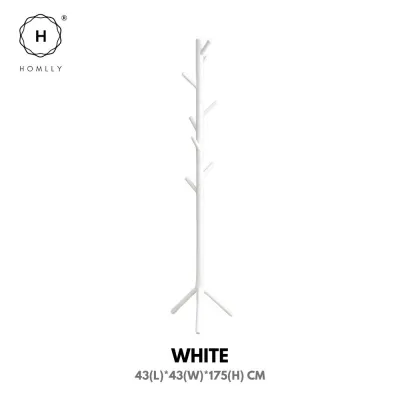
For exceptionally narrow foyers or tight corners, slim vertical and tree-style stands are highly efficient. These designs feature a single central pole with multiple hooks branching out at various heights, utilizing vertical wall-adjacent space rather than spreading horizontally. Because their base footprint is typically restricted to a small circle or square, they tuck neatly into unused corners, such as the small nook between a wall column and the front door.
However, a narrow profile requires careful attention to physical stability. Because a tree-style stand has a small base relative to its height, it relies heavily on a low center of gravity to remain upright. When shopping, look for models that feature a heavy marble, cast iron, or solid steel base. A lightweight plastic or hollow metal base is highly prone to tipping over when a heavy backpack or wet trench coat is hung on one of the top branches. If you choose a wooden tree stand, ensure the legs flare outward slightly to distribute the weight safely, or verify that the base is sufficiently weighted.
These vertical designs are particularly suited for standard HDB corridors where wall space is at a premium. By keeping the floor area clear, they maintain an airy, open feel in the entryway. They are ideal for households that primarily need a place to hang daily-use items like light cardigans, umbrellas, and small handbags, keeping these essentials within arm’s reach without occupying valuable floor real estate.
Multi-Functional Stands with Shoe or Umbrella Holders
If your entryway lacks a dedicated shoe cabinet or an umbrella holder, a multi-functional coat hanger stand can consolidate these functions into a single, highly efficient unit. These designs typically feature a slim vertical frame with coat hooks at the top, integrated with bottom-tier shelves for shoes, a small bench for sitting, or a dedicated ring and drip tray for umbrellas. By combining multiple entryway storage needs into one piece of furniture, you eliminate the need for separate, mismatched organizers that clutter the floor.
When evaluating a multi-functional stand, understanding weight distribution is crucial for safety and usability. Because these units often hold heavier items like shoes on the bottom shelves, they naturally have a lower center of gravity than simple tree-style stands. However, if the upper hooks are heavily loaded while the bottom shelves remain empty, the unit can become top-heavy. Look for designs where the heaviest components—such as a solid wood bench or a steel shoe rack—are located at the base to anchor the entire structure.
Before making a purchase, always check the manufacturer’s specified load limits for both the upper hooks and the lower shelves. A high-quality multi-functional stand will clearly list the maximum weight capacity for individual hooks (often around 2 to 5 kg each) and the overall weight limit for the entire unit. Adhering to these specifications prevents the frame from bending or warping over time and ensures that the stand remains a safe, reliable addition to your busy household entryway.
Design Features That Maximize Storage Without Clutter
To keep a small entryway looking organized and spacious, the aesthetic and structural details of your coat hanger stand play a significant role. The right design features can make a substantial difference in how much storage the stand provides and how visually heavy it feels in a compact room.
Hook placement and angles are critical factors in preventing visual clutter. Stands with hooks arranged in a straight vertical line often cause hung items to pile on top of each other, creating a bulky, messy silhouette that protrudes into the walking path. Instead, look for stands with staggered or spiraled hook placements. This arrangement allows coats and bags to hang at different levels and positions, reducing bulk. Additionally, downward-angled or curved hooks secure items more reliably, preventing slippery fabrics from sliding off onto the floor.
The visual weight of the materials used also affects how spacious your entryway feels. Solid, thick wooden coat racks with chunky posts can feel visually oppressive in a small foyer, making the space seem smaller than it is. In contrast, open wireframes, slim powder-coated steel poles, or minimalist metal designs maintain an airy, transparent feel. These slim-profile materials allow light to pass through and keep the sightlines open, which is essential for making narrow HDB or condo entryways feel welcoming and uncluttered.
The design of the base is another area where small details yield big benefits. Flat, low-profile bases—such as flat steel discs or slim rectangular plates—sit flush against the floor, allowing you to tuck shoes directly over or around them without creating an obstacle. Bulky, raised tripod legs or thick decorative bases consume usable floor area and can easily become tripping hazards in tight spaces. Choosing a flat-base design ensures that the floor space remains as functional and safe as possible.
Finally, material durability is an essential consideration in Singapore’s tropical climate. High humidity levels can quickly cause rust on low-quality, untreated metal frames or mold on unsealed wooden stands. When browsing product descriptions, check for rust-resistant finishes, such as powder-coated steel or chrome plating, which withstand moisture effectively. If you prefer wood, look for sealed hardwoods or bamboo treated with water-resistant varnishes, especially if the stand will be placed near the main door where rain might occasionally blow in or where damp umbrellas will be hung.
Common Sizing and Placement Mistakes to Avoid
Even the most stylish coat hanger stand can become a source of frustration if it is placed incorrectly or if key environmental factors are ignored. Avoiding common pitfalls ensures your entryway remains safe, functional, and clean.
One frequent mistake is ignoring the “wet zone” near the entrance. Singapore’s frequent rain showers mean that wet umbrellas and damp outer layers are common. If you place a coat stand without a waterproof base or a dedicated drip tray directly onto laminate, engineered wood, or vinyl flooring, water can pool underneath and cause warping, swelling, or mold growth. Always ensure that any stand used for wet gear has a built-in drip tray or is placed on a small, water-resistant mat to protect your apartment’s flooring.
Another hazard is blocking the main door’s full opening arc. It is easy to underestimate how much space a fully loaded coat rack occupies. While the empty stand might sit safely behind the door, a thick jacket or a protruding handbag can catch on the door handle or frame as you enter. This not only restricts access but can also knock the stand over or scratch the door’s finish. Always test the door clearance with the stand fully loaded to guarantee smooth, unobstructed entry and exit.
Overloading top-heavy racks is a significant safety concern, particularly in households with young children or active pets. Hanging heavy laptop bags or multiple items on the highest hooks of a lightweight stand shifts the center of gravity upward, making it incredibly easy to tip over with a slight bump. To prevent accidents, verify the base weight of any stand you buy, utilize lower hooks for heavier items, and consider securing the stand with anti-tip wall straps if the manufacturer provides them.
Finally, choosing a stand that is too deep can severely restrict movement in narrow entryways. Standard-depth coat racks designed for larger suburban homes often extend 50 cm or more from the wall. In a narrow HDB corridor, this forces residents and guests to walk sideways to get past. For tight spaces, prioritize ultra-slim designs with a depth of 30 cm or less, or opt for semi-circular or flat-backed stands that sit flush against the wall to preserve every possible centimeter of walkway width.
Maintaining a Clutter-Free Entryway
A coat hanger stand is an excellent tool for organization, but without consistent habits, it can easily turn into a chaotic pile of clothing and accessories. Implementing simple, low-risk maintenance routines will keep your entryway looking pristine and functional.
One of the most effective strategies is the “one in, one out” rule for daily wear items. It is easy to let jackets, cardigans, hats, and bags accumulate on the hooks over the course of a week. To prevent this, make it a habit to return items that are not in active, daily use to your main wardrobe or closet. Limit the coat stand to one or two active items per family member. This simple practice ensures the stand never becomes overloaded, maintaining both its visual appeal and its physical stability.
Regular cleaning is also essential for keeping the entryway fresh and hygienic. Because the stand is located right at the entrance of your home, it naturally collects outdoor dust, pollen, and moisture. Once a week, take a damp microfiber cloth to wipe down the central pole, hooks, and base. If your stand has lower shelves for shoes or a built-in umbrella holder, pay extra attention to these areas to remove any accumulated dirt, sand, or dried water spots. Always follow the manufacturer’s care instructions regarding suitable cleaning agents to avoid damaging the finish.
Lastly, periodically check the structural integrity of your stand. Over time, the repeated action of hanging and removing items can cause the joints, screws, or bolts to loosen slightly, leading to a wobbly or unstable rack. Every few months, take a moment to inspect the connections. If you notice any play or wobbling, use the appropriate tools—such as an Allen key or screwdriver—to tighten the hardware according to the original assembly instructions. Maintaining tight, secure joints ensures your coat hanger stand remains safe and reliable for years to come.
Frequently Asked Questions (FAQ)
Are wall-mounted racks better than freestanding stands for HDBs?
Wall-mounted racks are highly space-efficient because they consume zero floor real estate, making them excellent for extremely narrow HDB entryways. However, they lack the flexibility of freestanding stands, which can be easily moved during cleaning or redecorating. Before installing a wall-mounted rack, it is crucial to check HDB or condo management guidelines regarding drilling. Drilling into structural concrete walls or household shelter walls is often restricted or requires specific tools, while drilling into drywall requires finding studs or using heavy-duty anchors to prevent the rack from pulling out under weight. Freestanding stands offer a damage-free, versatile alternative that requires no drilling.
How can I prevent a tall, slim coat stand from tipping over?
To prevent a tall, slim coat stand from tipping, always distribute weight evenly around the hooks rather than hanging everything on one side. Place heavier items, such as backpacks or heavy bags, on the lower hooks or tiers to keep the center of gravity as low as possible. When purchasing, check the product specifications to ensure the stand features a heavily weighted base, such as solid marble or iron. Finally, avoid placing the stand in high-traffic pathways where it could be easily bumped by residents, children, or pets, and ensure it sits on a completely flat, level floor surface.
Community discussion
Share your experience or ask a question. Comments are reviewed before publication.