
Finding the right furniture for a compact Singapore apartment requires balancing daily comfort, aesthetic appeal, and storage efficiency. With the average size of newer Housing & Development Board (HDB) flats and condominium units becoming more streamlined, maximizing every square meter is a necessity. A sofa storage bed offers a practical, dual-purpose solution by serving as a comfortable seating area by day, a supportive sleeping surface by night, and an integrated storage unit for household essentials. To select the best option for your home, you must evaluate how different configurations align with your specific room dimensions, access points, and storage needs.
Key Selection Criteria for Compact Singapore Layouts
When integrating a multi-functional piece of furniture into a tight floor plan, spatial calculations must extend beyond a simple static footprint. You must measure the exact dimensions of the sofa in its closed position, but more importantly, map out its dynamic clearance when fully deployed as a bed. In many HDB bedrooms or living rooms, a sofa bed that fits comfortably against a wall might block walkways, wardrobe doors, or vanity drawers once unfolded. Ensure there is at least 50 to 60 centimeters of walking clearance around the perimeter of the fully extended bed to maintain comfortable movement throughout the room.
The intended frequency of use is another critical factor that dictates the level of structural support and mattress quality you require. If the sofa bed is meant for daily sleeping—such as in a studio apartment or a shared bedroom—prioritize models with high-density foam, pocket springs, or a robust wooden slat support system. Occasional guest use, on the other hand, allows for lighter, more flexible mattress types, such as polyurethane foam or tri-fold designs, which prioritize easy folding over heavy-duty skeletal support.
Products mentioned in this guide
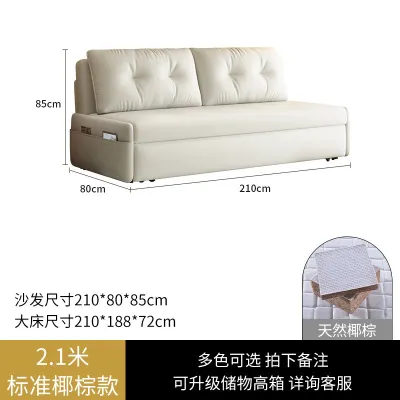
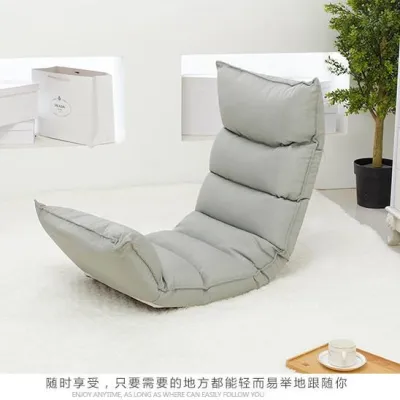
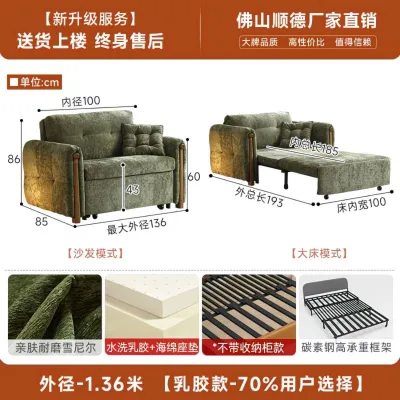
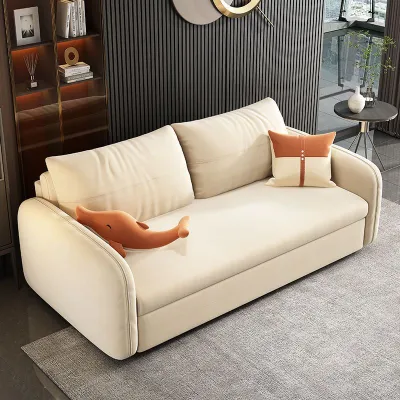
Prices are valid at publication and may change. Please refer to the product page for the latest price.
Storage accessibility is the third pillar of selection, and it directly affects your daily routine. Side-pull drawers offer highly convenient access to items without disrupting the seating setup, but they require substantial clear floor space directly in front of or beside the sofa. Conversely, lift-up hydraulic mechanisms utilize the entire base of the sofa for deep, high-capacity storage, making them excellent for bulky items. However, accessing this compartment requires you to clear the seating area and lift the frame, which can be physically demanding if not supported by high-quality gas struts.
Top Sofa Storage Bed Configurations for Small Spaces
Pull-Out Sofa Beds with Built-In Drawers
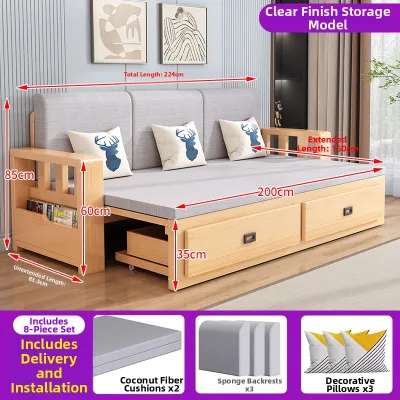
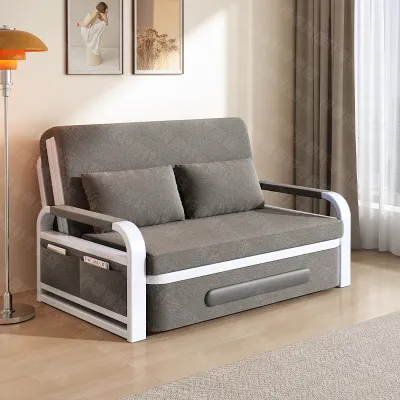
Pull-Out sofa beds featuring integrated base or side drawers are highly effective for multi-purpose rooms, such as a home study that doubles as a guest bedroom. This configuration typically utilizes a trundle-style mechanism where the bed frame rolls out from beneath the main seat cushions, while separate drawers are built into the armrests or the lower front panel. This design keeps your sleeping linens, pillows, and blankets completely isolated from the main seating surface, preserving hygiene and reducing wear on the bedding.

The primary advantage of this setup is the ease of organizing smaller, frequently used items. Because the drawers operate independently of the bed conversion mechanism, you can retrieve items like study materials, electronics, or extra cushions without having to transform the sofa into a bed.
However, the physical limitations of this configuration are significant in tight layouts. You must account for the dual clearance requirement: the bed frame requires considerable forward space to roll out fully, and the drawers require additional clearance to slide open. If your room features a coffee table, a study desk, or a television console opposite the sofa, you may find yourself constantly moving furniture to access your stored items or prepare the bed for guests.
Lift-Up Seat Storage Sofas
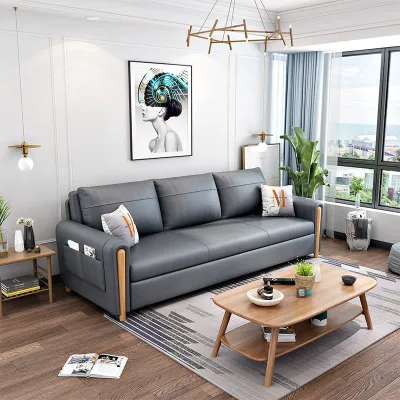
Lift-up seat storage sofas, often incorporating gas-assisted hydraulic hinges, are designed to maximize storage volume without consuming extra floor space during access. By pulling a fabric strap or activating a lever, the entire seating platform lifts upward, revealing a deep, open compartment that spans the entire footprint of the sofa base. This makes it the premier solution for storing bulky, seasonal, or infrequently used items, such as winter travel wear, extra duvets, luggage, or holiday decorations.
From a spatial perspective, the lift-up mechanism is incredibly efficient. Because the opening action is vertical rather than horizontal, you do not need to clear any front or side floor space to access the storage compartment. This makes it highly suitable for narrow living rooms or tight bedroom alcoves where the sofa sits directly opposite a wall, wardrobe, or media unit.
The trade-off lies in the physical effort and preparation required for daily operation. To lift the seat, you must first remove any loose cushions, throw pillows, or blankets resting on the sofa. While high-quality hydraulic struts significantly reduce the lifting force required, repeatedly clearing and lifting the seat can become tedious if you need to access the stored items on a daily basis.
Futon-Style Click-Clack Beds with Under-Storage
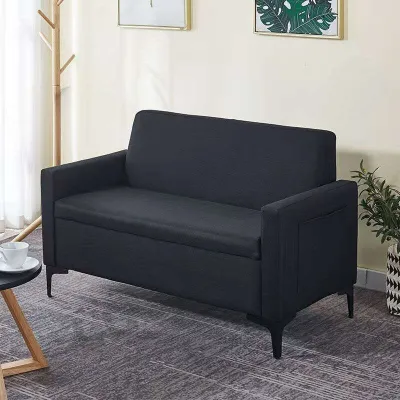
For studio apartments, micro-condos, or highly compact study corners where visual clutter must be kept to a minimum, futon-style click-clack beds with shallow under-bed storage are an excellent low-profile option. These sofas operate on a simple hinge system where the backrest folds down flat to align with the seat cushion, instantly creating a sleeping platform. The storage component typically consists of shallow, built-in drawers or a low-clearance compartment located directly beneath the main frame.
The greatest benefit of the click-clack design is its rapid and effortless conversion. Without a heavy internal metal frame to pull out or complex tracks to align, you can transition the piece from a sofa to a bed in a single, smooth motion. The low visual profile of the futon also helps maintain an open, airy feel in rooms with lower ceilings or limited natural light.
Nonetheless, the compact nature of this design introduces clear limitations. Because the frame is low to the ground, the under-bed storage is necessarily shallow, restricting your storage options to flat items such as bedsheets, pillowcases, ironed garments, or thin storage vacuum bags. Furthermore, the dual-purpose cushions serve as both the seating and sleeping surface, meaning they are often firmer and thinner than dedicated mattresses, which may not provide sufficient ergonomic support for long-term daily sleep.
Configuration Comparison at a Glance
To help you determine which configuration best matches your home’s layout and your lifestyle, the table below compares the key operational and spatial characteristics of each type.
| Configuration Type | Best Room Type | Storage Capacity | Required Front Clearance | Ease of Daily Conversion |
|---|---|---|---|---|
| Pull-Out with Drawers | Study / Guest Room | Moderate | High (Full bed length + drawer extension) | Moderate (Requires rolling out and unfolding) |
| Lift-Up Seat | Narrow Living Room / Master Bedroom | High (Deep, full-footprint compartment) | Low (Vertical opening action) | Moderate to High Effort (Requires clearing cushions) |
| Futon with Under-Storage | Studio Apartment / Micro-Condo | Low (Shallow drawers for flat items) | Low to Moderate (Backrest reclining clearance) | High (Simple, quick hinge transition) |
When reviewing these options, consider how the physical constraints of your room interact with the data. For instance, a lift-up seat model is highly advantageous if your floor space is heavily restricted, whereas a pull-out model with drawers is more practical if you require frequent, organized access to smaller items.
Essential Pre-Purchase Checks for HDB and Condo Deliveries
Before finalizing your purchase of a sofa storage bed, you must conduct a series of rigorous physical and logistical checks. Because these multi-functional pieces combine heavy wooden or steel frames, mattress mechanisms, and storage compartments, they are significantly heavier and less flexible than standard sofas. This makes the delivery process a critical phase that requires careful planning to avoid costly returns or damage to your property.
First, map out the exact delivery path from the unloading bay to your apartment’s designated room. Measure the width and height of all entry points, including the building’s main entrance, elevator doors, elevator cabin interior dimensions (height, width, and diagonal depth), corridor corners, and your apartment’s front door. Older HDB estates may have narrower elevator doors or tight staircase landings that cannot accommodate long, unbendable sofa frames. Ensure the packaged dimensions of the sofa—which you should request directly from the retailer—allow for at least a 5 to 10-centimeter clearance margin on all sides during transport.
Second, evaluate the structural load considerations of your flooring. A fully loaded storage sofa bed, containing heavy bedding, books, or luggage, can exert substantial point pressure on your floor tiles, vinyl, or parquet. Ensure the sofa’s legs or base runners are equipped with wide, non-marking protective pads to distribute the weight evenly and prevent deep scratches or indentations over time.
Third, inspect the specific wall where the sofa will be positioned. Note the location of wall skirting boards, power sockets, light switches, and air-conditioning trunking. Skirting boards can prevent a sofa from sitting completely flush against the wall, which can interfere with the reclining mechanism of a click-clack futon or the opening arc of a lift-up seat. Similarly, ensure the sofa does not block access to essential electrical outlets or force power cords to bend at sharp, damaging angles behind the heavy frame.
Practical Maintenance for Moving Parts and Fabrics
Maintaining a sofa storage bed involves caring for both the upholstery fabric and the mechanical components that enable its multi-functional use. For pull-out models, the metal tracks, rollers, and hinges must be kept completely free of dust, lint, and household debris. Vacuum the tracks regularly using a narrow crevice tool to prevent friction buildup, which can cause the mechanism to jam, squeak, or wear out prematurely.
The internal storage compartments also require routine cleaning. Because these spaces are enclosed and positioned close to the floor, they can accumulate fine dust and trap moisture, particularly in Singapore’s humid tropical climate. Vacuum the interior of the storage compartments monthly, and consider using moisture-absorbing sachets or silica gel packs to protect stored linens and garments from musty odors and mildew.
When cleaning the upholstery and mechanical parts, always refer to the manufacturer’s care label. If your sofa features removable covers, follow the washing instructions precisely to prevent shrinkage, which can make reassembly extremely difficult. For non-removable fabrics, use a gentle fabric vacuum attachment and spot-clean spills immediately with a damp microfiber cloth. Avoid applying harsh chemical cleaners, solvents, or lubricants to the metal hinges and hydraulic struts unless specifically recommended by the manufacturer, as these substances can degrade the seals and compromise the safety of the lifting mechanism.
Frequently Asked Questions (FAQ)
Can a sofa storage bed be used as a daily bed?
Yes, certain sofa storage beds can be used as daily sleeping surfaces, but this depends heavily on the quality of their internal support system. Models designed for daily use typically feature a dedicated pocket-spring mattress or high-density memory foam resting on a sturdy wooden slat base, which provides proper spinal alignment and breathability. Standard models with thin foam pads or wire mesh supports are best reserved for occasional guest use, as daily sleeping on these surfaces can lead to premature sagging of the cushions and physical discomfort. Always verify the mattress specifications and frame construction with the manufacturer if you plan to use the sofa bed every night.
How much weight can a typical storage sofa bed hold?
The weight capacity of a storage sofa bed varies widely based on its frame materials, joint construction, and the specific mechanism used. Generally, a high-quality double-sized sofa bed can support a static weight capacity of 150 to 250 kilograms in sleeping mode, while the seating mode typically supports 100 to 120 kilograms per seat. Additionally, the internal storage compartments have their own weight limits—often between 20 and 50 kilograms—to prevent overloading the base panel or straining the hydraulic lift struts. Always check the manufacturer’s official specifications for weight limits, and avoid overloading the storage area, as excessive weight can warp the frame and damage the moving parts.
Community discussion
Share your experience or ask a question. Comments are reviewed before publication.