
Finding the right slim shoe cabinet brand in Singapore requires balancing tight entryway dimensions with practical storage capacity. In compact HDB flats and condominiums, the space behind the main door or along the corridor is often highly restricted, sometimes measuring less than 20 centimeters in depth. Standard shoe racks frequently protrude into walking paths, creating safety hazards and violating estate guidelines. A dedicated slim shoe cabinet, typically featuring a tilt-out drawer mechanism, allows footwear to be stored vertically, drastically reducing the footprint of the unit. To secure a reliable storage solution, you must look beyond aesthetic appeal and evaluate how different brands handle structural stability, moisture resistance, and installation safety. Navigating these choices involves understanding your specific entryway layout, verifying material specifications, and ensuring the unit can be securely anchored to your walls to prevent tipping accidents.
Key Criteria for Evaluating Slim Shoe Cabinet Brands
When evaluating brands that specialize in slim shoe cabinets, the primary consideration must be dimensional accuracy. A true space-saving cabinet is defined by its depth rather than its height or width. High-quality slim brands design units with a depth of 15 to 24 centimeters, utilizing clever pivoting compartments that store shoes at an angle. You should carefully examine the manufacturer’s technical drawings to ensure the external depth matches your available space, taking into account any protruding baseboards or wall switches.
Material durability and surface treatments are equally critical, especially in Singapore’s tropical climate. Entryways are highly susceptible to ambient humidity, wet umbrellas, and damp shoes. Brands that use untreated particleboard or low-grade fiberboard often suffer from swelling, warping, and mold growth within a few years. Look for brands that utilize high-density fiberboard (HDF), moisture-resistant melamine, or solid wood composites finished with protective sealants. The quality of the edge banding—the protective strip sealing the raw edges of the panels—is a reliable indicator of longevity; seamless, heat-activated edge banding prevents moisture from penetrating the core material.
Products mentioned in this guide
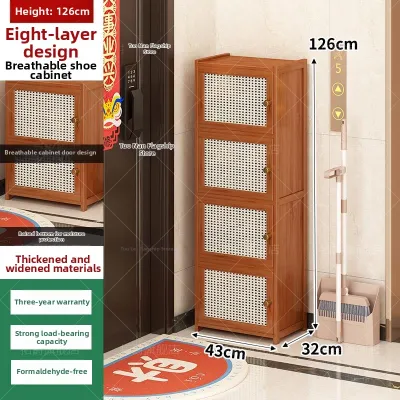
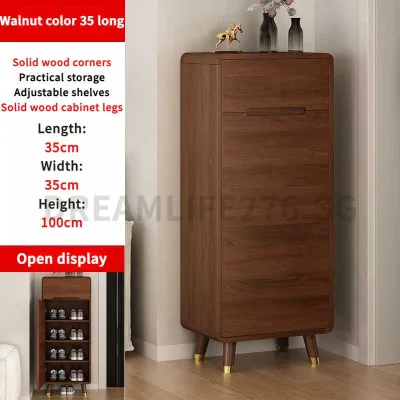
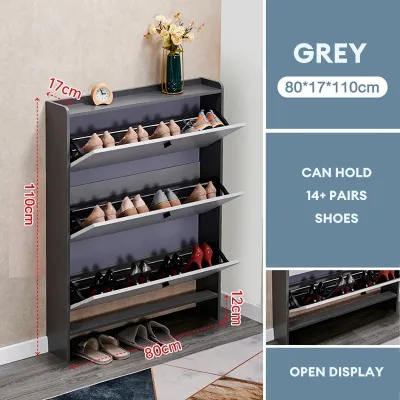
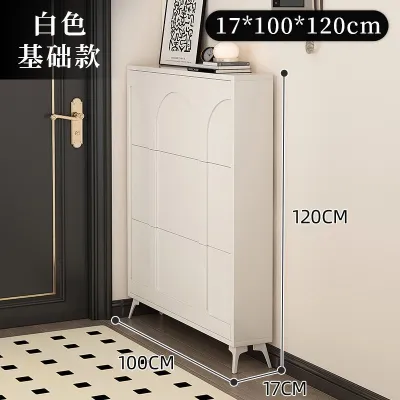
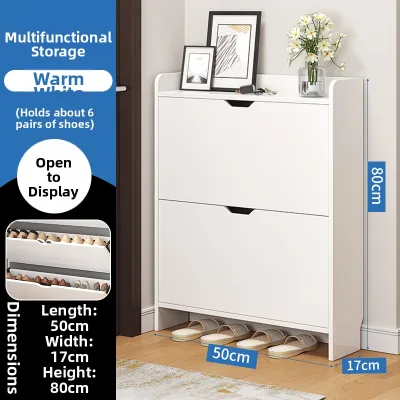
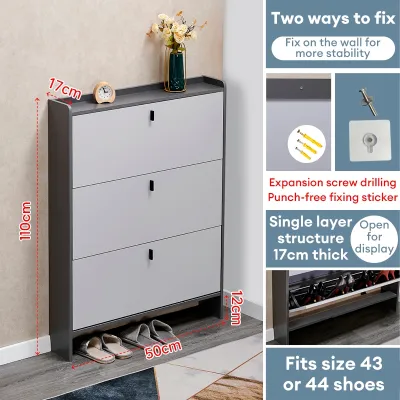
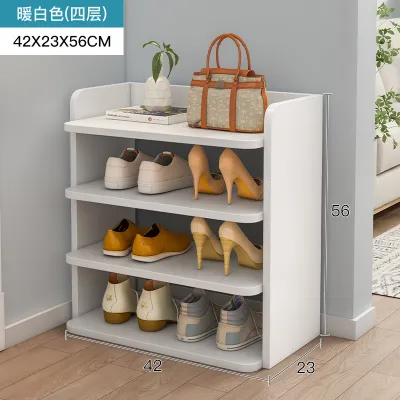
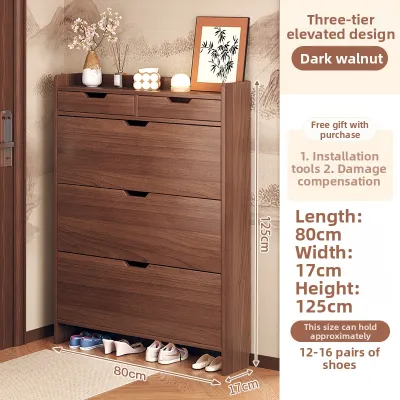
Prices are valid at publication and may change. Please refer to the product page for the latest price.
Stability and safety mechanisms must never be overlooked in narrow, tall furniture designs. Because slim shoe cabinets have a high center of gravity and a very shallow footprint, they are inherently prone to tipping forward when multiple drawers are opened or when heavy footwear is placed in the upper tiers. Reputable brands always design their units with integrated wall-anchoring points and include heavy-duty mounting hardware. They also engineer their drawer slides and hinges to operate smoothly, preventing sudden shifts in weight that could destabilize the cabinet.
Finally, consider the level of after-sales support, warranty coverage, and professional assembly services offered by the brand. Assembling a tilt-out shoe cabinet can be surprisingly complex, requiring precise alignment of pivoting brackets and secure wall drilling. Brands that provide professional installation services ensure that the cabinet is perfectly level and safely anchored to your specific wall type. A clear warranty policy covering hardware failure, such as broken hinges or sagging brackets, provides peace of mind and reflects the manufacturer’s confidence in their product’s structural integrity.
Types of Furniture Brands and Retailers in Singapore
The Singapore furniture market offers a diverse array of retail channels for sourcing slim shoe cabinets, ranging from global home furnishing giants to boutique local e-commerce platforms and custom carpenters. Each channel serves different budget levels, spatial constraints, and design preferences. Choosing the right provider requires weighing the convenience of ready-made, mass-produced furniture against the precise fit and premium materials of custom-built installations.

Large-Scale Home Furnishing Retailers
Large-scale home furnishing retailers are often the first stop for homeowners seeking immediate, budget-friendly storage solutions. These global and regional giants offer standardized sizing, which makes it easy to plan your entryway layout using pre-published dimensions. One of the greatest advantages of buying from a physical megastore is the ability to test the furniture in person. You can physically open the tilt-out compartments, assess the smoothness of the hinges, and inspect the overall build quality before making a purchase.
However, these standardized designs come with notable limitations. Mass-market retailers design products for global distribution, meaning their dimensions may not align perfectly with the unique architectural quirks of Singaporean apartments, such as narrow alcoves next to household shelters or protruding structural pillars. If your entryway has a non-standard width or a very specific depth limit, a pre-fabricated cabinet might leave awkward gaps that accumulate dust or fail to fit entirely.
Local and Regional Online Furniture Brands
Digital-first furniture brands and local online marketplaces have grown rapidly, offering an extensive variety of modern, ultra-slim shoe cabinets that are often difficult to find in traditional physical showrooms. These online retailers frequently source designs specifically tailored for compact Asian apartments, featuring depths as shallow as 15 centimeters. Because they operate without the massive overhead costs of large physical showrooms, these brands can often offer competitive pricing and unique aesthetic styles, from minimalist industrial metal units to warm Japandi-style wooden cabinets.
Despite the convenience and variety, purchasing a slim shoe cabinet online requires a high degree of diligence. Since you cannot physically inspect the product, you must rely entirely on technical specification sheets rather than stylized, wide-angle product photos. Always verify the exact internal dimensions of the shoe compartments to ensure they can accommodate your specific shoe sizes, as some ultra-slim designs may not fit high-top sneakers or large men’s footwear without bending the heels.
Custom Carpentry and Built-in Specialists
For homeowners dealing with highly irregular entryway layouts, awkward corners, or strict aesthetic requirements, custom carpentry is often the most effective solution. Built-in specialists can design a slim shoe cabinet that integrates seamlessly into your apartment’s architecture, running from floor to ceiling or wrapping around structural pillars. This approach is particularly useful in HDB flats where the entryway is directly adjacent to a household shelter (bomb shelter) or a distribution board (DB) box, where standard ready-made furniture would block essential access panels.
While custom carpentry offers unparalleled spatial integration and material choice, it comes with a significantly higher financial investment in S$ and longer lead times. Unlike ready-made cabinets that can be delivered and installed within a few days, custom built-ins require detailed site measurements, material selection consultations, off-site fabrication, and several days of on-site installation. Furthermore, because these units are permanently fixed to the walls and floor, they cannot be easily relocated if you decide to rearrange your home layout or move to a new property.
Essential Space and Safety Checks Before You Buy
Before purchasing any slim shoe cabinet, conducting thorough physical checks of your entryway is paramount to ensure both functionality and safety. Begin by measuring the exact clearance zone around your main door. The cabinet must not obstruct the door’s full swing path or restrict the minimum walkway width required by local fire safety guidelines. In Singapore, maintaining a clear escape route in HDB corridors and internal foyers is a safety requirement. If your entryway features a household shelter, ensure the cabinet does not block the heavy steel door from opening fully during routine inspections or emergencies.
Next, identify the location of your distribution board (DB) box and any electrical outlets or light switches. A tall, slim cabinet placed directly in front of a DB box can restrict access to circuit breakers during a power outage. Additionally, check the height of your baseboards or skirting boards along the floor. Many slim cabinets are designed with a straight back, meaning a thick skirting board will prevent the cabinet from flushing flat against the wall, leaving a gap that compromises stability and aesthetics unless the unit features a bottom cutout.
Verifying your wall type is a non-negotiable safety step for installing any slim, tall cabinet. Because these units must be anchored to prevent tipping, you must use the correct wall plugs and screws for your specific wall material. Most HDB internal walls are constructed of solid concrete or lightweight concrete blocks, which require a masonry drill bit and heavy-duty plastic or metal wall plugs. However, some newer condominiums and renovated flats utilize drywall partitions. Drywall cannot support the weight of a loaded shoe cabinet using standard plugs; you must locate the internal timber or metal studs to secure the mounting screws, or use specialized toggle bolts designed for hollow walls.
How to Compare and Shortlist Your Options
To make an informed decision, create a structured comparison framework based on your household’s specific needs. Start by listing your non-negotiable physical constraints: maximum depth, maximum width, and the minimum number of shoe pairs you need to store. This checklist will immediately eliminate brands that do not offer units within your spatial limits. For instance, if your entryway can only accommodate a maximum depth of 18 centimeters, you can filter out any brands whose “slim” collections start at 22 centimeters.
Next, compare the material finishes and construction details of your shortlisted options. Examine the quality of the hinges and pivoting mechanisms, as these moving parts bear the brunt of daily wear and tear. Metal hinges and reinforced plastic brackets are generally more durable than thin plastic pivots, which can crack under the weight of heavy shoes. If you have young children or pets, prioritize brands that offer soft-close mechanisms to prevent fingers from getting pinched in the fast-closing tilt-out drawers. Also, evaluate the ease of cleaning; textured laminate surfaces are highly resistant to scuffs and easy to wipe down, whereas matte painted finishes may show dirt and marks more easily.
Finally, calculate the total cost of ownership rather than looking solely at the retail price of the cabinet. A seemingly inexpensive cabinet from an online marketplace can quickly become costly once you add delivery fees, assembly charges, and the cost of purchasing specialized wall-anchoring hardware. Conversely, a slightly higher-priced model from a local brand might include free delivery, professional installation, and a comprehensive warranty, representing better overall value. Compare these total costs against your budget to identify the brand that offers the best balance of safety, durability, and convenience.
Frequently Asked Questions (FAQ)
How many pairs of shoes can a typical slim cabinet hold?
The storage capacity of a slim shoe cabinet depends heavily on its internal mechanism and the types of footwear you own. Standard tilt-out drawers typically hold two rows of shoes per compartment, allowing a three-tier cabinet to accommodate approximately 12 to 18 pairs of flat shoes, such as sneakers, sandals, and flats. However, bulky footwear like high-top sneakers, boots, or large men’s leather shoes take up significantly more vertical and horizontal space. To maximize capacity, look for brands that offer adjustable or removable internal dividers, which allow you to customize the compartment height to fit taller shoes without crushing them.
Do slim shoe cabinets need to be anchored to the wall?
Yes, anchoring a slim shoe cabinet to the wall is an absolute safety necessity. Because these cabinets have an extremely shallow depth—often under 20 centimeters—and a tall profile, their center of gravity shifts dramatically forward when the drawers are opened. The weight of several pairs of shoes pulling outward can easily cause the entire unit to tip over, posing a severe injury risk to children, pets, and adults alike. Always use the wall-anchoring brackets provided by the manufacturer, and ensure you use the correct mounting hardware suitable for your specific wall type, whether it is solid concrete, brick, or drywall.
What is the best material for a shoe cabinet in a humid climate?
In Singapore’s humid climate, the best materials for a shoe cabinet are those with high moisture resistance and structural stability. High-density fiberboard (HDF) with a high-quality melamine laminate finish is an excellent choice, as the laminate acts as a barrier against ambient humidity and wet shoes. Metal cabinets, such as powder-coated steel, are also highly durable, completely immune to mold, and easy to sanitize, making them ideal for semi-outdoor corridors. If you prefer natural wood, ensure it is treated with a marine-grade sealant or polyurethane coating, and pay close attention to the edge banding to ensure no raw wood is exposed to moisture.

Community discussion
Share your experience or ask a question. Comments are reviewed before publication.