
Finding the ideal single fabric sofa chair for a Singapore HDB living room requires balancing space efficiency with daily comfort. Because modern HDB flats—especially Build-To-Order (BTO) units—feature compact layouts, every square meter of floor space must be carefully planned. A well-chosen single-seater provides a dedicated spot for reading, working, or relaxing without disrupting the flow of your living room. The key is to select a profile that complements your existing sofa layout, matches your household’s lifestyle, and features a fabric capable of handling the local warm, humid climate.
Quick Guide to Choosing a Single Fabric Sofa Chair for HDB Flats
When space is at a premium, selecting furniture is no longer just about aesthetics; it is an exercise in spatial geometry and material science. HDB living rooms often serve multiple purposes, acting as entertainment zones, home offices, and relaxation areas simultaneously. To find a single fabric sofa chair that fits seamlessly, you must evaluate three core pillars: physical footprint, structural profile, and fabric performance.
The physical footprint must leave enough clearance for comfortable movement, ensuring that walkways remain unobstructed. The structural profile—whether it is a sleek accent chair, a flexible swivel chair, or a compact recliner—determines how the chair interacts with your existing furniture and walls. Finally, because Singapore’s tropical climate brings high humidity, the fabric must be breathable and easy to maintain to prevent moisture retention and premature wear. By following a systematic evaluation process—measuring your space, selecting the right chair archetype, and verifying fabric specifications—you can confidently choose a piece that enhances both the functionality and comfort of your home.
Products mentioned in this guide
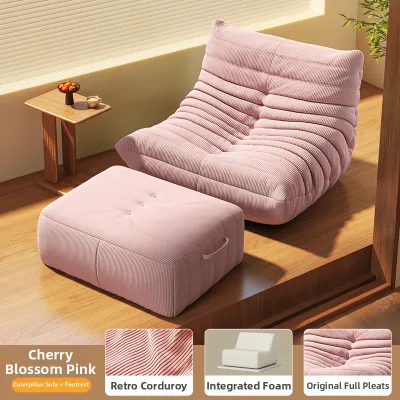
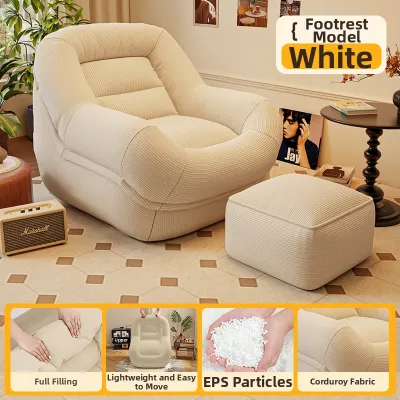
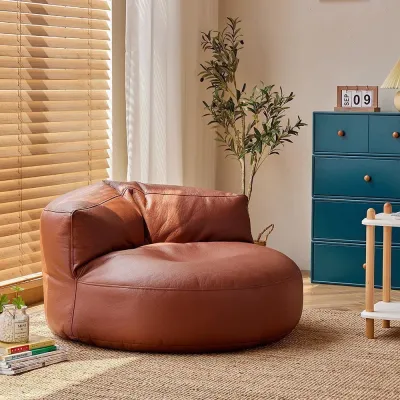
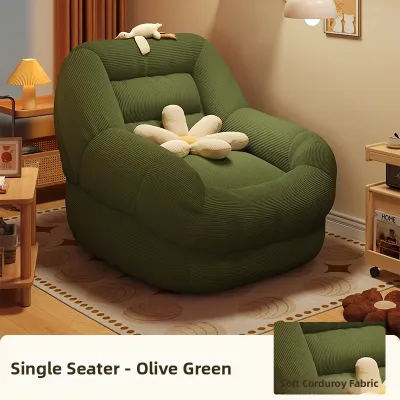
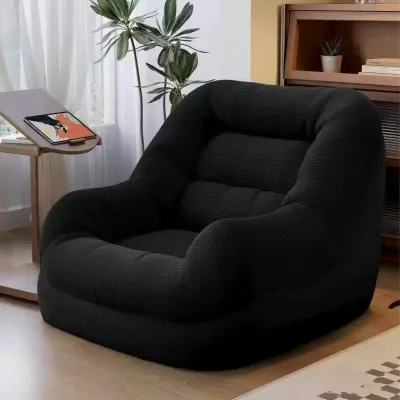
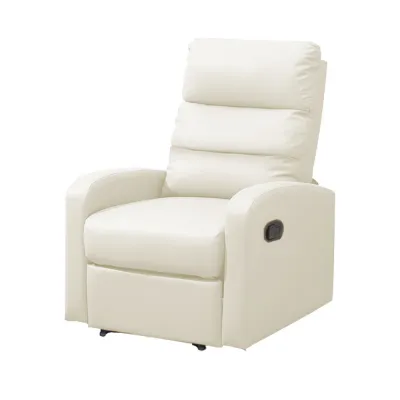
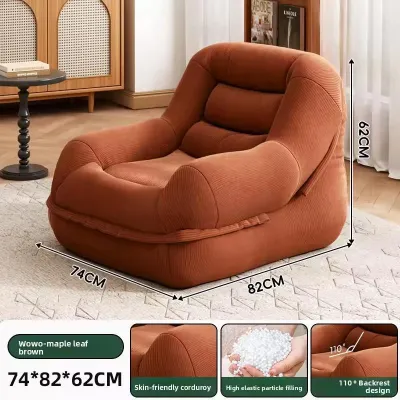
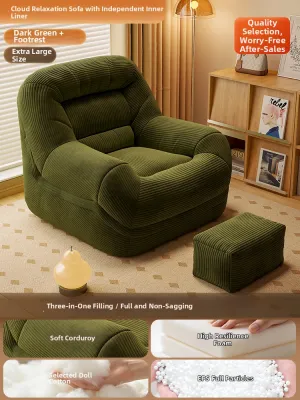
Prices are valid at publication and may change. Please refer to the product page for the latest price.
Recommended Single Fabric Sofa Chair Profiles for HDB Layouts
Rather than focusing on specific brands, successful space planning in an HDB flat relies on identifying the right structural profile. Different chair designs serve distinct functional purposes and require varying amounts of floor space. Understanding these archetypes allows you to match a chair to your specific layout constraints and lifestyle needs.

When browsing online marketplaces or visiting local showrooms, always look for the manufacturer’s official specification label to verify the exact dimensions. Pay close attention to the width, depth, and height, as even a few centimeters can make the difference between a comfortable fit and a cramped walkway. Below, we analyze three highly suitable profiles for HDB living rooms, detailing their spatial requirements, ideal placements, and inherent trade-offs.
The Compact Armless or Slim-Arm Accent Chair
For tight corners, narrow alcoves, or small reading nooks, the compact armless or slim-arm accent chair is an exceptional choice. By eliminating bulky, padded armrests, this design significantly reduces the chair’s overall width—often keeping it within a modest 60 to 75 centimeters. This reduced footprint creates a sense of visual lightness, making small HDB living rooms feel more open and airy.
However, this space-saving design does come with trade-offs. Without substantial armrests, you lose side support, which may impact long-term lounging comfort if you prefer to lean sideways while reading or watching television. To ensure an ergonomic fit, check the manufacturer’s label for a seat depth of around 50 to 55 centimeters and a seat height of 40 to 45 centimeters. A backrest angle of 100 to 105 degrees generally provides a comfortable, upright sitting posture that supports the lower back without requiring excessive lounge space.
The Swivel Base Single Seater
In multi-functional HDB layouts where the living room transitions directly into the dining area or home office, a swivel base single-seater offers unmatched flexibility. A 360-degree rotating mechanism allows you to turn easily to face a conversation in the dining room, watch television, or look out the window, all without physically moving the chair’s base.
Before purchasing, it is critical to verify the base diameter and the required clearance for a full rotation. A typical swivel chair requires a circular clearance zone of at least 90 to 100 centimeters in diameter to spin freely without striking adjacent walls, side tables, or main sofas. Additionally, inspect the base construction for stability; a heavy, wide metal disc base generally offers better tip-over resistance than a narrow four-star base. If your HDB flat features vinyl, laminate, or polished tile flooring, ensure the underside of the swivel base is equipped with protective rubber rings or felt pads to prevent scratching during daily rotation.
The Small-Scale Recliner or Lounger
If maximum relaxation is your priority, a small-scale recliner or lounger provides the ultimate comfort, though it requires careful spatial planning. Traditional recliners are notoriously bulky, but modern small-scale versions are designed specifically for compact living. These chairs typically feature a narrower profile, often measuring under 85 centimeters in width.
When evaluating recliners, distinguish between manual push-back models and mechanical or motorized versions. Manual push-back models rely on body weight to recline and often require significant wall clearance—the space between the back of the chair and the wall—to fully extend. Look for wall-hugger designs that slide forward as they recline, reducing the required rear clearance to as little as 10 to 15 centimeters. Always check the product manual for the fully extended length, which can reach up to 150 to 160 centimeters, and verify that this extended footprint does not block your main walkway or collide with your coffee table. Additionally, check the manufacturer’s specifications for the internal mechanism’s weight capacity and the warranty terms for moving parts, as these are critical indicators of long-term durability.
Space Planning and Sizing for HDB Living Rooms
Successful furniture integration begins long before you make a purchase. To ensure your chosen single fabric sofa chair fits perfectly, you must conduct a thorough spatial assessment of your HDB living room. Start by measuring the allocated footprint where the chair will sit. Keep in mind that you do not just need space for the chair itself; you must also maintain comfortable walking paths. Standard interior design guidelines suggest leaving at least 60 to 75 centimeters of clearance for primary walkways, and at least 30 to 45 centimeters between the chair and a coffee table or side table to allow for easy leg movement.
Beyond the living room layout, you must plan for the delivery process. Many homeowners purchase beautiful furniture only to find it cannot fit through their front door or into the lift. Measure the width and height of your HDB main door, the clearance of your corridor turns, and the interior dimensions of the lift lobby and lift car. Compare these measurements against the product’s packaged shipping dimensions, which are usually listed on the retailer’s website. If the packaged dimensions exceed your doorway clearance, check if the legs or backrest of the chair are removable for assembly inside your home.
To visualize the chair’s physical presence in your room, use painter’s tape or lay down sheets of newspaper to map out the exact footprint on your floor. If you are considering a swivel chair or a recliner, use the tape to outline the maximum rotation circle or the fully extended reclining length. Walk around the taped area for a few days to ensure it does not disrupt your daily household traffic flow or block access to power outlets, storage cabinets, or balcony doors.
Evaluating Fabric Durability and Maintenance
The choice of fabric is just as important as the chair’s physical dimensions, especially in Singapore’s hot and humid climate. To ensure the fabric can withstand daily wear and tear, look for the Martindale or Wyzenbeek rub count on the product tag or specification sheet. For residential use, a Martindale rating of 15,000 to 20,000 rubs is considered suitable for general domestic use, while a rating of 25,000 rubs or higher indicates heavy-duty durability, making it ideal for households with children or pets.
The fiber composition of the fabric directly affects its breathability, stain resistance, and moisture retention. Natural fibers like cotton and linen offer excellent breathability and a soft feel, which is highly comfortable in warm weather. However, they tend to absorb moisture easily, making them prone to water stains and mold if the room is not well-ventilated. Synthetic fibers, such as high-quality polyester or nylon, are highly durable, resistant to fading from sunlight, and less prone to moisture absorption. Many modern fabric chairs use synthetic-natural blends, combining the breathability of natural fibers with the strength and stain resistance of synthetics.
Maintenance is another critical factor to verify before buying. Read the manufacturer’s care manual to check if the fabric covers are removable and machine-washable. Removable covers make cleaning spills and maintaining hygiene significantly easier. If the covers are fixed, check the cleaning codes on the label: “W” means the fabric can be cleaned with water-based cleaners, “S” requires solvent-based dry cleaning, and “WS” allows both. If a fabric requires professional dry cleaning only, consider whether you are willing to invest the time and maintenance costs over the lifespan of the chair.
Your Pre-Purchase Shortlisting Checklist
To help you make an informed decision when browsing online marketplaces or visiting physical showrooms, use this comprehensive checklist to evaluate and compare your options:
- Spatial Verification: Have you measured your allocated floor space and mapped it out with painter's tape, including clearance for walkways (60 to 75 cm) and adjacent furniture?
- Delivery Access: Do the packaged shipping dimensions fit through your HDB main door, lift door, and corridor turns? Are the legs or backrest removable if clearance is tight?
- Structural Suitability: Does the chair's profile (armless, swivel, or recliner) match your layout? For swivel chairs, is there enough clearance for a full 360-degree rotation? For recliners, is the wall clearance and extended length verified?
- Fabric Performance: What is the Martindale rub count? Is the fiber blend suitable for Singapore's humidity?
- Maintenance and Care: Are the fabric covers removable and machine-washable, or does the care manual specify professional dry cleaning?
- Warranty and Assembly: What does the warranty cover (e.g., frame, moving mechanisms, fabric)? Does the chair arrive fully assembled, or are there specific assembly tools and conditions required?
If you find that a product’s specifications are incomplete, conflicting, or missing entirely from the listing, contact the seller directly to request official documentation or the user manual. If the seller cannot provide clear, verified specifications regarding dimensions, weight capacity, or fabric care, it is best to skip the item and choose a model with fully transparent product details.
Frequently Asked Questions (FAQ)
How much clearance should I leave around a single sofa chair in an HDB living room?
For a comfortable and safe living environment, maintain a primary walking path clearance of at least 60 to 75 centimeters around the chair. If the chair is placed next to a coffee table or side table, leave a gap of 30 to 45 centimeters to allow for comfortable leg movement and easy access to drinks or books. You should adjust these clearances based on your household’s specific needs; for instance, if you have family members with mobility aids, wider pathways of 90 centimeters or more are recommended. If you have active pets, ensuring clear pathways prevents accidental collisions and keeps the space feeling open.
Can I place a single fabric sofa chair directly under an HDB air-conditioner or near a window?
Placing fabric furniture directly under an air-conditioner or next to a window carries environmental risks that can shorten the lifespan of the fabric. Air-conditioners can occasionally drip condensation, leading to localized moisture buildup, water stains, and mold growth on fabric upholstery. Meanwhile, direct sunlight from windows exposes the fabric to ultraviolet (UV) rays, which can cause colors to fade and weaken the fibers over time. To protect your investment, check the manufacturer’s placement guidelines. If you must place the chair near a window, use UV-blocking window films, sheer curtains, or blinds to mitigate sun exposure, and ensure your air-conditioner is regularly serviced to prevent leaks.

Community discussion
Share your experience or ask a question. Comments are reviewed before publication.