
Finding efficient ways to store footwear is a constant challenge in compact Singapore apartments, where every square meter of floor space must be carefully optimized. Standard built-in wardrobes and narrow entryways in modern Housing & Development Board (HDB) flats and condominiums often lack the dedicated depth or height needed to house a growing shoe collection. Utilizing modular shoe box storage offers a highly customizable, space-saving alternative to bulky traditional cabinets, allowing you to utilize vertical dimensions, awkward corners, and under-bed voids that would otherwise go to waste.
To successfully implement this storage strategy, you must select the right style of shoe box based on your specific apartment layout, your daily habits, and the unique environmental conditions of your home. By evaluating your space, choosing appropriate materials, and understanding the physical limits of different box designs, you can double your usable storage capacity while keeping your entryway and wardrobe neat, organized, and visually appealing.
How to Evaluate Shoe Storage for Compact HDBs and Condos
Before purchasing any storage containers, you must conduct a thorough spatial assessment of your apartment to determine where your shoes will live and how much room you actually have. Measuring your available space is the first and most critical step. For built-in wardrobes, measure the internal depth precisely; standard wardrobes are typically 60cm deep, but sliding door tracks can reduce the usable depth to 52cm or 55cm. If you plan to store boxes sideways or double-stacked, ensure the box dimensions align with these internal limits so the wardrobe doors can close fully without obstruction. For under-bed storage, measure the vertical clearance from the floor to the lowest point of the bed frame, taking into account any support legs, center beams, or rug edges that might block a sliding bin.
Products mentioned in this guide
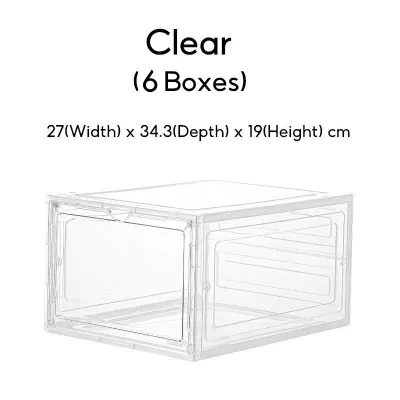
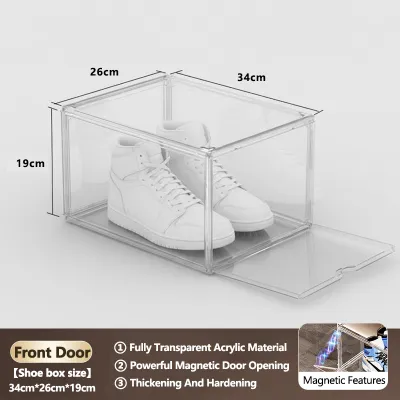
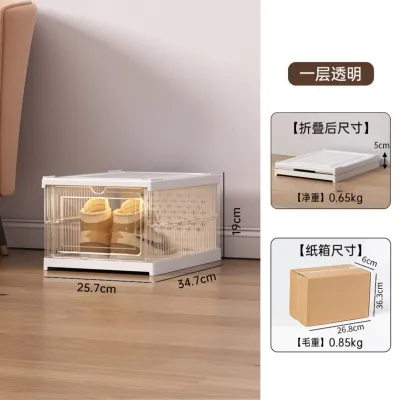
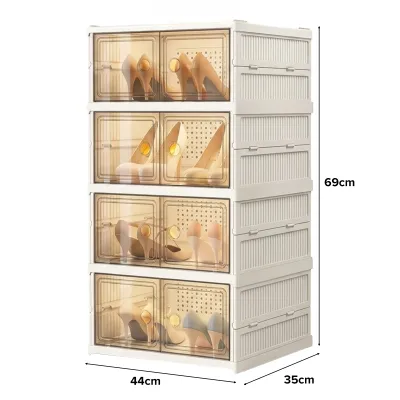
Prices are valid at publication and may change. Please refer to the product page for the latest price.
Accessibility is another vital factor to consider when space is tight. The way a shoe box opens dictates how much clearance you need in front of or above the container. Drop-front doors are excellent for stacked configurations because they allow you to retrieve shoes without moving the boxes above them, but they require sufficient forward clearance—typically 15cm to 22cm—for the door panel to swing downward. Side-opening boxes are ideal for shallow closets where shoes are stored parallel to the wall, requiring lateral rather than forward clearance. Top-lid boxes, while highly secure, require you to lift the lid to access the contents, meaning you must unstack every box sitting on top of them. Consequently, top-lid designs should be reserved strictly for single-layer storage or for pairs worn only on rare occasions.
Singapore’s tropical climate, characterized by high relative humidity that frequently exceeds 80 percent, introduces unique challenges for shoe preservation. When evaluating materials, do not assume that rigid plastic names like acrylic or polypropylene automatically guarantee protection against moisture damage. In fact, completely sealed plastic boxes can trap residual moisture from sweaty feet or wet weather, creating a damp microclimate that accelerates mold growth and material degradation. Look for manufacturer specifications indicating built-in ventilation holes, mesh panels, or breathable materials. Acrylic offers crystal-clear visibility but is more brittle, while polypropylene (PP) is slightly flexible, highly durable, and less prone to cracking over time.
Stackability and safety must also be evaluated to prevent accidents in narrow walkways or high-traffic areas. Look for modular boxes that feature interlocking mechanisms, such as molded ridges on the top lid that nest securely into corresponding grooves on the bottom of the box above it. Magnetic connection points or physical joining clips provide additional structural integrity. Always check the manufacturer’s specified load-bearing capacity; lightweight, budget-friendly plastic boxes may bow or collapse under the weight of heavy leather boots or platform heels. To maintain a stable center of gravity, plan to place your heaviest footwear in the bottom boxes of any stack.
Top Shoe Storage Box Types for Maximizing Limited Space
Drop-Front Stackable Boxes for Wardrobes and Entryways
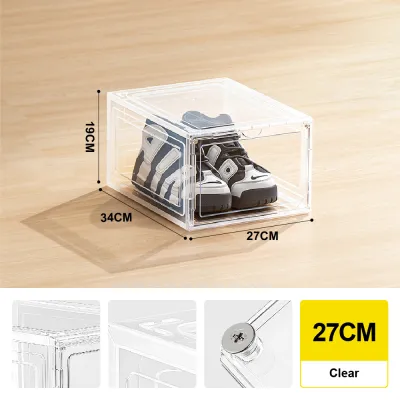
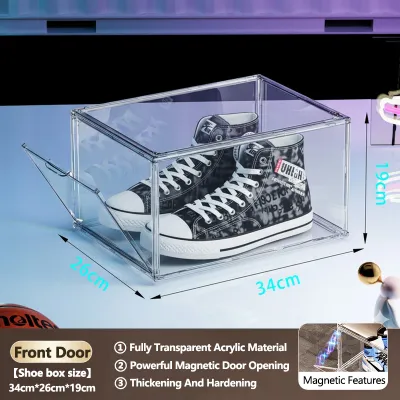
Drop-front stackable boxes are widely considered the most versatile option for active, daily-use footwear in compact apartments. These boxes are particularly effective when utilized inside HDB household shelters (bomb shelters), which often serve as multi-purpose utility rooms or walk-in pantries. Because these utility spaces lack built-in shelving, you can build a custom, floor-to-ceiling shoe wall using interlocking drop-front boxes, adapting the stack to fit around electrical distribution boards or structural pillars.

When shopping for drop-front boxes, prioritize models with strong magnetic closures that keep the front door securely shut, preventing dust and pests from entering. Look for reinforced plastic frames or internal support structures that prevent the boxes from bowing when stacked five or six units high. Transparent front panels are essential, as they allow you to locate the exact pair you need at a glance without having to open multiple containers.
Key Considerations
- Best For: High-frequency footwear, entryway consoles, and custom shoe walls in utility rooms.
- Space Requirements: Requires clear forward clearance equal to the height of the door panel to allow the front flap to swing open fully.
- Limitations: Not suitable for tight corners or narrow closet spaces where forward clearance is restricted.
Low-Profile Under-Bed Bins for Hidden Storage
Under-bed storage is an exceptional way to utilize the dead space beneath your bed frame, keeping less frequently worn footwear out of sight but still easily accessible. This setup is ideal for storing seasonal shoes, such as winter boots used for overseas travel, formal dress shoes, or special-occasion heels that do not need to occupy prime real estate in your entryway or primary wardrobe.
Before selecting under-bed bins, verify the vertical clearance of your bed frame. Standard platform beds may have no clearance at all, while slatted or wooden frames typically offer between 15cm and 25cm of space. Choose low-profile bins that are at least 2cm shorter than this clearance measurement to ensure they slide in and out smoothly. For ease of retrieval, look for bins equipped with multi-directional wheels or low-friction glides that slide effortlessly over laminate, vinyl, or parquet flooring without leaving scuff marks.
Key Considerations
- Best For: Out-of-season footwear, travel boots, and formal shoes.
- Key Features: Smooth-rolling wheels, sturdy pull handles on multiple sides, and zippered fabric covers or snap-on lids to protect against dust.
- Limitations: Difficult to access daily; requires clear floor space next to the bed to pull the bins out fully.
Adjustable Shoe Slots for Maximizing Existing Shelves
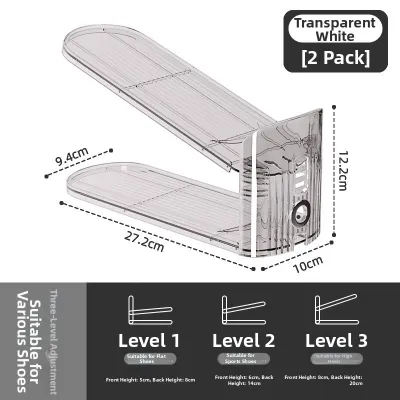
If you prefer to keep your footwear inside your existing built-in wardrobe but find yourself running out of shelf space, adjustable shoe slots offer a highly efficient, non-invasive solution. These individual plastic organizers allow you to stack one shoe directly above the other, effectively halving the horizontal footprint of each pair and doubling the capacity of your existing shelves without requiring any drilling or assembly.
These slots work by utilizing the empty vertical space between fixed wardrobe shelves, which is often wasted when storing low-profile shoes like flats, sandals, loafers, or sneakers. Look for slots with adjustable angle settings, which allow you to customize the height of the top platform to accommodate everything from flat slippers to mid-height heels. Ensure the slots feature a non-slip surface texture and a raised heel guard to prevent the top shoe from sliding off.
Key Considerations
- Best For: Flat shelves inside wardrobes, pantries, or existing shoe cabinets.
- Key Features: Multi-level height adjustments, non-slip surfaces, and compact footprints.
- Limitations: Open-air design provides no protection against dust or humidity; unsuitable for heavy boots, high-top sneakers, or bulky orthopedic footwear.
Foldable Fabric or Canvas Bins for Flexible Needs
Foldable fabric or canvas bins provide a lightweight, collapsible alternative for homeowners who value flexibility. These organizers are excellent for top-shelf wardrobe storage, where heavy plastic boxes would be difficult or dangerous to lift and maneuver. When not in use, these bins can be folded completely flat, allowing you to store them away in a drawer without taking up valuable space.
Because canvas and non-woven fabrics are naturally breathable, these bins allow for better air circulation than sealed plastic containers, reducing the risk of musty odors. However, fabric lacks the inherent structural integrity of rigid plastic. To prevent the bins from sagging or collapsing under the weight of your shoes, look for models that feature sturdy internal wire frames, reinforced cardboard bases, and robust fabric handles that can withstand being pulled down from a high shelf.
Key Considerations
- Best For: High wardrobe shelves, seasonal storage, and lightweight footwear.
- Key Features: Collapsible design, breathable fabric, clear viewing windows, and reinforced pull handles.
- Limitations: Cannot be stacked vertically without a shelf supporting each layer; fabric can absorb ambient moisture if placed in damp areas.
Quick Comparison: Matching Organizers to Your Apartment Layout
To help you determine which storage solution best aligns with your specific spatial constraints and footwear collection, review the comparison table below. This table outlines the practical performance of each storage type across key utility dimensions.
| Storage Type | Space Efficiency | Accessibility | Best Apartment Location | Ideal Shoe Type |
|---|---|---|---|---|
| Drop-Front Stackable Boxes | High (utilizes vertical wall space) | Excellent (quick front access) | Entryway, HDB bomb shelter, wardrobe floor | Daily sneakers, heels, low-profile boots |
| Low-Profile Under-Bed Bins | High (utilizes hidden floor space) | Moderate (requires sliding out) | Bedroom, guest room under-bed void | Seasonal travel boots, formal dress shoes |
| Adjustable Shoe Slots | Very High (doubles shelf capacity) | Excellent (open-air design) | Inside built-in wardrobes, fixed shelves | Flats, sandals, loafers, low-top sneakers |
| Foldable Fabric Bins | Moderate (requires shelving) | Moderate (best for high shelves) | Top wardrobe shelves, closet overheads | Lightweight canvas shoes, slippers, sandals |
Setup, Safety, and Maintenance Guidelines
Stacking Safety
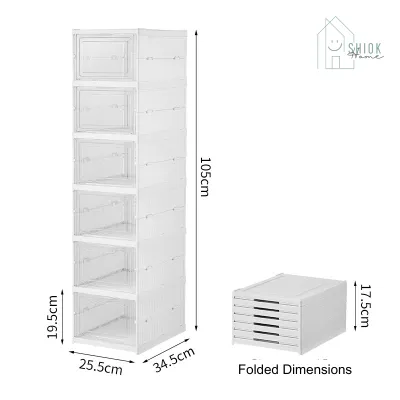
When building a vertical stack of shoe boxes, safety must be your primary concern. Always refer to the manufacturer’s guidelines to identify the maximum recommended stacking height for your specific product model. As a general safety precaution, avoid stacking lightweight, unanchored plastic boxes higher than 1.5 meters or more than six to eight units high, particularly in narrow HDB corridors where they could be easily bumped. If you plan to build a taller shoe wall, ensure the base row is perfectly level and placed on a flat, non-slip surface. For tall stacks in homes with young children or active pets, consider using adhesive wall straps or securing the stack to a nearby heavy furniture piece to eliminate the risk of tipping.
Cleaning and Care
Over time, street dust, dirt, and moisture brought in from the outdoors can accumulate inside your storage boxes, potentially scratching clear surfaces or transferring grime to other shoes. To clean acrylic, polystyrene, or polypropylene boxes, avoid using harsh chemical solvents, alcohol-based sprays, or abrasive scrubbing pads, as these can cause clear plastics to cloud or scratch permanently. Instead, wipe the interior and exterior surfaces with a soft microfiber cloth dampened with warm water and a drop of mild dish soap. Allow the boxes to dry completely in a shaded, well-ventilated area before returning your shoes to them.
Moisture Management
Singapore’s high humidity requires proactive moisture management to prevent mold from ruining your shoe collection. Never place shoes into enclosed storage boxes immediately after wearing them; allow them to air dry in a well-ventilated space for at least 24 hours to ensure all sweat and ambient moisture have evaporated. To further protect your footwear, place silica gel packets, bamboo charcoal deodorizing bags, or commercial calcium chloride moisture absorbers inside each enclosed box. Monitor these absorbers regularly, replacing or reactivating them according to the manufacturer’s instructions as they become saturated.
Frequently Asked Questions (FAQ)
How high can I safely stack plastic shoe boxes?
You should always check the manufacturer’s packaging or product specifications for the exact stacking limit of your specific box model, as weight capacities vary significantly. For standard, interlocking plastic boxes, a safe general limit is six to eight boxes high, or roughly 1.5 meters, provided they are placed on a completely flat, stable floor. Stacking boxes beyond this height increases the risk of the bottom boxes bowing under the weight, which can compromise the stability of the entire stack and lead to toppling, especially in narrow HDB entryways or high-traffic corridors.
Are clear shoe boxes better for small wardrobes?
Clear shoe boxes offer excellent functional benefits for compact wardrobes because they allow you to identify your footwear instantly without having to open multiple containers, saving you time during busy mornings. However, if your shoe collection consists of highly mismatched, colorful, or well-worn pairs, a solid wall of clear boxes can sometimes create visual clutter, making a small room feel smaller. In these cases, semi-translucent or frosted boxes offer a great middle ground, hiding visual clutter while still allowing you to see the general silhouette of the shoes inside.
How do I prevent mold in shoe storage boxes in Singapore?
To prevent mold growth in Singapore’s humid climate, ensure your shoes are completely clean and dry before storing them. Choosing shoe boxes designed with built-in ventilation holes or mesh panels is highly recommended to promote continuous airflow. Additionally, place active moisture-absorbing agents, such as silica gel packets or charcoal bags, inside each box. Regularly open your wardrobe doors and slide open your shoe boxes during dry, air-conditioned periods to allow fresh air to circulate through the storage system.
Community discussion
Share your experience or ask a question. Comments are reviewed before publication.