
Finding the best salon stool in Singapore for professional use requires looking beyond basic aesthetics and focusing on structural longevity, ergonomic support, and local service support. In a busy salon environment, a stylist, therapist, or technician can spend upwards of eight to ten hours a day seated or semi-seated. This makes the salon stool one of the most critical investments in your business, directly impacting physical health, daily productivity, and long-term career longevity.
Singapore’s unique commercial landscape—characterized by high-density commercial spaces, premium rental rates, and a tropical climate with high humidity—places distinct demands on salon furniture. Stools must be compact enough to navigate tight styling bays, durable enough to resist moisture-induced degradation, and equipped with high-quality casters that glide smoothly over common salon floorings. While international brands set global benchmarks, local professionals must evaluate stools based on verifiable engineering specifications and local distributor reliability to ensure their investment is protected.
Essential Ergonomic and Structural Features for Salon Stools
Ergonomics in a professional salon setting starts with the shape and composition of the seat. Flat, poorly padded stools force the pelvis into a backward tilt, rounding the lumbar spine and leading to chronic lower back pain. To prevent this, professional salon stools typically feature contoured designs, such as saddle seats or ergonomically molded round cushions. Saddle stools are particularly favored by stylists because they mimic an equestrian riding posture, which naturally aligns the spine, opens the hip angle, and reduces pressure on the thighs. The cushion itself must be constructed from high-density, molded polyurethane foam rather than low-cost cut foam. High-density foam retains its shape and supportive properties over years of heavy daily use, whereas cheaper alternatives compress permanently within months, leaving the user sitting directly on the hard seat pan.
Products mentioned in this guide
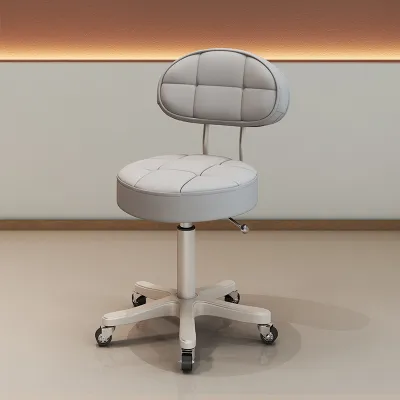
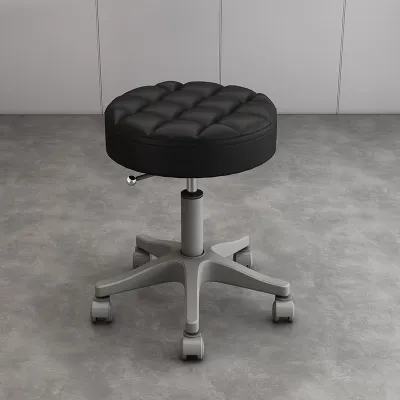
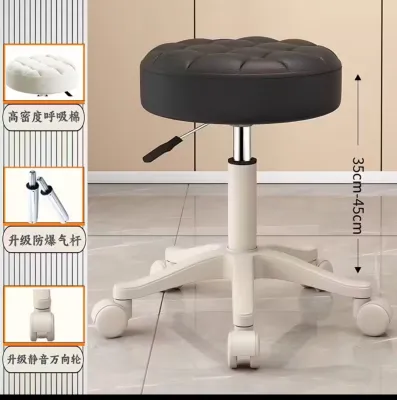
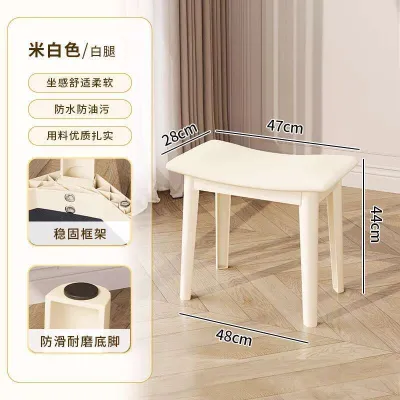
Prices are valid at publication and may change. Please refer to the product page for the latest price.
Choosing between a backless stool and a model with a backrest depends entirely on the specific tasks performed at your workstation. Backless stools offer maximum freedom of movement, allowing stylists to rotate 360 degrees effortlessly, lean forward close to the client, and tuck the stool completely under the styling station when not in use. This is highly advantageous in compact Singapore salons where floor space is at a premium. Conversely, stools with lumbar backrests are highly beneficial for technicians performing long, stationary procedures, such as eyelash extensions, microblading, or detailed nail art. A well-designed backrest provides essential support to the lower back during periods of prolonged sitting, reducing muscle fatigue, but it does limit overall mobility and requires more storage space.
The height adjustment mechanism is the mechanical heart of any salon stool, determining both its versatility and its operational lifespan. Most professional stools utilize either pneumatic (gas-lift) or hydraulic systems. Pneumatic systems are the most common, using a pressurized gas cylinder that allows for smooth, instant height adjustments with the pull of a lever. When selecting a pneumatic stool, it is crucial to check the cylinder’s class rating; commercial-grade stools should utilize Class 3 or Class 4 gas cylinders, which are designed to handle heavier weight capacities and frequent adjustments without sinking. Hydraulic systems, while heavier and more expensive, are operated via a foot pedal and are typically found on premium styling chairs or specialized heavy-duty stools, offering unmatched durability and load capacity.
Mobility is a non-negotiable requirement for salon professionals who must glide seamlessly around a client’s chair. The performance of a stool’s casters is heavily influenced by the type of flooring in your salon. In Singapore, most salons feature hard, non-porous floors such as ceramic tiles, polished concrete, or commercial-grade luxury vinyl tiles (LVT). For these surfaces, soft polyurethane (PU) or rubber-coated caster wheels are ideal, as they provide smooth, silent movement without scratching the floor. Hard nylon casters, while durable, can be noisy and may leave scuff marks over time. Furthermore, look for closed or hooded wheel designs; open-wheel casters collect hair clippings, dust, and chemical overspray, which quickly clog the axle, lock the wheel, and cause the stool to drag rather than roll.
The salon environment is notoriously harsh on upholstery materials due to the constant presence of hair dyes, bleaching agents, peroxides, styling sprays, and sanitizing chemicals. To ensure your stool remains presentable and hygienic, the upholstery must be constructed from high-grade, chemical-resistant polyurethane (PU) or polyvinyl chloride (PVC) synthetic leather. These materials are non-porous, allowing chemical spills and hair color to be wiped away quickly without staining. In Singapore’s humid climate, cheap synthetic leathers are prone to hydrolysis—a chemical breakdown where the material becomes sticky, cracks, and eventually peels off. Verifying that the upholstery is rated for commercial use and treated with a protective topcoat will prevent this degradation and ensure the stool remains easy to sanitize between clients.
How to Evaluate Salon Stool Brands for Durability and Comfort
When evaluating different salon stool brands, the structural frame and base should be your first point of physical inspection. Many budget-friendly stools utilize lightweight plastic or nylon five-star bases painted to look like metal. Under the daily stress of a busy salon, these plastic bases can flex, warp, or even crack, posing a serious safety hazard to the user. Professional-grade brands construct their bases from heavy-duty cast aluminum, chrome-plated steel, or reinforced iron. A metal base provides a lower center of gravity, which significantly improves the stool’s stability and prevents it from tipping over when you lean forward or reach for tools. Additionally, inspect the weld joints where the gas cylinder column meets the base and the seat plate; smooth, clean welds indicate high-quality manufacturing, whereas rough, uneven welds suggest a higher risk of structural failure.

A brand’s confidence in its product is directly reflected in its warranty terms. When purchasing salon stools, always read the fine print of the warranty agreement. Many consumer-grade office chairs and basic stools carry warranties that are explicitly voided if the product is used in a commercial or professional environment. Look for brands that offer dedicated commercial warranties, typically covering the structural frame, gas lift cylinder, and mechanical parts for at least one to three years. In Singapore, it is also essential to verify whether the warranty is backed by a local distributor with an authorized service center. Shipping a defective stool back to an overseas manufacturer is logistically difficult and financially impractical, so having local support ensures any mechanical issues can be resolved quickly with minimal downtime for your business.
Even the highest-quality salon stool will experience wear and tear over years of continuous professional use. The true hallmark of a premium, sustainable brand is the ready availability of individual replacement parts. Cheap, unbranded stools are often treated as disposable items; if a single caster wheel breaks or the gas lift cylinder loses pressure, the entire stool must be discarded. Conversely, reputable salon equipment brands design their products with modular, standardized components. Before committing to a brand, ask the supplier if they stock replacement caster wheels, gas lift cylinders, seat plates, and even replacement upholstery covers. Being able to swap out a faulty gas lift or a clogged wheel for a fraction of the cost of a new stool significantly extends the product’s lifespan and reduces your long-term capital expenditure.
While a definitive, universally agreed-upon ranking of salon stool brands does not exist, several established international manufacturers serve as industry benchmarks for premium build quality. Brands like Takara Belmont (renowned for Japanese precision engineering and exceptional ergonomic design) and REM (a leading UK manufacturer of professional salon furniture) are widely respected globally. However, because these brands operate through regional networks, Singaporean salon owners must focus on verifying the credentials of local authorized distributors rather than simply buying based on brand name alone. An authorized distributor guarantees that you are receiving authentic products, provides access to valid local warranties, and ensures that the stools meet local safety and quality standards. If a brand lacks an official local representative, consider established local commercial furniture suppliers who specialize in sourcing high-durability medical or laboratory stools, which often share the same rigorous ergonomic and mechanical specifications required for salon environments.
Where to Source and Verify Reliable Salon Stools in Singapore
To ensure you are purchasing genuine, high-quality salon stools backed by professional support, your primary sourcing channel should be authorized local distributors and specialized salon equipment suppliers. In Singapore, these specialized suppliers are often located in light industrial hubs such as Ubi, Kaki Bukit, Tai Seng, and Toa Payoh. Sourcing directly from these established commercial suppliers offers several advantages over retail stores. They understand the specific demands of the beauty and hair industry, can provide expert recommendations based on your salon’s layout, and often offer volume discounts for bulk purchases. Furthermore, purchasing through official channels ensures you receive a proper commercial tax invoice, which is essential for business accounting and claiming capital allowances.
While online marketplaces and e-commerce platforms offer a convenient way to browse a wide variety of salon stools, they also require a high level of consumer vigilance. Many listing pages feature unbranded, low-cost stools that look identical to professional models but are constructed from inferior materials. When shopping online, prioritize sellers who are registered businesses in Singapore and have a proven track record of positive reviews from commercial buyers. Avoid listings that lack detailed technical specifications, such as weight capacity, base material, and gas lift class. Always use the platform’s messaging system to ask the seller direct questions regarding warranty coverage, spare parts availability, and whether they can provide a formal commercial invoice. If a seller is evasive or cannot verify the structural materials of the stool, it is best to look elsewhere.
No amount of online research or specification reading can replace the value of physically testing a salon stool before making a purchase. If you are planning a bulk purchase for a new salon launch or a major renovation, make the time to visit a physical showroom. Sitting on the stool allows you to assess the actual firmness and contour of the cushion, ensuring it provides adequate support for your body type. Test the height adjustment lever to ensure the pneumatic cylinder operates smoothly and quietly without sudden drops. Roll the stool across the showroom floor to check the responsiveness of the casters and lean in different directions to evaluate the overall stability of the base. This hands-on evaluation is the most reliable way to prevent buyer’s remorse and ensure your staff will be comfortable during long working hours.
Purchasing salon furniture in Singapore involves several unique logistical considerations that must be planned in advance. Many commercial salons are located in high-density shopping malls, heritage shophouses, or high-rise office buildings, which often have strict delivery guidelines. Before finalizing your order, check with your building’s management regarding delivery hours, loading bay restrictions, and lift access. Ensure that the delivery vehicle’s height is compatible with the loading bay clearance. Additionally, clarify with the supplier whether the stools will be delivered fully assembled or flat-packed. Flat-packed stools require assembly time and tools, which can delay your opening schedule. Opting for a supplier that offers professional on-site assembly and delivery directly to your salon floor can save valuable time and ensure the stools are put together correctly and safely.
Maintenance and Care for Long-Lasting Salon Stools
Implementing a consistent cleaning routine is the most effective way to protect your salon stools from the harsh chemicals and daily wear of a busy salon environment. For daily maintenance, wipe down the upholstery with a soft microfiber cloth dampened with warm water and a mild, non-abrasive soap. This removes surface dust, hair sprays, and sweat before they can penetrate the material. Avoid using harsh chemical cleaners, bleach, or alcohol-based sanitizers on PU or vinyl upholstery unless they are explicitly approved by the manufacturer. These aggressive chemicals strip away the protective topcoat of the synthetic leather, causing it to dry out, stiffen, and crack over time. For tougher stains like hair dye, use a specialized vinyl cleaner recommended by the supplier, applying it gently without scrubbing aggressively.
The moving parts of a salon stool require regular attention to maintain their smooth operation and prevent damage to your salon floors. On a weekly basis, inspect the caster wheels for trapped hair, dust, and product buildup. Hair clippings act like a fiber wrap around the wheel axles, gradually tightening until the wheel can no longer rotate freely. When a caster locks up, rolling the stool across the floor can cause deep scratches on vinyl or wood surfaces. Use a small utility knife, seam ripper, or crochet hook to carefully cut away and pull out any trapped hair from the axles. Once cleared, wipe the wheels down to remove sticky product residue. Additionally, check the underside of the seat plate and tighten any mounting screws that may have loosened due to the constant vibration of daily movement.
While routine cleaning and caster maintenance are safe DIY tasks, certain mechanical issues require professional intervention to ensure safety and preserve your warranty. The pneumatic gas lift cylinder is a highly pressurized component; you should never attempt to disassemble, lubricate, or repair it yourself. If your stool begins to sink gradually when you sit on it, or if the height adjustment lever becomes completely unresponsive, the gas cylinder has likely failed and must be replaced. Similarly, if you detect any structural cracks in the metal base, loose weld joints, or if the stool feels wobbly and unstable even on a flat surface, immediately remove it from the salon floor. Continuing to use a structurally compromised stool poses a serious injury risk to your staff. Contact the authorized distributor or a qualified furniture technician to perform the necessary repairs using certified replacement parts.
Frequently Asked Questions (FAQ)
What is the ideal height range for a salon stool?
The ideal height range for a salon stool depends entirely on the height of your working surfaces, such as styling chairs, shampoo basins, or manicure tables. Most professional salon stools offer an adjustable height range of approximately 45 cm to 65 cm, which accommodates standard desk-height tasks and slightly elevated styling positions. For specialized tasks like facial therapy or detailed lash extensions, you may require a low-profile stool that adjusts down to 40 cm. Conversely, hair stylists working at standing-height stations often prefer high-range stools (often called drafting stools) that adjust up to 75 cm or higher. Always measure the height of your existing salon furniture and the physical reach of your stylists before purchasing to ensure the stool’s adjustment range matches your workspace ergonomics.
Should I choose a salon stool with or without a backrest?
Deciding between a backless salon stool and one with a backrest depends on the balance of mobility and support your daily tasks require. Backless stools are highly recommended for hair stylists and colorists who need to move constantly around the client’s head, bend over, and quickly transition between sitting and standing. The lack of a backrest allows for unrestricted 360-degree rotation and makes the stool easy to slide completely out of the way under styling counters, preserving valuable floor space. On the other hand, stools with backrests are highly beneficial for nail technicians, estheticians, and lash artists who remain seated in a relatively fixed position for hours at a time. A supportive backrest helps maintain proper lumbar curvature, reduces fatigue in the core muscles, and prevents slouching during long, detailed procedures.
How often should the gas lift cylinder be replaced?
There is no fixed timeline for replacing a gas lift cylinder, as its lifespan depends on the frequency of use, the weight load it carries, and the overall quality of the component. In a busy commercial salon, a high-quality Class 4 gas lift cylinder typically lasts between three to five years before showing signs of wear. The most common indicator that a gas cylinder needs replacement is gradual sinking, where the seat slowly lowers on its own while you are sitting on it. Other warning signs include a complete loss of height adjustment functionality, excessive wobbling at the connection points, or grinding noises when rotating the stool. When these signs appear, consult the manufacturer’s specifications to source an original or certified compatible replacement cylinder rather than attempting a temporary DIY fix, ensuring the stool remains safe and stable.
Community discussion
Share your experience or ask a question. Comments are reviewed before publication.