
Finding the right wardrobe with wheels for a Housing & Development Board (HDB) flat in Singapore requires balancing tight spatial constraints with mobile functionality. The best mobile wardrobes are those that feature a compact depth (often under 45 to 50 cm), a low center of gravity to prevent tipping, and floor-friendly casters that protect sensitive vinyl or parquet flooring. By opting for a mobile wardrobe, you gain the freedom to reconfigure your bedroom layout, clear dust accumulation with ease, and avoid the high costs and permanent nature of custom built-in carpentry.
Why HDB Residents Choose Rolling Wardrobes for Small Bedrooms
Standard HDB flats, particularly newer Build-To-Order (BTO) units, frequently feature compact common bedrooms where every square centimeter matters. Traditional swing-door wardrobes require significant clearance space, often blocking narrow walkways or clashing with bedside tables. A wardrobe with wheels solves these layout bottlenecks by allowing you to easily shift your storage aside when accessing adjacent drawers, opening windows, or making the bed. This mobility is especially valuable in multi-purpose rooms that double as home offices or guest bedrooms, where furniture must adapt to changing daily needs.
Beyond daily space optimization, mobile wardrobes simplify home maintenance. In Singapore’s humid tropical climate, dust mites and mold can rapidly accumulate in dark, unventilated spaces behind heavy, static furniture. A rolling wardrobe allows you to effortlessly glide the entire unit away from the wall to sweep, mop, and air out the corner, maintaining a healthier indoor environment. Additionally, these units can serve as temporary room dividers in open-concept layouts, establishing clear boundaries between a sleeping area and a study nook without the need for permanent walls.
Products mentioned in this guide
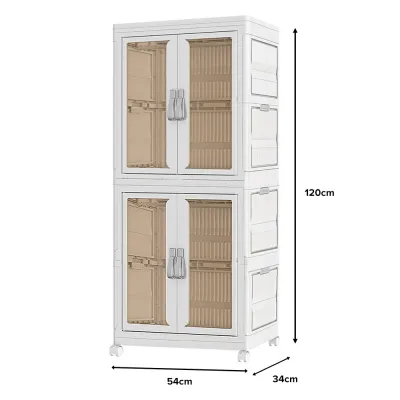
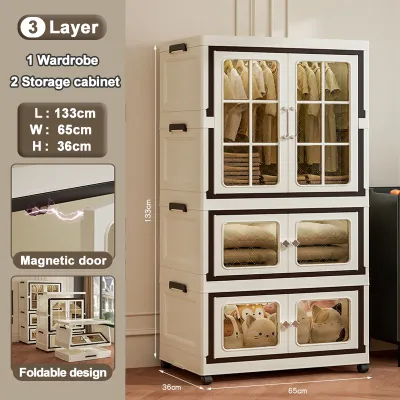
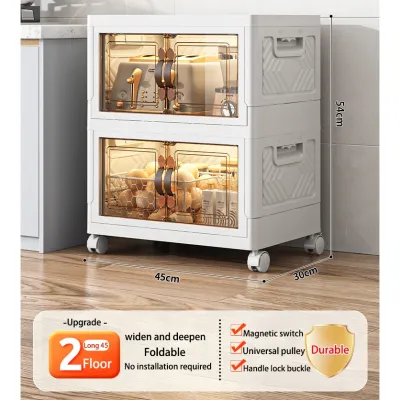
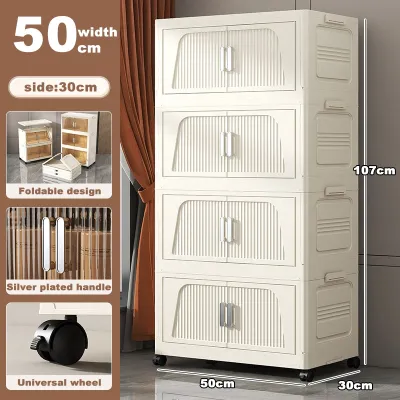
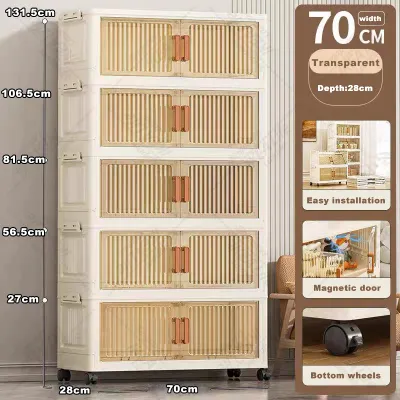
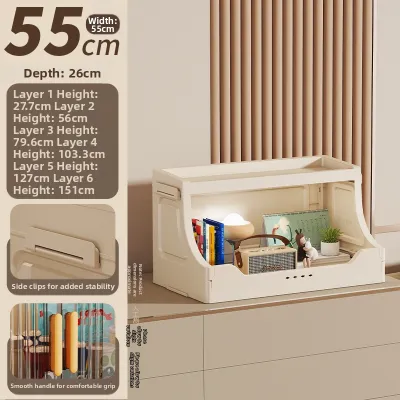
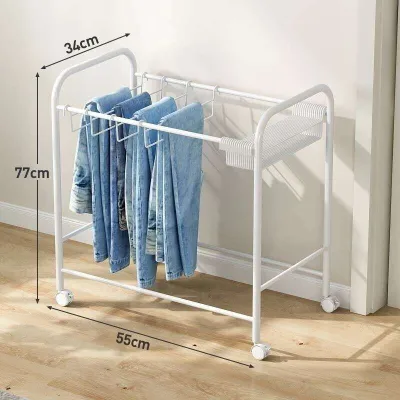
Prices are valid at publication and may change. Please refer to the product page for the latest price.
For renters or homeowners who anticipate future renovations, rolling wardrobes offer a highly cost-effective alternative to built-in carpentry. Custom built-in wardrobes can cost thousands of dollars and cannot be relocated when you move out. A mobile wardrobe represents a fraction of that investment, providing immediate storage that you can take with you to your next home or reposition as your family’s needs evolve over time.
How to Measure and Select Safe Casters for HDB Spaces
Before purchasing a wardrobe with wheels, you must conduct precise physical measurements that account for both the wardrobe’s dimensions and its path of travel. Measure the height and width of your bedroom door frames, hallway corners, and lift entryways to guarantee the fully assembled unit can pass through. Remember to add the height of the casters—which typically adds 5 to 10 cm to the manufacturer’s frame dimensions—when checking clearances against low-hanging air conditioning units or ceiling fans.

The choice of wheel material is critical to preserving your flooring. Standard HDB flats often feature modern vinyl, laminate, or polished parquet floors, all of which are susceptible to scratching and pressure marks under heavy loads. Hard plastic or nylon wheels are highly durable but can easily scratch or dent softer floor materials when rolled. For renovated vinyl or wood laminate floors, prioritize casters made of soft polyurethane or thermoplastic rubber, which distribute weight more evenly and glide smoothly without leaving unsightly tracks.
Safety on slightly uneven surfaces requires reliable locking mechanisms. Look for wardrobes equipped with dual-lock casters on at least two of the wheels, preferably at the front for easy access. A dual-lock mechanism locks both the rotation of the wheel and the swivel of the caster stem, ensuring the wardrobe remains perfectly stationary when you pull open drawers or accidentally bump into the frame.
Finally, structural stability must be evaluated to prevent tipping hazards. High, narrow wardrobes with a small footprint are naturally top-heavy when loaded with hanging clothes. To ensure stability, look for designs where the base width is at least one-third of the total height. If you select a taller unit, verify that the manufacturer specifies a stable weight distribution, and plan to place heavier items on the lowest shelves to anchor the unit securely.
Best Rolling Wardrobe Designs for HDB Layouts
Different HDB room layouts and storage needs call for specific mobile wardrobe configurations. Understanding the strengths and design limits of each style will help you choose the ideal match for your bedroom, study, or walk-in closet.
Open-Concept Rolling Garment Racks
Open-concept rolling garment racks are ideal for ultra-compact rooms or as supplementary overflow storage for your most frequently worn outfits. Because they lack solid side panels and doors, these racks maintain a sense of visual openness, preventing small HDB common rooms from feeling dark or cramped. Many modern designs feature a minimalist metal frame paired with a bottom shelf, providing a dedicated spot for storage boxes, baskets, or shoes.
When selecting an open rolling rack, verify that its total depth does not exceed 45 cm to ensure it can sit comfortably along narrow walkways without obstructing door paths. Look for models constructed from powder-coated steel or reinforced metal crossbars, which resist bowing under the weight of heavy garments. Ensure the hanging rail is securely welded or bolted to the vertical supports to maintain structural integrity over years of use.
Compact Enclosed Rolling Wardrobes
Compact enclosed rolling wardrobes offer the organizational benefits of a traditional closet while remaining lightweight and highly mobile. These units typically feature a metal or lightweight composite frame wrapped in a durable fabric cover, such as non-woven canvas or oxford cloth, complete with zippered doors. They are exceptionally well-suited for renters, temporary nursery setups, or homes located near active construction zones where airborne dust is a constant battle.
To ensure longevity in Singapore’s humid climate, check that the internal frame uses rust-resistant materials like powder-coated iron or treated engineered wood. The fabric cover should fit snugly over the frame without sagging, and its bottom edge must clear the floor by at least 2 to 3 cm. This clearance prevents the fabric from dragging, getting caught in the rolling casters, or absorbing moisture and dirt from the floor during cleaning.
Modular Rolling Storage Cubes and Drawer Units
Modular rolling storage cubes and drawer units provide highly customizable, low-profile storage that fits seamlessly into tight corners, study nooks, or under-desk areas. Because these units are relatively low to the ground, they possess an exceptionally low center of gravity, making them incredibly stable and safe for homes with young children or active pets. They can be stacked or arranged side-by-side, allowing you to adapt your storage layout as your wardrobe or study needs change.
Before purchasing a modular system, confirm that the locking connectors between individual cubes or drawers are robust and secure. Check the manufacturer’s load capacity for the casters to ensure they can support the cumulative weight of stacked units filled with dense items like folded jeans, heavy linens, or books. Opt for drawers with smooth glides and built-in stops to prevent the drawers from pulling out entirely when the unit is rolled.
Protecting HDB Floors and Preventing Tipping
Operating a mobile wardrobe safely requires mindful installation, smart loading habits, and routine maintenance. Because a fully loaded wardrobe can weigh upwards of 30 to 50 kg, improper handling can lead to floor damage or structural failure.
To safeguard sensitive flooring materials like vinyl, parquet, or laminate, consider placing a low-pile area rug or a protective polycarbonate floor mat along the wardrobe’s primary path of travel. If the wardrobe is destined to remain stationary for long periods, you can place silicone caster cups under the wheels to distribute the concentrated weight and prevent permanent indentation marks on your floors.
Strategic loading is the most effective way to lower the center of gravity and prevent tipping accidents. Always place your heaviest items—such as winter coats, thick denim, storage boxes, and shoes—on the bottom shelves or in the lowest drawers. Reserve the upper hanging rails and top shelves for lighter items like t-shirts, summer dresses, and accessories. This bottom-heavy distribution ensures the wardrobe remains stable and balanced, even when you roll it across minor floor transitions.
When moving the wardrobe, never drag or pull it from the top or sides, as this lateral force can bend or snap the caster stems at the base. Instead, unlock all casters, ensure they are aligned in the direction of travel, and push the unit slowly from the lower-middle section of the frame.
Finally, establish a quick routine maintenance schedule. Every six months, inspect the caster wheels for hair or dust buildup that could jam the bearings, and tighten any loose screws or frame joints. Singapore’s high relative humidity can occasionally cause metal fasteners to loosen or wooden joints to expand slightly, so keeping the hardware secure is vital to maintaining long-term stability and safety.
Frequently Asked Questions (FAQ)
Can I use a rolling wardrobe on HDB vinyl flooring without scratching it?
Yes, you can safely use a rolling wardrobe on vinyl flooring by selecting the right caster material. Avoid hard nylon or plastic wheels, which can cause scratches or indentations under heavy loads. Instead, equip your wardrobe with soft polyurethane or thermoplastic rubber casters, which glide smoothly and distribute weight safely. For added protection, place a protective floor runner or use silicone caster cups when the wardrobe is parked in one spot for an extended period.
Are rolling wardrobes stable enough for heavy winter coats or suits?
Rolling wardrobes can support heavy garments, provided you select a model with a reinforced metal frame and a wide base. Always verify the manufacturer’s maximum weight capacity before loading heavy items. To maintain stability and prevent the frame from bowing, distribute the weight evenly across the hanging rail and place your heaviest items on the bottom shelves to keep the unit’s center of gravity low.
How do I prevent a rolling wardrobe from tipping over when moving it?
To prevent tipping, always empty the top shelves and remove heavy hanging items before moving the wardrobe across the room. Ensure all caster locks are fully released and the wheels are aligned in your intended direction of travel. When pushing, apply steady pressure to the lower or middle section of the frame rather than pulling from the top, which avoids creating a dangerous pivot point.
Community discussion
Share your experience or ask a question. Comments are reviewed before publication.