
Finding the perfect queen size mattress in Singapore is a significant investment in your daily well-being. A standard Singapore queen size mattress measures 152 cm by 190 cm, making it the most popular dimension for master bedrooms in both Housing & Development Board (HDB) flats and private condominiums. However, selecting the right model goes beyond simply measuring your bed frame.
Because sleep comfort is highly subjective, your ideal choice depends heavily on your preferred firmness level, sleep position, and how well the mattress handles Singapore’s year-round tropical heat and humidity. By understanding how different materials and construction methods align with your physical needs, you can make an informed decision that ensures restful, pain-free sleep for years to come.
How to Match Mattress Firmness to Your Sleep Style
Mattress firmness is typically rated on a standard scale from 1 to 10, where 1 represents cloud-like softness with maximum sinkage, and 10 represents a highly rigid, board-like surface. Most commercial mattresses available in retail stores fall between a 3 (soft) and an 8 (extra firm). Understanding where you sit on this scale is the first step to narrowing down your options.
Products mentioned in this guide
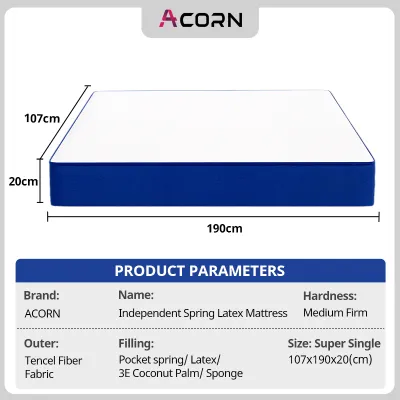
![[Bulky] DREAMAX Equinox Rest 8 Inch Comfort Pocket Spring Mattress / 20cm / Bed (SG) / sd](https://img.lazcdn.com/g/p/c25e074503162de8fade85f5c4b33c8d.jpg_400x400q80.jpg_.webp)
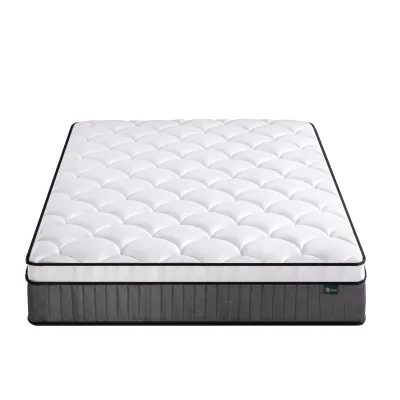
![[SG] NEXT DAY DELIVERY + FREE PILLOWS. Pocket Spring FIRM Mattress Luxury Memory Foam Single Super Single Queen King High Quality. Euro Design and High Quality. Comes in King Size Queen Super Single and Single Size Mattress. Free & Fast Delivery](https://img.lazcdn.com/g/p/f3daa9a9becc0782f477139f4696cded.jpg_400x400q80.jpg_.webp)
Prices are valid at publication and may change. Please refer to the product page for the latest price.
Your primary sleeping position dictates the level of support and contouring your body requires. When you sleep on your side, your shoulders and hips bear the brunt of your body weight. A mattress that is too firm will push back against these joints, causing numbness, tossing, and spinal misalignment. A softer mattress, typically rated between 3 and 5, allows these pressure points to sink in just enough to keep your spine in a straight, neutral line.
Back and stomach sleepers require a different support profile to maintain healthy alignment. Back sleepers generally need a medium-firm to firm surface, rated 6 to 8, to support the natural curve of the lower spine and keep the shoulders level. Stomach sleepers require an even firmer surface, usually between 7 and 8, to prevent the pelvis and hips from sinking too deeply. If the hips sink, the lower back arches unnaturally, which often leads to chronic lower back pain.
Your body weight also significantly alters how you perceive mattress firmness. Sleepers weighing under 55 kg do not compress the comfort layers deeply and will often perceive a medium-firm mattress as quite firm. Conversely, sleepers weighing over 80 kg exert more downward force, compressing the comfort layers fully and experiencing a medium mattress as relatively soft. If you fall into a heavier weight category, opting for a slightly firmer model or a hybrid design with robust coil support will help maintain structural integrity.
Couples sharing a queen size bed must often navigate differing firmness preferences. If one partner prefers a soft bed while the other needs rigid support, a medium-firm mattress rating around 6 to 6.5 serves as the ideal compromise. This level balances initial contouring comfort with deep, reliable support, accommodating a wide variety of body shapes and sleeping styles.
Recommended Queen Size Mattresses by Firmness Level
To help you find the right match, we have categorized highly regarded queen size mattresses available in Singapore by their firmness profiles. These selections are based on material specifications, design features, and post-purchase customer policies.

Plush and Soft Picks for Side Sleepers
Side sleepers require deep contouring to relieve pressure on the shoulders and hips. Soft mattresses achieve this by utilizing thick comfort layers that cradle the body’s natural curves.
- Emma Original Mattress: This all-foam mattress rates around 4 to 5 out of 10 on the firmness scale. It features three layers of high-density polyfoam, including a contouring memory foam layer that molds closely to the body. This deep cradling provides excellent pressure relief for sensitive joints. It comes with a 200-night trial and a 10-year warranty.
- Woosa Original Mattress: Made in Belgium and designed specifically for Singapore's climate, this mattress offers a plush, cloud-like feel rating around 4.5 to 5.5 out of 10. It combines a natural latex comfort layer with memory foam to offer pressure relief without making you feel completely stuck in the bed. It includes a 100-night trial and a 10-year warranty.
Because soft mattresses wrap closer to your body, they can trap heat more easily in Singapore’s humid climate. Before purchasing a plush mattress, use this checklist to verify its cooling features:
- Open-cell foam structure: Ensure the polyurethane or memory foams are engineered with open cells to allow air to pass through.
- Gel infusions: Look for cooling gel beads infused into the memory foam layers to absorb and dissipate initial body heat.
- Breathable cover fabrics: Verify that the outer cover utilizes breathable materials such as Tencel, bamboo viscose, or specialized cooling yarns.
- Natural latex layers: Natural latex is inherently more breathable and holds less heat than traditional synthetic memory foam.
Medium-Firm Picks for Combination Sleepers
Combination sleepers change positions throughout the night and require a responsive surface that balances contouring with active push-back support.
- Origin Hybrid Mattress: A highly popular choice in Singapore rating around 6 to 6.5 out of 10. It utilizes a hybrid design combining pocketed springs, cooling gel-infused memory foam, and natural latex. This blend provides the contouring of foam alongside the responsive bounce of springs, making it easy to turn over. It features a 120-night trial and a 15-year warranty.
- Sonno Signature Mattress: This hybrid model rates around 6 out of 10. It features a combination of natural latex, memory foam, and individually wrapped pocket springs. The pocket springs provide targeted support and excellent motion isolation, while the top latex layer keeps the sleeping surface responsive. It includes a 100-night trial and a 10-year warranty.
For combination sleepers and couples sharing a queen size bed, edge support is a critical factor. Hybrid mattresses with reinforced pocketed coils around the perimeter prevent the rolling-off sensation when sleeping near the edge. This effectively maximizes the usable sleep surface of your queen mattress, allowing both partners to spread out comfortably.
Firm Picks for Back and Stomach Sleepers
Back and stomach sleepers, as well as heavier individuals, need a firm mattress that prioritizes structural support and prevents the spine from sagging.
- Seahorse Healthy Mattress: A household name in Singapore, Seahorse is famous for its ultra-firm foam mattresses. The Healthy Mattress series provides a very firm, solid sleeping surface, typically rating 8 to 9 out of 10, using high-density, heavy-duty foam. It is highly favored by older adults and back sleepers who prefer minimal sinkage. Warranty terms vary by retail outlet, typically ranging from 5 to 10 years.
- King Koil Spinal Pedic: King Koil is renowned for its chiropractor-tested, pocketed coil spring systems. Their firm models, rating 7.5 to 8.5 out of 10, offer robust, zoned support that keeps the spine perfectly aligned. The heavy-duty coil system is highly durable and prevents sagging under heavier weights. They typically offer a 10-year to 15-year warranty.
Firm mattresses, especially high-density foam or heavy pocketed coil hybrids, can be exceptionally heavy. Before purchasing, verify the total weight of the mattress and ensure your existing bed frame can support both the mattress and the sleepers. Slatted frames should have minimal gaps to prevent the heavy materials from sagging between the slats.
Essential Features to Compare Beyond Firmness
To make a holistic decision, you must compare mattresses across several key performance dimensions beyond basic firmness. Different materials and policies can drastically affect your long-term satisfaction.
Core Material Types
- Natural Latex: Highly durable, responsive, and naturally breathable. It conforms gently to the body without the deep "sinking" feeling of memory foam. It is ideal for eco-conscious sleepers and those who sleep hot.
- Memory Foam: Offers unmatched pressure relief and motion isolation by contouring closely to the body. However, traditional memory foam tends to retain body heat, making advanced cooling technologies essential.
- Innerspring: Traditional coil systems that offer high bounce and excellent airflow but poor motion isolation.
- Hybrid: Combines pocketed coils with foam or latex comfort layers. This offers the best of both worlds: pressure relief, bounce, strong edge support, and enhanced breathability.
Cooling Technologies Singapore’s tropical climate makes heat dissipation a top priority. Look for mattresses featuring phase-change materials (PCM) that actively regulate temperature, graphite or gel infusions that conduct heat away from the body, and high-airflow pocketed coil bases.
Post-Purchase Policies
- Sleep Trials: A quick test in a showroom cannot replicate weeks of continuous sleep. Look for brands offering at least a 100-night trial. Verify if the brand offers a full refund, whether they charge a return pickup fee, and what happens to returned mattresses (reputable brands donate them to local charities).
- Warranty Terms: Look for a 10-year to 15-year warranty. Pay close attention to the "sagging depth" clause. Most warranties only cover visible sagging if the permanent indentation exceeds a specific depth, usually 2.5 cm to 3.8 cm, when no weight is applied.
Motion Isolation If you share a queen size bed, motion transfer can severely disrupt your sleep. Pocketed coils, which move independently, and memory foam are excellent at absorbing movement, ensuring that when one partner tosses or turns, the other remains undisturbed.
Delivery and Setup Checks for Singapore Homes
Before your delivery date, measure the dimensions of your home’s entry points. Standard HDB and condominium elevators can sometimes be tight, and narrow corridors or sharp stairwell turns can block traditional, non-compressed queen size mattresses. Bed-in-a-box options are compressed and rolled into compact boxes, making them incredibly easy to transport through tight spaces. If buying a traditional spring mattress, verify the delivery team’s access requirements.
To protect your mattress warranty, verify that your bed frame is compatible. For slatted frames, ensure the gap between slats is no wider than 7 to 8 cm; wider gaps can cause the mattress to sag prematurely and void the warranty. Heavy queen mattresses also require a frame with a sturdy center support rail and support legs extending to the floor.
Replacing an old mattress means figuring out how to dispose of the old one. Many local mattress retailers offer disposal services for a nominal fee, typically S$50 to S$100, or even free of charge during promotional periods. Alternatively, if you live in an HDB flat, you can coordinate with your local Town Council for free bulky item removal services, though this must be scheduled in advance.
Frequently Asked Questions (FAQ)
How long should a queen size mattress last?
On average, a high-quality queen size mattress should last between 7 and 10 years. The actual lifespan depends heavily on the quality and density of the materials used; natural latex and high-density pocketed coil hybrids tend to last longer than low-density polyfoams. You should consider replacing your mattress if you notice visible sagging, permanent body impressions deeper than 2.5 cm, or if you consistently wake up with morning stiffness, joint pain, or backaches.
Can I flip my mattress to change its firmness?
Most modern mattresses, including popular bed-in-a-box and hybrid models, are single-sided and designed with a specific top-to-bottom layer structure, with comfort layers on top and support layers on the bottom. Flipping these mattresses upside down would mean sleeping directly on the hard support core, which can cause discomfort and damage the mattress. Instead of flipping, you should rotate your mattress 180 degrees every 3 to 6 months to ensure even wear. Always check the manufacturer’s care label and warranty guidelines before attempting to flip any mattress.
Community discussion
Share your experience or ask a question. Comments are reviewed before publication.