
In Singapore’s tropical climate, finding the right storage solution for your footwear is a constant challenge. High humidity, sudden downpours, and intense afternoon sun can quickly ruin shoes left in the open. Investing in a durable shoe cabinet outdoor plastic setup is one of the most practical ways to protect your footwear collection while keeping your entrance neat and organized. Unlike traditional wooden cabinets that are prone to warping, rotting, or termite damage when exposed to the elements, modern plastic options offer superior moisture resistance and straightforward maintenance. However, finding the perfect cabinet requires balancing your household’s storage needs with the spatial constraints and regulations of your specific property type.
Selecting the Best Shoe Cabinet Outdoor Plastic Storage for Your Home
When shopping for outdoor shoe storage, the primary decision dimensions are your household size, the physical layout of your outdoor space, and the rules governing your property. A single professional living in an HDB flat has vastly different requirements than a family of five residing in a landed home. Before purchasing, it is essential to evaluate how much footwear you need to store and where the cabinet will stand.
Do not assume that all plastic furniture is inherently weatherproof. Standard indoor plastic can degrade rapidly under Singapore’s intense ultraviolet (UV) radiation, leading to fading, chalking, and structural brittleness. When reading product specifications, look for terms like “UV-stabilized,” “UV-resistant,” or materials such as high-density polyethylene (HDPE) and polypropylene (PP). These materials are specifically formulated to withstand prolonged sun exposure without losing structural integrity. Polypropylene is highly resistant to fatigue and chemical solvents, making it excellent for outdoor hinges and doors, while HDPE offers high impact resistance and is less likely to crack under temperature fluctuations. In contrast, standard polyvinyl chloride (PVC) without UV stabilizers can degrade rapidly under direct sunlight, turning yellow and brittle within months.
Products mentioned in this guide
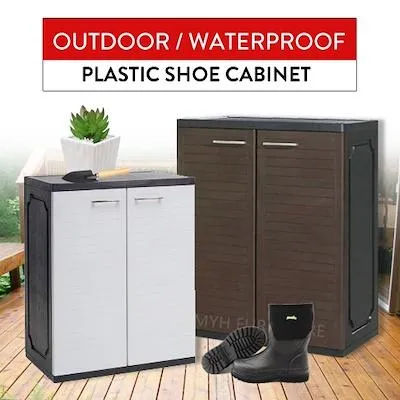
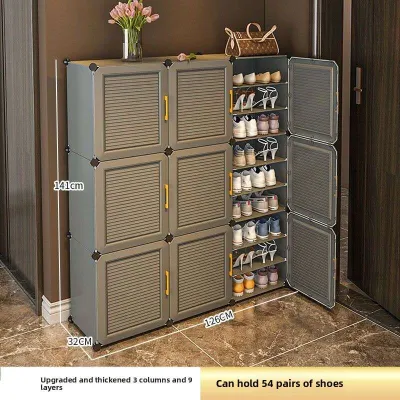
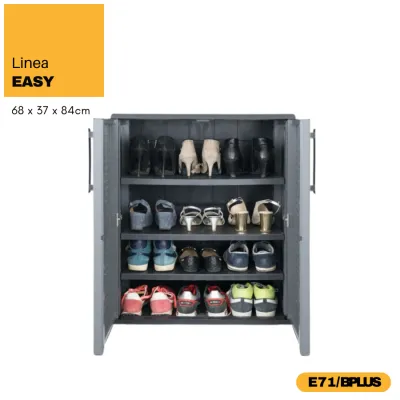
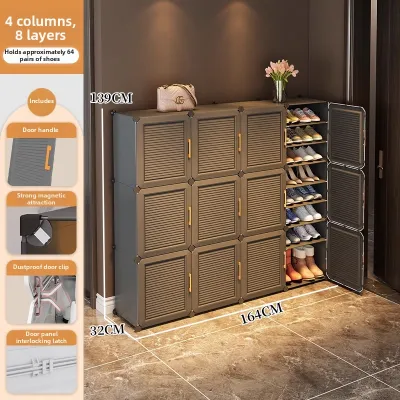
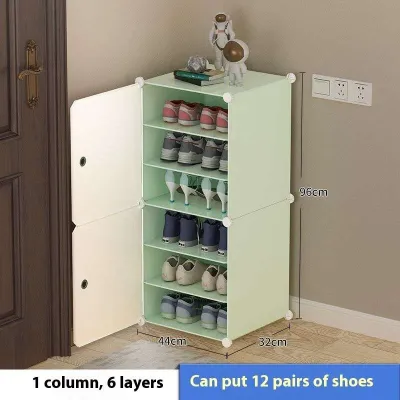
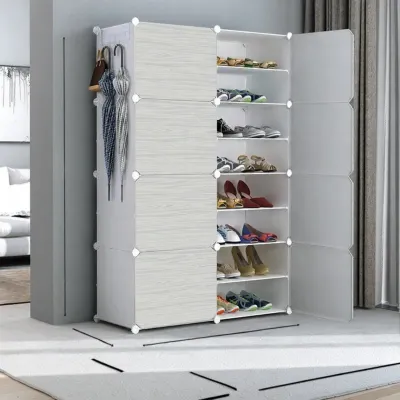
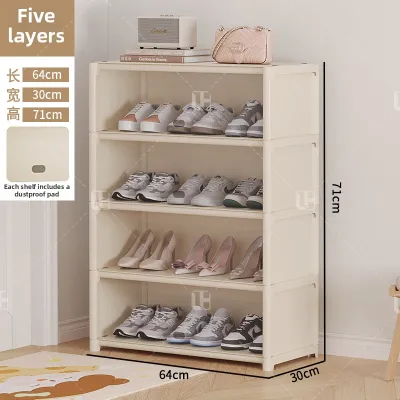
Prices are valid at publication and may change. Please refer to the product page for the latest price.
Essential design features for outdoor use include built-in ventilation, raised bases, and secure door mechanisms. Ventilation slots or louvered doors are crucial for promoting airflow, which helps control odors and prevents the buildup of mold and mildew in humid conditions. A raised base or elevated legs will keep the bottom of the cabinet away from pooling water during heavy rainstorms, protecting both the cabinet’s contents and its base. Secure door latches or magnetic closures are also necessary to prevent strong winds from blowing the doors open and to keep out common outdoor pests.
Finally, precise measurements are non-negotiable. You must measure the exact footprint of your available outdoor space, including the clearance required for the cabinet doors to swing fully open. For those living in HDB flats or condominiums, it is vital to check building management rules and fire safety guidelines before making a purchase. The Singapore Civil Defence Force (SCDF) maintains strict regulations regarding corridor clearances, and individual Management Corporation Strata Title (MCST) by-laws may restrict the types of furniture permitted on balconies or porches.
Top Cabinet Styles for Singles and Couples (Compact Spaces & HDB Corridors)
For one- to two-person households, space efficiency is the top priority. If you live in an HDB flat with a shared corridor or a condominium with a compact entryway, you must maximize your storage capacity without encroaching on public walkways or violating safety rules.

Slim and stackable units are highly effective for these tight configurations. Vertical plastic cabinets with tilting compartments—often referred to as shoe tippers—are designed with an incredibly narrow depth, sometimes measuring as little as 15 to 20 centimeters. These units store shoes vertically rather than horizontally, allowing you to keep several pairs organized while maintaining a flush profile against the wall. Stackable plastic shoe boxes or modular drawers offer similar space-saving benefits, allowing you to build your storage upward as your collection grows.
Another excellent option for compact areas is low-profile or multi-functional storage, such as outdoor plastic storage benches. These units serve a dual purpose: they provide a sturdy seat for putting on shoes while concealing storage compartments underneath. If permitted by your building guidelines, wall-mounted plastic cabinets can also keep the floor completely clear, making it easier to clean the corridor floor and preventing water from pooling underneath the unit.
Before placing any storage unit in an HDB corridor, you must verify compliance with local fire safety regulations. SCDF guidelines dictate that a minimum clear escape passage of 1.2 meters must be maintained along the corridor at all times. Additionally, your cabinet must not block access to utility meters, water valves, electrical risers, or emergency exit routes. Failing to adhere to these rules can result in warnings or fines from your Town Council, and you may be forced to remove the cabinet entirely.
When browsing online marketplaces or brand official stores, pay close attention to the exact depth and width of the product. Check the manufacturer’s specified weight limits, especially if you plan to stack multiple modular units, and look for models that include anti-tip hardware to secure the cabinet to the wall. When stacking modular plastic units, the center of gravity shifts upward. If the bottom units are filled with lightweight sandals while the top units hold heavy boots, the entire structure becomes unstable. Therefore, always place heavier footwear at the bottom of the stack to maintain a low center of gravity.
Best Storage Options for Small Families (Condo Porches & Medium Spaces)
A typical three- to four-person household requires a medium-capacity storage solution that balances volume with aesthetics. For small families living in condominiums or apartments with medium-sized porches, the cabinet must accommodate a diverse mix of footwear while matching the visual standards of the estate.
Mid-sized plastic cabinets with adjustable internal shelves are ideal for small families. Children’s shoes, school sneakers, high heels, and flat sandals all have different heights. Fixed shelves often lead to wasted vertical space, whereas adjustable shelving allows you to customize the interior layout to maximize capacity. Look for cabinets that can comfortably hold between 15 and 25 pairs of shoes without crowding.
Because condo porches and balconies are often semi-sheltered, your cabinet will still be exposed to wind-blown rain and dust. A high-quality outdoor cabinet should feature weather-sealed doors with overlapping lips or rubber gaskets to keep water out during heavy downpours. However, because airtight cabinets trap moisture and sweat, the design must also incorporate strategically placed ventilation slots—ideally located on the rear panel or under a protective overhang—to allow continuous airflow without letting rain inside.
Before installing a shoe cabinet on your condo porch, consult your estate’s MCST by-laws. Many private estates have strict regulations regarding the visual uniformity of external areas. Some management bodies prohibit any visible storage units on balconies or porches, while others restrict the allowed colors, materials, and maximum heights of outdoor furniture. For instance, the MCST may mandate that any outdoor cabinet on a balcony or private enclosed space (PES) must not exceed the height of the balcony railing (typically 1 to 1.2 meters) to ensure it remains invisible from the street level. They may also restrict colors to neutral tones like charcoal, light grey, or off-white.
When evaluating cabinets for medium loads, prioritize structural stability. Check that the plastic shelves are reinforced with internal ribbing or metal supports to prevent them from sagging under the weight of heavier shoes, such as leather work boots or wet athletic sneakers. Look for robust, heavy-duty polymer or rust-resistant metal hinges that can withstand frequent daily use by multiple family members.
High-Capacity Picks for Large Families (Landed Entrances & Large Porches)
Large households of five or more people require heavy-duty, high-capacity storage solutions. If you have a spacious porch, a private landed property entrance, or a large ground-floor patio, you have the physical space to accommodate substantial freestanding units that can hold 30 or more pairs of shoes.
Modular and expandable plastic systems are highly practical for growing families. These systems consist of interlocking plastic storage cubes or side-by-side modular cabinets that can be reconfigured or expanded over time. If your family’s footwear needs increase, you can simply purchase additional matching modules and connect them to your existing setup, avoiding the need to buy an entirely new, larger cabinet.
For maximum durability and volume, heavy-duty freestanding plastic utility cabinets or outdoor wardrobes are the gold standard. Often constructed from double-walled polypropylene, these robust units are designed to withstand harsh outdoor environments. Double-walled plastic construction creates a small air gap between the outer and inner walls of the cabinet, acting as a natural thermal barrier. In Singapore’s intense heat, single-walled plastic cabinets can heat up significantly, creating an oven-like interior that can melt shoe glues and warp synthetic materials; double-walled designs help mitigate this heat transfer. They feature thick, sturdy shelves, reinforced bases, and heavy-duty latches that can be padlocked for extra security.
Environmental and safety considerations are paramount when installing large cabinets outdoors. Landed property entrances and ground-floor patios are highly susceptible to pests such as lizards, cockroaches, spiders, and rodents. To protect your shoes, select cabinets with tight-fitting doors, magnetic latches, and sealed back panels. Furthermore, because tall, heavy cabinets present a serious tip-over hazard—especially in households with children or pets—it is critical to anchor any unit over 1.2 meters tall to the wall or floor using heavy-duty masonry anchors or anti-topple brackets.
When purchasing a high-capacity cabinet, verify the maximum load capacity per shelf to ensure it can support heavy family footwear. Look for premium UV-stabilized plastics to prevent the material from becoming yellow or brittle under Singapore’s intense sun. Finally, double-check the finished dimensions of the product against your property’s access points, ensuring the delivery package can easily pass through your main gates, lift doors, and entryways.
Maintenance and Care for Outdoor Plastic Cabinets
While plastic is exceptionally durable and low-maintenance compared to other materials, regular care is still required to maximize its lifespan and keep the interior hygienic for your footwear.
For routine cleaning, wash the cabinet’s exterior and interior surfaces using a soft cloth, mild dishwashing soap, and lukewarm water. This simple routine easily removes dust, dirt, and rainwater spots. Avoid using abrasive scrubbing pads, steel wool, or harsh chemical cleaners such as bleach, ammonia, or solvent-based thinners. These harsh substances can scratch the plastic surface, degrade the UV-resistant coating, and potentially void the manufacturer’s warranty.
Sun and weather management are also vital. Whenever possible, position your plastic cabinet in a shaded area, such as under an awning, porch roof, or behind a structural pillar. Even UV-stabilized plastics will eventually experience some degradation if subjected to constant, direct afternoon sun. Regularly inspect your cabinet for early signs of UV damage, which include color fading, surface chalking (a powdery white residue), or micro-cracks. If you notice these signs, consider relocating the cabinet to a more sheltered spot.
To control odors and moisture inside the cabinet, never store damp or wet shoes immediately after a rainstorm. Allow your footwear to air-dry completely in a well-ventilated indoor area before placing them inside the enclosed plastic cabinet. To combat Singapore’s high ambient humidity, place reusable silica gel packets, activated charcoal bags, or disposable calcium chloride dehumidifier tubs on the shelves. These moisture-absorbing products will help keep the interior dry and prevent the growth of mold and mildew.
Before applying any aftermarket protective sprays, UV-blocking coatings, or using a high-pressure water jet to clean the cabinet, always consult the manufacturer’s care instructions. High-pressure washers can easily dislodge weather-stripping, damage plastic hinges, or force water through ventilation slots, defeating the cabinet’s protective features. Additionally, excessive pressure can cause micro-cracks in older, sun-exposed plastic, compromising its structural integrity.
Frequently Asked Questions (FAQ)
Are plastic shoe cabinets allowed in HDB corridors?
HDB corridors are subject to strict fire safety guidelines managed by the SCDF and your local Town Council. While small, non-obstructive shoe racks are sometimes tolerated, they must never reduce the clear escape passage of the corridor to less than 1.2 meters. Additionally, cabinets must not block access to utility risers, water meters, or fire hose reels. Large, fully enclosed plastic cabinets often violate these space and safety requirements. It is highly recommended to check the latest guidelines from your specific Town Council and obtain necessary approvals before placing any furniture in common areas.
How do I prevent mold and odors in an outdoor plastic shoe cabinet?
Preventing mold and odors in an outdoor plastic cabinet requires active moisture management and proper airflow. Always ensure that your shoes are completely dry before placing them inside the cabinet. Choose a cabinet model that features built-in ventilation slots or louvered doors to facilitate continuous air circulation. Additionally, place moisture-absorbing products, such as activated charcoal bags or calcium chloride dehumidifier tubs, inside the cabinet and replace them regularly. Wiping down the interior shelves with a mild disinfectant once a month will also help eliminate odor-causing bacteria and mold spores.
Community discussion
Share your experience or ask a question. Comments are reviewed before publication.