
Finding the right furniture for Singaporean homes often requires balancing limited floor space with daily practical needs. An ottoman bench serves as an exceptionally versatile solution, offering a comfortable seat while concealing a generous storage compartment. To choose a reliable brand, homeowners must look beyond surface aesthetics and evaluate how well a manufacturer balances structural integrity, cushion comfort, and climate-resilient materials.
In high-density housing layouts like HDB flats and modern condominiums, every square meter counts. A well-engineered storage bench can declutter entryways, organize bedroom linens, or provide extra seating in the living room. Identifying a quality brand involves understanding the engineering behind these dual-purpose pieces, ensuring they can withstand daily seating weight while keeping stored belongings safe from local humidity.
How to Evaluate Brands for Multi-Functional Quality
When assessing furniture brands for a high-quality ottoman bench, the primary consideration is how the manufacturer balances the competing demands of storage volume and seating comfort. A deep storage cavity naturally reduces the space available for supportive seating foam, while an overly thick cushion can compromise the internal storage depth. Superior brands solve this engineering challenge by utilizing high-density polyurethane foam that provides firm, resilient support with a thinner profile, typically between 5cm and 8cm. This ensures the seat does not bottom out against the hard wooden frame while maximizing the usable space underneath.
Products mentioned in this guide
![[FABRIC] Foldable Storage Ottoman Bench For Living Room Bedroom Entryway](https://img.lazcdn.com/g/p/039bf582e2daaba41ba4126dc41fc823.png_400x400q80.png_.webp)
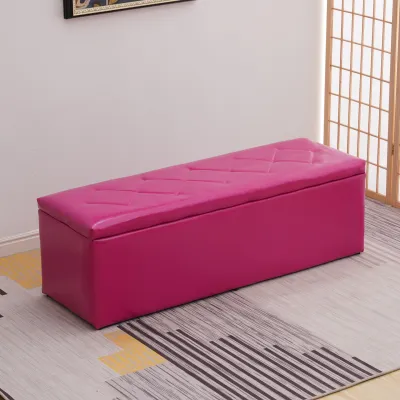
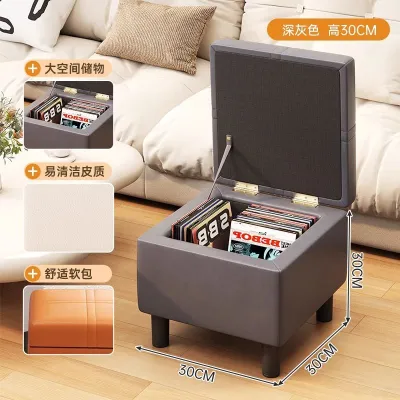
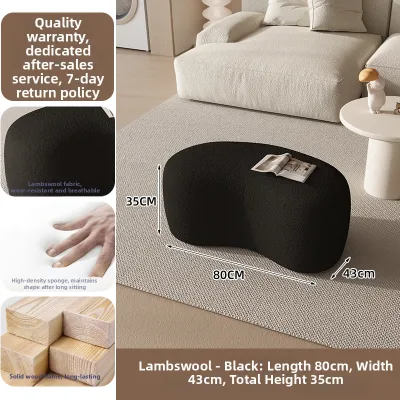
Prices are valid at publication and may change. Please refer to the product page for the latest price.
Frame construction is the most critical factor determining the lifespan of a multi-functional bench. Brands that prioritize durability construct their frames from solid hardwoods, such as rubberwood, oak, or high-grade birch plywood. Solid wood frames can easily support static seating loads of 150kg to 200kg or more without bowing. Conversely, budget-focused brands often rely on low-density particleboard or thin medium-density fibreboard (MDF) held together by staples. Over time, the constant weight of users sitting down weakens these joints, causing the frame to warp and preventing the storage lid from closing flush.
To identify brands that emphasize dual-purpose engineering, look closely at their published product specifications. Reputable manufacturers will explicitly state the maximum weight capacity of the seating surface and the internal dimensions of the storage compartment. They will also detail the joinery methods used, such as mortise-and-tenon joints or reinforced corner blocks, rather than simple glue and screws. Brands that provide these granular details demonstrate that their products are designed to function safely as both heavy-duty seating and secure storage units.
Essential Design and Material Features for Local Homes
Space planning is a critical step when integrating an ottoman bench into typical Singaporean residential layouts. In compact HDB entryways or narrow condominium foyers, you must measure the clearance around the bench carefully. Ensure that the placement of the bench does not obstruct the swing path of the main door, the metal gate, or nearby shoe cabinets. For bedroom placement at the foot of the bed, maintain a minimum walkway clearance of 60cm between the bench and the wardrobe doors or adjacent walls to allow comfortable movement.

Singapore’s tropical climate, characterized by high relative humidity that frequently exceeds 80%, demands careful material selection. Standard synthetic leathers, such as low-grade polyurethane (PU), are highly prone to peeling and cracking within a few years of exposure to local heat and moisture. Instead, seek brands that offer breathable upholstery options, such as linen-polyester blends, performance fabrics treated with moisture barriers, or genuine top-grain leather. Additionally, ensure that all internal metal hardware, including screws, hinges, and bracket supports, is made of rust-proof materials like stainless steel or powder-coated steel to prevent oxidation from humid air.
Choosing the right lid mechanism is essential for both convenience and safety, and different brands offer distinct configurations:
- Manual Lift-Off Lids: These are highly durable and budget-friendly because they have no moving parts to wear out. However, they require you to lift and hold the entire lid while accessing your items, which can be cumbersome in tight spaces.
- Hydraulic Gas Struts: These mechanisms assist in lifting the heavy upholstered lid and holding it open automatically. This is highly recommended for daily-use storage, such as entryway shoe benches, as it allows for hands-free access.
- Standard Mechanical Hinges: These hold the lid to the frame but do not support its weight when open, requiring one hand to keep the lid propped up to prevent it from slamming shut.
Before finalizing a purchase, always calculate the ratio between the external footprint and the internal usable storage volume. Some designs feature thick, decorative rolled arms or bulky overstuffed cushions that look appealing but significantly reduce the actual storage space inside. A smart design maximizes the internal width and depth while keeping the external dimensions compact enough to fit your designated space.
Comparing Furniture Retailers and Custom Options in Singapore
To find the right bench, it helps to categorize the local retail landscape into three main segments: international flat-pack retailers, premium designer showrooms, and custom carpentry services. Each option caters to different budgets, timelines, and spatial requirements.
International flat-pack and ready-to-assemble (RTA) retailers are popular for their affordability and immediate availability. These brands are excellent for temporary living arrangements or budget-conscious buyers who need a quick storage solution. However, because these pieces are designed for mass shipping, they often rely heavily on engineered wood panels and basic manual hardware. The weight capacities are generally lower, and the assembly quality depends entirely on the tools and precision of the person putting it together.
Premium designer furniture showrooms, located in local furniture hubs like Tanjong Pagar, Ubi, or Sungei Kadut, offer a significant step up in material quality. These brands focus on solid wood frames, high-density foam cushioning, and premium upholstery fabrics. Their designs are often more refined, featuring sleek mid-century modern or minimalist aesthetics that elevate the room’s decor. The trade-offs are a higher price point, often ranging from S$300 to S$800, and potential waiting periods of several weeks if the specific fabric or color configuration is out of stock.
For homes with highly specific spatial constraints, such as awkward bay windows, structural pillars, or precise wall-to-wall niches, local custom carpentry is often the most practical route. Commissioning a built-in storage bench allows you to maximize every millimeter of space and match the exact wood laminate of your existing cabinetry. While custom carpentry offers unmatched space optimization and structural integration, it is completely non-portable. If you move house, the bench cannot go with you, and the initial cost per linear foot is significantly higher than buying a ready-made retail piece.
Verifying Delivery, Assembly, and Warranty Support
Receiving a heavy, fully assembled storage bench requires careful logistical planning. Before ordering, review the brand’s delivery policies regarding building access. Many logistics providers in Singapore charge additional staircase surcharges, typically ranging from S$10 to S$20 per floor, if the item cannot fit into the building’s passenger lift or if you live in an older walk-up apartment. Measure the height and width of your lift door, the interior cabin dimensions, and any tight turns in your corridor to ensure the delivery team can safely navigate the package to your doorstep.
Professional assembly is highly recommended for multi-functional benches, particularly those equipped with hydraulic gas struts or complex soft-close hinges. If the frame is not perfectly squared during assembly, the hinges will experience uneven tension. This misalignment leads to premature wear, squeaking, and a lid that fails to close flush with the base. Many premium brands include professional on-site assembly in their delivery fee, which ensures that all moving parts are calibrated correctly from day one.
Warranty coverage is a strong indicator of a brand’s confidence in their product’s longevity. A standard furniture warranty often covers only the static wooden frame for a year. However, because an ottoman bench has moving parts, you should look for brands that offer comprehensive warranties covering the hardware, including the hydraulic struts, hinges, and casters. Ensure you read the fine print to understand what constitutes normal wear and tear versus a manufacturing defect, as hardware failure is the most common issue over years of daily use.
Safety Mechanisms and Long-Term Maintenance
Safety is a paramount consideration for multi-functional furniture, especially in households with young children or pets. A heavy, upholstered storage lid can act like a guillotine if it falls unexpectedly. To prevent painful finger-pinch injuries, prioritize brands that incorporate soft-close hinges, anti-slam dampers, or safety lid stays. These mechanisms slow down the descent of the lid during the last few inches of closing, ensuring it gently glides shut even if released suddenly.
Stability and weight distribution are equally important for preventing accidents. Because these benches are hollow, they have a higher center of gravity than solid seating. Sitting on the very edge of an open lid, or allowing children to climb on the lid, can cause the entire bench to tip forward. To maintain maximum stability, always store heavier items, such as books, photo albums, or heavy winter wear, flat along the bottom of the compartment to keep the center of gravity as low as possible. Avoid overloading one side of the bench, which can strain the frame and warp the hinges.
Maintaining your storage bench in Singapore’s humid climate requires a simple but consistent care routine:
- Fabric Care: Vacuum the upholstery weekly using a soft brush attachment to remove dust, pet dander, and skin cells. If using a fabric cleaner, test it on a small, hidden area first to ensure it does not discolor the material.
- Hardware Lubrication: Apply a light silicone-based lubricant to the metal hinges and gas struts once a year to prevent rust, eliminate squeaks, and maintain smooth opening and closing movements.
- Joint Inspection: Periodically check the structural joints and tighten any loose screws or bolts, especially if the bench is moved frequently.
Always consult the manufacturer’s specific care labels and weight limit guidelines before performing any deep cleaning or structural adjustments. Following these tailored instructions will protect the materials and ensure your warranty remains valid.
Frequently Asked Questions (FAQ)
Can an ottoman bench be used as a primary dining seat or bed end?
An ottoman bench is highly suitable as a bed-end seat, as its typical height of 40cm to 45cm aligns perfectly with standard mattress heights, providing a convenient spot to put on shoes or lay out clothes. However, using it as a primary dining seat is generally not recommended for extended periods. Standard dining chairs are taller, usually 45cm to 48cm, and feature upright back support. Most storage benches lack backrests and feature softer cushioning that sinks over time, which can lead to poor posture and discomfort during long meals. If you do use a bench for dining, ensure the brand specifies a firm, high-density foam cushion and a seating height that matches your dining table.
How do I measure my space for a storage bench in an HDB hallway?
To measure an HDB hallway for a storage bench, start by mapping out the floor footprint using masking tape to visualize how much physical space the bench will occupy. Next, measure the vertical clearance directly above the bench; you must ensure there is enough room for the storage lid to swing open fully without hitting wall-mounted items like mirrors, key organizers, or light switches. Finally, account for structural obstacles such as wall skirting boards, which can push the bench 1cm to 2cm away from the wall, and ensure the bench does not block the opening path of your main door, gate, or shoe cabinet drawers.
Community discussion
Share your experience or ask a question. Comments are reviewed before publication.