
Selecting the right storage stool seat for a compact home in Singapore requires balancing seating comfort, structural safety, and space efficiency. In high-density living environments like HDB flats and condominiums, every piece of furniture must justify its footprint. A multi-functional storage stool serves as a practical solution, offering a hidden compartment to clear clutter while functioning as a supportive seat, a footrest, or even a temporary side table. However, finding a model that withstands daily wear and the local tropical climate requires careful evaluation of materials, mechanisms, and dimensions.
To make an informed purchase, you must look beyond aesthetic appeal. The ideal storage stool must support your body weight safely, open smoothly without risking pinched fingers, and resist the high humidity levels typical of Singapore’s environment. This guide outlines the essential criteria for evaluating these versatile furniture pieces, categorizes the most practical designs available, and provides actionable space-planning advice to ensure your chosen stool fits seamlessly into your home layout.
How to Evaluate Multi-Functional Storage Stools
When shopping for a storage stool seat, evaluating the build quality and structural integrity prevents common issues like sagging lids, warped frames, or stiff opening mechanisms. Focusing on practical engineering ensures the piece remains functional for years rather than becoming a decorative hindrance.
Products mentioned in this guide
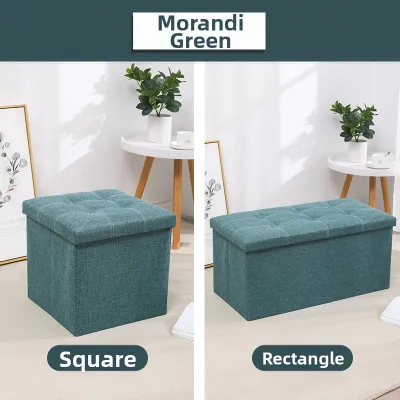
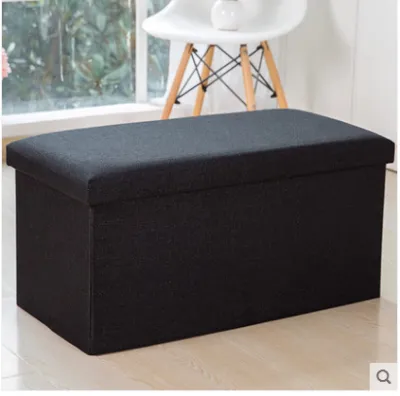
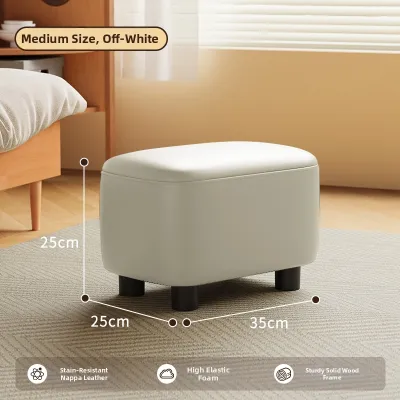
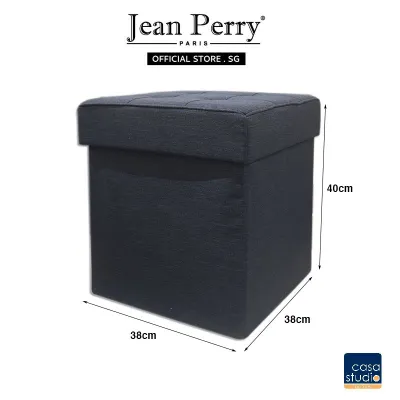
![[SG🇸🇬Seller] Solid Wood Storage Foot Stool Ottoman PU Leather](https://img.lazcdn.com/g/p/d7b77d49aa189d018c6971e1fb6eb988.jpg_400x400q80.jpg_.webp)
Prices are valid at publication and may change. Please refer to the product page for the latest price.
Mechanism Practicality
The way a storage stool opens and closes determines its daily usability. Lift-off lids are simple and highly durable because they lack moving parts, but they require you to find a temporary spot for the lid whenever you access the storage compartment. Hinged lids offer greater convenience, but the hardware must be robust. Look for high-quality friction hinges or gas struts that hold the lid open automatically, preventing it from slamming down on your hands. If you are considering a convertible design, test how smoothly the components transition between modes; any resistance, squeaking, or misalignment during the transition indicates poor manufacturing tolerances.
Storage Capacity and Interior
To maximize storage utility, calculate the internal volume rather than relying solely on external dimensions. A standard 38-centimeter cubic storage stool typically offers around 40 to 45 liters of storage capacity, but the actual usable space depends on the thickness of the walls and the presence of internal dividers. If you plan to store small, loose items like remote controls, chargers, or children’s toys, look for models with built-in fabric dividers or removable trays to prevent the interior from becoming cluttered. Additionally, verify that the interior lining is made of a non-woven synthetic material or treated canvas, which provides basic moisture resistance and is easy to vacuum or wipe clean.
Material and Climate Adaptability
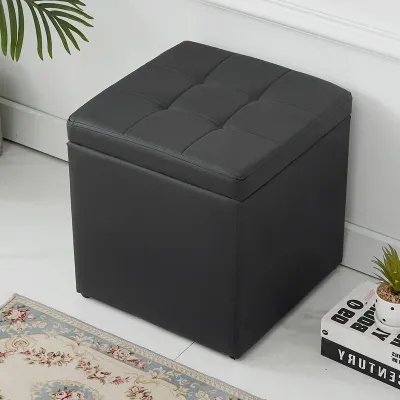
Singapore’s year-round high humidity and ambient heat place unique demands on furniture materials. Frame construction is critical; cheap, untreated particleboard is highly susceptible to absorbing moisture from the air, which leads to swelling, warping, and structural weakening over time. Instead, prioritize frames made from solid rubberwood, engineered medium-density fibreboard (MDF) with a protective laminate, or rust-proof powder-coated metal. For the upholstery, breathable fabrics like linen blends or synthetic polyester are excellent choices as they allow air circulation and dry quickly. If you prefer leather, opt for high-grade polyurethane (PU) leather or treated genuine leather, which can be easily wiped down to prevent mold growth, and avoid low-quality vinyl that traps heat and becomes uncomfortable to sit on.
Weight Capacity and Stability
A storage stool must function reliably as a seat, which means its weight capacity is just as important as its storage volume. Always check the manufacturer’s stated static weight limit, which typically ranges from 80 kilograms for basic foldable models to over 150 kilograms for solid-frame benches. Stability is heavily influenced by the base design; stools with a wide, flat bottom or low-profile, solid wood legs offer the lowest risk of tipping. Inspect the corner joints of the frame to ensure they are reinforced with metal brackets or dowels, as weak joints can cause the stool to wobble or collapse when a user sits down or shifts their weight.
Top Multi-Functional Storage Stool Categories for Compact Homes
To help you find the right fit for your specific living arrangements, multi-functional storage stools can be grouped into three primary categories. Each type addresses distinct spatial challenges and functional requirements in HDB flats and condominiums.

Foldable and Collapsible Storage Stools
Foldable storage stools are designed for maximum space efficiency and temporary utility, making them ideal for homes that frequently need to adapt their layouts for guests or seasonal activities.
- Ideal Scenarios: These stools work exceptionally well in guest bedrooms, multi-purpose study rooms, or entryways where you need a temporary seat to put on shoes but want to clear the floor space afterward. They can be folded flat and tucked away inside a wardrobe or behind a door when not in use.
- Pre-Purchase Checks: Carefully inspect the thickness and rigidity of the bottom insert board. This board is placed at the bottom of the expanded stool to push the walls outward and distribute weight; if it is too thin or made of cheap cardboard, the stool will lack lateral stability. Also, verify that the lid has a deep overhanging lip to prevent it from sliding off when sat upon.
- Limitations: Foldable models generally offer lower seating comfort for prolonged periods because the padding on the lid is thinner to allow for a compact folded profile. Additionally, the fiberboard walls can bow or degrade over time under heavy, daily seating loads.
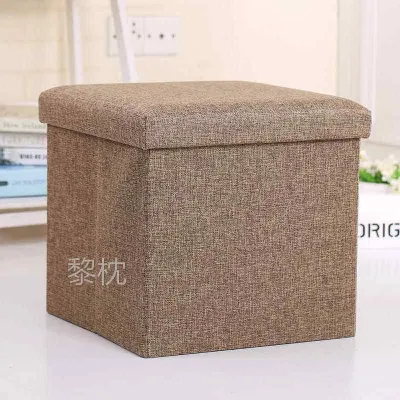
- Product Integration: Standard collapsible linen storage stools, widely available on local online marketplaces, typically measure 38 x 38 x 38 centimeters and fold down to a height of just 5 centimeters. When fully expanded, they provide a quick 40-liter storage compartment and are rated to support up to 100 kilograms of static weight, offering a highly flexible, low-cost seating solution.
Convertible Stools with Tray Tops or Tables
Convertible storage stools feature clever dual-purpose lids that allow the piece to transition from a soft footrest or seat to a hard, stable surface for holding drinks, books, or decorative items.
- Ideal Scenarios: These are perfect for positioning beside low-profile sofas, next to bedheads in compact bedrooms, or in cozy balcony nooks where space does not permit both an ottoman and a side table.
- Pre-Purchase Checks: Look for a reversible lid design where one side is upholstered in comfortable foam and fabric, while the reverse side features a flat wooden or laminate tray. Ensure the tray side has a raised outer lip (at least 1 to 2 centimeters high) to prevent cups or plates from sliding off if the stool is bumped. The wooden surface should also have a water-resistant polyurethane coating to protect against condensation from cold drinks.
- Limitations: Because the lid must accommodate a hard tray, the cushioned side may be slightly firmer than a dedicated footstool. Furthermore, when used as a table, you cannot sit on the stool, meaning you must choose between seating and surface utility at any given moment.
- Product Integration: A popular example in Singapore is the round convertible storage ottoman (often measuring 40 centimeters in diameter and 45 centimeters in height) featuring an oak-veneered tray lid. This design allows you to flip the lid to instantly create a stable coffee table surface, while the hollow interior provides a discreet spot to store living room blankets, magazines, or gaming controllers.
Modular Ottomans and Expandable Storage Benches
Modular and expandable storage benches offer substantial storage volume and flexible seating configurations, making them a semi-permanent furniture anchor in larger rooms.
- Ideal Scenarios: These units are highly suited for main living rooms, long entryways, or at the foot of a master bed. They are particularly useful for families who need to store larger items like bed linens, winter wear, or bulky toys, while providing seating for multiple people.
- Pre-Purchase Checks: If choosing a modular set, examine the connection mechanisms between the individual units. High-quality modular stools use heavy-duty steel interlocking clips or wide Velcro straps underneath to prevent the modules from drifting apart when sat upon. For long, single-piece benches, ensure the frame features a central support leg or a reinforced bottom panel to prevent sagging in the middle.
- Limitations: These benches have a much larger permanent footprint and cannot be easily tucked away. The gaps between modular units can also accumulate dust, pet hair, and small debris, requiring regular vacuuming to maintain cleanliness.
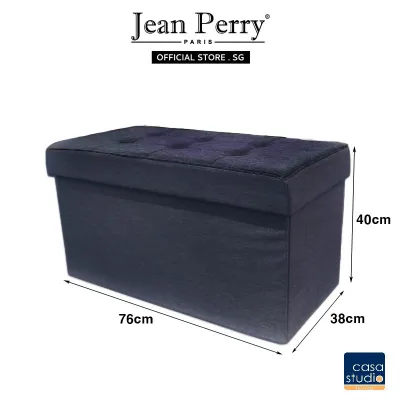
- Product Integration: Large fabric storage benches, such as those measuring 110 x 40 x 40 centimeters, offer over 120 liters of internal storage space. These sturdy benches are built with solid wood frames and high-density foam cushioning, supporting up to 150 kilograms across the top, making them a robust, long-term addition to an entryway or living room layout.
Space Planning and Measurement for HDBs and Condos
To avoid delivery complications and ensure your new storage stool seat functions practically within your home, you must measure your space and plan for clearances before making a purchase.
Delivery and Access Checks
While small, foldable stools are easy to transport, larger modular ottomans or fully assembled storage benches require clear access routes. Measure the width of your HDB or condo main entrance door, the dimensions of your building’s elevator door, and the interior depth of the elevator cabin. For long benches exceeding 120 centimeters, check the clearance in narrow corridors or tight corners inside your entryway; a lack of turning space can make it impossible to bring a fully assembled bench into your living room.
Clearance and Swing Space
A storage stool requires dedicated operational clearance to be useful. If the stool features a hinged lid, ensure there is enough vertical clearance above the stool so the lid can open fully without hitting low-hanging wall shelves, artwork, or wall-mounted TVs. For models with drawers or pull-out compartments, calculate the depth of the drawer when fully extended and add at least 40 centimeters of standing space so you can access the contents comfortably without being blocked by coffee tables or adjacent walls.
Visual Proportions and Cleaning
In compact apartments with standard 2.6-meter ceiling heights, bulky, floor-hugging furniture can make a room feel visually crowded. To maintain an open, airy feel, choose a low-profile storage stool that sits below the height of your sofa cushions. If you use a robot vacuum cleaner, pay close attention to the base design. Choose a storage stool with raised legs that provide at least 10 centimeters of ground clearance, allowing the robot vacuum to pass underneath easily. If you opt for a floor-contact model, ensure it has rubberized pads or felt glides to protect your vinyl, laminate, or polished tile flooring from scratches when the stool is moved.
Safety Boundaries, Weight Limits, and Maintenance
Proper usage and routine maintenance are essential to ensure your multi-functional storage stool remains safe, hygienic, and structurally sound over its lifespan.
Load and Safety Warnings
Strictly adhere to the manufacturer’s specified weight limits for both the seating surface and the internal storage compartment. Never use a collapsible or lightweight storage stool as a step ladder to reach high shelves or ceiling fans; these stools are designed to distribute weight evenly when a person is sitting, and standing on them concentrates force in a small area, which can cause the lid to cave in or the walls to buckle. If you have young children or pets, prioritize stools with safety hinges or soft-close dampers that prevent the lid from slamming shut, reducing the risk of painful pinches.
Hardware and Mechanism Care
Over time, the constant opening, closing, and seating pressure can loosen hardware components. Every six months, inspect the hinges, screws, and gas struts of your storage stool. Use a screwdriver to tighten any loose screws, and check that the hinges are aligned correctly. If the joints begin to squeak or feel stiff, apply a tiny drop of silicone-based lubricant directly to the moving parts of the hinge. Wipe away any excess lubricant immediately with a dry cloth to prevent it from attracting household dust or staining the surrounding upholstery.
Material Upkeep
To protect your storage stool from Singapore’s humid climate, place it in a well-ventilated area of your home, away from direct sunlight which can dry out leather and fade fabric colors. Vacuum fabric upholstery once a week using a brush attachment to remove dust mites and skin flakes. For PU or genuine leather stools, wipe the surface weekly with a slightly damp microfiber cloth to remove sweat and oils, and apply a specialized leather conditioner once a year to keep the material supple. Inside the storage compartment, place reusable silica gel packets or charcoal deodorizer bags to absorb ambient moisture and prevent musty odors.
Stop-Use Conditions
Regularly inspect the structural integrity of your storage stool. You must immediately stop using the stool as a seat if you observe any of the following warning signs:
- Visible cracks or splits in the wooden frame or support legs.
- Severely bent, rusted, or loose metal hinges that prevent the lid from aligning properly.
- A noticeable bowing or sagging of the top lid when weight is applied.
- Excessive wobbling, shaking, or loud creaking noises when you sit down.
If any of these conditions occur, discontinue use to prevent sudden collapse or injury, and contact the manufacturer or a professional furniture repair technician to assess whether the piece can be safely repaired.
Frequently Asked Questions (FAQ)
Can a storage stool be used as a primary dining seat?
No, storage stools are not recommended as primary dining seats. Most storage stools have a seat height of 38 to 42 centimeters, which is lower than the standard dining chair height of 45 to 48 centimeters, resulting in poor dining ergonomics and back strain. Additionally, the lack of back support and the tendency of foam lids to compress over long periods make them uncomfortable for extended meals. They are best reserved as temporary, space-saving seating options for guests.
How do I prevent mold inside the storage compartment?
To prevent mold growth in Singapore’s humid climate, ensure that all items are completely dry before placing them inside the stool. Place moisture absorbers, such as silica gel packets or disposable calcium chloride dehumidifier tubs, inside the compartment, and replace them regularly. On dry, sunny days, leave the lid of the stool open for a few hours to allow fresh air to circulate. Avoid storing damp linens, sensitive electronics, or valuable paper documents inside the stool.
Are foldable storage stools safe for elderly users?
Foldable storage stools are generally unsafe for elderly users. Because these stools rely on collapsible walls and removable base inserts rather than a solid, rigid frame, they lack lateral stability and can tip over if a user sits down unevenly or shifts their weight. Furthermore, they do not feature armrests to assist with standing up, and the low seat height can place excessive strain on aging knees. Older adults should prioritize solid, fixed-frame storage benches with sturdy wooden or metal legs and non-slip feet.
Community discussion
Share your experience or ask a question. Comments are reviewed before publication.