
Selecting a mattress king size in Singapore requires aligning your specific sleep posture and body weight with brands that excel in particular firmness profiles. While King Koil and Sealy Posturepedic lead the market for firm and extra-firm orthopedic support, brands like Simmons and Serta are highly regarded for balanced, medium-firm hybrid versatility. For those seeking plush, deep-contouring pressure relief, Tempur and premium latex or memory foam offerings provide the ideal cloud-like feel.
Because a king size mattress represents a substantial physical and financial investment, understanding how its physical dimensions and construction interface with your sleep environment is critical. The larger surface area alters how weight is distributed, how motion travels across the bed, and how structural integrity is maintained along the perimeter. By matching your physical requirements with the engineering strengths of established brands, you can secure a sleep system that supports your spine and ensures long-term durability.
How to Choose the Right Firmness for a King Size Mattress
Mattress firmness is typically measured on a standardized scale from 1 to 10, where 1 represents an ultra-soft surface with maximum sinkage and 10 represents a rigid, unyielding surface. Most commercial mattresses fall within the 3 to 8 range. It is vital to recognize that firmness is highly subjective and heavily influenced by an individual’s body weight. A sleeper weighing under 60 kilograms will experience a mattress as significantly firmer than a sleeper weighing over 90 kilograms, as lighter individuals do not exert enough force to compress the deeper comfort layers.
Products mentioned in this guide
![[The Mattress Boutique]King Koil Cool Radiance Mattress - King](https://img.lazcdn.com/g/p/9cbe2efc880f3f6f60fa25a6d46dbb09.jpg_400x400q80.jpg_.webp)
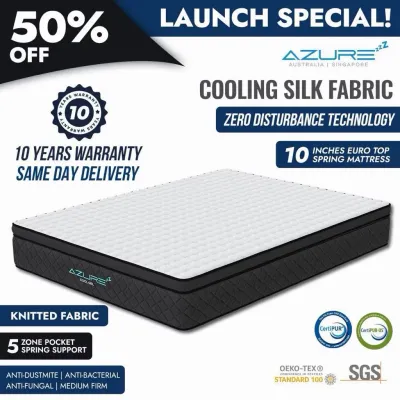
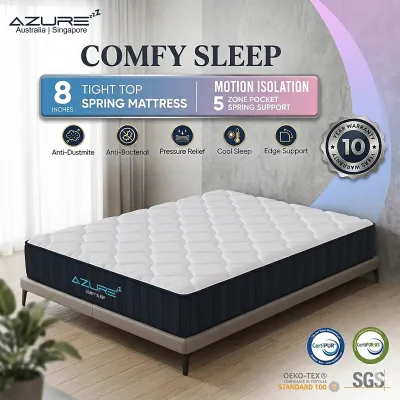
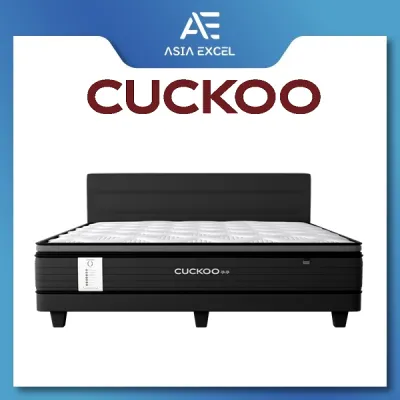
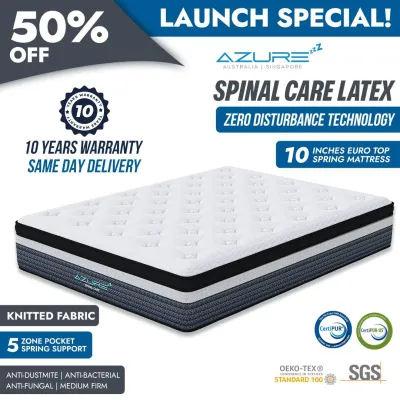
Prices are valid at publication and may change. Please refer to the product page for the latest price.
Your primary sleep position dictates the level of support required to maintain neutral spinal alignment. Side sleepers require a medium-soft to medium feel (typically 4 to 6 on the scale) to allow the shoulders and hips to sink sufficiently, preventing pressure points while keeping the spine straight. Back sleepers benefit from a medium-firm surface (6 to 7) that supports the natural lumbar curve without letting the hips sag. Stomach sleepers need a firm surface (7 to 8) to keep the pelvis elevated, preventing hyperextension of the lower spine.
When upgrading to a king size mattress, specific structural dynamics become highly prominent. The expansive surface area—standardized at 183 cm by 190 cm in Singapore—requires robust internal engineering to prevent a “hammocking” effect, where the center of the mattress sags over time. Consistent support across the entire width is essential, especially when two partners of different body weights share the bed.
Edge support is another critical factor for king size beds. Because users frequently sit on the edge of the bed to dress or sleep near the perimeter, a mattress must feature reinforced edges. This is typically achieved through high-density foam encasements or heavier-gauge coils around the perimeter. Without this reinforcement, you may experience a rolling-off sensation when sleeping near the edge, effectively reducing the usable sleeping surface.
Motion isolation is the final key consideration for couples sharing a king size bed. Kinetic energy from one partner turning or getting out of bed can easily travel across a continuous coil system, disrupting the other partner’s sleep. Selecting a mattress with individually pocketed coils or thick memory foam layers ensures that energy is absorbed vertically rather than transferred horizontally across the wide surface.
Top Brand Profiles for Firm and Extra-Firm Support
Firm and extra-firm mattresses (rated 7.5 to 9 on the scale) are engineered specifically for back sleepers, stomach sleepers, and individuals with heavier body weights. These models focus on keeping the spine in a flat, neutral position by preventing the heavier midsection of the body from sinking into the mattress. This rigid alignment reduces muscle strain along the lower back and shoulders during sleep.

In Singapore, King Koil is widely recognized for its firm orthopedic mattress lines, many of which are developed in collaboration with the International Chiropractors Association (ICA). Their firm models utilize heavy-gauge coil systems and high-density foam layers that resist compression. Sealy Posturepedic is another prominent brand in this category, utilizing patented Posturetech coil systems that sense body weight and respond with increasing resistance, ensuring the lower back remains supported throughout the night.
When evaluating firm models from these brands, pay close attention to the internal construction. Look for high-density polyurethane or natural latex support cores paired with zoned pocketed coil systems. Zoned systems feature thicker, stiffer coils in the middle third of the mattress to handle the concentrated weight of the torso, while using slightly softer coils under the head and feet to maintain natural body contours.
While highly beneficial for spinal alignment, extra-firm mattresses carry distinct limitations. Side sleepers will likely find these surfaces too unyielding, leading to restricted blood circulation and joint pain in the shoulders and hips. Lighter individuals may also experience discomfort, as they will rest entirely on top of the mattress without engaging the comfort layers, creating localized pressure points.
Before finalizing a purchase, verify the specific model’s edge support construction. Ask the retailer if the mattress uses a double-row steel border wire or a high-density foam box wall along the sides. Additionally, review the manufacturer’s warranty terms regarding permanent indentations; a quality firm mattress should be warranted against sagging of more than 2.0 to 2.5 centimeters over a ten-year period.
Best Brand Profiles for Medium-Firm Versatility
Medium-firm mattresses (rated 6 to 7 on the scale) represent the most popular and versatile category in Singapore. This firmness level is highly recommended for combination sleepers who change positions throughout the night, average-weight individuals, and couples who must compromise between differing firmness preferences. It offers a balanced blend of surface contouring and deep structural support.
Simmons is a leading brand in this segment, famous for its Beautyrest pocketed coil technology. Each coil is wrapped in individual fabric pockets, allowing them to compress independently to contour to the body while offering excellent motion isolation. Serta is also highly regarded for its medium-firm hybrid models, which combine pocketed coils with gel-infused memory foam to balance support with temperature regulation.
Engineered medium-firm mattresses typically feature a multi-layer design. A robust pocketed coil support core is topped with transition layers of medium-density foam or natural latex. These transition layers are crucial; they provide enough initial give to cushion the shoulders and hips of a side sleeper, while offering a progressive resistance that prevents a back or stomach sleeper from sinking too deeply.
Despite their versatility, medium-firm mattresses are not a universal solution. Strict side sleepers who are very light may still find the transition layers too rigid, leading to minor hip discomfort. Conversely, very heavy stomach sleepers may find that a medium-firm mattress allows their pelvis to sink just enough to cause lower back stiffness over time.
To mitigate these risks, verify the sleep trial policies associated with these brands. Many premium and direct-to-consumer mattress brands in Singapore offer home trials ranging from 100 to 120 nights. This trial period is essential for couples, as it takes several weeks of continuous use for both partners’ bodies to adjust and determine if the medium-firm compromise is genuinely comfortable for both sleep styles.
Leading Brand Profiles for Medium and Plush Comfort
Plush and medium mattresses (rated 3 to 5 on the scale) are designed for side sleepers, lighter individuals, and those suffering from joint pain or arthritis. These mattresses prioritize pressure relief, using thick, conforming comfort layers to distribute body weight evenly across the surface, thereby eliminating pressure spikes on the shoulders, elbows, and hips.
Tempur is the global benchmark for plush, pressure-relieving comfort, utilizing its proprietary Tempur Material. Originally developed by NASA, this high-density viscoelastic foam responds to body heat and weight, contouring precisely to every curve and virtually eliminating motion transfer. Premium local and international brands also offer high-end plush models featuring natural talalay latex or thick euro-top comfort layers.
Plush mattresses rely heavily on thick comfort layers positioned above the support core. These often take the form of pillow-tops (an extra cushion stitched directly to the top of the mattress) or euro-tops (a flush, integrated layer that offers a cleaner aesthetic and firmer edge support). Beneath these tops, layers of memory foam, gel foam, or soft natural latex work in tandem to cradle the body.
However, plush mattresses present specific trade-offs that must be carefully managed. The close-contouring nature of memory foam can trap body heat, which is a significant concern in Singapore’s warm, humid climate. Furthermore, plush mattresses often lack rigid edge support, making the perimeter feel soft and unstable when sitting. Heavier sleepers must avoid ultra-soft models, as excessive sinkage will misalign the spine and cause chronic back pain.
When shopping for a plush mattress, verify the integration of cooling technologies. Look for open-cell foam structures, gel infusions, or phase-change materials (PCM) woven into the fabric cover to help dissipate heat. Additionally, check the density of the comfort foams; high-density memory foam (above 50 kg/m³) or premium natural latex will retain its shape and resiliency much longer than low-density alternative foams.
Firmness Comparison and Verification Guide
To assist in your decision-making process, the table below compares the primary firmness categories, detailing their target users, structural characteristics, and potential limitations.
| Firmness Level | Ideal Sleep Position | Key Construction Features to Look For | Potential Limitations |
|---|---|---|---|
| Firm / Extra-Firm (7.5 – 9) | Back, Stomach, Heavier Sleepers | High-density support cores, zoned pocketed coils, minimal comfort layers | May cause pressure points for side sleepers; feels too rigid for light individuals |
| Medium-Firm (6 – 7) | Combination, Couples, Average-Weight | Transition layers, pocketed coil cores, balanced foam/latex comfort layers | May not offer enough plushness for strict side sleepers or rigidity for heavy stomach sleepers |
| Medium / Plush (3 – 5) | Side, Lighter Sleepers, Joint Pain Sufferers | Thick memory foam, natural latex, pillow-top or euro-top designs | Can retain body heat; lacks rigid edge support; potential spinal misalignment for heavier sleepers |
When reviewing product specifications online or in-store, do not rely solely on descriptive marketing terms like “orthopedic” or “cloud-like.” Instead, ask the retailer for technical specifications. Look for the Indentation Load Deflection (ILD) or Indentation Force Deflection (IFD) ratings of the foam layers if available; lower ILD ratings (10 to 18) indicate soft, plush foams, while higher ratings (25 to 35) indicate firm support foams. For hybrid mattresses, verify the coil count and wire gauge; a lower gauge number (such as 13-gauge) indicates thicker, firmer coils compared to a higher gauge number (such as 15-gauge).
What to Verify Before Buying a King Size Mattress in Singapore
Before committing to a king size mattress, you must address several logistical and spatial constraints unique to Singapore’s housing landscape. Standard Singapore king size dimensions are 183 cm wide by 190 cm long. However, some international brands sold locally conform to European King (190 cm x 200 cm) or US King (193 cm x 203 cm) dimensions. You must measure your bedroom floor space carefully, ensuring you have at least 60 to 70 centimeters of clearance on all three open sides of the bed to allow for comfortable movement and wardrobe door clearance.
Delivery logistics represent a major hurdle for king size purchases in high-rise HDB flats and condominiums. Measure the height and width of your apartment entrance door, internal corridors, and bedroom doors. Crucially, measure the interior dimensions and door clearance of your building’s passenger or service lift. Many delivery companies charge staircase delivery fees per floor if the mattress cannot fit inside the lift and must be carried up manually. If access is exceptionally tight, a compressed bed-in-a-box hybrid or a split-king configuration may be the only viable option.
When evaluating risk-free sleep trials, read the terms and conditions thoroughly. Verify if the brand charges a return processing or transportation fee (which can range from S$50 to S$150 in Singapore). Some brands require you to use a waterproof mattress protector during the trial period to keep the mattress in pristine condition, and most enforce a mandatory minimum trial period of 21 to 30 nights before a return can be initiated, allowing your body time to adjust to the new support structure.
Warranty policies must also be scrutinized. A standard 10-year warranty typically covers manufacturing defects and structural sagging, but it is often voided if the mattress is placed on an improper foundation. For a king size mattress, the bed frame must have a robust center support rail with at least one, and preferably two, support legs extending to the floor. If you are using a slatted base, ensure the slats are flat, rigid, and spaced no more than 7.5 centimeters apart; wider gaps can cause the mattress coils or foam to bulge downward, leading to premature sagging and voiding your warranty coverage.
Frequently Asked Questions (FAQ)
Does a king size mattress feel firmer or softer than a smaller size of the same model?
A king size mattress can feel slightly softer or more compliant in the center compared to a single or queen size mattress of the identical model. This variation is due to the larger surface area, which allows the comfort layers and coil systems more room to flex and stretch under weight. Conversely, if the brand utilizes heavy perimeter wire framing or dense foam encasement for edge support, the areas closest to the edges may feel noticeably firmer than the center. To get an accurate assessment of the feel, always test the exact king size model in a showroom rather than relying on a smaller display model.
Can I get a split-firmness king size mattress in Singapore?
Yes, several premium brands in Singapore offer split-firmness or dual-firmness king size options. These are designed specifically for couples with vastly different firmness preferences or body weights. A split-king configuration can consist of two individual single-long mattresses placed side-by-side on a single king frame, or a single king mattress engineered with different internal firmness zones on the left and right sides. When opting for this setup, verify how the center seam is constructed to ensure there is no uncomfortable gap, and confirm that the motion isolation properties are not compromised at the junction.
How long does it take to break in a new king size mattress?
It typically takes between 30 to 60 nights to fully break in a new king size mattress. During the manufacturing and packaging process, especially with compressed bed-in-a-box models, the foams and fibers are tightly compressed. Over the first few weeks of nightly use, the cells within the foam layers open up, and the steel coils lose their initial manufacturing stiffness, allowing the mattress to settle into its intended firmness level. It is common to experience mild back alignment discomfort during the first two weeks as your body adjusts to the new support profile; this is why utilizing the full duration of a sleep trial is highly recommended before making a final decision.
Community discussion
Share your experience or ask a question. Comments are reviewed before publication.