
Finding the right wardrobe for a Housing & Development Board (HDB) flat in Singapore requires balancing space constraints, storage capacity, and durability against the tropical climate. While traditional built-in wooden carpentry has long been the default choice, choosing an iron closet can be an excellent alternative that addresses many of the challenges unique to local apartments. High humidity, limited floor areas, and the risk of pest infestations make metal wardrobes an increasingly popular choice for modern homeowners. Selecting the right metal wardrobe involves understanding material specifications, structural limitations, and how different brands design their systems to fit into typical HDB bedroom layouts.
Why Choose an Iron Closet for Your HDB Bedroom?
Singapore’s tropical climate presents unique challenges for home furniture. With relative humidity levels frequently exceeding 80 percent, traditional wood-based materials like medium-density fibreboard (MDF), particle board, and plywood are highly susceptible to absorbing moisture from the air. This moisture absorption leads to swelling, warping, and the eventual structural degradation of the wardrobe. Furthermore, damp wood creates an ideal breeding ground for mold, mildew, and wood-boring pests such as termites and booklice, which can damage both the furniture and your clothing. An iron closet provides a highly durable alternative, as metal is completely impervious to biological pests, mold growth, and moisture-induced warping, ensuring a hygienic storage environment for your garments.
Space efficiency is another critical factor in HDB bedrooms, where every square centimeter counts. Standard wooden wardrobes require thick structural panels—typically between 15mm and 25mm thick—to maintain stability and support the weight of the doors and shelves. Metal wardrobes, on the other hand, utilize high-tensile steel or iron frames that can be as thin as 1mm to 2mm while offering equivalent or superior load-bearing capacity. This thin-profile design minimizes the external footprint of the wardrobe while maximizing the internal usable width and depth, allowing you to store more clothing without encroaching on valuable floor space or blocking walkways.
Products mentioned in this guide
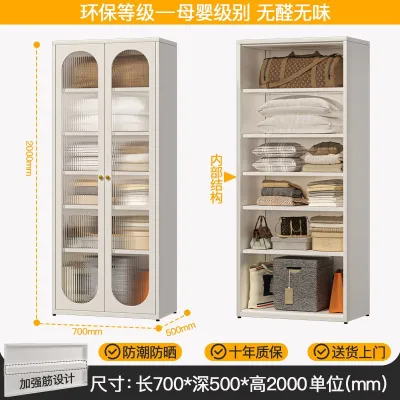
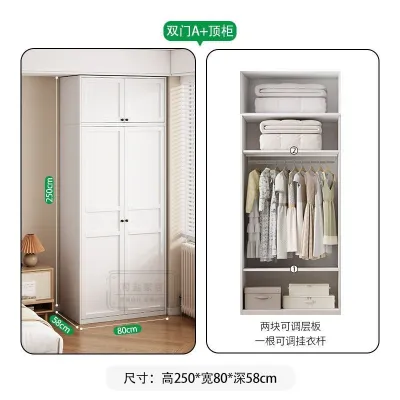
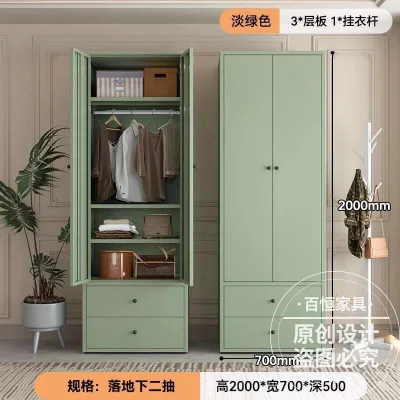
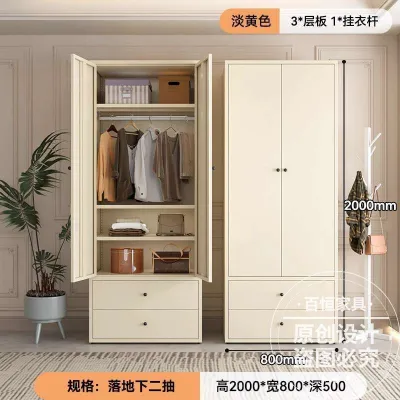
![[Cozy ]Wardrobe Storage Cabinet Wardrobe Bedroom Home Use Modern Thickened Wrought Iron Storage Cabinet Simple Wardrobe](https://img.lazcdn.com/g/p/a40fad9d3d8e008ab5582c3bcd5f1f26.jpg_400x400q80.jpg_.webp)
Prices are valid at publication and may change. Please refer to the product page for the latest price.
From an aesthetic perspective, modern metal wardrobes offer surprising versatility that extends far beyond industrial loft designs. While they naturally complement industrial and minimalist interior themes, contemporary brands offer powder-coated finishes in a wide range of colors, from matte black and charcoal gray to soft pastels and clean whites. These clean lines and slim profiles help keep a bedroom looking open, airy, and uncluttered, which is particularly beneficial in smaller BTO (Built-to-Order) bedroom layouts where bulky furniture can easily overwhelm the space.
How to Evaluate Iron Wardrobe Brands for HDB Living
When shopping for an iron wardrobe in Singapore, it is essential to look past marketing claims and evaluate brands based on objective technical specifications. The most critical factor to verify is the quality of the protective coating applied to the metal. Raw iron and steel will rust when exposed to moisture and oxygen; therefore, a high-quality finish is non-negotiable. Look for brands that specify a thermosetting powder-coated finish rather than standard liquid paint. Powder coating involves applying an electrostatic charge to dry powder, which is then cured under heat to form a continuous, highly durable, and scratch-resistant barrier. Ask the retailer or manufacturer about their coating process and check if the finish is rated for high-humidity environments.

Dimensional compatibility with typical HDB layouts is another vital consideration. Standard HDB master bedrooms can usually accommodate wardrobes with depths of 60cm, while common bedrooms may require shallower options of 50cm to 55cm to maintain comfortable clearances. You must verify the finished external dimensions of the wardrobe, including any protruding handles, base frames, or door hinges. Ensure that the brand’s standard sizing aligns with your room’s layout, and check if the unit can be flat-packed for delivery. Flat-packed furniture is significantly easier to transport through standard HDB passenger lifts and narrow corridor doorways, reducing the risk of damage during transit and installation.
Modularity and internal adaptability determine how well the wardrobe will serve your changing storage needs over time. A high-quality metal wardrobe system should feature adjustable shelving, customizable hanging rods, and modular drawer inserts. Look for brands that use slotted uprights or multi-position brackets, allowing you to easily reconfigure the interior layout as your wardrobe collection evolves. For instance, the ability to convert a double-hanging rod section into a single-rod section with deep shelving is invaluable when transitioning from seasonal clothing storage to daily workwear organization.
Finally, prioritize brands that offer robust local support and structural warranties. Because metal furniture relies on precise engineering and weld joints, a structural warranty provides peace of mind against manufacturing defects, frame sagging, or premature coating failure. Check whether the brand maintains a local inventory of replacement parts, such as extra shelf brackets, replacement hinges, or touch-up paint kits. Having access to local customer service ensures that any installation or maintenance issues can be resolved quickly without waiting weeks for international shipping.
Types of Metal Wardrobe Solutions for Singapore Homes
The market for metal closets in Singapore can be broadly categorized into three distinct solutions, each catering to different budgets, layout requirements, and design preferences. Understanding these categories will help you narrow down your search to the option that best aligns with your home’s specific needs.
Modular Metal Closet Systems
Modular metal closet systems consist of open-frame structures, vertical wall standards, and adjustable wire shelving or metal baskets. These systems are highly valued for their extreme flexibility, allowing you to build a customized storage layout that can be expanded or reconfigured at any time. Because they use open grids and slim vertical supports, they maintain an incredibly light visual footprint, making them ideal for small bedrooms or walk-in wardrobe concepts.
However, the open-concept nature of these systems means your clothing is exposed to the ambient air, which requires active dust management. To protect your garments, you may need to utilize fabric storage boxes, hanging garment bags, or install a front curtain or sliding door system. These modular systems are highly recommended for renters or homeowners who anticipate moving in the future, as the entire structure can be disassembled, packed flat, and reassembled in a new layout.
Custom Local Metal Fabricators
If your HDB bedroom features awkward architectural features, such as recessed alcoves, low-hanging air-conditioning trunking, or sloped ceiling corners, off-the-shelf retail options may not fit properly. Engaging a custom local metal fabricator or specialized furniture workshop allows you to design a bespoke iron wardrobe tailored to your room’s exact dimensions. Fabricators can construct heavy-duty iron frames, integrated sliding doors, and specialized internal configurations that maximize every millimeter of available space.
The trade-offs of choosing a custom fabrication route include significantly higher upfront costs and longer lead times, which typically range from four to eight weeks. When working with a custom workshop, it is crucial to verify their portfolio of completed residential projects and discuss their structural engineering standards. Ensure they provide detailed 3D technical drawings showing finished dimensions, weld locations, and the specific powder-coating specifications before production begins to avoid design miscommunications.
Freestanding Retail Metal Wardrobes
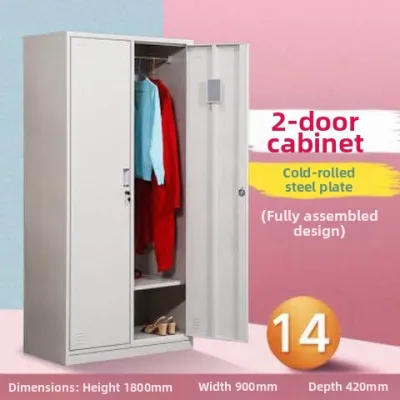
Freestanding retail metal wardrobes are ready-made, fully enclosed cabinets constructed from sheet steel or iron panels. These wardrobes are often styled to resemble vintage industrial school lockers, sleek modern office cabinets, or minimalist Scandinavian wardrobes. Because they are fully enclosed, they provide excellent protection against dust, sunlight, and ambient moisture, keeping your clothes clean and fresh.
These retail options offer the convenience of immediate availability and predictable, standardized sizing. However, because they are manufactured to fixed dimensions, they rarely fit perfectly flush against bedroom walls or ceilings. This can leave small gaps at the sides or top that can collect dust and are difficult to clean. When selecting a freestanding retail model, pay close attention to the stability of the unit, the quality of the door hinges, and whether the base features adjustable leveling feet to compensate for uneven HDB screeded floors.
Measuring Your HDB Bedroom for a Perfect Fit
Before purchasing any iron wardrobe, a meticulous site measurement is essential to ensure a seamless fit and prevent delivery day complications. Metal furniture is rigid and cannot be shaved down or adjusted on-site like wooden carpentry, meaning your measurements must be highly accurate.
Start by measuring the floor-to-ceiling height at three different points along the wall where the wardrobe will stand: the left side, the center, and the right side. HDB concrete floors and ceilings often have minor level variances, and a wardrobe that fits on one side of the room might jam against the ceiling on the other. Next, measure the wall-to-wall width at both the floor level and ceiling level. Be sure to account for the thickness of your skirting boards, which typically project 1.5cm to 2cm from the wall. If your wardrobe does not have a recessed base to clear the skirting, you must subtract the skirting thickness from your available width and depth measurements to ensure the unit can sit flush against the wall.
Clearance and circulation space are critical for maintaining a comfortable and functional bedroom. You must maintain a minimum walkway clearance of 60cm in front of the wardrobe to allow a person to walk past comfortably. If you choose a wardrobe with hinged doors, you must calculate the door swing radius. Add the width of the open door to the depth of the wardrobe, then add an additional 60cm of standing clearance. If this total depth exceeds your available space, a sliding door metal wardrobe or an open-concept modular system is a much safer choice, as they do not require front clearance for door operation.
Finally, map out all physical obstacles on your installation wall. In Singapore HDB flats, the most common obstacles include air-conditioning copper piping and plastic trunking, which often run along the top of bedroom walls. You must also identify the locations of electrical DB boxes, light switches, wall-mounted power sockets, window sill projections, and curtain tracks. Ensure that the wardrobe’s frame will not block access to light switches or power outlets, and verify that sliding or hinged doors can open fully without colliding with window frames or curtain rods.
Installation, Safety, and Maintenance Essentials
Proper installation and ongoing maintenance are vital to ensuring the long-term safety, stability, and performance of your metal wardrobe. Because iron is a dense, heavy material, an unloaded wardrobe can still pose a significant tip-over risk, especially if it features heavy drawers or doors that shift the center of gravity forward when opened.
Wall anchoring is a mandatory safety step for almost all freestanding and modular iron wardrobes. Before drilling, you must identify the structural composition of your bedroom wall. HDB flats feature two main wall types: structural load-bearing concrete walls and non-load-bearing internal partition walls (often made of lightweight concrete blocks or drywall in newer BTO flats). Concrete walls require a rotary hammer drill and heavy-duty plastic or metal masonry wall plugs to secure the anchoring brackets. Partition walls, conversely, require specialized toggle bolts or hollow wall anchors that expand behind the wall board to distribute the load. If you are uncertain about your wall type or lack the proper tools, always consult a qualified professional handyman or check HDB’s renovation guidelines before proceeding with installation.
To maintain structural stability, practice proper weight distribution when loading your wardrobe. Always place heavy items, such as storage boxes, suitcases, and heavy bedding, on the lowest shelves or at the bottom of the closet. This lowers the overall center of gravity, significantly increasing the stability of the unit. Hang lighter garments like shirts and t-shirts on the upper rods, and avoid overloading individual wire shelves beyond the manufacturer’s stated weight capacity to prevent bowing or structural fatigue.
Routine maintenance will keep your iron wardrobe looking and functioning like new for years. Although high-quality powder-coated finishes are highly durable, they can still chip if struck by heavy metal hangers or sharp objects. Periodically inspect your wardrobe for any deep scratches or chips that expose the raw metal underneath. Address these areas immediately by applying a small amount of rust-inhibiting touch-up paint to prevent moisture from creeping under the coating and causing rust. For cleaning, avoid abrasive scrubbing pads and harsh chemical solvents, which can dull or strip the powder coat. Instead, use a soft microfiber cloth slightly dampened with a mild, pH-neutral soap solution. Finally, regularly clean the door tracks of sliding systems to remove dust and lint, and apply a light silicone-based lubricant to hinges and drawer runners to ensure smooth, quiet operation.
Frequently Asked Questions (FAQ)
Are iron wardrobes prone to rust in Singapore's climate?
Properly powder-coated iron wardrobes are highly resistant to rust, even in Singapore’s humid tropical climate. The powder-coating process creates a thick, non-porous polymer barrier that prevents moisture and oxygen from reaching the underlying metal. To ensure maximum longevity, avoid placing your wardrobe directly against damp exterior walls, ensure your bedroom has adequate air circulation, and quickly repair any surface scratches with touch-up paint to keep the protective seal intact.
Can I anchor a heavy iron closet to HDB partition walls?
Yes, you can anchor an iron closet to HDB partition walls, but you must use the correct hardware. Standard plastic wall plugs designed for concrete will not hold in lightweight drywall or partition blocks. Instead, you must use heavy-duty hollow wall anchors or toggle bolts that expand behind the partition board to secure the bracket. If the wardrobe is exceptionally heavy or if you are unsure of the wall’s load capacity, it is highly recommended to consult a professional installer to ensure structural safety.
How do I minimize noise from metal wardrobe doors and drawers?
You can easily minimize the metallic noise associated with metal wardrobes by applying simple acoustic dampening solutions. Place small, self-adhesive felt pads or silicone bumpers on the inside corners of doors and drawer fronts where they meet the metal frame to cushion the impact when closing. Additionally, keep the sliding tracks clean of dust and debris, and apply a light coat of silicone spray or white lithium grease to the hinges and drawer runners once a year to ensure silent operation.
Community discussion
Share your experience or ask a question. Comments are reviewed before publication.