
The best hangers for clothes rack stands depend entirely on the rack’s specific design—whether it is an angled ladder, a multi-directional tree, or a heavy-duty rolling rack. To maximize space and prevent garments from slipping or tipping the stand, you must match the hanger’s material, grip, and hook opening to the rack’s structural limits.
For example, high-grip velvet or rubber-coated hangers are essential for slanted ladder rungs, lightweight swivel-hook hangers prevent tree stands from becoming unbalanced, and wide-hook, heavy-duty wooden or metal hangers are necessary to span the thick bars of rolling racks. By carefully selecting your hangers based on the rack’s geometry and weight capacity, you preserve your clothes’ shapes while maintaining a clean, organized, and visually appealing display in your home.
Quick Match: Ideal Hanger Styles for Common Rack Designs
To help you quickly identify the right storage combination, this guide maps out the most compatible hanger styles for the three primary clothes rack stand designs. Each rack type presents unique physical challenges, from garments sliding down angled rungs to heavy coats causing a tree stand to tip over.
Products mentioned in this guide
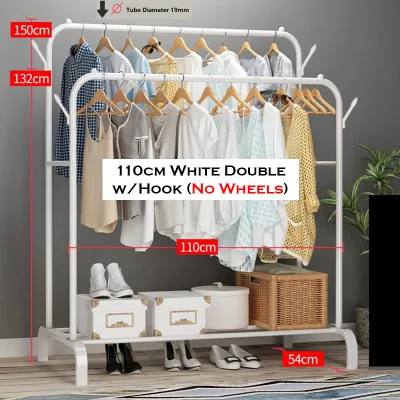
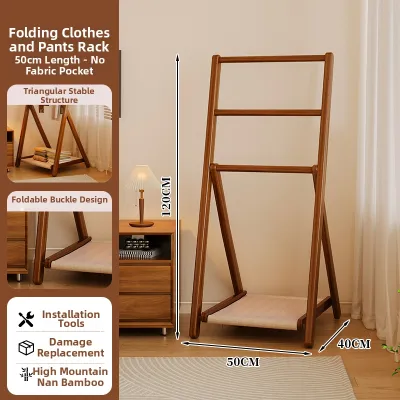

![[✅SG Ready Stock] 100% solid wood Wooden Clothes Hanger Rack Nordic Style Clothes Hanger Hook Bedroom Coat Stand Rack](https://img.lazcdn.com/g/p/f4e39069115cbc3402d9b2bbb638ae5a.png_400x400q80.png_.webp)

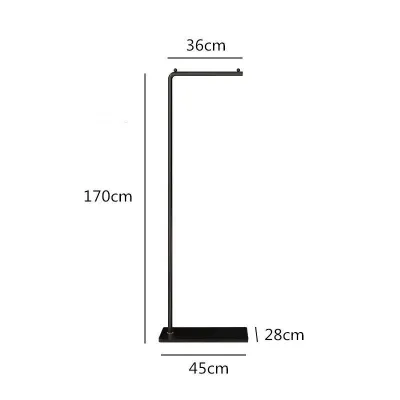
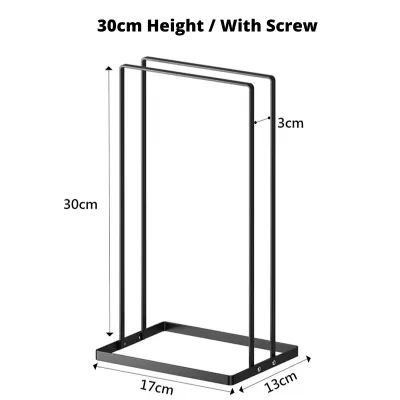
Prices are valid at publication and may change. Please refer to the product page for the latest price.
The core decision rule is simple: always match the hanger’s hook opening to the rack’s pole or rung diameter, and match the hanger’s grip and weight to the rack’s angle and overall load capacity. Below is a quick-reference comparison mapping these combinations:
| Rack Stand Design | Ideal Hanger Hook Type | Ideal Hanger Width & Material | Primary Physical Challenge |
|---|---|---|---|
| Ladder / A-Frame | Standard or wide hook with high-grip coating | Slim-profile, velvet or rubber-coated | Garments sliding down angled rungs; limited horizontal space |
| Tree / Branch-Style | Swivel hook (360-degree rotation) | Lightweight, slim plastic or acrylic | Overcrowding on short branches; weight limits; tipping risks |
| Rolling / Freestanding | Wide-opening hook (heavy-duty) | Thick wood, heavy metal, or reinforced tubular | Supporting heavy weight; fitting over thick commercial bars |
When selecting hangers, remember that a mismatch can lead to fallen clothes, bent hangers, or a damaged rack. Taking a moment to assess your rack’s shape and weight limits ensures your wardrobe remains secure and accessible.
Measure Your Rack: Pole Diameter and Hook Compatibility
Before purchasing any hangers, you must verify the physical dimensions of your clothes rack stand to ensure the hanger hooks can actually fit over the hanging bars, rungs, or pegs. Using a standard flexible measuring tape or a caliper, measure the diameter (the thickness across the widest part) of the hanging rod or rung.

For round bars, wrap a flexible tape measure around the pole to find the circumference, then divide that number by 3.14 to calculate the diameter. If you do not have a flexible tape measure, wrap a piece of string around the rod, mark the intersection, and measure the string flat against a standard ruler.
Standard household hanger hooks typically have an inner opening width of approximately 3.5 to 4 centimeters, which easily fits standard closet rods. However, commercial-grade rolling racks often feature heavy-duty metal bars with diameters exceeding 4 centimeters, which can prevent standard, narrow-hook plastic or wire hangers from sliding on or off smoothly.
Conversely, ladder racks and A-frame stands often use thin wooden rungs or square dowels that require a hook with a wider, more square-shaped bend rather than a tight, circular curve. If the hook is too narrow, the hanger will sit awkwardly at an angle, reducing stability and making it difficult to slide garments along the rack.
The structural design of the hook also dictates how easily you can access your clothes. Open, fixed hooks work well on straight, horizontal bars where you can lift the entire hanger directly upward. For enclosed spaces, tight corners, or angled rungs, swivel hooks are highly recommended because they allow you to rotate the hanger 360 degrees, making it easier to hang or retrieve garments without twisting the entire frame.
When selecting a freestanding or rolling rack for a compact Singapore apartment, always verify that the overall dimensions of both the rack and your hangers allow for easy clearance through standard doorways and lift entryways if you plan to move the setup between rooms. If you cannot physically measure your rack, always check the manufacturer’s specifications for both products. Look for the “maximum rod diameter” on the rack’s product page and compare it directly to the “hook opening width” listed in the hanger’s specifications to avoid a frustrating mismatch.
Best Hangers for Ladder and A-Frame Racks
Ladder and A-frame clothes racks are popular for their minimalist, decorative appeal, but their angled rungs and slanted frames present unique storage challenges. The most significant issue is gravity: because the rungs or side rails slope downward or lean against a wall, standard hangers tend to slide downward, clustering your clothes at the lowest point or slipping off the ends entirely.
Additionally, these racks typically offer limited horizontal hanging space, meaning any bulkiness from your hangers will quickly cause overcrowding and unsightly clutter. To solve the sliding problem, you should prioritize high-grip hanger types, such as those finished with velvet flocking, rubber coatings, or strategically placed silicone lines.
The micro-fibers on velvet hangers and the high-friction surface of rubber-coated options keep the hanger securely in place on slanted wooden or metal rungs, even when the rack is bumped or moved. For strap-heavy items like dresses, camisoles, or summer tops, look for hangers featuring deep, notched shoulders to prevent the straps from slipping off the hanger’s frame on inclined surfaces.
You should actively avoid smooth plastic, polished tubular metal, or wide wooden hangers on ladder racks, as these materials lack the necessary friction to stay put and will easily slide down the rungs. Furthermore, wide wooden hangers take up too much physical and visual space, defeating the purpose of a slim, decorative ladder rack.
In humid climates like Singapore, check that wooden ladder racks have a moisture-resistant sealant or smooth varnish. This finish check is crucial to prevent mold growth or wood splinters from snagging delicate fabrics like silk or linen. To maintain the aesthetic appeal of a highly visible ladder rack in a bedroom or entryway, use uniform, slim-profile velvet hangers in a neutral color. This uniform look maximizes the limited hanging capacity of the rack while keeping the visual focus on your curated garments rather than a chaotic mix of mismatched hangers.
Best Hangers for Tree and Branch-Style Racks
Tree-style coat racks, characterized by a central vertical post with multi-directional pegs or branches, are excellent for small entryways but require careful hanger selection due to their unique geometry. The primary challenges of a tree rack include short hanging depth on individual pegs, the need for 360-degree access, sleeve tangling when garments are hung too close together, and strict weight limits per branch.
If you overload a single branch, or if the overall weight distribution becomes uneven, the entire stand can easily lose its center of gravity and tip over. To prevent overloading the branches, choose lightweight hangers made of slim plastic, thin wire, or lightweight acrylic.
These slim designs allow garments to hang close to the central trunk, preserving precious clearance space and preventing sleeves from blocking adjacent pegs. Hangers with 360-degree swivel hooks are highly recommended for tree stands, as they allow you to rotate and retrieve garments easily from any angle around the rack without having to move the entire stand.
Avoid heavy solid wood hangers, bulky padded hangers, or wide-shoulder designs on tree racks, as their inherent weight and bulk can compromise the rack’s stability before you even hang a single garment. These bulky styles also block neighboring pegs, rendering a multi-branch rack half-useless by limiting where you can hang additional items.
Given Singapore’s year-round tropical climate, entryway tree racks are primarily used for light cardigans, umbrellas, and bags rather than heavy wool overcoats. It is important to clarify that tree racks paired with standard hangers are best suited for these lightweight daily garments and accessories. If you must hang a heavier bag or jacket, place it on a hook closest to the center pole and ensure the rack’s base is heavy enough to support the asymmetrical load.
Best Hangers for Rolling and Freestanding Racks
Rolling and freestanding wardrobe racks are the workhorses of clothing storage, designed to hold a large volume of garments on a long, horizontal bar. The main challenges here are maximizing the linear hanging space, supporting heavy garments like winter coats and suits, and ensuring the hanger hooks can fit over thick, commercial-grade metal bars.
Because these racks are built to handle heavier loads, you should choose heavy-duty metal, thick wooden, or reinforced tubular hangers that will not bend or warp under pressure. These hangers must feature wide hook openings to easily glide over the thick metal poles typical of rolling wardrobe stands.
For heavy suits, blazers, and winter coats, contoured or wide-shoulder wooden hangers are highly recommended, as they mimic the natural shape of human shoulders and prevent the fabric from stretching or puckering over long-term storage. To maximize the vertical space often available on tall rolling racks, consider using cascading hooks or chain hangers, which allow you to hang multiple garments vertically from a single point on the bar.
Avoid flimsy wire hangers on rolling racks, as they will quickly bend under the weight of multiple heavy garments, leading to sagging clothes and a messy appearance. Standard, narrow-necked closet hangers should also be avoided, as they will get stuck on thick rolling bars and resist smooth sliding.
For those living in compact Singapore apartments, a rolling rack can serve as an open wardrobe system. To ensure the long-term stability of your rolling rack, always distribute heavy garments evenly across the horizontal bar rather than clustering them all on one side. This even weight distribution prevents the metal bar from bowing in the middle and keeps the rack stable and easy to roll when you need to move it.
Material and Shape Choices for Space-Saving Organization
Selecting the right hanger material and shape is key to refining your storage setup, balancing space-saving goals with the physical limits of your clothes rack stand. Velvet or flocked hangers are the ultimate space-savers, offering an ultra-slim profile that lets you pack more clothes onto a rack, while their high-grip texture is perfect for slippery or angled surfaces like ladder racks.
In contrast, wooden hangers offer unmatched strength and aesthetic elegance, making them ideal for displaying heavy coats on sturdy rolling racks, though their bulk makes them unsuitable for space-constrained tree or ladder racks. When purchasing wooden hangers, check that the joints are securely fastened with screws or heavy-duty dowels rather than cheap glue, which can fail under load.
Tubular plastic and metal hangers offer excellent durability and standard hook sizes that work well for daily wear on high-capacity rolling racks, provided they are thick enough not to bend. Specialty shapes also play a crucial role in maximizing your rack’s utility; for instance, pant hangers with clips or fold-over bars are excellent for utilizing the lower, wider rungs of A-frame or ladder racks.
By hanging pants or accessories on the lower rungs and tops on the upper rungs, you create a balanced, functional wardrobe station. However, mixing too many different hanger types, materials, and colors on a single rack can quickly disrupt the visual harmony and reduce the usable hanging space.
To achieve a clean, professional look, choose a unified hanger style per rack section—such as all-black velvet for your ladder rack or matching natural wood for your rolling coat rack. This consistency not only looks visually appealing but also ensures that garments hang at the same height, making it much easier to browse through your clothes.
Frequently Asked Questions (FAQ)
Can I use standard closet hangers on a ladder clothes rack?
While standard plastic or wooden closet hangers can physically fit over the rungs of a ladder clothes rack, they are generally not recommended because their smooth surfaces offer no resistance. On the angled slope of a ladder rack, standard hangers will easily slide down and cluster at the lowest point, causing your clothes to wrinkle and look disorganized.
If you must use your existing standard hangers, you can apply adhesive silicone grip strips to the rungs or wrap small rubber bands around the hanger hooks to create the friction needed to keep them in place.
How do I stop hangers from sliding off an angled A-frame rack?
To prevent hangers from sliding down or falling off the slanted rails of an A-frame rack, switch to high-friction hangers such as velvet-flocked or rubber-coated designs. Another highly effective, low-risk solution is to apply clear silicone grip tape or small adhesive rubber dots directly to the top surface of the rack’s rungs.
These clear barriers create physical friction points that stop the hangers from sliding without damaging the wood or metal finish of your rack, keeping your clothes neatly spaced.
What is the best hanger for heavy winter coats on a tree rack?
Most decorative tree-style coat racks are not designed to support multiple heavy winter coats on individual branches, as this can easily cause the rack to tip over or the pegs to break. If you must hang a heavy coat on a tree rack, use a sturdy, wide-shoulder wooden hanger to support the coat’s weight and shape, but ensure the rack’s base is heavily weighted and check the manufacturer’s maximum load limits first.
For long-term storage of multiple heavy coats, it is much safer to move them to a heavy-duty rolling or freestanding rack that distributes the weight evenly across a wide, stable base.
Community discussion
Share your experience or ask a question. Comments are reviewed before publication.