
Maximizing a compact HDB kitchen requires a smart balance of vertical storage and floor-space flexibility. In typical Singaporean apartments, where galley layouts and narrow walkways limit your movement, permanent shelving units can quickly make the space feel cramped and restricted. Foldable nest kitchen racks offer a dynamic alternative, allowing you to expand your storage capacity during heavy meal preparation and collapse the frames out of sight when the work is done. By choosing adaptable, high-quality folding systems, you can reclaim valuable countertop and floor space without committing to permanent, bulky renovations.
Understanding how to select, configure, and maintain these versatile storage solutions is key to creating an efficient kitchen workflow. This guide breaks down the spatial advantages of nesting mechanisms, outlines critical selection criteria, and provides practical layout configurations tailored to the unique constraints of HDB kitchen spaces.
Why Foldable Nest Racks Work in Compact HDB Kitchens
Standard kitchen cabinets and fixed utility shelves are static structures. While they provide reliable storage, they permanently occupy a set footprint, regardless of whether they are fully utilized. In a compact HDB kitchen, where the walkway width often ranges between 90 to 120 centimeters, every square centimeter of floor space impacts your ability to move comfortably between the sink, stove, and refrigerator.
Products mentioned in this guide
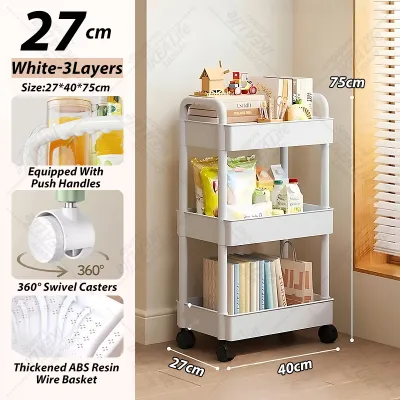
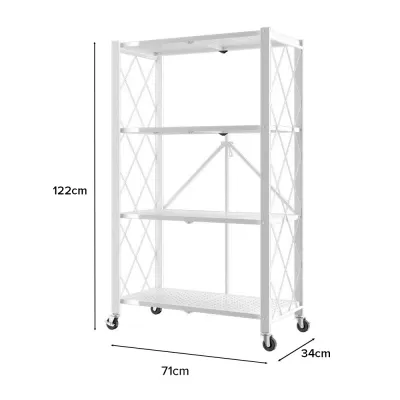
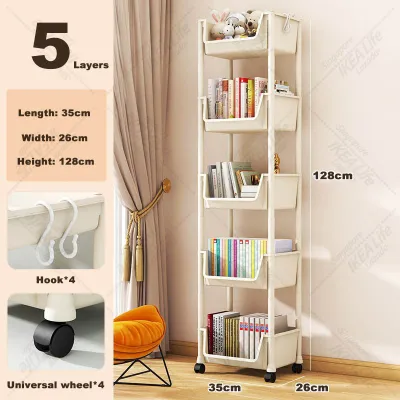
![[Cozy Nest] Adjustable Kitchen Microwave Shelf Expandable Countertop Organizer for Home Use Oven Pots Fruits Vegetable and Spice Rack Storage](https://img.lazcdn.com/g/p/fc2240e0db1709e68cfe5fe078e9d134.jpg_400x400q80.jpg_.webp)
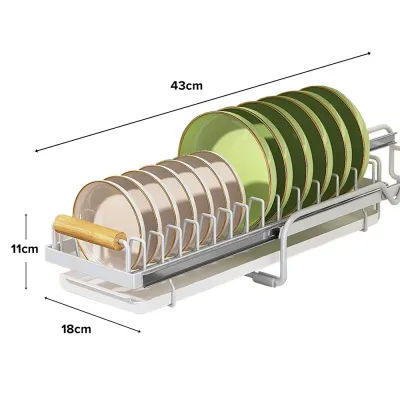
Prices are valid at publication and may change. Please refer to the product page for the latest price.
Foldable nest kitchen racks solve this spatial bottleneck through mechanical adaptability. “Nesting” refers to storage units designed to slide or stack inside one another when empty, while “foldable” mechanisms allow the structural frame to collapse flat—often reducing a multi-tier rack’s width to less than 10 centimeters. This dual functionality means you can deploy a three- or four-tier utility cart to hold ingredients and prep bowls while cooking a complex meal, and then fold it flat to slide into the narrow gap beside your refrigerator or washing machine once the kitchen is clean.
Compared to fixed shelving, foldable nest systems offer unparalleled flexibility during peak cooking hours. If two people are working in the kitchen simultaneously, a fixed cart can create a physical barrier that leads to constant bumping and safety hazards. A collapsible rack can be rolled out of the main traffic lane, tucked into a corner, or folded away entirely, keeping the primary walkway clear. This adaptability is particularly beneficial for homeowners who host gatherings occasionally but prefer an open, minimalist kitchen environment for daily use.
Key Selection Criteria for Foldable Kitchen Storage
Investing in foldable storage requires careful evaluation of product specifications to ensure the unit can withstand the demanding environment of a busy kitchen. Because folding frames rely on moving joints rather than solid, welded connections, you must look closely at structural integrity and material quality before making a purchase.

Dimensions and Clearance
Before browsing online marketplaces or local furniture stores, use a metal measuring tape to map out your kitchen’s available zones. You must measure three distinct states: the fully expanded footprint, the fully collapsed footprint, and the clearance required to transition between the two.
When measuring floor space for a rolling nest cart, check that the expanded unit does not obstruct the swing paths of your refrigerator door, oven door, or lower cabinet drawers. For countertop or over-the-sink racks, measure the distance between the counter surface and the underside of your upper cabinets. Many standard HDB configurations leave a clearance of about 50 to 60 centimeters between the countertop and upper cabinets; ensure your chosen rack can expand fully within this vertical window without hitting light fixtures or switches.
Load Capacity and Stability
Foldable racks are subject to both static loads (stationary items like plates or spice jars) and dynamic loads (the force applied when placing a heavy pot down or rolling a loaded cart across floor tiles). Always check the manufacturer’s specified weight limit per tier, rather than relying solely on the total weight capacity of the entire unit.
Because folding joints act as pivot points, a poorly balanced rack can buckle under uneven weight distribution. Look for models that feature a low center of gravity, wider base frames, and robust locking bars that secure the shelves in the open position. If you select a mobile unit, ensure at least two of the casters feature heavy-duty locking brakes to prevent the rack from shifting when you are retrieving items.
Material and Surface Treatment
The kitchen is a high-humidity, high-grease zone where steam from cooking and water splashes from the sink can quickly degrade unprotected materials. Do not assume a metal rack is rust-proof simply because it is labeled as “utility steel.”
Look for explicit product specifications detailing the surface treatment. High-quality options typically feature carbon steel coated with an electrostatic powder finish or a baked-on epoxy layer, which resists moisture and prevents grease from binding to the surface. For wet zones near the sink, grade 304 stainless steel is highly recommended due to its natural resistance to corrosion. If you prefer wooden or bamboo accents, ensure the material has been treated with a food-safe, water-resistant sealant to prevent mold growth in Singapore’s humid climate.
Folding Mechanism Durability
The longevity of a foldable rack depends almost entirely on its hinges, rivets, and locking pins. Inspect the joint construction closely: high-quality units utilize bolted joints with nylon washers to ensure smooth folding action without metal-on-metal grinding. Avoid units that rely on thin, friction-fit plastic clips to hold the shelves in place, as these can become brittle and crack over time when exposed to ambient kitchen heat.
Recommended Configurations Based on Kitchen Layout
Different kitchen layouts present unique spatial challenges. A long, narrow galley kitchen requires a different storage strategy than an open-concept L-shaped kitchen. Matching the right foldable rack configuration to your specific layout ensures you address your primary storage bottlenecks effectively.
| Kitchen Layout | Primary Spatial Bottleneck | Recommended Foldable Configuration | Key Benefit |
|---|---|---|---|
| Galley Kitchen | Narrow walkways, limited floor space | Tiered Nesting Carts (Under-Counter) | Rolls away to keep the central path clear |
| L-Shaped / U-Shaped | Deep corner dead zones, cluttered counters | Expandable Counter-Top Nest Racks | Reclaims vertical space above prep zones |
| One-Wall Kitchen | No floor space, minimal wall cabinets | Wall-Mounted / Door-Back Foldable Shelves | Utilizes vertical dead space without floor footprint |
Tiered Nesting Carts for Under-Counter Storage
Multi-tiered, collapsible utility carts are highly effective for galley kitchens where floor space is at a premium. These carts typically feature three to four shallow baskets or flat shelves mounted on a scissor-style folding frame. When fully open, they serve as an auxiliary pantry or a mobile prep station; when folded, they compress to a fraction of their size.
- Ideal Uses: Storing root vegetables (onions, potatoes) that require ventilation, holding small appliances like blenders or air fryers, or organizing bulk dry goods.
- Key Checks: Verify the height of the cart against the underside of your kitchen counter overhang or utility table. Ensure the wheels can glide smoothly over your kitchen floor tiles without catching on grout lines.
- Limitations: Folding a heavily loaded cart is unsafe. You must unload the items before collapsing the frame to prevent structural damage or injury.
Expandable Over-the-Sink or Counter-Top Nest Racks
Countertop space is often the first thing to disappear in a small HDB kitchen once you set down a dish drying rack, a cutting board, and a rice cooker. Expandable countertop nest racks sit directly on your solid-surface or quartz counters, utilizing telescoping bars or nesting frames to adjust their width horizontally.
- Ideal Uses: Organizing frequently used spices, drying hand-washed dishes over the sink basin, or creating a temporary double-deck prep surface.
- Key Checks: Measure the width of your sink rim carefully. Ensure the rack's feet are equipped with non-slip, heat-resistant silicone or rubber pads to prevent the unit from sliding on wet countertops.
- Limitations: These racks are designed for light-to-medium items. Avoid stacking heavy cast-iron pots or heavy stone mortar and pestle sets on expandable sections unless the manufacturer explicitly rates them for heavy loads.
Wall-Mounted or Door-Back Foldable Nest Shelves
If your kitchen floor and countertops are completely maxed out, look to your vertical surfaces. Wall-mounted foldable shelves screw directly into concrete or partition walls, while door-back units hang over the top edge of standard cabinet doors. These shelves fold flat against the mounting surface when not in use, keeping walkways entirely unobstructed.
- Ideal Uses: Storing lightweight items such as aluminum foil rolls, baking paper, cleaning cloths, or small spice containers.
- Key Checks: For wall-mounted units, verify your wall material. Concrete walls require robust wall plugs and masonry drilling, while drywall partitions require specialized toggle bolts. For door-back units, check that your cabinet hinges are in good condition and can support the extra weight without sagging.
- Limitations: These systems require secure, permanent anchoring or hanging hardware. They are strictly limited to lightweight, non-breakable items to prevent accidental falls.
Space Planning and Safety Checks Before Installation
Integrating a new storage rack into your kitchen requires more than just finding an empty corner. Proper space planning and safety checks prevent accidents and ensure your kitchen remains a functional, comfortable workspace.
Traffic Flow and the Work Triangle
Before setting up your rack, map out your kitchen’s work triangle—the path between your sink, stove, and refrigerator. The expanded rack should never cross these primary paths of movement. If you must place a mobile cart within the work triangle, ensure it can be easily rolled out of the way with one hand. Maintain a minimum walkway clearance of 90 centimeters at all times to allow safe passage, especially when carrying hot pots or sharp knives.
Hazard Prevention and Heat Zones
Keep foldable joints, plastic components, and locking mechanisms away from high-heat zones. Placing a plastic-jointed or painted metal rack directly next to a gas hob or oven can cause the materials to warp, discolor, or emit unpleasant odors. Additionally, ensure that any sharp folding edges, hinges, or pinch-points are positioned away from high-traffic walkways where they could catch on clothing or pinch fingers during rapid movement.
When to Stop and Re-evaluate
If you assemble your freestanding foldable rack and notice it wobbles on your kitchen floor tiles, do not ignore the issue. Uneven floors can cause a loaded rack to tip over. Try adjusting the leveling feet if your model has them. If the rack remains unstable, or if a wall-mounted unit begins to pull away from the wall under a moderate load, stop using it immediately. Consult a professional handyman or contact the manufacturer to verify if the installation is safe for your specific home environment.
Maintenance and Care for Folding Mechanisms
To keep your foldable nest kitchen rack operating smoothly for years, you must protect its moving parts from the corrosive combination of airborne grease, moisture, and salt common in cooking environments.
Routine Cleaning of Joints
Airborne grease from frying can settle into the hinges and locking pins of your rack, attracting dust and creating a sticky residue that jams the folding mechanism. Wipe down the joints at least once a month using a soft microfiber cloth dampened with warm water and a mild dishwashing liquid. Avoid spraying water directly into the hinge joints, as trapped moisture can lead to internal rust; instead, wipe them damp and dry them thoroughly with a clean cloth.
Hardware Inspections
Periodically inspect the structural hardware of your rack. Check that the rivets are secure and that any visible screws or bolts have not loosened over time due to the vibrations of rolling or folding the unit. If you find loose screws, tighten them gently with a screwdriver—over-tightening can strip the threads or bind the folding joints, making the rack difficult to collapse.
Following Care Labels
Always adhere to the manufacturer’s care instructions regarding chemical cleaners. Avoid using abrasive scrubbing pads, steel wool, or harsh chemical agents (such as bleach or highly acidic cleaners) on powder-coated or epoxy-treated metal frames. These harsh materials can scratch or strip away the protective outer coating, exposing the underlying steel to moisture and accelerating rust formation.
Frequently Asked Questions (FAQ)
Can I use a foldable nest rack to hold heavy appliances like a microwave?
Whether a foldable rack can hold a microwave depends entirely on the manufacturer’s explicit weight rating and the structural design of the rack. Microwaves are heavy, dense appliances that generate heat and minor vibrations during operation. These dynamic forces can place stress on folding hinges and locking pins over time. If you plan to store a microwave, select a heavy-duty utility rack with reinforced steel crossbeams, robust locking joints, and a weight capacity that comfortably exceeds the weight of your appliance. Avoid placing heavy appliances on lightweight, scissor-style folding carts or expandable countertop racks.
How do I prevent a freestanding foldable rack from tipping over?
To maximize the stability of a freestanding foldable rack, always load your heaviest items—such as bags of rice, cooking oils, or heavy cast-iron pans—on the bottom tier. This lowers the unit’s center of gravity, making it much less likely to tip. Avoid overloading the top shelves with heavy items while leaving the bottom shelves empty. If your rack is tall or top-heavy, position it directly against a wall, engage the caster locks, or utilize anti-tip wall anchor straps to secure the frame to the wall structure.
Are tension-mounted foldable racks safe for HDB kitchen tiles?
Tension-mounted racks rely on upward and downward pressure to stay in place, making them a popular choice for renters who want to avoid drilling into kitchen tiles. While they can be safe, their stability depends on proper installation and surface compatibility. Ensure the rubber pressure pads sit flat against solid, even tile surfaces rather than directly on uneven grout lines, which can cause the poles to slip. Be aware that high humidity and grease buildup can reduce the friction of the rubber pads over time. Regularly check the tension of the poles and avoid overloading the shelves with heavy or breakable items.

Community discussion
Share your experience or ask a question. Comments are reviewed before publication.