
Finding the perfect balance between living room aesthetics and functional floor space is a common challenge for homeowners in Singapore. The best foldable coffee table styles for small apartments are those that adapt dynamically to your daily needs without permanently consuming valuable floor area. By transitioning from a compact footprint to an expanded surface, styles such as lift-top tables, drop-leaf designs, and nesting sets offer the ideal combination of daily utility, aesthetic integration, and space-saving efficiency.
Selecting the right style requires looking beyond mere appearance. You must consider how a table operates, how easily it moves, and how well it integrates with your existing layout. By choosing a design tailored to your specific daily routines, you can maintain an open, uncluttered living room while still enjoying the convenience of a fully functional surface when you need it.
Understanding Space Constraints in Compact Singapore Homes
Modern residential layouts in Singapore, particularly Built-To-Order (BTO) Housing & Development Board (HDB) flats and compact condominiums, require highly efficient space planning. The typical living room footprint in these homes has become increasingly streamlined, often leaving a narrow margin between the sofa and the television console. In these tight quarters, a traditional, static coffee table can easily become a permanent physical obstacle, restricting movement and making the entire room feel cramped.
Products mentioned in this guide
![[3S FURNITURE] Modern Rustic Simple Solid Rubber Wood Foldable Coffee Table * FREE DELIVERY * (1Yr Local Warranty)](https://img.lazcdn.com/g/p/204cfe405828c8ecbaeacf2b4c69c93d.jpg_400x400q80.jpg_.webp)
![[SG Seller] Modern Minimalist Foldable Bamboo Coffee Table Small Multi-Functional Simple Shelf Living Room Furniture](https://img.lazcdn.com/g/p/f26ebcffc2387f34fefddcb535535b5f.jpg_400x400q80.jpg_.webp)
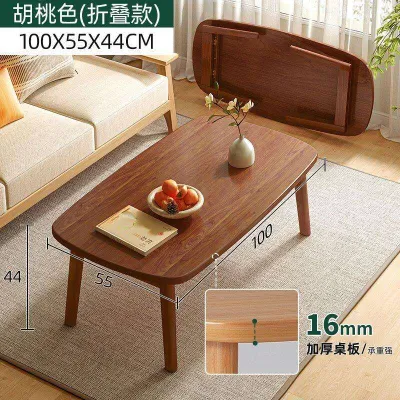
![[SG Seller]Foldable acrylic coffee table small coffee table trendy minimalist chair portable minimalist crystal coffee table stackable small dining chair](https://img.lazcdn.com/g/p/f4ac670d94cc32a94828fc0adf43d156.jpg_400x400q80.jpg_.webp)
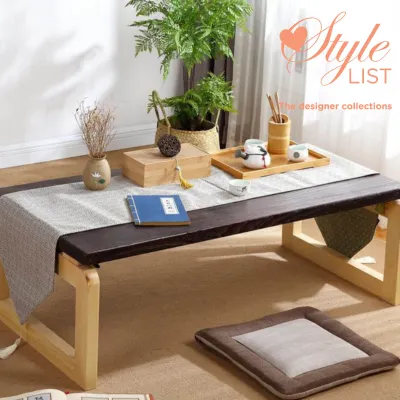
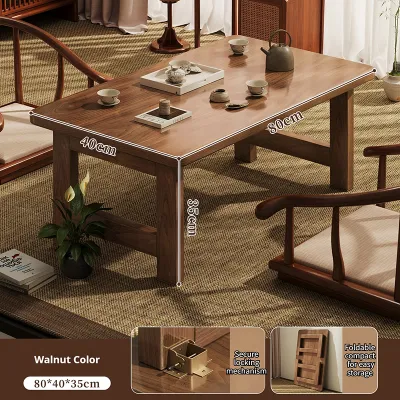
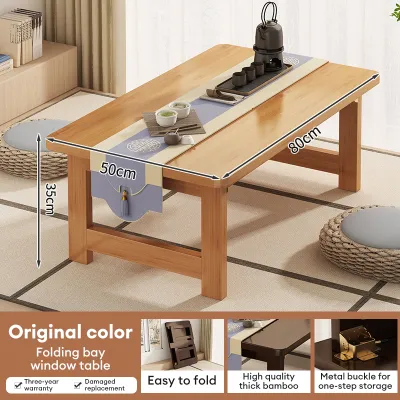
Prices are valid at publication and may change. Please refer to the product page for the latest price.
To make the most of limited square footage, contemporary living areas must serve multiple purposes throughout the day. A single space often needs to transition seamlessly from a relaxation zone to a productive home office, a dining area, or even an open floor for exercise and play. A bulky, immovable table prevents this flexibility, forcing you to commit to a single layout that may not support all your daily activities.
This is where a foldable coffee table becomes a practical necessity. By allowing you to expand the surface area when entertaining or working, and fold it away when you need open floor space, these adaptable pieces of furniture preserve the natural flow of your home. They help maintain a clean, breathable environment, ensuring your living room remains a comfortable sanctuary rather than a cluttered corridor.
What to Look for When Choosing a Foldable Coffee Table
Before purchasing a foldable coffee table, it is essential to evaluate several practical criteria. These standards ensure your chosen piece is not only visually appealing but also safe, durable, and suited to the unique environmental conditions of Singapore.

Mechanism Durability
The moving parts of a foldable table are its most vulnerable points. When shopping, closely inspect the quality of the hinges, sliding tracks, and lifting hardware. Look for heavy-duty steel or brass components that operate smoothly without sticking or wobbling. In Singapore’s humid climate, untreated metal parts can rust over time, leading to stiff mechanisms and squeaking. Opt for hardware with rust-resistant coatings, powder-coated finishes, or high-quality hydraulic gas lifts, which offer quieter and more controlled movement than standard spring-loaded systems.
Weight and Stability
A successful foldable table must strike a balance between portability and structural integrity. It should be lightweight enough for you to fold, unfold, or reposition without straining your back. However, it must also feature a low, weighted center of gravity—such as a sturdy metal base or a solid lower shelf—to prevent it from tipping over when the surface is fully extended or when items are placed near the edges.
Folded vs. Expanded Footprint
Always compare the table’s dimensions in both its closed and fully open states. A highly efficient design should reduce its footprint by at least 40% to 50% when folded. Ensure that the fully expanded size is large enough to be genuinely useful for your needs, while the folded size is compact enough to store easily or sit unobtrusively against a wall or sofa.
Aesthetic Cohesion
To prevent your living room from feeling visually cluttered, choose materials and colors that complement popular compact interior design styles in Singapore, such as Japandi, Scandinavian, or modern minimalist. Light wood finishes like oak, ash, or rubberwood help reflect natural light, making a small room feel larger. Alternatively, slim matte-metal frames paired with tempered glass or engineered stone tops provide a modern, airy look without adding visual weight to the space.
Safety Features
Because foldable furniture relies on moving joints, safety is a crucial consideration, especially in households with young children or pets. Look for designs that incorporate soft-close mechanisms, magnetic locks, or safety pins that prevent the table from collapsing unexpectedly. Anti-pinch hinge designs are also highly recommended to protect fingers during folding and unfolding.
Best Foldable Coffee Table Styles for Small Living Rooms
Different households have different spatial challenges and daily routines. Understanding the unique strengths and limitations of each foldable style will help you identify the best option for your home.
Drop-Leaf and Gateleg Tables
Drop-leaf and gateleg coffee tables feature a fixed center section with hinged side panels (leaves) that can be raised or lowered as needed. In a gateleg design, the raised leaves are supported by legs that swing out from the main frame like a gate, while standard drop-leaf tables may use slide-out wooden supports.
- Best For: Homes that occasionally require a large, flat surface for hosting guests, playing board games, or enjoying casual family meals, but want to minimize furniture presence during quiet daily hours.
- Limitations: When the leaves are folded down, they hang vertically along the sides of the table. This can restrict legroom if you try to sit close to the table, and the swing-out legs require a clear path on your rug or floor to open smoothly.
- Pre-Purchase Check: Measure the exact width of the table when both leaves are fully dropped. Ensure this collapsed width is slim enough (ideally under 30 cm) to allow the table to function as a narrow console behind your sofa or against a wall when not in use.
Lift-Top Coffee Tables
Lift-top coffee tables feature a mechanical top that lifts upward and forward, bringing the surface closer to you while you sit on the sofa. This action raises the table from a standard coffee table height of around 40 to 45 cm to a comfortable working or dining height of approximately 60 to 70 cm.
- Best For: Remote workers, students, or couples in studio apartments who frequently use the living room sofa as a workspace or a spot for enjoying meals while watching television.
- Limitations: The internal storage compartment located directly beneath the tabletop becomes accessible only when the top is raised, meaning you cannot easily reach stored items while working. Additionally, if the lifting mechanism is overloaded beyond its weight capacity, it can warp or fail.
- Pre-Purchase Check: Confirm the manufacturer's maximum weight capacity for the lifted surface (typically between 10 kg and 15 kg) and ensure the fully raised height aligns ergonomically with the seat height of your existing sofa.
Nesting and Expandable Tables
Nesting tables consist of a set of two or three independent tables of graduated sizes designed to slide completely underneath one another. Expandable tables use a similar concept, featuring pull-out segments or interlocking frames that slide out to extend the surface area.
- Best For: Homeowners who love to entertain guests and need multiple small surfaces for drinks and snacks scattered around the room, but want a clean, single-table look for daily life.
- Limitations: Because the smaller nested tables are designed to slide easily, they are often quite lightweight and can tip over more easily than a single, heavier coffee table. If they are not nested neatly, they can also create visual clutter.
- Pre-Purchase Check: Measure the combined footprint of the entire nested set when fully spread out. Ensure this total area fits comfortably within your designated seating zone without blocking walkways or spilling off your living room rug.
Wall-Mounted and Fold-Down Tables
Wall-mounted tables are fixed directly to the wall using heavy-duty folding brackets. When you need a surface, you simply lift the table panel until it locks into place; when finished, you release the brackets to let the table fold flat against the wall.
- Best For: Ultra-compact studio apartments, narrow living areas, or multi-use rooms where saving floor space is the absolute priority.
- Limitations: Because the table is permanently mounted to the wall, you lose the ability to rearrange your living room layout. It also requires a completely clear wall area and professional installation.
- Pre-Purchase Check: Before purchasing, check your HDB or condominium management guidelines regarding drilling into walls. You must ensure the mounting wall is a solid concrete or structural wall—not a hollow drywall partition—to safely support the weight of the brackets, the table, and any items placed on top.
C-Shaped and Tuck-Away Tables
C-shaped tables feature an asymmetrical frame with a flat, low-profile base and a single cantilevered support post. This design allows the base to slide completely underneath your sofa frame, bringing the tabletop directly over your lap.
- Best For: Minimalist living spaces where you only require a small, highly mobile surface to hold a laptop, a book, or a single beverage.
- Limitations: These tables offer a very limited surface area and are not suitable for holding heavy items. Because of the cantilevered design, they have a higher risk of tipping if you lean heavily on the outer edge.
- Pre-Purchase Check: Measure the exact clearance height under your sofa frame to ensure the flat base of the C-table (which usually requires 2 cm to 3 cm of clearance) can slide underneath easily. Also, check that the table height clears your sofa's armrests.
How to Measure Your Living Room for a Foldable Table
To ensure your new foldable coffee table fits perfectly and functions safely, you must take precise measurements of your living room. Avoid relying on visual estimates, as even a few centimeters can make a significant difference in a tight space.
Sofa Clearance
To maintain comfortable legroom and easy access to your drinks or books, aim for a distance of 40 cm to 45 cm between the front edge of your sofa seat cushions and the edge of the coffee table. If the table is placed closer than 35 cm, sitting down and standing up will feel cramped; if it is placed further than 50 cm, you will have to lean forward awkwardly to reach the surface.
Walkway Width
When the coffee table is fully expanded, there must still be a clear, unobstructed path around it. Ensure there is at least 60 cm to 80 cm of open floor space between the outer edges of the expanded table and any surrounding furniture, such as the TV console, armchairs, or walls. This allows family members to walk through the living room comfortably without having to squeeze past sideways.
Rug Proportions
If you have a living room rug, your coffee table should sit comfortably within its boundaries. In its fully expanded state, the table should not overwhelm the rug. Ideally, you should leave at least 15 cm to 20 cm of visible rug border around all sides of the expanded table to maintain a balanced, visually grounded layout.
Mechanism Clearance
Remember to account for the physical space required to operate the folding mechanisms. For example, a lift-top table does not just rise straight up; it also moves forward toward the sofa. Ensure your sofa clearance accounts for this forward projection so the table does not bump your knees when raised. Similarly, check that gateleg tables have enough clear floor space to swing open without catching on the edges of your rug.
Styling and Maintaining Your Foldable Coffee Table
Because a foldable coffee table is a highly functional piece of furniture, it requires styling and maintenance practices that support its moving parts and changing configurations.
Visual Styling
Keep your tabletop decor simple, lightweight, and easy to move. Avoid heavy sculptures, large flower vases, or complex decorative arrangements that must be carefully packed away every time you want to fold or lift the table. Instead, use a shallow, lightweight wooden or acrylic tray to group small items like remote controls, a coaster, and a small potted plant. When you need to expand or fold the table, you can quickly lift the entire tray off the surface in one easy motion.
Mechanism Care
To keep hinges, sliding tracks, and lifting arms operating smoothly, keep them free of dust, lint, and pet hair. Vacuum the moving joints regularly using a soft brush attachment. Periodically check the underside of the table and use a screwdriver to tighten any screws or bolts that may have loosened from repeated folding. If metal hinges or tracks begin to squeak or feel stiff, apply a small amount of silicone-based lubricant to the joints once a year.
Surface Protection
Always use coasters, heat-resistant placemats, and tablecloths to protect the tabletop from moisture and heat. This is especially critical for lift-top, drop-leaf, or expandable tables that feature seams and joints on the surface. If liquids spill on these seams, moisture can easily seep down into the internal joints, causing engineered wood to swell, veneer to peel, or metal hardware to rust. Wipe up any spills immediately with a dry, soft microfiber cloth.
Frequently Asked Questions (FAQ)
Are foldable coffee tables sturdy enough for daily use?
Yes, high-quality foldable coffee tables are exceptionally sturdy and designed to withstand the demands of daily use. Their stability depends heavily on the quality of their construction, the weight of their base, and the strength of their hardware. When shopping, look for tables constructed with solid wood or reinforced steel frames rather than lightweight plastic or thin particle board. To maintain stability, always adhere to the manufacturer’s specified weight limits and avoid leaning heavily on extended leaves, cantilevered edges, or raised lift-tops.
Can I use a foldable coffee table as a primary dining table?
Yes, certain styles of foldable coffee tables can successfully double as your primary dining table, which is an excellent space-saving solution for studio apartments and small HDB flats. Lift-top tables and larger drop-leaf or gateleg tables are particularly well-suited for this purpose, as they can be adjusted to standard dining heights of 65 cm to 75 cm. However, keep in mind that these tables typically accommodate only two to four people comfortably. You should also consider the daily routine of clearing away all dining items and wiping down the surface before folding the table back down to its compact coffee table height.
Community discussion
Share your experience or ask a question. Comments are reviewed before publication.