
Finding the ideal fabric recliner sofa for a compact Housing & Development Board (HDB) living room in Singapore requires a careful balance of spatial planning, mechanical design, and material suitability. While traditional recliners are often associated with bulky, oversized frames that dominate a room, modern space-saving configurations allow you to enjoy the comfort of a reclining seat without sacrificing precious floor space. The best fabric recliner for a compact HDB flat is one that utilizes a zero-wall clearance mechanism, features a streamlined silhouette, and is upholstered in a breathable, moisture-resistant performance fabric that can withstand Singapore’s year-round humidity.
By focusing on specialized designs like wall-huggers, compact two-seaters, and modular configurations, homeowners can enjoy the luxury of a reclining sofa without compromising the layout of their home. Selecting the right model involves looking beyond comfort to evaluate physical dimensions, mechanical requirements, and delivery constraints. This guide outlines the essential factors to consider when choosing a fabric recliner that fits seamlessly into your HDB living room, ensuring a harmonious balance between relaxation and functional space.
Why Space and Layout Matter for HDB Recliner Sofas
Living room layouts in standard Singapore HDB flats—particularly in newer 3-room and 4-room Build-To-Order (BTO) units—are designed with efficiency in mind. These spaces typically feature a rectangular or square footprint where the distance between the primary sofa wall and the television console ranges from 2.8 to 3.5 meters. In such compact environments, every square centimeter of floor space is highly valuable. Introducing a traditional recliner sofa without careful planning can quickly overwhelm the room, making it feel cramped and visually cluttered.
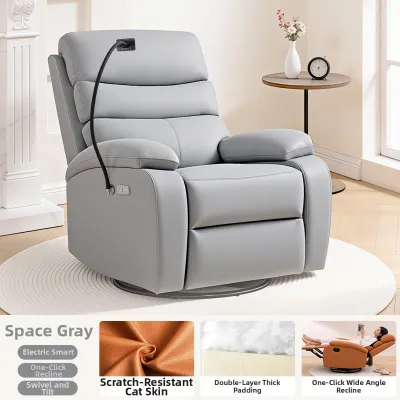
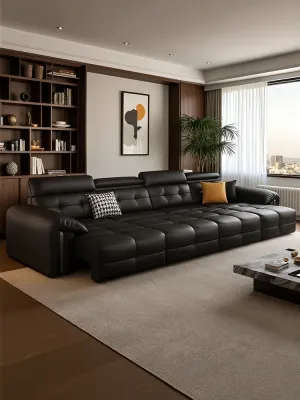
Products mentioned in this guide
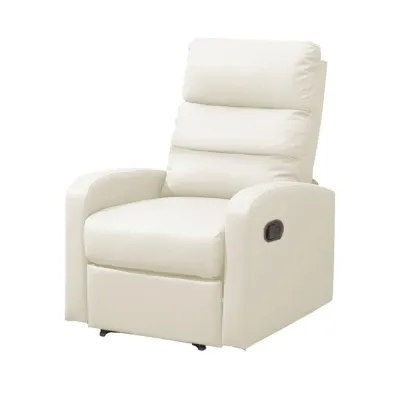
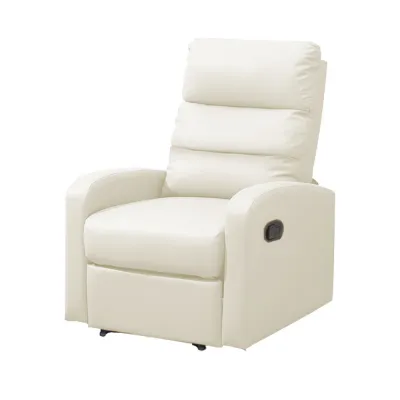
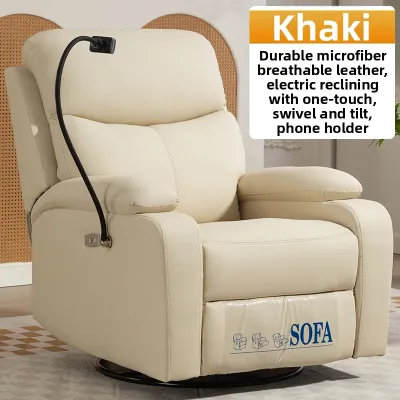
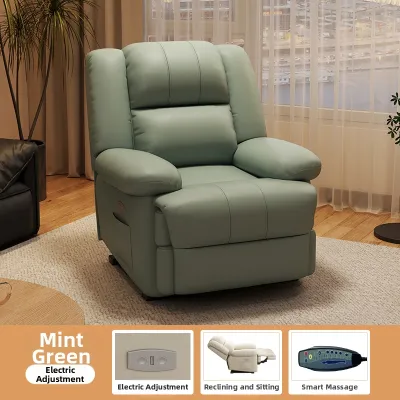
![[Free installation] Electric Recliner Sofa Chair | Single Zero Gravity Motorized Lounge Chair | Rotating Lazy Sofa Bed with Warranty](https://img.lazcdn.com/g/p/76a9b5a7220bfea1b826a65095b7fbbc.jpg_400x400q80.jpg_.webp)
![[SG Seller] TAYLOR COWHIDE RECLINER LEATHER SOFA 3 SEETER (MANUAL/POWER RECLINER AVAILABLE)](https://img.lazcdn.com/g/p/c11663e79909996131fe58434a265c61.jpg_400x400q80.jpg_.webp)
Prices are valid at publication and may change. Please refer to the product page for the latest price.
The primary challenge with standard recliners is the “clearance problem.” Traditional reclining mechanisms operate by tilting the backrest backward while extending the footrest forward. This design requires a significant gap—often between 15 and 30 centimeters—between the back of the sofa and the wall. In a small HDB living room, pushing a sofa 30 centimeters away from the wall severely reduces the remaining floor space, narrowing the central walkway and bringing the seating uncomfortably close to the television screen. Furthermore, when the footrest is fully extended, it can block crucial traffic pathways, preventing easy access to bedrooms, kitchens, or balcony doors.
Maintaining a clear, unobstructed traffic flow is essential for both safety and visual comfort. A living room should feel like an open, inviting space rather than an obstacle course. If a recliner blocks the natural path of movement, it creates daily frustration and can pose a tripping hazard, particularly for households with young children or elderly family members. To avoid these issues, homeowners must prioritize recliners specifically engineered for small spaces, ensuring that the sofa’s extended footprint does not interfere with the room’s primary walkways or structural features like low windows and sliding doors.
Key Features to Look for in Compact Fabric Recliners
To find a recliner that accommodates a small HDB layout, you must look closely at the underlying mechanics and structural dimensions of the furniture. Choosing a model with space-saving features ensures you get maximum comfort with minimal spatial impact.

Zero-Wall Clearance (Wall-Hugger) Mechanisms
- The most critical mechanical feature for a compact living room is a zero-wall clearance, or "wall-hugger," mechanism. Unlike traditional designs that tilt backward, wall-huggers are engineered on a forward-gliding track. As you recline, the seat base slides forward while the backrest lowers within the established footprint. This unique motion means the sofa can be placed as close as 5 to 10 centimeters from the wall, saving valuable floor space and allowing the sofa to sit flush with your living room walls.
Power vs. Manual Reclining
- Power Recliners: These models use electric motors to adjust the seating angle smoothly at the touch of a button, allowing you to stop at any precise position. However, they require constant access to an electrical outlet. In HDB flats, power sockets are often pre-installed at specific intervals along the walls. If your sofa placement does not align with an outlet, you may have to run extension cords along the floor, which can look untidy and create tripping hazards.
- Manual Recliners: Operating via a pull-tab, lever, or simple body-weight tension (push-back), manual models do not require electrical power. This gives you complete freedom to place the sofa anywhere in the room, including away from walls or near balconies. The trade-off is that they require physical effort to operate, and they generally offer fewer customizable angles compared to their motorized counterparts.
Visual Weight and Leg Design
- The visual weight of a piece of furniture refers to how heavy or bulky it appears in a room. Traditional recliners often feature solid, blocky bases that sit directly on the floor, which can make a small living room feel congested. To combat this, look for recliners designed with exposed, slender legs or raised bases. Elevating the sofa frame off the ground allows light to pass underneath, creating an illusion of spaciousness. Additionally, a raised base provides practical benefits, such as allowing robotic vacuums to pass underneath freely, making home maintenance much easier.
Armrest and Backrest Proportions
- When shopping for a compact recliner, pay close attention to the width of the armrests. Standard recliners often feature thick, overstuffed armrests that add unnecessary bulk to the overall width of the sofa without increasing the actual seating area. Streamlined, narrow armrests—often referred to as track arms—maximize the usable seating space while keeping the sofa's overall footprint as small as possible. Similarly, a lower backrest profile helps maintain open sightlines across the room, preventing the sofa from dominating the visual field.
Recommended Recliner Configurations for Small Spaces
Selecting the right configuration depends on your household size, lifestyle, and the specific layout of your HDB flat. Several space-saving options work exceptionally well in compact living areas.
Wall-Hugging (Zero-Clearance) Recliners
Wall-hugging recliners are the premier choice for linear HDB living room layouts where the sofa must sit directly against the main wall. Because the mechanism slides the seat forward rather than tilting the backrest backward, these sofas maximize the usable floor area in front of the television. They are highly efficient for narrow rectangular rooms, allowing you to position a coffee table or ottoman closer to the sofa without restricting movement. One minor trade-off to consider is that wall-huggers may not recline to a completely flat, 180-degree position, but they easily achieve a highly comfortable lounging angle suitable for watching movies or reading.
Compact Two-Seater Recliners
For couples or small families, a compact two-seater recliner (often called a reclining loveseat) offers a highly functional seating solution. A two-seater with dual reclining mechanisms allows both occupants to adjust their comfort levels independently without the massive, room-dominating footprint of a traditional three-seater sofa. To accommodate guests without cluttering the room, you can pair a compact two-seater with a lightweight, non-reclining accent chair or a set of nesting ottomans. This setup maintains a flexible layout while ensuring daily comfort remains a priority. When selecting a compact two-seater, always verify the seat depth to ensure it provides adequate leg support for taller household members.
Modular and Single Recliner Options
If your living room has an irregular layout, awkward corners, or is part of a smaller 2-room Flexi flat, modular or single recliner options offer unmatched flexibility. A single reclining armchair can be placed in a corner at an angle, creating a cozy reading nook without disrupting the main living area. Modular recliner systems allow you to customize your seating arrangement by combining individual reclining and stationary modules. You can start with a single reclining module and add matching stationary pieces later if your space permits. Furthermore, modular pieces are significantly easier to maneuver through tight HDB corridors and elevators during delivery.
Choosing the Right Fabric for Singapore's Climate
Upholstery selection is just as important as the sofa’s mechanical design, particularly given Singapore’s tropical climate. High temperatures and humidity levels demand fabrics that prioritize comfort, breathability, and ease of maintenance.
Breathability and Comfort
- In a non-air-conditioned HDB living room, sitting on the wrong fabric can quickly lead to an uncomfortable, sticky feeling. Heavy, tightly woven synthetic fabrics or low-grade polyesters tend to trap body heat and moisture. Instead, look for breathable fabric options such as linen-polyester blends or high-quality cotton weaves. These materials allow air to circulate freely, keeping the seating surface cool and comfortable even during the warmest months of the year.
Moisture and Mold Resistance
- Singapore's high relative humidity levels can create an environment prone to mold and mildew growth, especially in fabrics that absorb moisture easily. To prevent musty odors and fabric degradation, look for performance fabrics engineered with moisture-wicking properties. Many modern synthetic winds, such as high-grade microfibers and treated polyesters, are designed to resist moisture absorption, allowing them to dry quickly and remain fresh. Always check the manufacturer's care label to verify if the fabric has been treated with antimicrobial or mold-resistant coatings.
Durability and Stain Resistance
- For busy households, especially those with young children or pets, durability is a primary concern. Performance fabrics are highly recommended because they are constructed using tightly woven yarns that resist liquid penetration and claw snags. Many of these fabrics are treated with stain-resistant barriers that cause liquids to bead up on the surface rather than soaking into the fibers, giving you ample time to wipe away spills. When comparing fabrics, look for those with high Wyzenbeek or Martindale rub counts, which indicate strong resistance to surface wear and abrasion over time.
Maintenance Requirements
- Because reclining sofas contain complex internal metal frames and electrical components, their fabric covers are rarely fully removable or machine-washable. This makes spot-cleaning capability a crucial factor. Before purchasing, verify the cleaning code of the fabric. Code W can be cleaned with water-based cleaning agents, while Code S must be cleaned with mild, water-free solvents or dry-cleaning products. Code W/S allows for either water-based or solvent-based cleaners, offering the greatest maintenance flexibility. If you prefer low-maintenance furniture, prioritize performance fabrics that can be easily cleaned with a damp cloth and mild soap, reducing the need for expensive professional upholstery cleaning services.
Pre-Purchase Checklist: Measuring Your HDB Space
To avoid the frustration of a delivery failure or a sofa that blocks your living room, you must perform precise measurements before finalizing your purchase. Follow this step-by-step checklist to ensure a seamless fit.
1. Measure Living Room Dimensions and Clearance
- Do not rely solely on visual estimates. Use a measuring tape to determine the exact length of the wall where the sofa will sit, as well as the total depth of the room.
- Fully Extended Depth: Obtain the exact dimensions of the recliner when it is fully extended (with the backrest down and footrest up). Mark this footprint on your living room floor using masking tape.
- Walkway Clearance: Ensure that even when the recliner is fully extended, there is at least 60 to 90 centimeters of clear space remaining in front of the footrest to allow family members to walk past without obstruction.
2. Verify the Delivery Path
- Many large furniture deliveries in Singapore fail because the item cannot fit through the building's entry points. You must measure the entire path the delivery team will take.
- HDB Lift Doors and Cabin: Measure the height, width, and diagonal depth of your estate's elevator doors and the interior cabin. The sofa must fit inside the lift unless you plan to pay extra for staircase delivery (which may have strict floor limits).
- Corridor and Staircase Landings: Check for narrow corridor turns, low ceilings, or obstacles like shoe racks and bicycles that could block the delivery team.
- Main Entrance and Gate: Measure the clear opening width of your flat's metal gate and main wooden door frame.
3. Confirm Power Socket Locations
- If you are planning to purchase an electric power recliner, identify the locations of your living room's power sockets.
- Proximity: Ideally, the sofa should be positioned directly in front of or adjacent to an outlet.
- Cable Management: If the cable must cross a walkway, plan to use a low-profile floor cable protector or run the wire along the baseboards to prevent tripping hazards.
4. Check Assembly and Delivery Conditions
- Ask the retailer about the state of the sofa upon delivery.
- Modular Delivery: Many high-quality recliners are designed with detachable backrests or come in individual modular pieces, making them much easier to transport through tight doors and assemble inside your home.
- In-Home Assembly: Confirm whether the delivery service includes professional in-home assembly and the disposal of bulky packaging materials, as setting up complex reclining mechanisms yourself can be challenging.
Frequently Asked Questions (FAQ)
Can I fit a 3-seater recliner in a standard HDB living room?
While it is physically possible to fit a 3-seater recliner into larger 4-room or 5-room HDB living rooms, doing so in a standard 3-room flat is generally not recommended. A 3-seater recliner has a wide footprint that can easily dominate the space, blocking natural traffic paths and making the room feel visually cramped. For smaller living areas, a more practical solution is to choose a compact 2-seater recliner. If you require additional seating, you can pair it with a separate, lightweight accent chair or a flexible ottoman. This configuration provides the same seating capacity while preserving open walkways and offering greater layout flexibility.
Do electric recliners require special wiring in HDB flats?
No, electric recliners do not require any special wiring, dedicated circuits, or structural electrical modifications in HDB flats. They are designed to operate on standard residential voltage and can be plugged directly into any standard 230V Singapore power socket. However, because these sofas rely on constant power, it is important to position them near existing outlets to avoid running long cords across the room. If you must use an extension cord, ensure it is a high-quality, surge-protected model, and secure it safely along the walls or under cable covers to prevent tripping hazards.
How do I clean fabric recliners in a humid climate?
Maintaining a fabric recliner in Singapore’s humid climate requires regular, preventative care to prevent dust accumulation and mold growth. You should vacuum the upholstery at least once a week using a soft brush attachment, paying close attention to the crevices and joints where dust and debris gather. In the event of a spill, spot-clean the area immediately by blotting it with a clean, dry microfiber cloth; avoid rubbing, which can push the stain deeper into the fibers. For stubborn spots, use a mild, water-safe upholstery cleaner, taking care not to oversaturate the fabric, as excess moisture trapped in the cushioning can lead to mold. Always consult the manufacturer’s specific care label before applying any cleaning solutions.
Community discussion
Share your experience or ask a question. Comments are reviewed before publication.