
Selecting a fabric couch for a Singapore Housing & Development Board (HDB) flat requires balancing tight spatial footprints with structural durability and comfort. Because modern Build-To-Order (BTO) and resale flats often feature compact living rooms, choosing a sofa is no longer just about aesthetics. The ideal choice hinges on a brand’s quality-to-size ratio—how well a piece maximizes seating comfort and material longevity without overwhelming the physical and visual limits of your home.
To help you navigate the crowded Singapore furniture market, this guide evaluates the core criteria for assessing HDB-friendly couches and categorizes the top local and international brands by their design philosophy, material quality, and spatial efficiency.
How to Evaluate Fabric Couches for HDB Living Spaces
Space Planning and Proportions
Modern HDB living rooms, particularly in 3-room and 4-room layouts, present distinct spatial constraints. The typical distance between the main sofa wall and the television console ranges from 2.8 to 3.2 meters. This limited depth means that a couch’s footprint must be calculated down to the centimeter to ensure the room remains functional and easy to navigate.
Products mentioned in this guide
![[SG OPEN BOX SALE] Premium Quality 3 Seater Sofa Fabric Sofa Scandinavian Inspired Design | High Quality | Bedroom | Compact | Living Room | Fabric Sofa Bed | High-End | Comfortable | Durable | Designer | Luxury | HomeAndStyle | Home And Style](https://img.lazcdn.com/g/p/043e37ddaf58a118eb332e2d01ec2eeb.jpg_400x400q80.jpg_.webp)
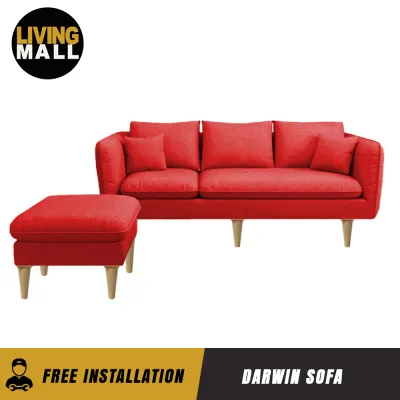
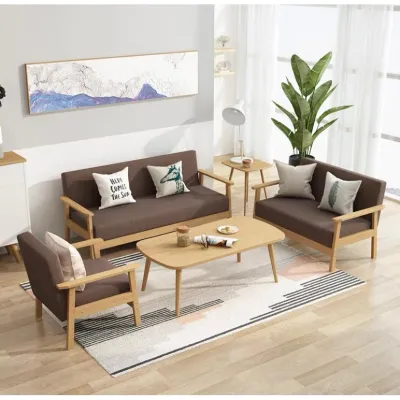
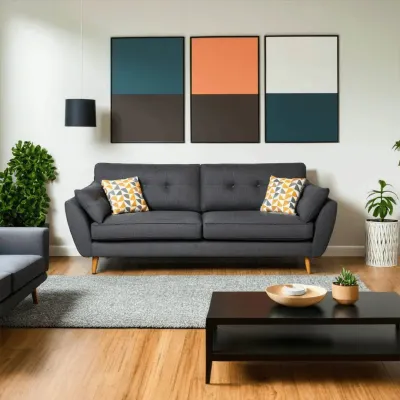
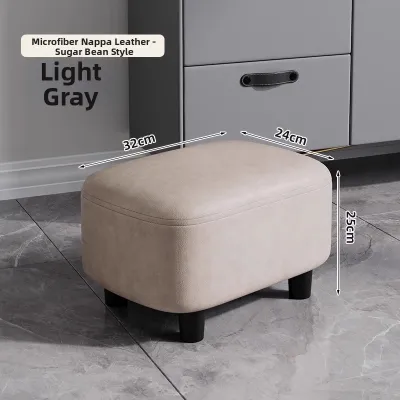
Prices are valid at publication and may change. Please refer to the product page for the latest price.
When evaluating a couch, look beyond the overall length and pay close attention to armrest width and seat depth. Wide, rolled armrests can easily consume 20 to 30 centimeters of potential seating space on either side of the frame. For compact HDB rooms, look for couches with slim track armrests, flared arms, or armless profiles, which maximize the usable seating area within a smaller total footprint.
Seat depth is another critical factor that dictates walkway clearance. While deep, plush couches (measuring 100 centimeters or more from front to back) are excellent for lounging, they can restrict the central pathway of a narrow living room. A couch with an overall depth of 80 to 90 centimeters is generally the sweet spot for HDB flats, providing sufficient thigh support while leaving enough clearance for a coffee table and media console.
Visual Weight
Visual weight refers to how heavy or bulky a piece of furniture appears to the eye. In a small space, a couch that sits flush against the floor with a solid plinth base can block light and make the entire room feel cramped. To maintain an open, airy atmosphere, select designs that minimize visual clutter.
Couches with raised legs (typically 12 to 15 centimeters high) are highly effective for small living rooms. Elevating the sofa frame exposes the floor underneath, which fools the brain into perceiving a larger continuous floor area. As a practical bonus, this elevation provides enough clearance for robotic vacuum cleaners and manual mops to pass underneath without obstruction.
Streamlined silhouettes with clean, straight lines or gentle organic curves help preserve sightlines across the room. Low-profile backrests also prevent the couch from acting as a visual barrier, making the ceiling feel higher. Color choices further influence visual weight; light neutrals, soft pastels, or cool greys reflect Singapore’s abundant natural light, whereas dark, saturated tones can dominate a small room unless balanced by light-colored walls and flooring.
Fabric Durability and Maintenance
Singapore’s hot and humid tropical climate makes fabric selection a primary consideration for comfort and longevity. High humidity levels can trap moisture in dense weaves, leading to musty odors, mold, or mildew if the fabric lacks breathability. Synthetic blends, such as polyester mixed with nylon or acrylic, are highly popular because they resist stretching, fading, and moisture retention better than pure natural fibers.
When assessing fabric quality, ask the retailer for the Martindale rub count, which measures a fabric’s resistance to abrasion. For a typical HDB household with daily use, a rating of 15,000 to 20,000 rubs is suitable for general domestic wear. If you have pets, young children, or use your living room as a primary workspace, aim for a heavy-duty rating of 25,000 rubs or higher to prevent premature pilling and thinning.
Stain resistance is equally vital for maintaining a clean appearance in a multi-use living space. Many modern fabric couches feature performance fabrics treated with liquid-repellent coatings that cause spills to bead on the surface rather than sink into the fibers. Always verify whether the fabric covers are fully removable and machine-washable, or if they require professional dry cleaning, as this heavily impacts long-term maintenance costs.
Top Fabric Couch Brand Categories for HDB Homes
Premium Modular and Customizable Brands
Premium modular brands cater to HDB homeowners who want a tailored fit for their specific living room dimensions. Brands in this category, such as Castlery, King Living, and greyhammer, offer highly flexible configuration systems that allow you to piece together individual seating modules to match your wall length perfectly.

- Modularity and Flexibility: The primary benefit of a modular system is adaptability. If you transition from a compact 3-room BTO to a larger resale flat in the future, you can easily add intermediate seats, corner pieces, or an ottoman. Many modular designs also feature reversible chaise lounges, allowing you to switch the layout from left-facing to right-facing if you decide to rearrange your living room.
- Premium Material Construction: These brands typically justify their higher price points (generally ranging from S$1,800 to S$4,000+) by utilizing superior internal materials. Look for kiln-dried hardwood frames that resist warping in Singapore’s humidity, pocketed spring suspension systems, and high-density polyurethane foam (often 35kg/m³ or higher) that retains its shape and support over years of continuous use.
- Customization Trade-offs: While custom fabric selections and tailored configurations ensure a perfect aesthetic and physical fit, they come with notable trade-offs. Custom orders often involve production and shipping lead times of 8 to 16 weeks. Furthermore, precise upfront measurements are mandatory; even a minor 5-centimeter calculation error can prevent a modular sectional from clearing a structural column or fitting neatly against an adjacent partition wall.
Space-Optimized and Apartment-Scale Brands
Space-optimized brands specialize in furniture designed specifically for compact urban apartments. Brands like Soul & Tables, Commune, and Scanteak focus on Scandinavian, Japanese, or modern minimalist aesthetics, offering curated collections that prioritize space efficiency without sacrificing seating comfort.
- Compact Design Features: These collections feature ultra-slim solid wood or metal frames, narrow track arms, and shallow overall depths. You will often find clever multi-functional elements, such as couches with integrated wooden side ledges that eliminate the need for end tables, built-in storage compartments under the seat cushions, or high-quality, smooth-operating sofa bed mechanisms.
- Structural Integrity: Despite their smaller footprints and lighter profiles, these brands maintain high standards of structural integrity. They frequently utilize solid teak, oak, or walnut wood for their exposed frames and legs. Solid wood construction not only adds a warm, natural texture to the home but also ensures excellent stability and load-bearing capacity without requiring a bulky, heavy base.
- In-Person Comfort Testing: Because apartment-scale couches reduce the overall footprint, some models may compromise on seat depth or cushion thickness. It is highly recommended to visit local showrooms to test the comfort in person. Pay attention to the cushion recovery—how quickly the foam bounces back after you stand up—and ensure the seat height and angle provide comfortable thigh and lower back support for extended sitting sessions.
Value-Driven and Direct-to-Consumer Brands
Value-driven and direct-to-consumer (DTC) brands, such as HipVan, FortyTwo, and Megafurniture, have transformed the Singapore furniture landscape by offering accessible, stylish, and HDB-friendly couches at highly competitive price points.
- Transparent Pricing and Convenience: By operating primarily online and maintaining streamlined physical experience centers, these brands reduce overhead costs and pass the savings directly to the consumer. Standard compact 2-seater and 3-seater fabric couches in popular neutral shades are often priced between S$400 and S$1,200. Online platforms provide detailed dimensions, material breakdowns, and transparent pricing without hidden showroom markups.
- Quick Delivery and Stock Availability: Unlike custom-built furniture, many value-driven brands keep a large inventory of standard models in local warehouses. This allows for rapid delivery timelines, often within 3 to 7 working days, making them an excellent choice for homeowners who need immediate furnishing solutions or are working within tight renovation schedules.
- Verifying Quality and Managing Risk: To mitigate the risks of buying furniture online, take advantage of physical showrooms or pop-up spaces to examine the fabric texture and cushion firmness firsthand. If a showroom visit is not possible, order fabric swatches if the brand offers them. Carefully review the warranty terms—which typically cover frame defects for 1 to 5 years but may exclude fabric pilling, zipper damage, and normal foam compression—and check the return policy for restocking or return transportation fees.
Essential Pre-Purchase Checks for HDB Delivery and Fit
Access Verification
One of the most common delivery mishaps in Singapore is purchasing a gorgeous couch only to discover it cannot fit into the HDB passenger lift or through the unit’s front entrance. Before finalizing your purchase, you must perform a thorough physical audit of the delivery pathway.
- Lift Dimensions: Measure the height of the passenger lift door, the interior cabin height, width, depth, and the diagonal clearance from the bottom corner of the door to the top opposite corner of the cabin. If the couch is delivered as a single long frame and cannot fit inside the lift, delivery teams may have to carry it up the stairwell, which typically incurs steep stair-climbing fees per floor.
- Corridors and Gate Clearances: Measure the width of the common corridor outside your unit, paying close attention to any tight turns, low-hanging pipes, or emergency exit signs. Next, measure the maximum clearance of your outer metal gate and main wooden door frame when fully opened. Keep in mind that some metal gates do not open a full 180 degrees, which can significantly narrow the entry passage.
- Hoisting and Assembly: If your entryway is too tight, check if the couch legs or armrests can be detached to reduce its delivery profile. If a couch must be hoisted over a balcony or through a window, this requires specialized equipment, additional delivery fees, and prior approval from the building management or HDB, which many standard delivery services do not provide.
Clearance and Flow
Once you have confirmed that the couch can physically enter your home, you must map out its placement to ensure it does not disrupt the daily flow of your household.
- The Masking Tape Test: Use painter's masking tape to outline the exact dimensions of the proposed couch on your living room floor. Leave the tape in place for a few days to get a realistic sense of how the physical footprint affects your movement through the room.
- Walkway and Swing Clearances: Ensure there is a minimum of 60 centimeters of clear walkway space between the front of the couch and any coffee table or television console. Check the swing paths of nearby doors, including balcony sliding doors, bedroom doors, and the household shelter (bomb shelter) door. A couch should never block these essential exit routes.
- Recliner and Sofa Bed Extensions: If you are purchasing a reclining couch or a sofa bed, measure the additional clearance required behind the backrest and in front of the footrest when the mechanism is fully extended. Many wall-hugger recliners require only 10 to 15 centimeters of rear clearance, whereas traditional recliners may require significantly more.
Care and Warranty
Protecting your investment in Singapore’s humid climate requires understanding the manufacturer’s care guidelines and warranty limitations before making your purchase.
- Fabric Protection Sprays: Many homeowners apply third-party fabric protectors or stain-guard sprays to their new couches. Before doing so, consult the manufacturer's care instructions, as some chemical treatments can react negatively with specific fabric synthetic blends or void your structural and material warranties.
- Local Support and Upholstery Services: Inquire whether the brand offers local upholstery repair, replacement cushion foam, or extra slipcovers. Having access to local repair services or replacement parts is incredibly valuable, as it allows you to refresh a worn cushion or repair a broken zipper without having to replace the entire couch frame.
- Warranty Exclusions: Read the fine print of the warranty document. A standard warranty typically covers structural defects in the frame (such as joint separation or wood splitting) and mechanical failures in recliners or sofa beds. However, superficial wear and tear, fabric pilling, color fading due to direct sunlight exposure, and normal softening of polyurethane foam are rarely covered.
Frequently Asked Questions (FAQ)
What is the ideal couch depth for a small HDB living room?
For a small HDB living room, the ideal overall couch depth is between 80 and 90 centimeters. This range provides a comfortable seat depth of approximately 50 to 55 centimeters, which accommodates most body types comfortably while leaving sufficient clearance for walkways. If your living room is exceptionally narrow, look for a shallower depth of 80 to 82 centimeters, and pair the couch with a slim, wall-mounted television console to maximize the remaining floor space.
Can I get a fabric couch with removable covers in Singapore?
Yes, many local and international furniture brands in Singapore offer couches with fully removable and washable covers. This feature is highly recommended for households with young children, pets, or individuals with dust mite allergies, as it allows for regular deep cleaning. If you purchase a couch with fixed covers, you can maintain its hygiene by vacuuming it weekly with an upholstery attachment, spot-cleaning spills immediately with a damp microfiber cloth and mild fabric detergent, or hiring professional local steam cleaning services once or twice a year.
Community discussion
Share your experience or ask a question. Comments are reviewed before publication.