
Working from home in Singapore presents a unique set of challenges when selecting the ideal office chair. The combination of high tropical humidity, compact residential floor plans in Housing & Development Board (HDB) flats and condominiums, and long hours spent at a desk demands a chair that balances superior physical support with practical spatial and material considerations. Finding the right brand requires evaluating how well their designs adapt to these local environmental factors while providing the necessary adjustments to prevent chronic back and neck discomfort.
The most suitable ergonomic office chair brands for Singaporean homes are those that offer high-performance mesh materials for optimal airflow, adjustable lumbar and seat-depth mechanisms to accommodate diverse body types, and a compact physical footprint that fits within multi-purpose rooms. While premium global manufacturers set the standard for long-term durability and advanced kinetic support, regional and mid-range brands have emerged as highly competitive alternatives, offering localized customer service, faster delivery times, and frames scaled specifically for Asian body proportions.
How to Evaluate Ergonomic Office Chairs for Singapore Homes
Evaluating an office chair for a Singapore home requires looking beyond basic comfort to assess how the furniture integrates with your specific living environment and daily habits. Because a home office often shares space with a bedroom, living area, or corridor, physical dimensions are the first critical boundary.
Products mentioned in this guide
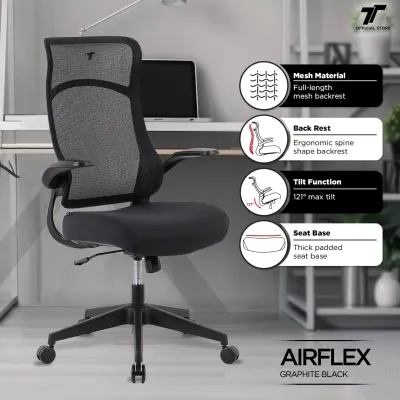
![[SG Ready Stocks] Ergonomic Office Chair - 8.5cm Thick Cushion + Antislip Surface Adjustable Backrest & Detachable Headrest Flip-Up Arms Rocking & Lock Function 15-Min Easy Assemble for Home/Office](https://img.lazcdn.com/g/p/056ecb65b2a442dd9a476ff654362085.jpg_400x400q80.jpg_.webp)
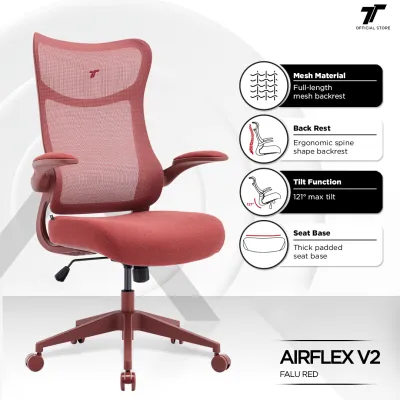
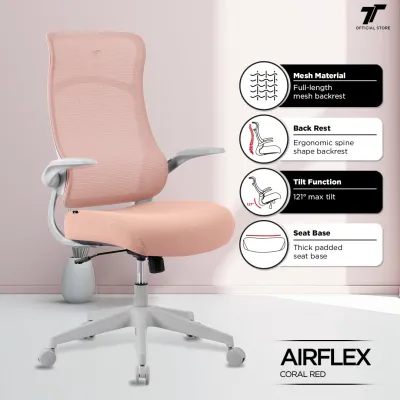
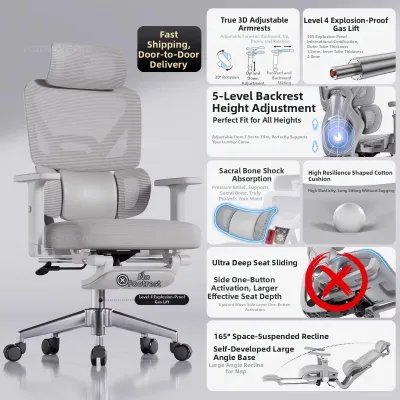
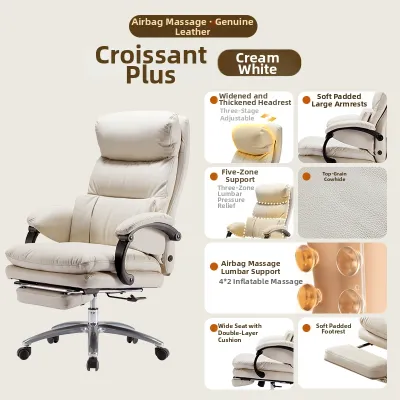
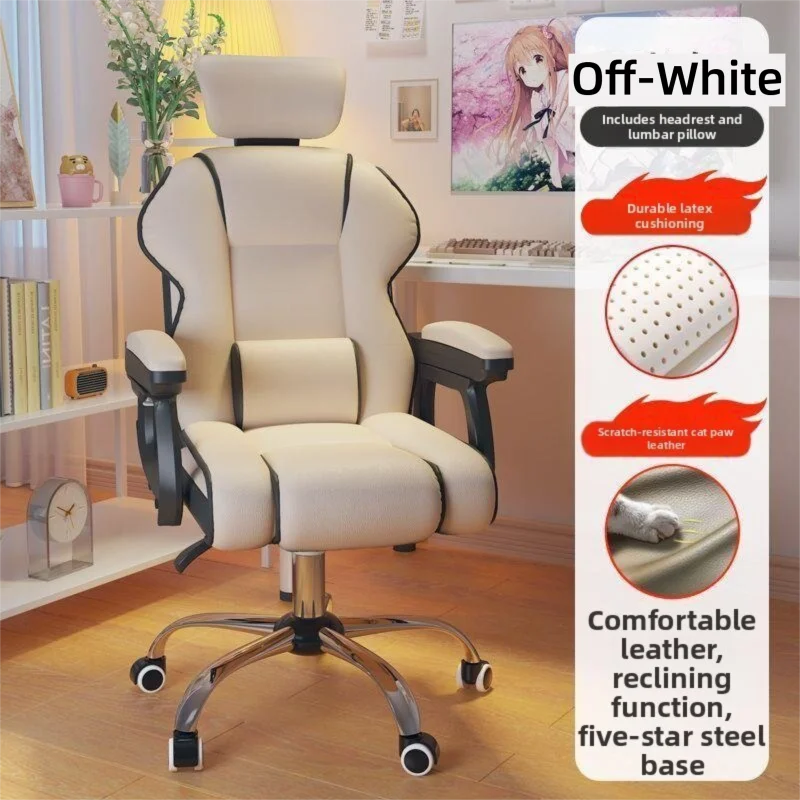
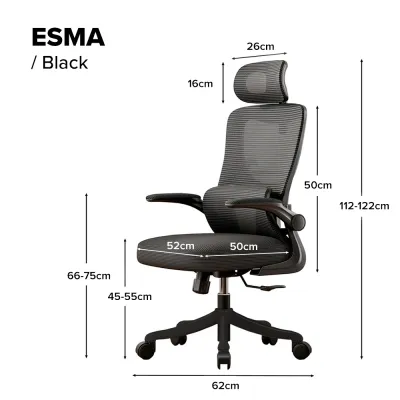
Prices are valid at publication and may change. Please refer to the product page for the latest price.
Space and Footprint Constraints
Before shortlisting any chair, measure the precise floor area where the chair will operate, as well as the clearance under your desk. A standard ergonomic chair has a five-star wheelbase diameter ranging from 65 to 70 centimetres. In a compact bedroom or study nook, this wide base can easily collide with wardrobe doors, bed frames, or adjacent walls.
Furthermore, pay close attention to the maximum width of the armrests. If they cannot be lowered or slid inward to tuck completely beneath your desk surface, the chair will remain protruding into your living space, blocking foot traffic when not in use. Choosing a model with highly adjustable or flip-up armrests can save valuable floor space in tight layouts.
Climate and Material Considerations
Singapore’s tropical climate, characterized by high relative humidity and warm temperatures, makes material choice a primary factor in long-term seating comfort. Traditional thick foam cushions wrapped in polyurethane (PU) leather or heavy fabrics tend to trap body heat and moisture, leading to sweating, discomfort, and eventual material degradation such as peeling or cracking.
Fully mesh chairs—featuring both a mesh backrest and a mesh seat pan—are highly recommended for non-air-conditioned spaces because they allow continuous air circulation. However, if you prefer the support of a foam seat, look for high-density molded foam paired with a breathable fabric cover, and ensure the foam is certified to resist sagging over years of use.
Essential Ergonomic Adjustments
True ergonomic support relies on a chair’s ability to be tailored to your unique skeletal frame. The non-negotiable adjustments include:
- Adjustable Lumbar Support: This mechanism should adjust both vertically (to align with the natural curve of your lower spine) and in depth (to control the level of pressure applied to your lower back).
- Seat Depth Adjustment (Seat Slider): This allows you to slide the seat pan forward or backward, ensuring there is a gap of approximately two to three fingers between the edge of the seat and the back of your knees, which prevents restricted blood circulation.
- Multi-Dimensional Armrests (3D or 4D): Armrests must adjust in height, angle, and depth to support your forearms comfortably, keeping your shoulders relaxed and reducing strain on your upper back and neck.
Top Ergonomic Office Chair Brands to Consider for WFH
The market for ergonomic seating in Singapore is diverse, ranging from prestigious international manufacturers to regional brands that cater directly to local consumer preferences and room sizes. Understanding the design philosophy and limitations of each brand tier helps narrow down your options based on budget, space, and required features.

Premium Brands for Maximum Adjustability
Premium global brands are widely recognized for pioneering advanced ergonomic engineering and high-durability materials. These manufacturers design chairs based on extensive biomechanical research, resulting in sophisticated tilt mechanisms that respond dynamically to your body movements without requiring manual tension adjustments.
The primary strength of these premium brands lies in their exceptional posture correction and build quality. They utilize proprietary elastomeric mesh and high-grade polymers that maintain their tension and shape for over a decade, often backed by comprehensive 12-year manufacturer warranties. For individuals who suffer from chronic back pain or spend upwards of eight hours a day seated, the long-term health benefits and durability of these chairs justify the high initial capital outlay.
However, these premium options come with distinct limitations for Singaporean home offices. They represent a significant financial investment, with prices often starting well above S$1,500. Physically, many of these chairs feature substantial, heavy frames and wide wheelbases designed for spacious corporate offices, which can visually and physically overwhelm a small domestic room. Additionally, customized configurations or specific colorways may involve lead times of several weeks or months if they are not currently stocked by local authorized distributors.
Mid-Range and Regional Brands for Balanced Value
For many professionals working from home, mid-range and regional brands offer a highly practical middle ground. Brands such as Ergotune, Hinomi, Secretlab, and local commercial furniture suppliers provide feature-rich ergonomic chairs at price points ranging from S$400 to S$900. These brands frequently incorporate advanced features typically reserved for high-end models, such as synchronous tilt mechanisms, fully adjustable 3D or 4D armrests, and integrated, dynamic headrests.
A major advantage of regional brands is that their product dimensions and adjustment ranges are often optimized for Asian body frames, ensuring that seat depths and backrest heights align correctly with shorter or average-height users. Furthermore, because these brands maintain local warehousing and dedicated customer support teams in Singapore, they can offer rapid delivery, straightforward local warranty fulfillment, and readily available replacement parts.
When evaluating a mid-range or regional brand, it is crucial to verify the long-term durability of the moving parts. Inspect the construction of the levers, tension knobs, and armrest adjustment tracks, as these components may utilize more plastic than their premium counterparts. Always read the exact terms of the local warranty, paying close attention to which parts are covered (for example, the gas lift and frame may have a longer warranty than the mesh or armrest pads) and whether the brand offers on-site repair or requires you to transport the chair to a service center.
Compact and Budget-Friendly Brands for Small Spaces
When floor space is extremely restricted or the chair is only needed for occasional use, compact and budget-friendly brands provide essential support without dominating the room. Manufacturers like Ikea, along with entry-level ergonomic lines sold through local furniture retailers, offer streamlined designs priced under S$300.
These chairs often feature space-saving design elements, such as flip-up armrests that allow the chair to slide completely under low desks, or armless configurations that minimize the overall width of the unit. Their smaller wheelbases make them easier to maneuver in tight corridors or shared study areas, making them excellent choices for secondary workstations or student desks.
The trade-offs for these budget-friendly models are found in their adjustment limitations and material longevity. Many budget models offer only basic height adjustments and a simple tension-tilt mechanism, lacking independent seat depth or customizable lumbar controls. The cushioning on entry-level chairs often consists of standard polyurethane foam, which may compress and lose its supportive qualities after a few hours of continuous daily use. These options are best suited for individuals with hybrid work schedules who only spend a few hours a day at their desks, or for households requiring a versatile, occasional-use chair.
Feature Comparison Framework for Home Office Chairs
To make an objective purchasing decision, it is helpful to compare different brand categories across the specific practical and physical dimensions that impact your daily home use. The table below outlines how these tiers generally compare across critical functional categories.
| Brand Category | Adjustability Range | Material Breathability | Footprint & Spatial Impact | Warranty Coverage Type |
|---|---|---|---|---|
| Premium Brands (e.g., Herman Miller, Steelcase) | Advanced (Dynamic tilt, precise lumbar depth, multi-angle armrests) | High (Proprietary, high-tension elastomeric mesh or breathable fabrics) | Large (Requires dedicated space; wider wheelbases of 68-70cm) | Long-term (Typically 10-12 years, covering parts and local on-site service) |
| Mid-Range & Regional (e.g., Ergotune, Hinomi) | Comprehensive (Synchronous tilt, adjustable headrests, 3D/4D armrests) | High to Moderate (Standard breathable mesh; some hybrid foam seats) | Moderate (Standard wheelbases of 65-68cm; adjustable armrests help fit desks) | Mid-term (Typically 3-8 years, with varying terms for mesh vs. mechanical parts) |
| Compact & Budget (e.g., Ikea, Entry-level brands) | Basic (Height adjustment, simple tilt lock, fixed or flip-up armrests) | Moderate to Low (Basic mesh back with standard foam seat or full fabric) | Small (Compact wheelbases under 65cm; easily tucked away) | Short-term (Typically 1-3 years; often requires self-transport for claims) |
How to Use the Framework
When using this framework to guide your purchase, prioritize the features that directly address your daily working conditions. If your home office setup is located in a room without air conditioning, prioritize material breathability and full-mesh construction over advanced armrest adjustments. This ensures you remain comfortable even during peak afternoon heat.
Conversely, if you share a desk with family members of different heights, prioritize a wide range of mechanical adjustability—especially seat depth and lumbar height—to ensure every user can configure the chair safely. A highly adjustable chair prevents long-term posture strain across multiple users.
Testing and Verification
Before finalizing any purchase, always cross-reference the manufacturer’s official specification sheet with your existing furniture. Check the minimum and maximum seat height ranges to ensure your legs can rest flat on the floor while your arms align with your desk height. This simple step prevents the discomfort of a mismatched workstation.
Additionally, verify the maximum weight capacity of the chair. High-quality ergonomic models are typically rated to support between 110 and 136 kilograms, which serves as a reliable indicator of the structural integrity of the frame and gas lift. Never assume a chair fits your physical profile without checking these exact limits.
Purchasing Channels and Pre-Delivery Checks in Singapore
Securing the right chair involves navigating local retail options and understanding the logistics of delivering large furniture items into Singaporean residential developments.
Where to Buy
To ensure you are purchasing a genuine product with valid warranty support, always buy through official brand showrooms, authorized local furniture retailers, or the official storefronts of brands on reputable e-commerce platforms. Visiting a physical showroom is highly recommended; sitting in a chair for at least 15 to 20 minutes allows you to test how the lumbar support aligns with your spine and whether the mesh tension feels comfortable to your body.
Be cautious of unauthorized third-party parallel importers offering steep discounts. While the upfront cost may be lower, these products often lack local warranty coverage, leaving you without recourse if a mechanical component fails. Buying from authorized channels guarantees that replacement parts and local repair services are available when needed.
Warranty and Return Policies
Carefully review the warranty policy before making a transaction. Determine whether the warranty is an international one or if it is managed locally by a Singapore distributor. Local distributor warranties are generally easier to claim against, as they have local technicians and parts inventories, avoiding the need to ship components overseas for repair.
Furthermore, check if the brand offers a “comfort trial” period. Some mid-range and premium brands allow customers to test the chair at home for 7 to 21 days, with the option to return it for a refund if it does not suit their posture. If no comfort trial is available, clarify whether returns are accepted only for manufacturing defects or if exchanges are permitted under specific conditions.
Delivery and Assembly Logistics
Before scheduling your delivery, perform a few practical spatial checks to avoid delivery-day complications. Measure the width of your main entrance door, hallway corridors, and the lift cabin door in your HDB block or condominium. Some premium chairs are delivered fully assembled in large boxes that may struggle to clear tight, right-angle turns in older residential layouts.
Additionally, clarify whether the purchase price includes professional on-site assembly or if the chair will arrive flat-packed. If self-assembly is required, ensure you have a clear, flat area of floor space to safely assemble the components without damaging the chair or your flooring. Finally, check if the retailer charges additional fees for deliveries to specific locations, or if there are stair-carry fees if your home cannot be accessed directly via a passenger lift.
Frequently Asked Questions (FAQ)
Is a headrest necessary for an ergonomic office chair?
A headrest is not strictly necessary for active, upright working postures, such as typing or writing, as your neck should ideally support itself in alignment with your spine. However, a headrest becomes highly beneficial if you frequently recline during phone calls, virtual meetings, or brief rest breaks, as it relieves the weight of your head from your neck muscles.
If you choose a model with a headrest, ensure it is fully adjustable in both height and angle. This adjustability allows it to cradle the base of your skull rather than pushing your head forward, which can cause significant neck strain and defeat the ergonomic purpose of the chair.
How do I know if an office chair fits my desk height?
To verify compatibility, measure the height of your desk surface from the floor—standard study desks in Singapore typically stand between 73 and 75 centimetres high. Next, check the chair’s maximum seat height specification. For an optimal ergonomic fit, your seat height should allow your feet to rest flat on the floor while your elbows form a 90-degree angle when resting on the desk surface or armrests.
If your desk is fixed and too high, you may need to raise the chair to its maximum height and use a supportive footrest to keep your feet flat and maintain proper blood circulation. Adjusting the chair’s gas lift range is the most effective way to achieve this alignment without compromising your posture.

Community discussion
Share your experience or ask a question. Comments are reviewed before publication.