
Finding efficient space-saving solutions is a priority for many homeowners in Singapore, where typical HDB flats and condominiums demand smart layout strategies. Utilizing the often-overlooked area beneath your bed frame is one of the most effective ways to declutter your living space. When searching for reliable, durable, and spacious containers, Durabox under-bed storage products stand out as highly functional options. Selecting the ideal Durabox variant requires matching the container’s physical dimensions, material properties, and lid mechanisms to your specific storage needs—whether you are organizing seasonal clothing, storing bulky bedding, or sorting miscellaneous household accessories.
How to Measure Your Under-Bed Space Before Buying
Before purchasing any Durabox container, taking precise physical measurements of your under-bed zone is essential to avoid fitment issues. The first and most critical measurement is the vertical clearance height. This is the distance from the finished floor surface—such as ceramic tiles, vinyl planks, or polished parquet—to the lowest point of the bed frame. Do not simply measure to the side rail; instead, measure to the lowest structural element, which might be a central support beam, a wooden slat, or even a hanging bed skirt. If your bed frame has sagged slightly over time under the weight of the mattress, measure the clearance at multiple points across the frame to find the absolute minimum height.
Next, assess the usable width and depth of the space under the bed. This involves mapping out any structural obstacles that could block a large storage box. Take note of the positions of the bed legs, the central support legs that run down the middle of queen and king-sized frames, and any existing built-in drawers. If you have a bedside table next to the bed, consider whether it will block the path of a box being pulled out from the side.
Products mentioned in this guide
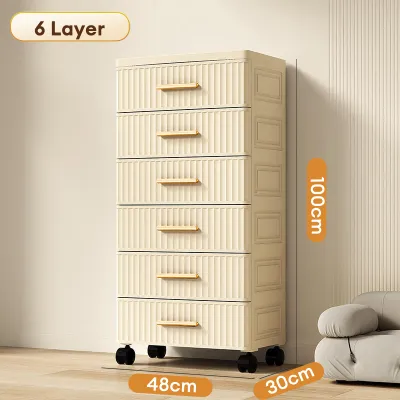
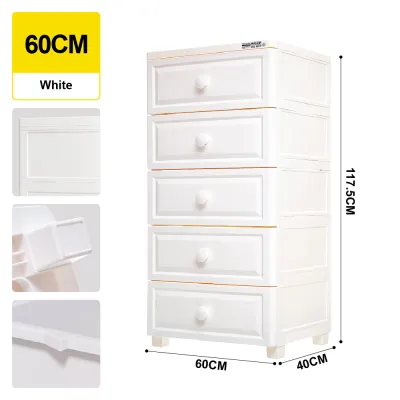
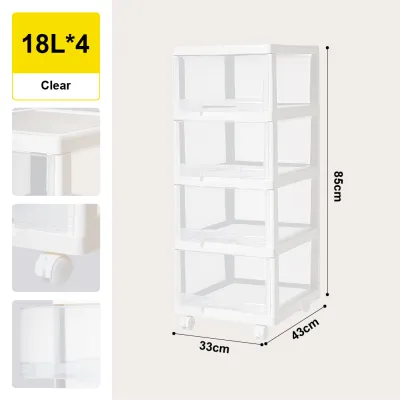
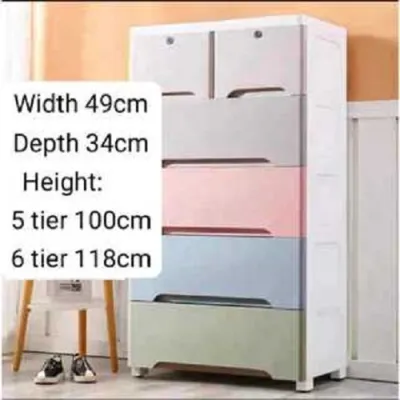
![[4/5 Tier] UNI-WARE White & Colorful Drawer Cabinet / home organizer stocker container storage boxes / Made in Thailand](https://img.lazcdn.com/g/p/91492409b66393953f2f2d2bb6fab7ab.jpg_400x400q80.jpg_.webp)
Prices are valid at publication and may change. Please refer to the product page for the latest price.
Finally, you must calculate the operational clearance on the floor surrounding the bed. A storage box is only useful if you can easily pull it out to access its contents. If the Durabox model you select features built-in wheels, it will slide smoothly, but it still requires a clear runway on your bedroom floor equal to or greater than the length of the box itself. If the box has a traditional lift-off lid rather than a split or hinged lid, you will need enough space to pull the entire unit out from under the bed before you can open it. For tight bedrooms common in newer Singapore apartments, a split-lid design that allows you to access contents by pulling the box only halfway out can be a significant spatial advantage.
Key Features to Compare When Choosing a Durabox
When evaluating different Durabox models for under-bed storage, several technical features and design elements dictate how well the container will perform in your home.

Material and Visibility
The choice between opaque, semi-transparent, and fully clear plastic involves a clear trade-off between visual neatness and ease of retrieval. Fully clear plastic allows you to identify stored items instantly from the side of the bed without needing to open the lid. This is highly efficient for active storage. However, if your under-bed area is visible from certain angles in the room, semi-transparent or opaque boxes can provide a cleaner, more uniform aesthetic by hiding colorful or cluttered items from view.
Lid Design and Protection
Under-bed environments are prone to dust accumulation. A snug-fitting lid with secure latches is crucial for keeping dust out. While plastic boxes naturally resist external splashes, they are not inherently hermetic or moisture-proof unless specifically designed with a rubberized gasket seal. You should always verify the manufacturer’s product label and specifications to confirm any claims regarding pest or moisture resistance, rather than assuming all plastic containers offer identical environmental protection.
Mobility and Handling
Moving a fully loaded storage box can place strain on your back and scratch your flooring. Look for models equipped with built-in wheels or rollers. Unidirectional rollers are excellent for straight pull-out motions, while multi-directional casters offer greater maneuverability in tight spaces. If your bedroom has thick rugs or carpeting, ensure the wheels have sufficient clearance to roll without snagging. For boxes without wheels, or for lifting the container onto a bed or table to sort items, ergonomic side handles or molded grips are essential features to check.
Structural Integrity
Plastic storage boxes can warp, sag, or crack if overloaded or stacked improperly. When comparing Durabox options, look for reinforced bases with grid patterns or structural ribbing. These design elements distribute weight evenly and prevent the bottom of the box from bowing downward and dragging against the floor. Always check the manufacturer’s stated weight capacity on the packaging or official product listing to ensure the box can support your intended load, especially if you plan to store heavy books, tools, or dense accessories.
Which Durabox Type Fits Your Specific Storage Needs?
Different household items present unique storage challenges, meaning a single box design may not suit every purpose. Matching the right Durabox variant to your specific category of belongings ensures better preservation of your items and more efficient space utilization.
Best for Clothing and Seasonal Wardrobes
Storing clothing under the bed is an excellent way to free up valuable wardrobe space in Singapore’s compact homes. However, fabrics are highly susceptible to dust, fiber degradation, and moisture damage. When selecting a Durabox for garments, prioritize variants that feature secure, locking lids with robust side latches. These latches pull the lid down tightly against the rim of the container, creating an effective barrier against dust and household pests.
To keep your folded clothes organized and prevent them from sliding into a disorganized pile when the box is moved, consider using internal dividers or pairing the plastic box with breathable fabric storage organizers. This allows you to categorize your wardrobe by season, item type, or family member.
The most critical step in under-bed clothing storage is prep work. You must ensure that all garments are completely clean and 100% dry before placing them inside the container. Even a trace of residual moisture from laundry or body sweat can trap humidity inside a sealed plastic box, leading to mildew, mold growth, and musty odors. In Singapore’s humid climate, this step is non-negotiable for preserving your fabrics.
Best for Bedding and Bulky Linens
Thick duvets, spare pillows, winter blankets, and heavy bed sheets take up an immense amount of closet space. Moving these bulky items to a large-capacity, single-compartment Durabox under the bed is a highly practical solution. For these items, look for wide, deep containers without internal dividers, allowing you to fold and lay large linens flat.
To maximize the storage capacity of your chosen box, consider using vacuum storage bags in tandem with the plastic container. Compressing your duvets and pillows inside vacuum bags before placing them in the Durabox can reduce their volume by up to 70%. However, you must measure the internal height of the box and compare it to the expanded height of the compressed bag. If a compressed bag is too thick or unevenly packed, forcing the lid shut can damage the latches or warp the plastic frame of the box.
Additionally, packed bedding can become surprisingly heavy. Ensure the Durabox you select for linens features sturdy, integrated side handles that allow for a secure grip. This is vital when you need to lift the heavy container out from under the bed or transport it to another room during sheet changes.
Best for Miscellaneous Items and Accessories
Under-bed space is also ideal for storing smaller, diverse household items such as holiday decorations, spare electronics, cables, documents, toys, or hobby supplies. For these miscellaneous goods, a single large, open compartment often leads to clutter and difficulty finding specific items. Instead, look for modular, stackable, or multi-compartment Durabox options.
For small accessories, choosing a fully clear plastic material is highly recommended. Being able to see the exact contents of the box from the outside saves you from having to pull out and open multiple containers when searching for a specific cable or document.
To keep smaller items from shifting, sliding, and getting mixed up when the box is pulled out, utilize small internal bins, shallow trays, or clear zip-lock bags within the main Durabox. This nested organization system ensures that delicate items remain protected and that your carefully sorted accessories stay in their designated places even after repeated sliding motions.
Pre-Purchase Checklist and Maintenance for Tropical Climates
Singapore’s tropical climate, characterized by high relative humidity and warm temperatures, requires a proactive approach to under-bed storage to protect both your belongings and your flooring.
Verification
Before completing your purchase, double-check the exact external dimensions (length, width, and height) listed on the official Durabox packaging or product listing. Compare these figures against your physical under-bed measurements, leaving a safety margin of at least 1 to 2 centimeters of clearance on all sides to prevent the box from scraping against the bed frame or floor. Also, confirm the maximum weight limit of the box to ensure it can safely support your intended items.
Preparation
Do not place your new storage boxes directly onto a dusty floor. Before installing them, thoroughly clean, vacuum, and mop the entire floor area beneath your bed. Allow the floor to dry completely—ideally for several hours with a fan running—before sliding the boxes into place. Trapping moisture between the bottom of a plastic box and a damp floor can damage wooden parquet or laminate flooring and encourage mold growth.
Routine Maintenance
Under-bed storage should not be a “set and forget” solution. Establish a routine schedule—such as every three to six months—to pull the Durabox containers completely out. Wipe down the exterior surfaces of the boxes with a dry or slightly damp microfiber cloth to remove accumulated dust. Inspect the floor beneath the bed for any signs of moisture, dust bunnies, or pests. Take this opportunity to open the boxes and check the condition of the stored items. If you detect any musty smells or dampness, improve the room’s ventilation, run an air conditioner or dehumidifier, and ensure the items are thoroughly dried before resealing them.
Frequently Asked Questions (FAQ)
Can I use under-bed storage if my bed frame has no legs?
Traditional under-bed storage boxes, including all Durabox variants, rely on physical floor clearance beneath the bed frame to slide in and out. If your bed is a solid platform, a divan, or sits directly on the floor without legs, these external storage boxes will not fit. In this scenario, you cannot use under-bed containers. Instead, consider replacing your bed frame with one that features built-in storage drawers, or look for alternative space-saving solutions within your bedroom. These can include over-door organizers, hanging wardrobe shelves, or utilizing the top shelves of your closets to maximize vertical space.
How do I protect stored items from high humidity?
To safeguard your stored belongings from Singapore’s high humidity, place active moisture absorbers, such as silica gel packets or calcium chloride dehumidifying boxes, directly inside your Durabox containers. These absorbers draw excess moisture out of the air within the sealed box, protecting fabrics, papers, and electronics from mold and mildew. Always read the manufacturer’s specific product label on the storage box to understand its level of moisture resistance. Never store items that are even slightly damp, and replace the moisture absorbers regularly once they become saturated with water.
Community discussion
Share your experience or ask a question. Comments are reviewed before publication.