
Quick Answer: Which Bed Frame Brand Fits Your HDB Bedroom?
Selecting the ideal bed frame brand with a headboard for your Housing & Development Board (HDB) flat comes down to balancing tight spatial footprints with your storage and aesthetic needs. Because HDB bedrooms—especially in newer Build-To-Order (BTO) layouts—have strict structural limits, there is no single “best” brand for every homeowner. Instead, the right choice depends on your specific room dimensions, budget, and storage requirements.
For homes with complex layouts or tight corners, custom-friendly brands (such as Blafink or local bespoke workshops) are highly recommended. These brands allow you to customize headboard thickness, height, and width to fit exact niches. If you are furnishing a compact common room where space is at an absolute premium, space-saving and modular brands (such as Spaceman or IKEA) offer ultra-slim profiles and integrated shelving that eliminate the need for bulky bedside tables. For master bedrooms where visual openness and ease of maintenance are the priorities, minimalist and Scandinavian-inspired brands (such as Scanteak or Castlery) provide low-profile, light-toned wood frames that make small rooms feel significantly larger.
This guide compares these brand categories and design philosophies to help you make an informed decision based on structural realities, rather than ranking a closed list of models that may change with seasonal inventory.
Products mentioned in this guide
![[PRE-ORDER] Getha Moonlight Headboard](https://img.lazcdn.com/g/p/3d2882d4d30b88817e1a0579ff82a102.jpg_400x400q80.jpg_.webp)
![[PRE-ORDER] Getha V6 Headboard](https://img.lazcdn.com/g/p/73a7b43ed7069e4572e7c5324027179e.jpg_400x400q80.jpg_.webp)
![[PRE-ORDER] Getha Diamond Square V-Wing Headboard](https://img.lazcdn.com/g/p/86a465229de94136591a26b57ebc9c15.jpg_400x400q80.jpg_.webp)
![[PRE-ORDER] Getha Diamond Square B-Wing Headboard](https://img.lazcdn.com/g/p/6ae08237b4455bdb7c80d60c5988b4f8.jpg_400x400q80.jpg_.webp)
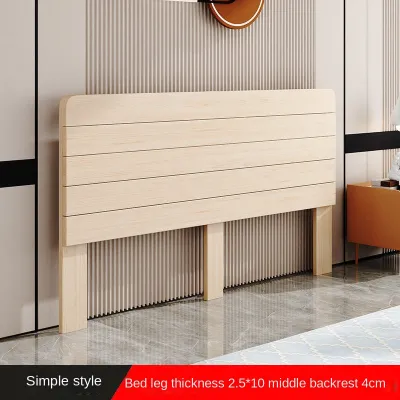
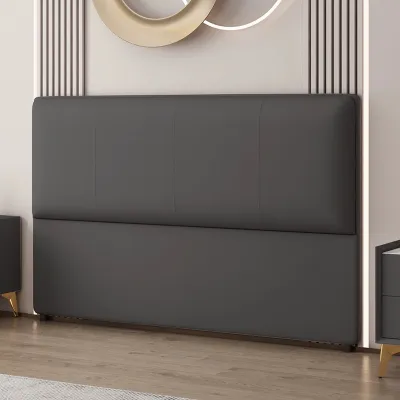
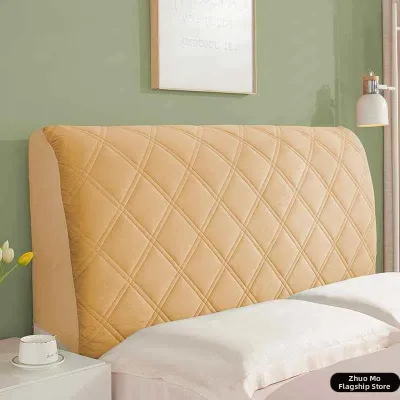
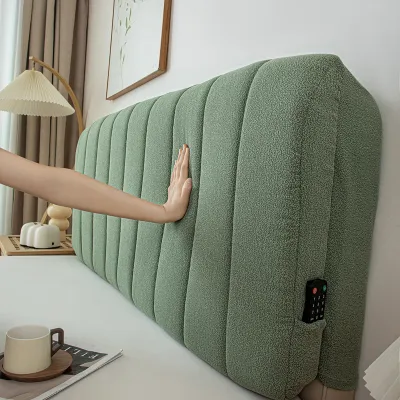
Prices are valid at publication and may change. Please refer to the product page for the latest price.
Why HDB Bedrooms Require Specific Headboard Designs
HDB flats feature unique architectural and spatial characteristics that directly influence how you should choose headboards for beds. Unlike spacious landed properties, public housing apartments require a highly strategic approach to furniture dimensions and placement.

Space Constraints Most modern HDB common bedrooms range from 9 to 12 square meters. In these compact environments, every centimeter matters. A bulky, deep headboard can project 15 to 20 cm from the wall, reducing the remaining clearance at the foot of the bed. If this clearance drops below 60 cm, walking around the bed becomes difficult, and opening wardrobe doors or dresser drawers can become a daily struggle.
Visual Weight The visual impact of a headboard is just as important as its physical footprint. A tall, dark, heavily tufted, or wingback headboard creates a high level of visual weight, drawing the eye and making a small room feel enclosed and cramped. In contrast, low-profile, light-colored, or open-slat headboards allow light to circulate freely, maintaining an airy, spacious feel that visually expands the bedroom.
Structural Considerations HDB flat walls are not all created equal. Bedrooms typically feature a combination of load-bearing concrete walls and non-structural drywall partitions. Concrete walls are incredibly sturdy but difficult to drill into without a heavy-duty rotary hammer, making wall-mounted headboards a permanent and labor-intensive choice. On the other hand, drywall partitions cannot support heavy wall-mounted headboards without specialized toggle bolts or internal structural reinforcement. Freestanding bed frames with integrated headboards are generally the safest and most practical option because they distribute their weight directly to the floor.
Utility Conflicts HDB layouts frequently place the bed head against walls that contain essential infrastructure, such as electrical sockets, light switches, or fiber optic termination points. A thick, solid headboard can completely block access to these outlets, forcing you to use extension cords or push the bed frame further away from the wall, creating an awkward, dust-collecting gap. Furthermore, headboards that are too tall can block low-hanging window sills, obstructing natural light and cross-ventilation, or collide with the swing path of adjacent built-in wardrobe doors.
Key Dimensions to Compare When Choosing Headboards for Beds in HDB Rooms
To find a bed frame that seamlessly integrates into your HDB bedroom, you must evaluate several critical dimensions and material characteristics. Comparing these factors across different brands will prevent costly purchasing mistakes.
Dimensions and Clearances When shopping for headboards for beds, always distinguish between the mattress size and the actual external dimensions of the bed frame. Standard Singapore mattress sizes (Single, Super Single, Queen, and King) are uniform, but bed frame dimensions vary widely. Some brands design “zero-clearance” or flush frames, where the outer edge of the frame matches the mattress perfectly. Other styles feature wide, padded borders or extended wooden ledges that add 10 to 15 cm of width and length. In a tight HDB room, a flush frame is almost always superior, as it maximizes walking space without sacrificing mattress size.
Headboard Profile and Mounting The depth (thickness) of the headboard is the most critical dimension for preserving room length. Look for ultra-slim profiles—ideally under 10 cm—if your bed faces a wardrobe or a narrow walkway. Additionally, measure the total height of the headboard from the floor. Standard HDB ceiling heights hover around 2.6 meters, and window sills are often positioned around 80 to 90 cm from the floor. If you plan to place your bed under a window, ensure the headboard height is lower than the sill to avoid blocking light and air. Freestanding or frame-integrated headboards are highly recommended over wall-mounted options, as they do not require drilling and can be easily moved during room reconfigurations.
Storage Integration Maximizing storage is a priority for most HDB dwellers, leading many to choose hydraulic lift-up storage beds or frames with pull-out drawers. However, your headboard choice can directly impact how usable this storage is. For example, deep wingback headboards can block side-opening drawers from sliding out fully. If you choose a hydraulic lift-up bed, ensure the headboard is securely bolted to the frame and does not press against the wall when the mattress platform is raised, which can damage both the wall paint and the headboard fabric.
Material and Maintenance Singapore’s tropical climate—characterized by high relative humidity and dust accumulation—demands careful consideration of headboard materials. Upholstered headboards (using linen, velvet, or performance fabrics) offer a soft, comfortable backrest for reading, but they can accumulate dust mites and absorb moisture if the room is not well-ventilated. If you prefer upholstery, look for brands that offer performance fabrics treated for stain and moisture resistance, or removable covers that can be professionally cleaned. Solid wood (such as teak, oak, or walnut) and high-quality engineered wood are exceptionally durable, easy to wipe clean, and do not trap allergens, making them highly practical for Singapore households, though they lack the plush cushioning of fabric.
Comparing Popular Bed Frame Brands for HDB Spaces
To help you navigate the market, we can categorize popular bed frame and headboard brands in Singapore into three distinct design philosophies. Each category offers unique advantages and trade-offs tailored to different HDB living scenarios.
Premium and Custom-Friendly Brands
Premium brands and local customization specialists (such as Blafink, Castlery, or bespoke furniture workshops) cater to homeowners who want a tailored look and precise spatial integration. Blafink, for example, is highly regarded in Singapore for allowing customers to customize the exact height, thickness, and upholstery fabric of their headboards. This level of customization is incredibly valuable for HDB master bedrooms where a standard off-the-shelf bed frame might block a light switch or sit too close to a built-in wardrobe.
The primary trade-off of premium and custom-friendly brands is cost and lead time. Custom-built upholstered frames or solid oak designer beds typically command a premium, with prices often starting from S$1,200 to S$2,500 or more. Furthermore, because these pieces are often made-to-order, you may face lead times of 6 to 12 weeks. However, the investment often includes high-quality materials—such as premium solid wood or heavy-duty performance fabrics—and superior structural joints that resist squeaking over years of use.
When buying from premium brands, prioritize those that offer professional site measurement and white-glove installation services. Professional installers will ensure the bed frame is perfectly leveled, the headboard is securely anchored to the frame, and the entire assembly fits through your HDB lift doors and narrow bedroom entryways without scratching your walls.
Space-Saving and Modular Brands
For smaller HDB common rooms, guest rooms, or study-bedroom hybrids, space-saving and modular brands (such as Spaceman, Seahorse, or IKEA) offer highly functional designs. These brands specialize in maximizing utility within a minimal footprint. You will find headboards with integrated shelving, built-in LED lighting, USB charging ports, or even fold-down desks. An integrated shelving headboard can completely eliminate the need for bedside tables, freeing up 30 to 45 cm of floor space on either side of the bed.
While these multi-functional designs are incredibly practical, you must carefully evaluate the quality of the hardware and moving parts. Hydraulic lift mechanisms, folding joints, and sliding panels are subject to daily wear and tear. Before purchasing, check the manufacturer’s warranty on the hydraulic pistons and structural frames, and verify the maximum load capacity of any integrated shelves or desks. Avoid overloading lightweight engineered wood shelves to prevent warping over time.
These brands typically offer budget-friendly to mid-range pricing, making them highly accessible. However, assembly can be complex, especially for multi-functional storage beds. If you are not experienced with flat-pack furniture assembly, it is highly recommended to pay for the brand’s professional assembly service to ensure the frame is put together safely and securely.
Minimalist and Scandinavian Brands
Minimalist and Scandinavian-inspired brands (such as Scanteak, Soul & Tables, or HipVan) focus on clean lines, light-toned woods, and low-profile silhouettes. Platform beds with simple, open slatted headboards or thin wooden panels are the hallmark of this design style. These frames are exceptionally popular in Singapore because they align perfectly with the modern, airy aesthetics favored in contemporary HDB renovations.
The primary benefit of a minimalist wooden headboard is its visual lightness. An open-slat or low-profile headboard allows light to pass through, preventing the bed from feeling like a massive block in the center of a small room. Additionally, wooden surfaces are incredibly easy to maintain in Singapore’s humid climate. Unlike fabric, solid teak or oak does not trap dust, mold, or odors, and can be kept clean with a simple wipe of a dry or slightly damp microfiber cloth. Many of these frames also feature raised legs, leaving a clear gap beneath the bed that makes floor cleaning and robot vacuum access effortless.
The main trade-off is comfort. A solid wood or metal slatted headboard does not provide the plush, cushioned support of an upholstered headboard. If you enjoy sitting up in bed to read, work, or watch television, you will need to invest in high-quality, supportive reading pillows to place against the wooden headboard.
Decision Framework: Matching Brands to Your HDB Room Layout
To finalize your choice, map your specific bedroom layout and lifestyle requirements against these brand categories. Use the following framework to guide your decision:
Choose Custom-Friendly Brands if:
- Your HDB master bedroom features a fixed, built-in wardrobe, and you have a highly specific, narrow gap (e.g., exactly 160 cm) remaining for your bed frame.
- You require an ultra-slim upholstered headboard (under 5 cm thick) to maximize walking clearance at the foot of the bed while still desiring a soft backrest.
- You want to match your bed's fabric upholstery with specific interior design elements, such as custom curtains or wall coverings.
Choose Space-Saving/Modular Brands if:
- You are furnishing a small HDB common room (under 10 sqm) and need to combine sleeping, storage, and study areas into a single footprint.
- You want to eliminate bedside tables entirely by using a headboard with built-in shelves, power outlets, and lighting.
- You require maximum under-bed storage with a reliable hydraulic lift mechanism to store seasonal bedding, luggage, or household items.
Choose Minimalist/Scandinavian Brands if:
- You want to create a visually light, open, and uncluttered bedroom aesthetic that makes your HDB room feel larger and more serene.
- You suffer from dust allergies or prefer low-maintenance materials like solid teak or oak that do not trap moisture or dust mites in Singapore's humid climate.
- You want a highly durable, timeless bed frame that can easily adapt to different decor styles if you decide to renovate your room in the future.
Critical Verification Step Before Purchasing Before committing to any bed frame or headboard, always verify your room’s physical constraints and structural limitations. If you plan to purchase a heavy or wall-mounted headboard, consult your HDB floor plan to identify if the target wall is a concrete structural wall or a drywall partition. Always check the manufacturer’s installation guidelines and the treated item’s care instructions. If instructions conflict, the wall material is unidentified, or the installation method is not covered, stop and consult a qualified professional contractor before proceeding.
Frequently Asked Questions (FAQ)
Can I mount a heavy headboard on HDB drywall partitions?
It is generally not recommended to mount heavy, solid wood, or thick upholstered headboards directly onto standard HDB drywall partitions without proper structural reinforcement. Drywall partitions—commonly used to separate bedrooms in newer flats—cannot support high shear or pull-out loads unless you anchor directly into the internal metal studs or have pre-installed plywood backing behind the plasterboard. For safety and to prevent wall damage, opt for a freestanding bed frame with an integrated headboard that rests its weight on the floor, or consult a professional contractor to assess and reinforce the partition wall.
What is the ideal headboard thickness for a small HDB bedroom?
For tight HDB common rooms, the ideal headboard thickness is between 3 cm and 8 cm. Ultra-slim wooden panels, metal frames, or lightly padded panels preserve maximum walking clearance at the foot of the bed and ensure wardrobe doors can swing open freely. In larger master bedrooms where space is less restricted, you can comfortably opt for thicker, plush upholstered headboards (12 cm to 20 cm) which provide excellent back support and acoustic dampening, provided you maintain at least 60 cm of clear walkway space around the bed.
Community discussion
Share your experience or ask a question. Comments are reviewed before publication.