
Finding the right balcony chair table set for a compact HDB balcony in Singapore requires balancing spatial efficiency with daily functionality. The ideal size typically centers around a compact bistro table with a diameter of 50 to 60 cm, or a slim rectangular bar table with a depth of 30 to 40 cm, paired with two armless or foldable chairs. This setup ensures you preserve the mandatory clearance zones while still enjoying an open-air dining or relaxation spot. To make a small balcony feel like an extension of your living room rather than an overcrowded storage space, every centimeter must be calculated. The goal is to maximize seating utility without blocking essential pathways, obstructing panoramic views, or interfering with daily household tasks like laundry drying. By selecting furniture that aligns with your balcony’s layout and dimensions, you can transform a small outdoor area into a highly functional retreat.
How to Measure Your HDB Balcony for Furniture
Before browsing online marketplaces or visiting local showrooms, you must establish an accurate, three-dimensional blueprint of your balcony. Use a reliable steel measuring tape to measure the absolute maximum length, width, and floor-to-ceiling height. However, these raw dimensions only represent the starting point; you must subtract the footprints of permanent architectural features. Note the locations of exposed drainage pipes, air conditioning condenser ledges, built-in planters, and wall-mounted water heaters, as these elements permanently reduce your usable floor area.
Next, plan for human movement by calculating ergonomic clearances. A standard, comfortable walkway requires a minimum of 60 cm of unobstructed space. This 60 cm clearance zone allows an adult to walk past comfortably without turning sideways or bumping into furniture. If your balcony is particularly tight, map out this walkway on the floor using masking tape to visualize how much space remains for your actual balcony chair table set. Failing to account for this movement zone often makes a balcony feel cramped and unusable.
Products mentioned in this guide
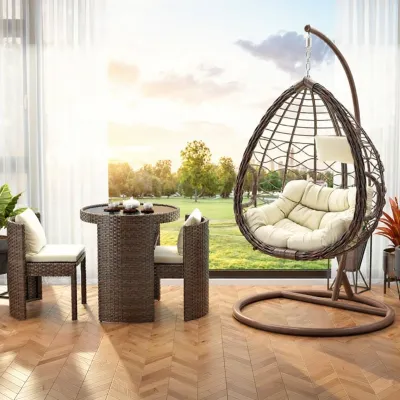
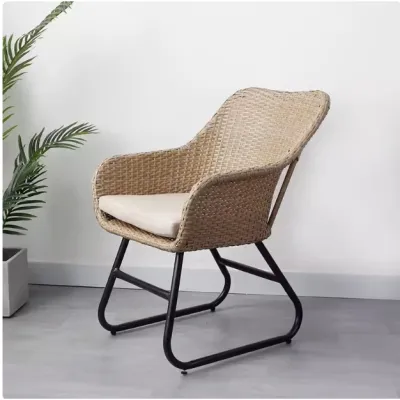
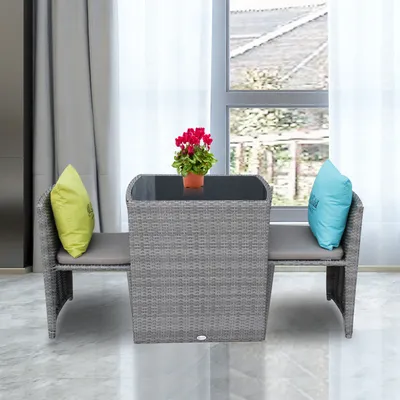
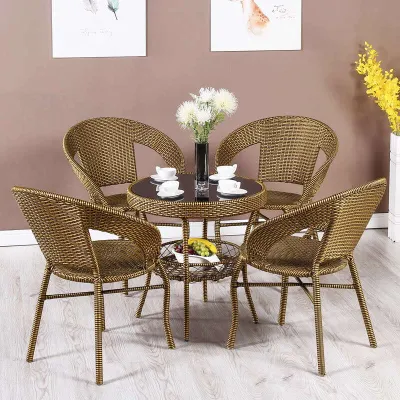
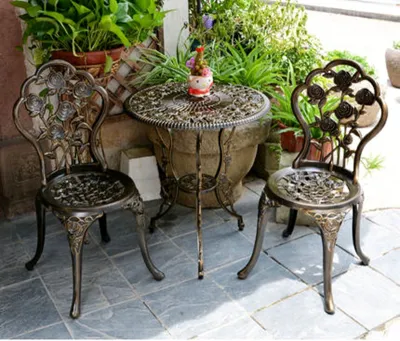
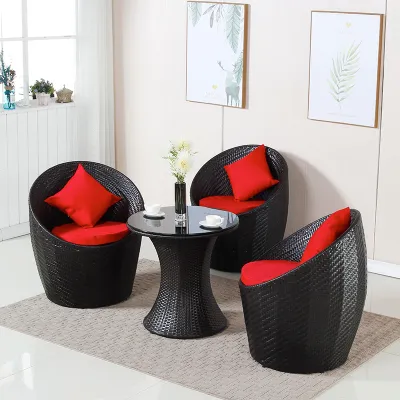
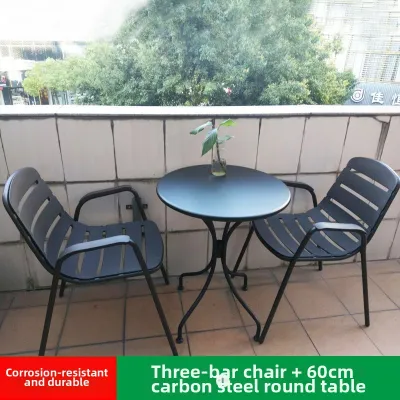
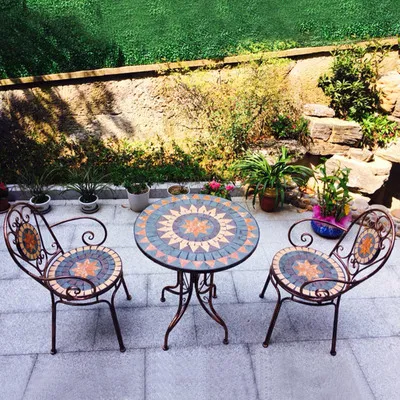
Prices are valid at publication and may change. Please refer to the product page for the latest price.
Next, analyze entry points and door operations. Observe how your balcony doors function, whether they are sliding glass panels, inward-swinging doors, or outward-swinging doors. Measure the exact arc of swinging doors; this area must remain clear to prevent glass damage or blocked exits. For sliding doors, ensure the furniture placement does not obstruct the sliding track or prevent you from opening the door wide enough to move large household items. Additionally, measure the clear width of the doorway itself to ensure your chosen furniture can physically pass through during delivery.
Ideal Balcony Chair Table Set Sizes by Layout
Achieving a balanced layout depends on matching the furniture’s geometric footprint to your balcony’s shape. Instead of focusing only on square footage, analyze how the furniture’s shape interacts with the space’s proportions. A set that looks perfectly proportioned in a square showroom can easily choke the flow of a long, narrow HDB balcony. By aligning the table and chair shapes with the structural lines of your apartment, you can maintain clear paths of travel while optimizing every square centimeter.

Narrow and Rectangular Balconies
Long, narrow balconies—common in modern HDB layouts—require a linear arrangement to prevent blocking the central walkway. Traditional centralized dining sets are highly impractical here. Instead, consider a high-top bar table or a narrow console table designed to sit flush against the balcony wall or parapet. Alternatively, a railing-mounted drop-leaf table can be suspended directly from the balcony balustrade, leaving the floor space entirely free when the table is not in use.
Prioritize a table depth of 30 to 40 cm. This slim profile provides enough surface for a laptop or light meals while leaving the remaining width open for foot traffic. Pair this narrow table with compact bar stools or folding chairs that can be tucked completely underneath the tabletop when not in use. Choosing armless seating options is particularly beneficial here, as they have a significantly smaller footprint and allow you to slide in and out of the seat from the side rather than needing extra clearance behind the chair.
Square and Compact Balconies
For square balconies, a centralized or corner-oriented layout works best to create an intimate dining experience. In these compact spaces, sharp corners are your enemy. A square or rectangular table forces you to navigate around rigid edges, which can disrupt visual flow.
A small round bistro table, ideally measuring 50 to 60 cm in diameter, is the optimal choice for a square HDB balcony. The curved silhouette of a round table eliminates sharp corners, allowing for smoother physical navigation and a softer visual aesthetic. Pair this round table with two small-scale, armless chairs. Position the set slightly off-center or in a corner to preserve a clear diagonal walkway from the living room door to the opposite end of the balcony. This arrangement maximizes the sense of openness while providing a comfortable, functional zone for morning coffee or evening relaxation.
Space-Saving Designs for Compact Outdoor Areas
When space is limited, static furniture can feel restrictive. Smart, space-saving designs let you transform the balcony from a dining area into a utility zone in seconds.
Foldable and drop-leaf sets offer excellent flexibility. You can collapse the chairs and fold down the table when not in use, freeing up floor space for laundry drying or workouts. When shopping for folding sets, check the folding mechanism’s stability and look for locking pins that prevent accidental collapsing. Ensure the folded thickness of the chairs is minimal so they can be easily leaned against a wall or stored in a nearby household shelter when bad weather approaches.
Wall-mounted and railing-mounted tables are outstanding alternatives that completely eliminate the need for floor legs, instantly making a small balcony feel larger. These tables attach directly to the concrete wall or clamp securely onto the balcony railing. Before installing a wall-mounted or railing table, check the manufacturer’s instructions and verify the load capacity of both the table and your balcony’s structural elements. If the instructions conflict with your balcony’s layout, or if you are unsure of the wall or railing material, stop and consult a qualified professional to prevent damage or safety hazards. Additionally, check the manufacturer’s maximum load capacity and installation instructions to ensure a secure, stable setup that can withstand wind and weight.
Stackable or nesting chairs provide another highly efficient way to manage limited floor space. High-quality stackable chairs can be piled vertically in a single corner when you need to clear the deck. Alternatively, nesting sets feature chairs with curved backrests and low profiles designed to slide completely underneath the table frame, forming a single, compact unit when not in use. This nesting capability keeps the balcony looking exceptionally tidy and organized, preventing the visual clutter of multiple chair legs scattered across a small area.
Common Sizing and Placement Mistakes to Avoid
Avoiding common pitfalls saves you from purchasing a beautiful set that does not work in your space. One frequent mistake is ignoring “dead zones” created by utility fixtures like retractable laundry racks, wall-mounted water heaters, or air conditioning ledges. If you place a table directly underneath a manual laundry rack, you will have to move the furniture every time you lower the rack to hang clothes. Always map out the operational zones of these fixtures before deciding on your furniture’s final position.
Another critical error is overlooking delivery and logistical constraints. It is easy to forget that furniture must travel from the delivery truck to your balcony. Before ordering a rigid, non-folding furniture set, measure the height and width of your HDB lift carriage, the common corridors, and your apartment’s main entrance door. A large, fully assembled table might fit perfectly on your spacious balcony but could be physically impossible to transport up the lift or through a narrow hallway. If you live in an older estate with smaller lift cabins, prioritize flat-packed furniture that can be assembled directly on your balcony.
Lastly, avoid choosing visually heavy furniture that overwhelms the small space. Bulky, solid wooden tables or thick, opaque plastic chairs block light and views, making a small balcony feel like a cramped box. Instead, look for furniture with slender, minimalist frames that allow light and air to pass through. While materials like thin aluminum, steel, or synthetic rattan offer a lighter aesthetic, remember that material names alone do not guarantee weather resistance. Always check the manufacturer’s care instructions, verify the quality of the protective finish or rust-resistant coatings, and examine the joints for secure welding before purchasing. This transparency keeps your sightlines open to the outdoors, making both your balcony and your adjacent living room feel significantly larger and more inviting.
Frequently Asked Questions (FAQ)
Can I use indoor dining sets on an HDB balcony?
No, standard indoor dining sets should not be used on an HDB balcony. Singapore’s tropical climate features intense ultraviolet (UV) radiation, high humidity, and sudden heavy downpours that will rapidly degrade indoor materials. Standard indoor furniture lacks the weather-resistant finishes and robust joints required to withstand Singapore’s elements. Even if a set is advertised as outdoor-ready, you should inspect the manufacturer’s care instructions and verify that the finish is rated for direct sun and rain exposure. Before placing any furniture on your balcony, always check the manufacturer’s labels and care instructions to verify that the set is explicitly rated for outdoor or semi-outdoor use.
Are there weight limits for HDB balcony furniture?
Yes, HDB balconies have strict structural load limits designed to ensure the safety and integrity of the building. While standard residential furniture is perfectly safe, you must avoid excessively heavy materials such as solid marble, thick concrete, or heavy wrought iron sets. If you plan to install heavy built-in seating, large planters, or solid stone tables, you must consult the official HDB guidelines or contact your estate’s town council or managing agent to verify the exact load-bearing capacity of your balcony floor. Opting for lightweight materials like aluminum, synthetic rattan, or hollow steel ensures you stay well within safe structural limits while making the furniture much easier to rearrange.
Community discussion
Share your experience or ask a question. Comments are reviewed before publication.