
Finding sufficient space in a compact Singapore HDB bedroom requires smart, vertical design choices. When a traditional bedside table is too bulky for narrow bed aisles, a bedside hanging rack offers a practical, space-saving alternative. By suspending your essentials directly from your bed frame, headboard, or adjacent wall, you can keep your sleeping area organized and clutter-free. However, choosing the wrong size or overloading the rack can lead to blocked pathways, damaged furniture, or falling items. To find the perfect balance, you must understand how dimensions, weight capacities, and mounting styles interact with your specific room layout.
To maximize efficiency in a small bedroom, the ideal bedside hanging rack should measure 30 to 40 cm in width, project no more than 10 to 15 cm from the bed frame, and support a weight capacity of 2 to 5 kg. These dimensions ensure that your essential items remain within arm’s reach without encroaching on the narrow walking aisles common in compact HDB flats. By matching the physical footprint and weight limits of the rack to your daily habits and room layout, you can create a highly functional sleeping zone that feels open and organized.
Quick Sizing and Capacity Guidelines for Compact Bedrooms
When selecting a bedside hanging rack, keeping the dimensions compact is essential to prevent the room from feeling overcrowded. A rack that projects too far into the room can disrupt the flow of movement, while one that is too small will fail to hold your nightly essentials.
Products mentioned in this guide
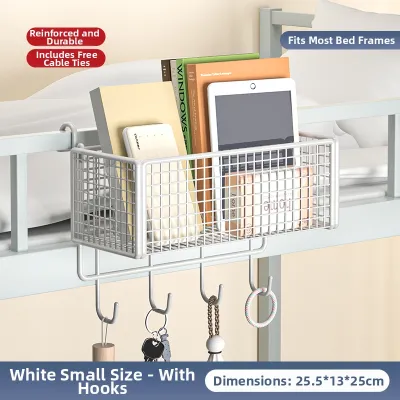
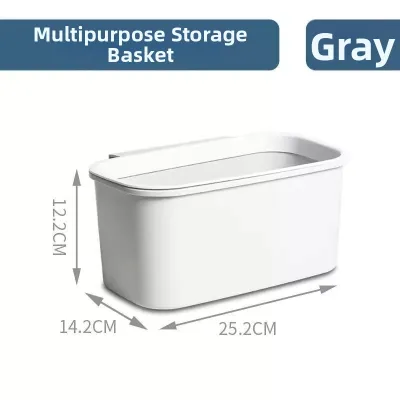
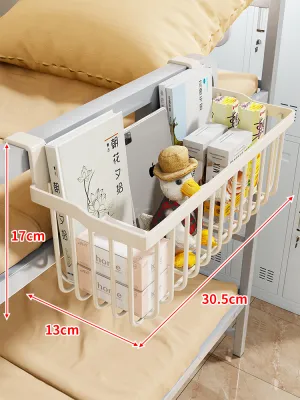
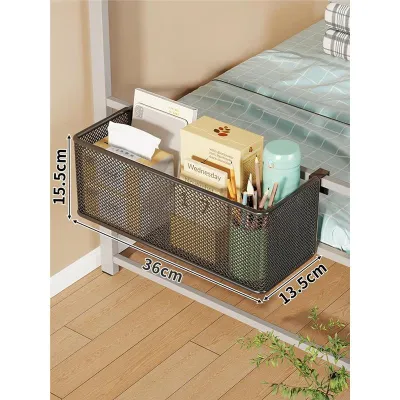
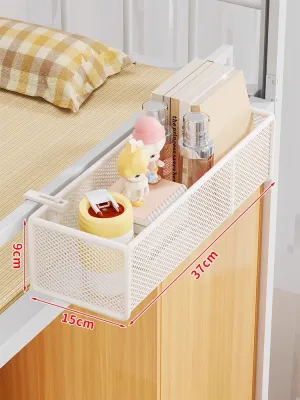

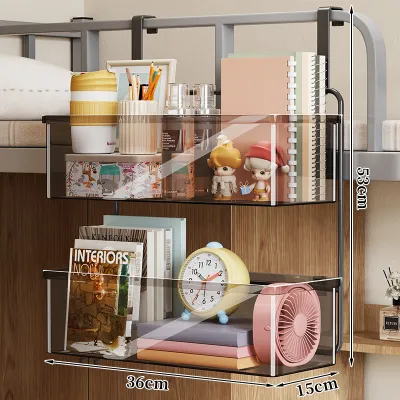
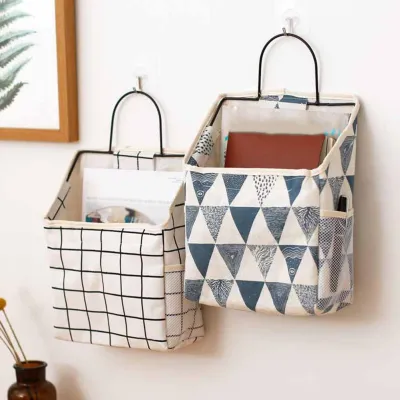
Prices are valid at publication and may change. Please refer to the product page for the latest price.
Below is a quick reference guide to the ideal dimensions and weight capacities for standard HDB bedroom layouts:
- Width: 30 cm to 40 cm. This range accommodates most smartphones, tablets, reading glasses, and a small book side-by-side without looking bulky.
- Depth (Projection): 10 cm to 15 cm. Keeping the rack slim ensures it does not block the narrow walking space between the bed and the wall or wardrobe.
- Height (Drop): 20 cm to 30 cm. This provides enough vertical space for multiple tiers or pockets without hanging so low that it touches the floor or blocks under-bed drawers.
- Weight Capacity: 2 kg to 5 kg. This is more than sufficient for typical bedside items, which generally weigh less than 1.5 kg combined.
To put weight capacity into perspective, a modern smartphone weighs approximately 200 grams, a pair of reading glasses weighs 50 grams, a small e-reader weighs 250 grams, and a filled 500 ml water bottle weighs roughly 550 grams. A rack with a 2 to 3 kg capacity can easily support all of these items simultaneously. Before making a purchase, always verify the compatibility of your bed frame or headboard with the rack’s mounting style, as different frames require specific attachment mechanisms to remain stable.
Ideal Dimensions for Narrow HDB Bedside Clearances
In a standard HDB flat, bedroom layouts are highly optimized, often leaving minimal clearance on either side of the bed. If you place a queen-sized bed in a standard master bedroom, the clearance between the edge of the mattress and the adjacent wall or built-in wardrobe is frequently restricted to 50 to 60 cm. A traditional bedside table, which typically measures 40 to 50 cm in depth, completely chokes this pathway, making it difficult to walk comfortably or open wardrobe doors.

Matching Width to Your Bed Profile
Choosing a rack with a width of 30 to 40 cm allows you to align the organizer neatly with the side of your mattress or the edge of your headboard. This width provides ample horizontal storage for your phone, a notebook, and a cup holder without extending past the natural boundary of the bed. Keeping the rack within this width limit ensures that it does not visually dominate the bedside area or interfere with nearby curtains and window treatments.
Minimizing Projection to Clear Walking Paths
To maintain a comfortable walking path, your bedside hanging rack should have a low-profile design that projects no more than 10 to 15 cm from the bed frame. In tight HDB bedrooms, preserving a minimum walking clearance of 40 to 60 cm is crucial for daily comfort. A slim rack that sits flat against the side of the bed allows you to navigate the room easily, even in the middle of the night, without stubbing your toes or bumping into sharp corners.
Balancing Height and Drop for Easy Access
The height of the rack determines how easily you can reach your items from a lying position. Ideally, the top of the hanging rack should sit level with or slightly below the top of your mattress. If the rack hangs too low, it can interfere with under-bed storage drawers or rub against the floor skirting boards. If it is positioned too high, you may have to strain your arm and shoulder to retrieve your items. A vertical drop of 20 to 30 cm from the mounting point is generally the sweet spot for ergonomic comfort.
Evaluating Weight Capacity and Safe Load Limits
Understanding the structural limits of different bedside hanging racks is vital to prevent sagging, tilting, or accidental falls. The safe load limit of a rack depends heavily on the materials used in its construction and the mechanism used to secure it to the bed.
Structural Material Differences
- Fabric and Felt Organizers: These soft-sided organizers are lightweight, budget-friendly, and gentle on your furniture's finish. However, they are prone to stretching and sagging if overloaded. They are best suited for light items such as remote controls, phones, cables, and magazines, with a typical safe load limit of 2 kg.
- Rigid Metal and Wood Shelves: Constructed from steel wire, aluminum, or engineered wood, these shelves provide a flat, stable surface that can support heavier items like water tumblers, heavy hardcover books, and tablets. They offer a higher weight capacity, often ranging from 3 to 5 kg, but add more dead weight to the bed frame.
Mounting Mechanisms and Stability
- Over-the-Headboard Hooks: These racks feature rigid metal or plastic hooks that hang directly over the top of the headboard. They are highly stable but rely entirely on the hook width matching the thickness of your headboard. If the hook is too wide, the rack will tilt forward under load.
- Bed Frame Clips and Clamps: These shelves use adjustable screw clamps to grip the side rail of the bed frame. They provide excellent stability and can be tightened securely, but you must check if the clamp pads are padded to avoid scratching the bed's finish.
- Wall-Mounted Brackets: If your bed frame cannot support a hanging rack, wall-mounted shelves using screws or heavy-duty adhesive strips are an alternative. Wall-mounted options offer high load capacities but require careful installation to ensure they do not damage HDB wall paint or plaster.
Practical Load Planning
To ensure long-term stability, always check the manufacturer’s specification label for the exact load threshold of your chosen rack. Avoid guessing the weight of your items; instead, group them logically to maintain a balanced center of gravity. Place heavier items, such as books or tablets, in the compartments closest to the mounting point or at the very bottom of the rack. Keep lighter accessories, like lip balm or charging cords, in the outer pockets to prevent the rack from tilting or pulling away from the bed frame.
Choosing the Right Storage Configuration for Vertical Space
Selecting the right layout for your bedside hanging rack is about balancing your personal storage needs with the visual aesthetics of a small room. The configuration should help you organize your daily essentials without creating visual clutter.
Tiered Shelves versus Multi-Pocket Organizers
If you prefer to read physical books, keep a glass of water nearby, or use an analog alarm clock, a tiered rigid shelf is the most practical choice. It provides flat, open surfaces that make it easy to grab items quickly. On the other hand, if your bedside routine is primarily digital, a multi-pocket fabric organizer is ideal. These organizers feature dedicated slots of varying sizes, allowing you to separate your smartphone, tablet, reading glasses, and charging cables into neat, designated compartments.
Managing Visual Weight in Small Rooms
In a compact HDB bedroom, bulky or solid furniture can make the space feel cramped and dark. To keep the room feeling open, opt for bedside racks with a light visual weight. Open wire-mesh designs, slim metal frames, and neutral-colored fabrics (such as soft greys, beiges, or whites) blend seamlessly into the background. Avoid thick, dark-colored wooden boxes or oversized plastic caddies that draw the eye downward and make the bedside area look congested.
Integrated Cable Management
One of the most common sources of bedside clutter is a tangle of charging cords. Look for hanging racks that feature built-in cable routing solutions, such as grommets, side slits, or elastic loops. These design elements allow you to thread your charging cables neatly from the wall socket into the rack, keeping your devices powered while preventing cords from dangling onto the floor where they can become tripping hazards or get caught in vacuum cleaners.
How to Measure Your Bed and Clearance Before Buying
Before purchasing a bedside hanging rack from an online marketplace or local furniture retailer, taking precise measurements of your bed and the surrounding space is crucial. A mismatch of even a few centimeters can make the rack unusable or unstable.
Measuring Headboard Thickness and Shape
If you plan to buy a hook-on rack, use a measuring tape to find the exact thickness of your headboard. Standard hooks are typically designed for headboards that are 2 to 4 cm thick. If you have a heavily padded, tufted, or extra-thick wooden headboard, standard hooks will not fit. In this case, look for racks with adjustable hook straps or clamp mechanisms that can accommodate wider profiles.
Checking Wall Clearance and Skirting Boards
Measure the physical gap between the side of your bed frame and the wall. If your bed is pushed directly against the wall, a hanging rack may not fit unless you pull the bed out slightly. Additionally, check the position of your floor skirting boards. Skirting boards in Singapore HDB flats typically project 1 to 2 cm from the wall. Ensure that the lower section of your hanging rack does not press against the skirting board, as this can force the rack to sit at an awkward, tilted angle.
Verifying the Remaining Aisle Space
To ensure you can still move comfortably around your bed, perform a quick calculation of your walking path. Measure the width of your current bedside aisle, then subtract the projected depth of the hanging rack you intend to buy. For example, if your current aisle is 55 cm and the rack projects 12 cm, your remaining walking clearance will be 43 cm. Ensure this remaining space is sufficient for you to walk naturally and open any adjacent wardrobe doors or drawers without obstruction.
Common Sizing and Placement Mistakes to Avoid
To ensure a safe and functional bedside setup, be mindful of several common pitfalls that homeowners encounter when installing hanging racks in tight spaces.
Ignoring the "Swing" of Fabric Organizers
Soft fabric and felt organizers are flexible, which means they can sway or swing when you reach inside them to grab an item. If a fabric organizer is hung too close to a wall, a delicate bedside lamp, or a glass of water, this swinging motion can cause the rack to bump into surrounding objects. This can result in scratched wall paint, spilled liquids, or broken items. Always ensure there is a small buffer zone around fabric organizers to allow for minor movement.
Overloading Top-Heavy Designs
Placing heavy items, such as large tablets or thick books, in the outermost pockets or top shelves of a hanging rack creates a lever effect. This shifts the center of gravity forward, causing the rack to tilt downward or slip off the headboard entirely. To prevent this, always place the heaviest items in the pockets closest to the bed frame or at the bottom of the organizer, reserving the outer and upper pockets for lightweight items like tissues, pens, or sleeping masks.
Blocking Wardrobe Doors and Power Sockets
In many HDB bedroom layouts, wall power sockets are installed low on the wall, directly behind or adjacent to the bed. When positioning your bedside hanging rack, make sure it does not cover or block access to these outlets. Additionally, double-check that the rack does not obstruct the swing path of built-in wardrobe doors or the opening of under-bed storage drawers. If your wardrobe has sliding doors, ensure the rack does not prevent you from sliding the doors open fully.
Frequently Asked Questions (FAQ)
Can I use a bedside hanging rack without a headboard?
Yes, you can easily use a bedside hanging rack even if your bed does not have a headboard. For platform beds or bed frames with side rails, look for clamp-on or clip-on bedside shelves that attach directly to the wooden or metal side panels. Another popular option is a pocket organizer designed with a long, flat fabric flap. This flap slides directly between your mattress and the bed base or box spring, using the weight of the mattress to hold the organizer securely in place. Alternatively, you can install a slim, wall-mounted floating shelf using non-damaging adhesive strips, provided your wall surface is smooth, clean, and compatible with the adhesive.
How do I prevent a fabric hanging organizer from sagging?
To prevent a fabric or felt hanging organizer from sagging over time, start by distributing the weight of your items evenly across all compartments. Avoid placing heavy items in the center or top pockets; instead, place them in the lowest pockets or closest to the mounting straps to keep the load balanced. If your organizer does not have built-in structural support, you can insert custom-cut pieces of stiff cardboard, thin acrylic sheets, or lightweight plastic boards into the bottom of the pockets to help them maintain their shape. Finally, avoid exceeding the manufacturer’s recommended weight limit, and periodically check and tighten any adjustable hanging straps to keep the organizer taut against the bed frame.
Community discussion
Share your experience or ask a question. Comments are reviewed before publication.