
Selecting the right bar chair wood is the single most important factor determining how well your seating survives daily kitchen island activity, high humidity, and constant physical stress. Elevated seating naturally endures greater lateral forces than standard dining chairs, making material strength and structural integrity paramount. When shopping for wooden bar stools, you will generally encounter three primary categories: premium solid hardwoods, value-focused solid woods like rubberwood, and budget-friendly engineered woods finished with real wood veneers.
Choosing the ideal wood type requires balancing your budget, aesthetic preferences, and how intensively the chairs will be used. For instance, a busy family kitchen island demands a far more resilient material and finish than a low-traffic home bar used only for occasional weekend entertaining. It is also vital to recognize that the wood species itself is only half the equation; the factory-applied protective finish and the structural joinery are what ultimately prevent a chair from warping, splitting, or wobbling over time.
Solid Wood vs. Engineered Wood: Which Is Right for Your Space?
Solid wood refers to natural lumber cut directly from trees, preserving the organic grain, density, and structural characteristics of the timber. For high-stress, elevated furniture like bar stools, solid wood offers unmatched structural benefits. Because the material is uniform throughout, it holds heavy-duty fasteners securely and accommodates traditional, high-strength woodworking joints. Furthermore, solid wood provides exceptional long-term wear and repairability; if the seat or legs suffer deep scratches, dents, or surface stains over years of use, the material can be sanded down, repaired, and completely refinished to look brand new.
Products mentioned in this guide
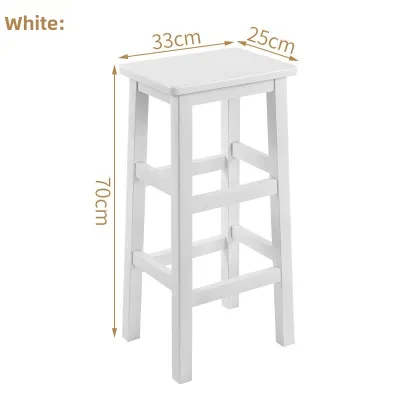
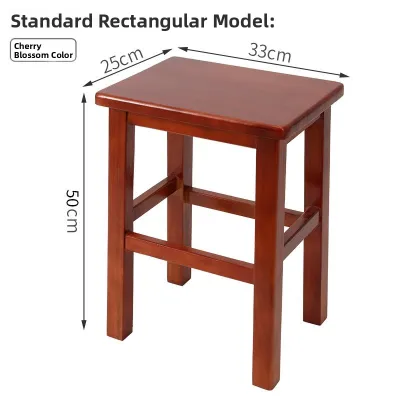
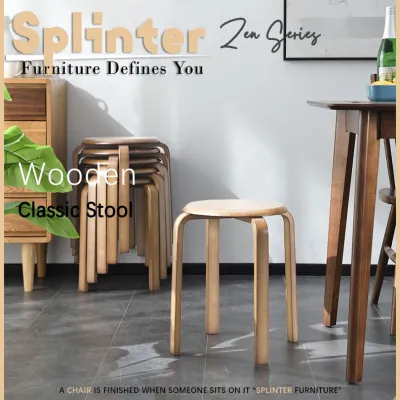
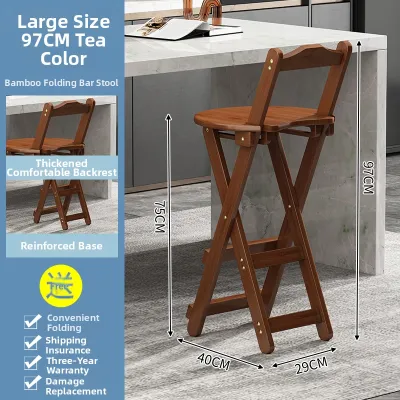
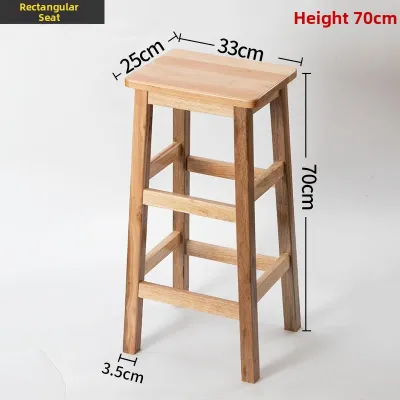


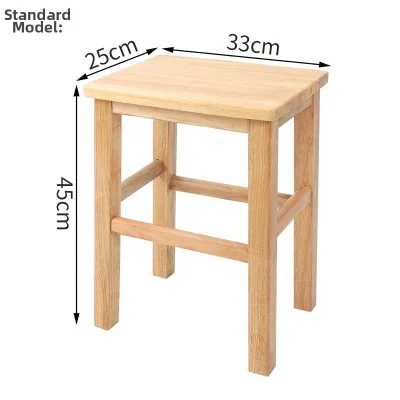
Prices are valid at publication and may change. Please refer to the product page for the latest price.
Engineered wood, on the other hand, includes manufactured materials such as medium-density fibreboard (MDF), particleboard, and high-grade plywood. These are created by bonding wood fibres, chips, or thin wood sheets together using synthetic resins under intense heat and pressure. Engineered wood is highly valued for its cost-effectiveness, uniform appearance free of natural knots, and its inherent resistance to warping or splitting when exposed to shifting humidity levels. However, engineered wood has notable limitations when used for tall bar chairs. It generally possesses a lower weight capacity under concentrated loads, its edges are highly vulnerable to impact damage from shoes or vacuum cleaners, and prolonged exposure to moisture can cause the internal fibers to swell and disintegrate.
To make an informed purchase, you must learn to verify material claims rather than relying on vague marketing terms. Retailers frequently use phrases like “warm oak finish,” “walnut look,” or “espresso wood” to describe synthetic paper foils or plastic laminates wrapped around cheap particleboard. To ensure you are getting genuine quality, always examine the detailed product descriptions, download the manufacturer’s technical specifications, and inspect the physical product labels. Look for explicit terms such as “100% solid hardwood” or “plywood core with natural timber veneer” to confirm the exact composition of the bar chair.
Common Bar Chair Wood Types: Durability and Value Compared
Different wood species exhibit distinct grain patterns, densities, and natural oil contents, all of which influence how a bar chair performs in a home environment. Understanding these differences allows you to select a material that aligns with your durability requirements and budget.

Teak (Premium Hardwood)
Teak is globally renowned as a premium hardwood due to its exceptionally dense grain and high concentration of natural oils and resins. These organic properties provide the wood with superb natural stability and resistance to rot, decay, and insect damage. While teak is historically associated with outdoor durability, its actual performance on a kitchen or balcony bar chair depends heavily on the specific factory finish and treatment applied.
A raw, untreated teak stool will weather naturally and absorb oils from food or skin, whereas a sealed teak stool is protected against immediate staining. Do not assume that any teak bar chair can automatically withstand outdoor rain or intense humidity without damage. Always consult the manufacturer’s care labels and product documentation to verify whether the specific stool is rated exclusively for indoor use or if it has been certified for indoor and outdoor environments.
Rubberwood (Value Solid Wood)
Rubberwood is a medium-density hardwood that has gained widespread popularity as a sustainable, budget-friendly solid wood option. Harvested from plantation rubber trees at the end of their useful latex-producing cycle, rubberwood is an environmentally responsible byproduct that prevents waste. It features a naturally light, neutral coloration and a straight grain pattern that accepts stains and paints exceptionally well.
Because rubberwood is naturally more porous than traditional hardwoods like oak or teak, its long-term durability is entirely dependent on a high-quality factory seal and topcoat. In a tropical climate with high relative humidity, an unsealed or poorly finished rubberwood chair can easily absorb moisture from the air, leading to swelling, warping, or dark mold stains. When properly sealed with a professional factory finish, however, rubberwood serves as an excellent, highly cost-effective solid wood choice for indoor kitchen islands and dining counters.
Oak and Ash (Traditional Hardwoods)
Oak and ash are classic, heavy-duty hardwoods that have been prized for centuries in premium and artisan-crafted furniture. Both woods are exceptionally hard, heavy, and structurally rigid, making them ideal for bar chairs that must withstand heavy daily use. Visually, they offer immense warmth and distinctive, prominent grain patterns that add character to modern and rustic interiors alike.
However, both oak and ash possess open grain structures, meaning they feature microscopic surface pores. If these pores are not properly sealed, dust, food crumbs, and dark liquid spills can settle deep into the wood grain, making cleaning difficult and leading to permanent discoloration. Before purchasing, verify the type of protective topcoat used on the chair; a robust polyurethane or commercial-grade lacquer is essential to seal these open pores and provide a wipeable, spill-resistant barrier for busy kitchen spaces.
Engineered Wood with Veneers
Engineered wood with natural veneers offers a practical middle ground for those seeking the premium look of expensive hardwoods at a more accessible price point. This construction utilizes a stable core made of MDF or high-grade plywood, which is then covered by a very thin slice of genuine hardwood, such as walnut or oak. This technique delivers the exact visual appeal, texture, and grain variation of solid wood while keeping manufacturing costs low.
Despite its visual appeal, veneered furniture has clear physical limitations. Unlike solid wood, you cannot sand down deep scratches, gouges, or heel dents on a veneered bar chair, as doing so will cut straight through the paper-thin wood veneer and expose the synthetic core underneath. Furthermore, if the edges of the stool are subjected to constant moisture, high heat, or physical impacts, the adhesive holding the veneer can fail, causing the edges to peel, bubble, or chip. When inspecting these chairs, pay close attention to the quality of the edge banding to ensure it is seamless, thick, and securely bonded.
How to Inspect Wood Quality and Structural Stability Before Buying
Evaluating a wooden bar chair requires looking beyond the aesthetic appeal of the wood grain to examine its physical build quality and engineering. Because bar chairs are tall and support weight at an elevated center of gravity, their structural integrity is directly tied to user safety.
Joinery and Connections The joints of a bar chair endure immense lateral stress as users climb onto the seat, shift their weight, or lean back against the frame. When inspecting a chair, look closely at how the legs, stretchers, and seat are connected. High-quality wooden bar chairs rely on traditional, reinforced woodworking joinery, such as mortise-and-tenon joints, double dowels, or heavy-duty internal corner metal brackets. Avoid chairs that rely solely on surface glue, staples, or basic wood screws driven directly into the end grain of the wood, as these weak connections will quickly loosen under daily stress, resulting in a dangerous, unstable wobble.
Surface Finish and Protection A high-quality wood finish is your primary defense against environmental damage and daily wear. Run your hand along the underside of the seat, the legs, and around the joints to check for a completely smooth, uniform texture. The presence of rough patches, dry spots, or tiny bubbles in the topcoat indicates a rushed or substandard factory finishing process. These surface defects allow humidity and liquid spills to bypass the protective layer, penetrating the raw wood fibers and causing localized swelling, cracking, or finish peeling.
Stability and Footrest Design The footrest on a wooden bar chair is not merely a comfort feature; it serves as a critical structural stretcher that ties the tall legs together and prevents them from splaying outward under load. Ensure that the footrest is deeply integrated into the leg frame with secure joint connections rather than simply screwed onto the surface. To protect against the constant friction and impact of shoes, look for footrests equipped with a protective metal cap or strip. Additionally, check that the overall footprint of the legs is sufficiently wide relative to the seat height to ensure the stool remains perfectly stable and resistant to tipping when a user climbs on or off.
Verifying Specifications Before making a purchase, always measure your available space and compare it against the manufacturer’s finished dimensions. Standard kitchen counters usually stand at 90 cm high, requiring a stool with a seat height of 60 to 65 cm. Commercial-height bar counters typically stand at 105 cm, requiring a seat height of 75 to 80 cm. Ensure there is a comfortable clearance of 25 to 30 cm between the top of the seat cushion and the underside of your counter.
Furthermore, check the manufacturer’s stated weight capacity to ensure the chair is engineered to safely support your household. High-quality solid wood bar chairs typically specify a load capacity of 110 kg to 150 kg. Finally, confirm that the physical dimensions of the fully assembled chairs will easily clear your home’s doorways, narrow hallways, and lift access during delivery. If the manufacturer’s assembly conditions require home assembly, verify that all necessary hardware and clear structural instructions are provided.
Caring for Wooden Bar Chairs in a Tropical Climate
Maintaining wooden furniture in a tropical climate requires a proactive approach to handle high relative humidity, ambient warmth, and daily kitchen exposure. Implementing proper care routines will significantly extend the lifespan and preserve the appearance of your wooden bar chairs.
Routine Cleaning For day-to-day cleaning, gently dust the wooden surfaces using a dry, clean microfiber cloth. If the chairs accumulate sticky kitchen residue or food spills, wipe them down with a slightly damp microfiber cloth. It is critical to immediately follow this with a dry microfiber cloth to absorb any lingering surface moisture. Never use harsh chemical cleaners, bleach, ammonia, abrasive scouring pads, or excessive amounts of water. These aggressive cleaning methods will strip away the protective factory sealant, exposing the raw wood grain to moisture and causing the timber to swell, warp, or split.
Managing Humidity and Temperature In tropical regions like Singapore, indoor environments often fluctuate rapidly between air-conditioned cooling and natural, high-humidity heat. Moving wooden bar chairs between an air-conditioned dry kitchen and an open-air balcony or patio causes the wood fibers to rapidly expand and contract. Over time, this constant dimensional movement stresses the joinery and can lead to hairline cracks in the timber or the protective finish. To minimize this risk, keep your wooden stools away from direct, intense sunlight to prevent UV fading and drying, and position them a safe distance away from heat-generating kitchen appliances like ovens, stoves, or dishwashers.
When to Seek Professional Help While routine cleaning is easily managed at home, structural repairs should be approached with caution. If you notice structural wobbling, deep water stains that have penetrated beneath the protective topcoat, or failing joints where the wood has begun to split, stop using the chair immediately to prevent accidents. Do not attempt to fix these issues using generic household glues, brackets, or random wood screws, as improper DIY modifications can permanently ruin the wood and compromise the chair’s safety. If the manufacturer’s care instructions do not cover the specific issue, or if you are dealing with an unidentified wood type, stop and consult the manufacturer or a qualified professional furniture restorer to handle the repair safely.
Frequently Asked Questions (FAQ)
Is rubberwood durable enough for daily use in a kitchen?
Yes, rubberwood is a medium-density hardwood that provides excellent structural stability and durability for daily indoor kitchen use, provided it features a high-quality, factory-applied sealant. Because rubberwood is naturally susceptible to moisture absorption, you must wipe up liquid spills immediately to protect the finish and prevent water from penetrating the wood grain.
How can I tell if a bar chair is made of solid wood or veneer?
To identify the material, inspect the edges and corners of the seat carefully. Veneered chairs will typically display a subtle seam line or edge banding where the thin wood sheet meets, and the grain pattern on the top surface will not wrap continuously around the edges. Additionally, solid wood chairs feature natural, non-repeating grain variations across the entire frame and are significantly heavier than those constructed with engineered cores.
Does teak furniture require special oiling for indoor use?
Indoor teak bar chairs generally come finished with a clear protective sealant or lacquer, meaning they do not require regular oiling. Applying teak oil to a pre-sealed, finished surface is unnecessary and can damage the protective topcoat, leaving a sticky, dust-attracting residue. Always consult and follow the specific care and maintenance instructions provided by the manufacturer.
Community discussion
Share your experience or ask a question. Comments are reviewed before publication.