
Quick Answer: Are PVC Bed Frames Safe for Kids?
The safety of a polyvinyl chloride (PVC) bed frame for a child is not a simple yes-or-no matter; rather, it depends heavily on the specific manufacturing standards, chemical additives, and structural integrity of the finished product. While pure PVC is a rigid plastic, furniture applications often require chemical additives to make the material flexible, durable, or flame-retardant. These additives are where potential health and safety risks typically lie.
To ensure a bed frame is safe for your child, you must look beyond the material name and verify independent safety certifications. High-quality manufacturers subject their products to rigorous third-party testing to guarantee low chemical emissions and robust physical construction. Without these verifiable testing labels and compliance certificates, the potential risks of synthetic chemical exposure and structural failure cannot be entirely ruled out.
What Is PVC and How Is It Used in Bed Frames?
Polyvinyl chloride, commonly known as PVC, is a versatile synthetic plastic polymer used widely across various industries. In children’s furniture, PVC is rarely used as a solid, standalone structural material. Instead, it is typically utilized as a surface finish, a decorative element, or a protective component. For instance, you will frequently find it in the form of faux leather upholstery (vinyl) wrapped around a padded frame, molded decorative panels on themed novelty beds, or protective edge banding on engineered wood panels.
Products mentioned in this guide
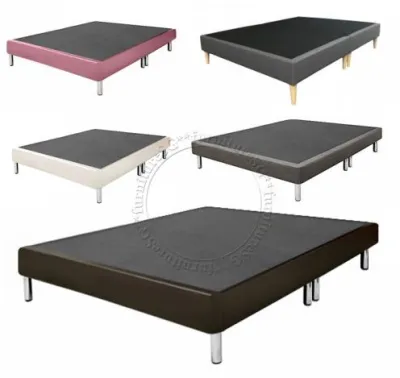
![[Free Installation] Durable Divan Bed Base | PVC Bedframe with Metal Legs | All Sizes (Single/SS/Queen/King) | Free Delivery](https://img.lazcdn.com/g/ff/kf/Se52a28130012468a96d195397613b09cB.jpg_400x400q80.jpg_.webp)
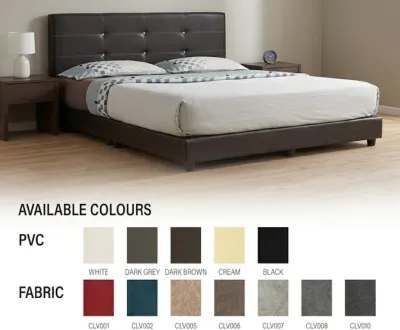
![[INNDESIGN.SG] PVC Faux Leather Divan Bedframe (All Sizes) (Fully Assembled and Free Delivery)](https://img.lazcdn.com/g/p/488898067d7c42ac2b7f15b5761bcb79.jpg_400x400q80.jpg_.webp)


Prices are valid at publication and may change. Please refer to the product page for the latest price.

Because PVC in furniture is almost always combined with other materials, the overall safety and durability of the bed frame depend on the entire assembly. A typical bed might feature a core made of solid wood, metal, or engineered boards like medium-density fibreboard (MDF), held together by industrial adhesives and covered with a PVC layer. Consequently, evaluating the bed requires looking at the quality of the underlying frame, the safety of the glues used, and the stability of the joints.
It is also important to recognize that the presence of PVC does not automatically guarantee or prevent wear and tear. While synthetic surfaces are often marketed as highly durable and water-resistant, their actual performance depends on the quality of the surface treatment and the manufacturing process. Poorly applied PVC edge banding can peel over time, exposing the underlying adhesive and wood core to moisture and physical damage. Therefore, parents should carefully inspect the manufacturer’s specifications, connection structures, and finishing quality rather than relying solely on material labels.
Health and Physical Risks to Check Before Buying
When evaluating synthetic furniture for a child’s bedroom, chemical off-gassing is a primary concern. Many synthetic materials, paints, and adhesives release volatile organic compounds (VOCs) into the air, especially when the furniture is brand new. In compact or air-conditioned bedrooms where ventilation may be limited during the night, these airborne chemicals can accumulate. This makes it essential to investigate the chemical profile of any upholstered or laminated bed frame before bringing it into your home.
Historical concerns surrounding PVC specifically focus on the chemical additives used during its formulation. To make rigid PVC flexible enough for upholstery or edge banding, manufacturers historically added plasticizers known as phthalates. Additionally, heavy metals like lead or cadmium were sometimes used as thermal stabilizers. While modern regulations in many regions strictly restrict or ban the use of harmful phthalates and heavy metals in children’s products, safety still depends entirely on the manufacturer’s compliance with these current standards. Unbranded or cheaply imported furniture from unregulated sources may not adhere to these strict chemical limits.
Beyond chemical concerns, physical safety hazards require equal scrutiny. Inspect the bed frame for sharp molded plastic edges, rough seams, or exposed hardware that could scratch a child. Small decorative caps, plastic plugs, or detachable buttons on upholstered frames can loosen over time, presenting serious choking hazards for younger children. Furthermore, check the structural load limits of any plastic components, such as corner brackets or slat supports, to ensure they can withstand the dynamic impact of a child jumping or playing on the bed.
Which Safety Certifications and Labels Should You Look For?
To navigate the complex world of furniture safety, parents should rely on independent, third-party certifications rather than vague marketing claims like “eco-friendly” or “non-toxic.” To address chemical emissions and safeguard indoor air quality, look for products certified by GREENGUARD or GREENGUARD Gold. This certification ensures that the furniture has been tested for thousands of chemicals and meets strict emission limits for VOCs, making it suitable for sensitive environments like children’s bedrooms.
For upholstered components or faux leather finishes, look for the OEKO-TEX Standard 100 label. This independent testing system certifies that the textile or synthetic leather components are free from harmful levels of restricted substances, including allergenic colorants, phthalates, and heavy metals. Verifying these chemical certifications provides peace of mind that the synthetic materials in your child’s bed will not compromise the air they breathe while sleeping.
Physical and structural safety must also be verified through recognized standards. For children’s beds, look for compliance with regional safety standards such as the European Standard (EN 747 for bunk beds and high beds) or the American Society for Testing and Materials (ASTM) standards for children’s furniture. These standards dictate strict rules for structural integrity, load-bearing capacity, and the prevention of entrapment hazards. For example, they ensure that the spacing between bed slats, guardrails, and the frame is designed to prevent a child’s head or limbs from becoming trapped. Always look for explicit declarations of compliance on the product packaging, in the instruction manual, or on the manufacturer’s official website, and do not hesitate to ask the retailer for the actual test reports.
Structural Stability and Installation Requirements
Ensuring a bed frame is safe for your child extends beyond chemical testing to the physical setup and installation in your home. Before purchasing, verify the finished dimensions of the bed frame and compare them to the available space in the bedroom. In high-rise apartments or homes with tight layouts, it is equally critical to measure doorway clearances, staircase widths, and lift dimensions to ensure the delivery team can safely transport the components into your home without damaging the product or your property.
Once the bed arrives, assess its physical stability and weight capacity. Children’s beds must be robust enough to handle both the weight of the mattress and the active movement of a growing child. If you are installing a loft bed, bunk bed, or a themed frame with a high center of gravity, check if the manufacturer requires or provides wall-anchoring hardware. Securing the frame directly to the wall is a highly effective way to prevent accidental tip-over incidents, which can occur if a child attempts to climb the outer frame of the bed.
Proper assembly is fundamental to structural safety. Always follow the manufacturer’s assembly instructions strictly, using the specified tools and hardware. Avoid over-tightening screws into engineered wood components, as this can strip the internal threads and weaken the joint; conversely, under-tightened bolts will cause the frame to wobble and loosen over time. Establish a routine to inspect the bed frame regularly—checking the joints, tightening any loose hardware, and examining the wooden or plastic slats for signs of cracking, bending, or wear.
Comparing PVC With Alternative Bed Frame Materials
If you decide that a PVC-upholstered or laminated bed frame is not the right fit for your home, several alternative materials offer different structural characteristics and maintenance requirements. Solid wood remains a highly popular choice due to its natural strength, longevity, and classic aesthetic. However, solid wood frames are typically heavier, more expensive, and still require parents to verify that the varnishes, paints, or stains used on the wood are certified lead-free and low-VOC.
Metal bed frames provide a lightweight, highly durable, and cost-effective alternative. They are exceptionally easy to clean and maintain, making them practical for children’s rooms. When choosing metal, inspect the quality of the weld joints to ensure there are no sharp burrs, and verify that the frame features a non-toxic, scratch-resistant powder coating rather than standard liquid paint that might chip or flake off.
Engineered wood, such as MDF or particleboard, is widely used in modern children’s furniture because it allows for versatile designs and affordable pricing. However, because engineered wood relies on resins and binders, it is crucial to check the formaldehyde emission rating, looking for standards such as E1 or E0. Additionally, ensure that the edge banding is securely bonded to prevent moisture from entering the core, which can cause the material to swell and degrade. To make the best decision, create a shortlist of options based on your child’s age, the room’s dimensions, and your specific safety and maintenance priorities.
Frequently Asked Questions (FAQ)
How do I clean and maintain a PVC bed frame safely?
To clean synthetic surfaces like PVC or vinyl upholstery safely, use mild, non-abrasive cleaners and soft microfiber cloths. Avoid using harsh household chemicals, bleach, ammonia, or alcohol-based sanitizers, as these strong solvents can degrade the plasticizers in the material, causing it to become brittle, discolor, or crack over time. Gently wipe down the surface with a damp cloth dipped in a mixture of warm water and a few drops of mild dishwashing liquid, then dry the frame thoroughly with a clean towel to prevent moisture from seeping into any joints or seams. Always consult the manufacturer’s care label or product manual for specific cleaning restrictions and approved maintenance products.
At what age is it appropriate to transition a child to a standard bed frame?
Rather than relying on a strict chronological age, parents should look for developmental milestones to determine when to transition a child from a crib to a standard bed frame. Common indicators include a child attempting to climb out of the crib, or reaching a height where the crib’s top rail is below their chest level when standing. For most children, this transition occurs between eighteen months and three years of age. When making the move, select a low-profile bed frame or a toddler bed equipped with sturdy guardrails to minimize the risk of injury from nighttime falls. Once your child has independent access to their bedroom, take the opportunity to re-evaluate the entire room layout, securing heavy furniture like chest drawers and wardrobes to the walls to ensure a safe environment for exploration.
Community discussion
Share your experience or ask a question. Comments are reviewed before publication.