
Loft beds are no longer reserved solely for children’s bedrooms or cramped university dormitories. As urban living spaces in compact cities like Singapore become more streamlined, many adults are turning to elevated sleeping solutions to maximize their limited floor area. Elevating a bed allows you to reclaim valuable square footage underneath for a home office, a cozy lounge, or much-needed wardrobe storage.
However, sleeping several feet above the floor introduces valid safety concerns for adult users. While a loft bed can be perfectly safe for an adult, safety is not a default characteristic of every elevated frame on the market. Ensuring a safe sleeping environment depends entirely on choosing a bed that is specifically engineered, structurally rated, and thoroughly tested to support adult weight and dynamic movement.
Using a loft bed designed for children or teenagers presents severe structural risks. These lighter frames are not built to withstand the physical forces exerted by an adult, which can lead to structural joint failure, frame bending, or a complete collapse. To guarantee your safety, you must evaluate three non-negotiable pillars before making a purchase: verified weight capacity, robust frame construction, and precise assembly paired with regular maintenance.
Products mentioned in this guide
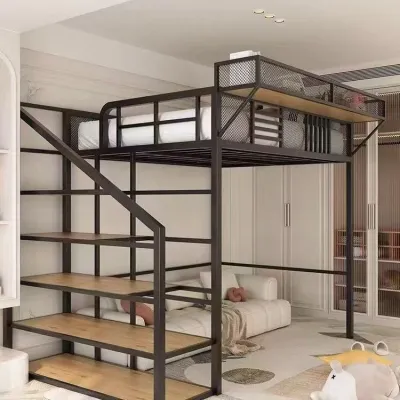

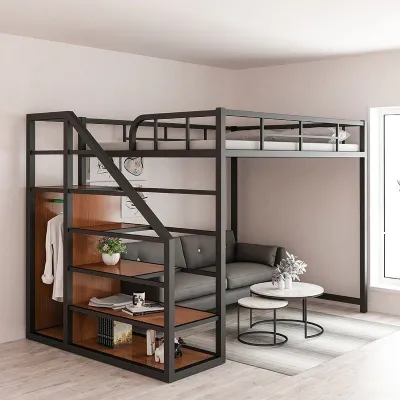
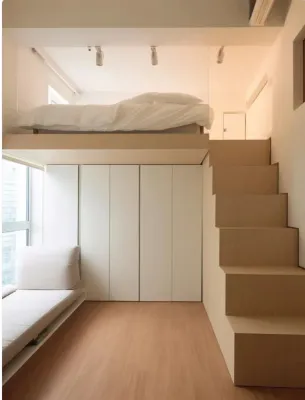
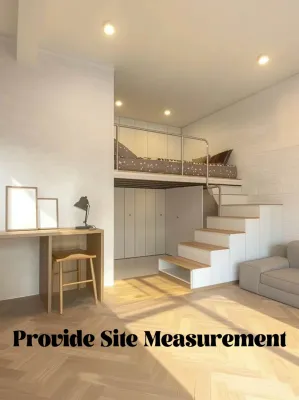
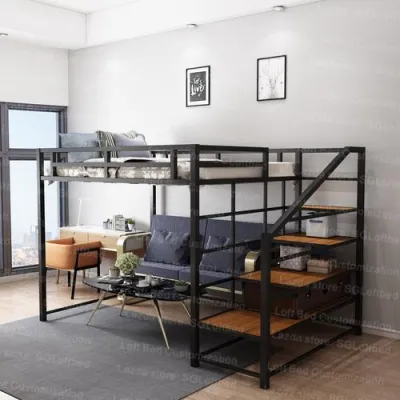
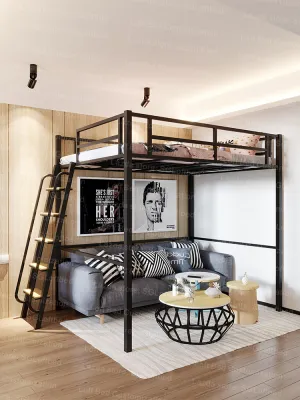
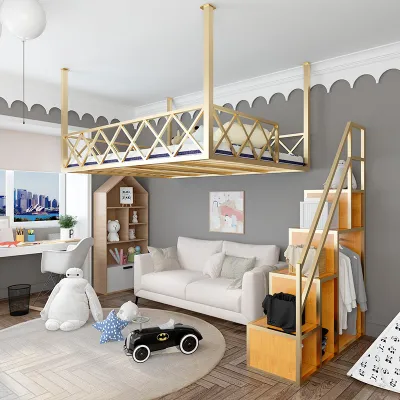
Prices are valid at publication and may change. Please refer to the product page for the latest price.
How to Verify Weight Capacity Limits Before You Buy
When evaluating a loft bed, understanding the difference between static and dynamic weight is critical to preventing structural failure. Static weight refers to the completely stationary load placed on the bed, such as a mattress resting on the slats or a person lying perfectly still. In contrast, dynamic weight is the force generated by movement, such as climbing up the ladder, tossing and turning during sleep, or sitting down heavily on the edge of the mattress. Dynamic movement temporarily multiplies the physical force exerted on the joints and fasteners of the frame, meaning a bed must be rated well above your resting weight to remain stable.
To ensure a bed can handle these daily physical stresses, you must locate and verify the manufacturer’s specified maximum weight capacity. This rating is typically found on the product label, within the assembly manual, or on the official technical specification sheet provided by the retailer. Relying on vague product descriptions or verbal assurances from showroom staff is a safety risk; always insist on seeing the official documented weight limit.
When calculating whether a loft bed meets your needs, remember that the manufacturer’s stated weight limit represents the total allowable load on the frame, not just the weight of the sleeper. You must calculate the combined weight of several components:
- The Sleeper's Body Weight: The weight of the primary user, or the combined weight of both partners if the bed is intended for double occupancy.
- The Mattress: High-quality adult mattresses, especially pocketed spring or dense memory foam models, can weigh anywhere from 25 to 50 kilograms.
- Bedding and Accessories: Pillows, heavy duvets, mattress toppers, and any bedside shelving attached directly to the frame add cumulative weight.
It is a common mistake to assume that larger frame sizes automatically translate to higher weight capacities. A “full” or “queen” size loft bed might offer a larger sleeping surface, but if it is constructed with thin materials intended for youth furniture, its weight rating may still be dangerously low. Frame size and structural weight capacity are independent specifications, and you must verify both separately.
Avoid purchasing any loft bed that lacks transparent, clearly stated weight limits in its official documentation. If a manufacturer does not publish a verified weight rating, it is highly likely the product has not undergone rigorous structural testing for adult use. Investing in an unrated frame exposes you to unpredictable structural behavior and voids standard consumer protections.
Frame Materials and Construction: Evaluating Structural Integrity
Evaluating the raw materials of a loft bed frame is the next step in ensuring long-term safety. While marketing materials often use reassuring terms like “heavy-duty” or “premium quality,” you must look past the adjectives and analyze the concrete specifications of the materials and joinery. The physical dimensions of the support posts, the thickness of the metal, and the quality of the wood grade are the true indicators of whether a frame can support adult dynamic loads over several years.

Solid Wood vs. Metal Frames
Solid wood frames offer exceptional natural shock absorption and aesthetic warmth, but their structural safety relies heavily on joint integrity and post thickness. When inspecting a wooden loft bed, look for support posts that measure at least 7.5 cm by 7.5 cm (3 inches by 3 inches) to prevent bowing under load. Hardwoods such as rubberwood, oak, or beech are highly durable options commonly available in Southeast Asia, whereas softwoods like standard pine require much thicker dimensions and more frequent hardware tightening to maintain the same level of rigidity.
Metal frames provide a sleek, modern profile and are highly resistant to warping, but their safety depends entirely on tubing gauge and welded joint quality. Metal thickness is measured in gauges; a lower gauge number indicates thicker, stronger metal. For adult safety, look for frames constructed from 14-gauge or 16-gauge steel tubing rather than thin-walled 18-gauge or 20-gauge steel, which is prone to bending. Additionally, inspect the welds at key connection points to ensure they are smooth, continuous, and free of tiny pinholes or cracks that suggest weak bonding.
Engineered Wood and Composite Materials
Engineered wood products, such as Medium-Density Fibreboard (MDF) or particleboard, are commonly used in budget-friendly furniture, but they are generally less suited for the primary structural posts of an adult loft bed. These composite materials lack the continuous grain structure of solid wood, making them vulnerable to stripping at screw connection points under repeated dynamic movement. If a loft bed utilizes engineered wood, ensure it is restricted to non-structural panels, such as desk surfaces or drawer fronts, and that the main load-bearing frame is reinforced with solid wood or steel sub-frames.
Beyond the primary materials, you must verify the design of the connections and the support foundation. Look for frames that feature reinforced corner brackets, diagonal cross-supports, and double-bolted joints that utilize heavy-duty machine bolts and barrel nuts rather than simple wood screws. The slat system is another critical failure point; ensure the slats are made of thick, solid timber or welded metal grids, and that they are securely fastened to the side rails to prevent them from slipping or sagging over time.
Finally, check the manufacturer’s structural warranty as a reliable proxy for expected durability. A manufacturer that offers a comprehensive multi-year warranty on the frame is demonstrating confidence in the structural integrity of their materials and construction methods. Conversely, a brief or highly restricted warranty should serve as a warning sign regarding the longevity of the bed.
Stability Features and Guardrails to Prevent Falls
Even a frame made of the strongest materials can become hazardous if it lacks the design features necessary to prevent tipping, wobbling, and accidental falls. Because adults are heavier and sleep higher off the ground than children, the kinetic energy shifted during movement is significantly greater, making stability features a vital consideration.
Preventing Tipping and Wobbling
To minimize sway and eliminate the risk of tipping, a high-quality adult loft bed must feature a wide footprint and robust structural bracing. Diagonal cross-bracing, often in the shape of an “X” or an “A” along the back and sides of the frame, is essential for absorbing lateral forces and preventing the bed from swaying when you climb or shift positions. Frames with a lower center of gravity—where the mattress platform is positioned only as high as necessary to clear the workspace below—are inherently more stable than extremely tall models.
For absolute security, look for loft beds that include integrated wall-anchoring brackets. Anchoring the frame directly to the wall transfer lateral forces away from the legs, eliminating wobble entirely. In Singapore, where most residential walls are constructed of solid concrete or heavy masonry, you must use high-quality wall plugs and masonry anchors rather than standard drywall screws to ensure a permanent, unyielding connection.
Guardrail and Ladder Safety
Guardrails are a critical safety feature designed to prevent accidental roll-offs during deep sleep. To function effectively, the guardrail must extend at least 13 to 15 cm above the top surface of the mattress. When purchasing a bed, you must calculate this safety clearance by subtracting your intended mattress thickness from the total height of the guardrail frame; choosing a mattress that is too thick will compromise the guardrail’s protective barrier and create a serious fall hazard.
Ladder safety is equally important for preventing slips and falls during nighttime use. Verify that the ladder has its own designated weight rating that matches or exceeds your body weight, and check how it attaches to the frame. Integrated ladders that are bolted directly into the main structure are significantly safer than hook-on models, which can slip or shift during climbing. Additionally, prioritize ladders with wide, flat treads rather than narrow, round rungs, as wider steps distribute your weight more evenly and provide a secure, comfortable grip for adult feet.
Assembly Rules and Ongoing Stability Checks
Achieving structural safety does not end with choosing the right product; correct assembly and ongoing maintenance are what keep a loft bed safe over years of daily use. Even the most robust industrial-grade frame will fail if fasteners are misaligned or structural components are omitted during setup.
When assembling your loft bed, it is absolutely necessary to follow the manufacturer’s instructions precisely. Use only the hardware provided in the packaging, and never substitute missing bolts with random screws from a home hardware kit. If a specific bolt or bracket is missing or damaged, pause the assembly and contact the manufacturer directly for an official replacement part.
Attempting to assemble a large loft bed alone is highly discouraged. Always have a second person assist you during the setup process. Having two people ensures that the frame can be held perfectly square and level while the fasteners are tightened, preventing the metal or wood from warping under uneven tension. Tighten all connections incrementally in a cross-pattern to ensure even pressure across the entire structure.
To maintain structural integrity over time, establish a routine maintenance checklist. The dynamic forces of climbing and sleeping will naturally cause fasteners to settle and loosen slightly over months of use. Perform the following checks at regular intervals:
- Tighten Fasteners: Every three to six months, use the appropriate hex keys or screwdrivers to gently retighten all bolts, screws, and brackets.
- Inspect Wood Components: Examine wooden frames for any signs of stress cracks, splitting around bolt holes, or warping in the support legs.
- Check Metal Welds: Inspect metal frames for hairline fractures in the welded joints, paint chipping that indicates metal fatigue, or bending in the ladder rungs.
- Verify Slat Security: Ensure that all mattress slats remain firmly seated in their designated tracks and have not shifted or cracked.
If you detect any structural damage, severe wobbling, or instability that cannot be resolved by tightening the hardware, stop using the bed immediately. Do not attempt temporary or makeshift repairs with tape or glue. Consult the manufacturer or hire a qualified furniture repair professional to assess and resolve the issue before sleeping on the bed again.
Frequently Asked Questions (FAQ)
Can I use a regular mattress on an adult loft bed?
Yes, you can use a standard mattress on an adult loft bed, provided the dimensions perfectly match the frame’s mattress platform (such as a standard Single, Queen, or King size). However, you must factor the weight of the mattress into the bed’s overall weight capacity, as heavy pocketed spring or hybrid mattresses can significantly reduce the remaining capacity available for the sleeper. Additionally, ensure the mattress thickness does not exceed the manufacturer’s recommendation; a mattress that is too thick will sit too high, reducing the effective height of the guardrails and creating a fall hazard.
Do adult loft beds need to be anchored to the wall?
While some heavy-duty, industrial-grade steel loft beds are engineered to be freestanding, many manufacturers strongly recommend or explicitly require wall anchoring for optimal safety. Anchoring the frame is the most effective way to eliminate sway, structural wobble, and the risk of tipping. For homes in Singapore, ensure you use heavy-duty masonry wall plugs and appropriate screws to secure the anchoring brackets directly into concrete or brick walls, as standard drywall anchors will not hold securely in solid masonry.
How often should I check the bed for stability?
You should perform a thorough stability and hardware check every three to six months. However, you should inspect the bed immediately if you move the frame to a new position in the room, change to a heavier mattress, or if you begin to notice any unusual creaking, swaying, or wobbling during daily use. Regular preventative maintenance is the key to ensuring your elevated sleeping space remains safe and structurally sound for years to come.
Community discussion
Share your experience or ask a question. Comments are reviewed before publication.