
Maximising floor space is a primary goal for many families living in Singapore, where apartment layouts require highly efficient design choices. The hwb hidden wall bed, commonly known as a Murphy bed, has emerged as a practical solution for children’s bedrooms, transforming a sleeping area into a spacious play or study zone during the day. However, before integrating this furniture into a child’s room, parents must address a critical question: are hidden wall beds safe for children?
The direct answer is yes, hidden wall beds are safe for children, but this safety is not an automatic feature of every model. A wall bed only becomes safe when it incorporates advanced child-proof locking mechanisms, is anchored securely to structural walls, and is operated under strict adult supervision. Understanding the engineering behind these beds and the specific installation requirements is essential to eliminating physical hazards.
Understanding the Core Safety Risks of Wall Beds for Kids
To evaluate whether a wall bed is suitable for your child’s room, you must first understand the potential physical hazards associated with these heavy, moving structures. The primary risk with any vertical folding furniture is a structural tip-over. A wall bed cabinet is a tall, heavy unit; when the bed frame is lowered, the center of gravity shifts dramatically forward. If the cabinet is not securely anchored to a load-bearing wall, the leverage generated by pulling the bed down can pull the entire wooden or metal enclosure forward, causing a catastrophic collapse.
Products mentioned in this guide
![[Showroom] Halfday - Rollover Folding Wall Bed | Invisible Murphy Bed Hidden Rollaway Bed](https://img.lazcdn.com/g/p/561a3a52b5e221b1fe5534dcf98e539c.jpg_400x400q80.jpg_.webp)
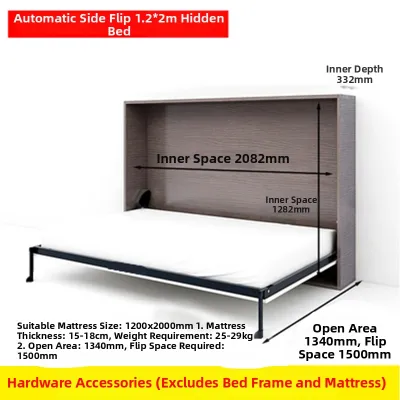
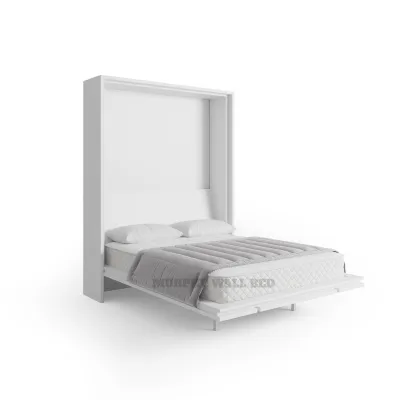
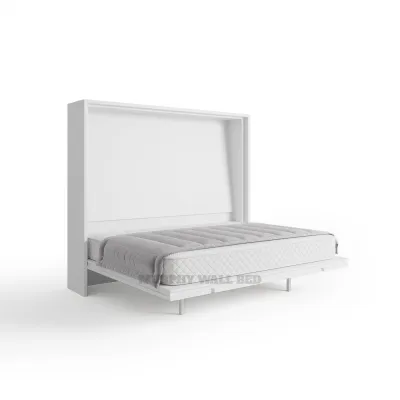

Prices are valid at publication and may change. Please refer to the product page for the latest price.
Another significant hazard involves pinch points located around the moving parts of the bed. The gaps between the folding bed frame, the outer cabinet, and the pivoting metal hinges act as scissor-like mechanisms during operation. Small children are naturally curious and may attempt to touch these moving joints while the bed is being lowered or raised. Without proper protective guards or careful operation, fingers or limbs can easily become trapped in these high-pressure areas.
Accidental deployment or sudden collapse represents another major safety concern in a child’s environment. If a wall bed does not feature a secure locking system, a child playing in the room might pull the release handle or attempt to climb the front panel of the closed cabinet. The weight of the child could trigger the bed to swing downward unexpectedly. Conversely, if a child climbs onto the bed frame while it is partially open, the lack of balanced tension could cause the bed to fold upward or drop suddenly, leading to entrapment or impact injuries.
Essential Child-Proof Mechanisms and Locking Systems
Modern furniture engineering has introduced several critical safety features designed specifically to mitigate these operational risks. When shopping for a hwb hidden wall bed, the most important component to verify is the locking mechanism. A child-safe wall bed must feature a secure, multi-step lock that cannot be easily operated by a young child. These systems typically require a dual-hand action or a complex physical motion—such as pressing a safety button while simultaneously turning a latch—to release the bed from its upright position.

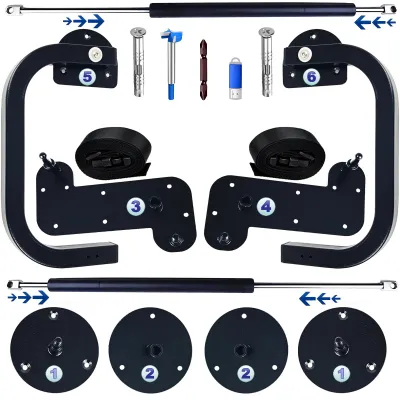
In addition to manual locks, the internal counterbalancing system plays a vital role in preventing sudden movement. High-quality wall beds utilize heavy-duty gas pistons or pneumatic struts rather than simple mechanical springs. These gas-charged pistons are calibrated to counteract the weight of the bed frame and mattress. When the lock is released, the pistons prevent the bed from dropping rapidly under gravity; instead, they ensure a slow, controlled, and soft-close descent. If a child accidentally releases the latch, a well-calibrated piston system will hold the bed in place or require active downward physical pressure to lower it fully.
Furthermore, the leg mechanisms must also feature dedicated safety locks. When a wall bed is lowered, the legs rotate to support the foot of the bed. High-quality models include automatic leg locks that secure the legs in their supporting position, preventing them from folding back under the bed if the frame is bumped or shifted. When the bed is closed, these same legs often fold over the front panel, acting as a secondary physical barrier that keeps the bed locked tightly within the cabinet frame.
Weight Limits and Structural Stability Requirements
Evaluating the physical limits and structural requirements of a wall bed is a non-negotiable step in ensuring long-term safety. Every manufacturer specifies a maximum weight capacity for their bed frames, which includes the dynamic load of a person moving on the bed and the static weight of the mattress and bedding. Parents must carefully calculate these figures. Exceeding the recommended weight limit can place immense strain on the hinges and pistons, leading to premature wear or sudden mechanical failure.
The method of installation is the single most critical factor in preventing tip-over accidents. A wall bed must never be anchored to standard drywall, plaster, or thin partition walls alone. The dynamic forces exerted when pulling the bed down require anchoring directly into solid structural elements. In Singapore, most residential walls are made of solid concrete or brick, which provide excellent structural support when paired with heavy-duty masonry anchors. If the bed must be installed against a partition wall, installers must locate the internal timber or metal studs and secure the cabinet frame directly to these structural members using specialized structural screws.
Additionally, you must evaluate the overall stability of the cabinet frame, particularly if you are choosing a multi-functional unit. Many wall beds designed for children’s rooms are integrated with study desks, bookshelves, or side wardrobes. While these configurations are highly efficient for space saving, they alter the overall center of gravity of the furniture. The manufacturer’s instructions must be consulted to ensure that the entire integrated unit is anchored as a single, cohesive system, preventing any individual section from shifting or tipping under load.
Safety Standards and Pre-Purchase Verification
Before finalizing your purchase of a hidden wall bed, conducting a thorough verification of safety certifications and manufacturer specifications is essential. Look for recognized safety standards on the product labels or within the technical documentation. For example, European standards such as EN 1129 specify rigorous safety requirements and test methods for foldaway beds, ensuring they can withstand thousands of cycles without structural degradation. Checking for these independent certifications provides peace of mind that the product has been engineered to meet strict international safety benchmarks.
You must also pay close attention to the manufacturer’s explicit age recommendations and mattress guidelines. Most manufacturers state that children under a certain age—typically six years old—should not sleep on or operate a wall bed. Additionally, the recommended mattress thickness must be strictly adhered to. Wall bed frames are designed with a specific depth; using a mattress that is too thick can prevent the bed from closing fully, making it impossible for the safety locks to engage properly. A mattress that is too heavy can also disrupt the balance of the piston tension, making the bed difficult to control.
Given the high stakes of structural stability, professional installation is strongly recommended over DIY assembly, especially in a child’s bedroom. Professional installers possess the experience to assess wall integrity, select the correct heavy-duty anchors for concrete or stud walls, and calibrate the piston tension precisely to match the weight of your specific mattress. A professional installation ensures that the bed operates smoothly, the safety latches align perfectly, and the unit remains permanently anchored to the wall.
Daily Safety Practices and Routine Maintenance
Even the most securely installed wall bed requires ongoing attention to maintain its safety standards over years of use. Establishing a routine maintenance schedule is a simple yet effective way to prevent mechanical failures. Every six months, perform a visual and physical inspection of the entire unit. Check all visible screws, brackets, and wall anchors to ensure they remain tight and flush. Inspect the hydraulic pistons for any signs of fluid leaks or loss of tension, and test the safety locks to confirm they engage smoothly without sticking.
Education is another cornerstone of household safety. Parents must set clear, non-negotiable rules regarding the use of the wall bed. Children must be taught that the bed mechanism is not a toy and that they are never to operate, open, or close the bed without direct adult supervision. Emphasize that climbing on the closed cabinet or jumping on the bed frame when lowered can damage the internal mechanisms and lead to accidents.
Finally, maintaining a clear operational path is crucial for daily use. Before lowering the bed, inspect the surrounding floor area to ensure it is completely free of toys, storage boxes, loose rugs, or electrical cords. Lowering the bed onto an obstruction can damage the frame, misalign the hinges, or cause the bed to sit at an angle, which places uneven stress on the structural anchors. Keeping the area clear ensures a smooth, safe transition every time the bed is prepared for sleep.
Frequently Asked Questions (FAQ)
At what age is it safe for a child to use or operate a hidden wall bed?
Children should generally be at least six years old before sleeping in a hidden wall bed, though you must always check the manufacturer’s specific age guidelines. Regardless of the child’s age, they should never operate the folding mechanism themselves. Lowering and raising the bed must always be performed by an adult to prevent accidental drops, pinches, or improper locking.
Can a hidden wall bed be safely installed on standard drywall?
No, a hidden wall bed cannot be safely installed on standard drywall alone. Drywall lacks the structural strength to resist the intense pulling forces and leverage generated when the bed is lowered. The bed must be anchored directly into solid concrete, brick, or the internal timber or metal studs behind the drywall. If studs are not aligned with the mounting points, professional installers must install a structural header board to distribute the load safely.
Community discussion
Share your experience or ask a question. Comments are reviewed before publication.