
Quick Answer: Are Floating Bed Frames Safe for Children?
A floating bed frame can be a safe and visually striking choice for an older child’s bedroom, but it is generally not recommended for toddlers or highly active children. The safety of these beds depends heavily on the specific support mechanism, the quality of construction, and proper installation. The “floating” illusion is created by using recessed legs, a central pedestal, or heavy-duty wall mounts, which fundamentally alters how weight is distributed compared to a traditional four-legged bed. For school-aged children who understand basic safety boundaries, a high-quality, professionally installed floating bed frame poses minimal risk. However, for younger kids prone to rough play, the cantilevered edges and hidden support structures present unique physical hazards that parents must carefully evaluate before making a purchase.
Primary Safety Risks of Floating Bed Designs
While traditional bed frames distribute weight evenly across four outer corners, a floating bed frame relies on hidden cantilevers and recessed supports to achieve its weightless aesthetic. This architectural shift introduces specific physical forces and structural vulnerabilities that do not exist with standard bed frames, requiring parents to assess how their child’s daily habits interact with the bed’s design.

Fall Hazards and Low Clearance
Many floating bed designs feature a low-profile platform, which parents often view as a safety benefit. While a lower mattress height does reduce the distance a child might fall if they roll out of bed, it introduces a different set of physical hazards. The recessed base or pedestal that creates the floating illusion is hidden from direct line of sight. In a darkened room, this recessed structure becomes a significant tripping hazard for children getting up at night.
Products mentioned in this guide
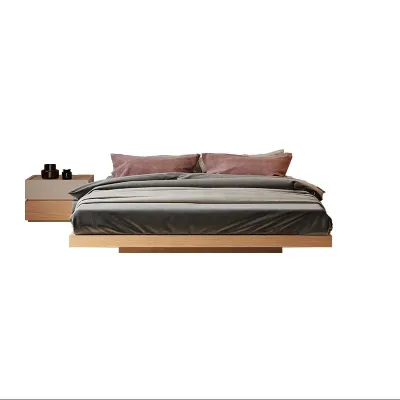


![WAYLON Modern Floating Bedframe [ETA 4-9 WEEKS]](https://img.lazcdn.com/g/p/ddcbe58254fb6bf327e770b7940baf94.png_400x400q80.png_.webp)
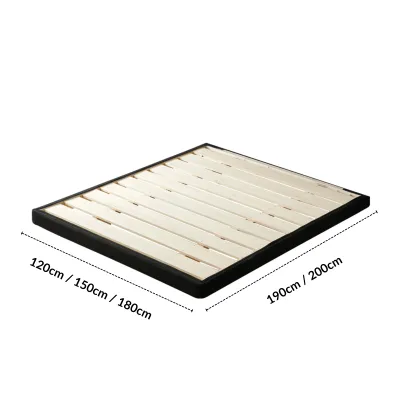

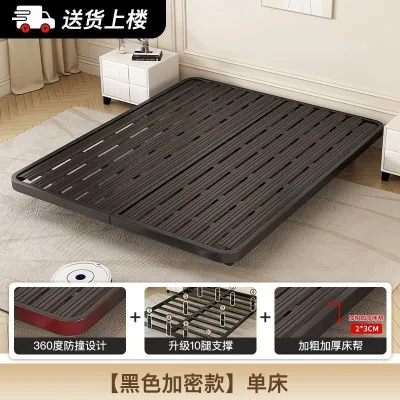
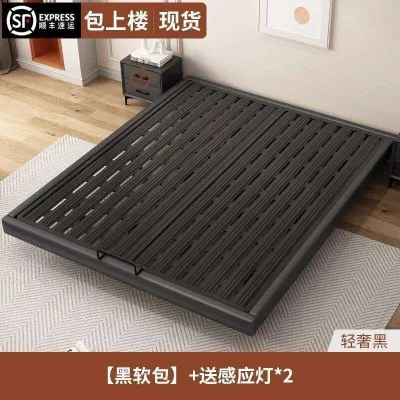
Prices are valid at publication and may change. Please refer to the product page for the latest price.
Furthermore, the gap between the outer edge of the platform and the recessed base creates a cantilevered overhang. If a child rolls off the bed or plays near the edge, there is a risk of limbs or toys getting caught in this narrow, semi-concealed under-bed space. When selecting a frame, it is vital to measure the exact floor clearance. Parents should inspect the underside of the platform for sharp inner corners, rough wood splinters, or exposed metal brackets that could cause scrapes or cuts during play.
Structural Integrity and Active Play
Children naturally use their beds for more than just sleeping; they are spaces for active play, jumping, and roughhousing. Standard four-legged beds distribute these dynamic forces directly down to the floor at the outer perimeter. In contrast, a floating bed frame concentrates these forces toward the center pedestal or the wall anchors. When a child jumps on the cantilevered edge of a floating bed, the leverage exerts immense upward and downward stress on the joints and central supports.
This concentrated stress makes the perimeter of the bed more prone to flexing, squeaking, or even tipping if the base is not sufficiently weighted. Over time, repeated dynamic loads can weaken joint fasteners, loosen wall anchors, or cause the wood or metal frame to snap. Before purchasing, parents must verify the manufacturer’s maximum weight capacity and confirm whether that rating accounts for static weight (sleeping) or dynamic movement. A frame rated for 150 kg of static weight may still fail under the sudden, high-impact force of a child jumping on the outer edge.
Hidden Dangers: Under-Bed Gaps and Electrical Features
To enhance the dramatic floating effect, many modern floating bed frames come equipped with integrated LED strip lighting installed along the underside of the platform. While this provides a convenient nightlight, it introduces electrical components into a highly accessible area. Exposed wiring, transformers, and power bricks often sit directly in the under-bed cavity. Active toddlers or curious children crawling beneath the bed can easily pull on these cords, chew on wires, or come into contact with warm electrical adapters, presenting shock and fire hazards.
Additionally, the dark, enclosed space created by a recessed base naturally attracts young children as a hiding spot or a place to store toys. If a child crawls into this tight space, they risk getting their head or limbs entrapped between the floor and the low-hanging frame. Dust and allergens also tend to accumulate in these hard-to-reach under-bed areas, which can exacerbate respiratory issues for children with allergies or asthma.
To mitigate these electrical and physical risks, parents should opt for low-voltage (typically 12V or 24V) LED systems with fully enclosed, child-safe housing. All cables must be routed securely along the frame using heavy-duty cord covers or cable ties, keeping them completely out of reach. If your child is still in the toddler or early preschool stage, it is best to avoid floating beds with deep, inaccessible under-bed gaps entirely, choosing instead a solid platform base that leaves no room for crawling or hiding toys.
How to Evaluate a Floating Bed Frame for Child Safety
Evaluating a floating bed frame requires looking beyond aesthetics to analyze the engineering of the support system. There are three primary configurations: central pedestals, recessed perimeter legs, and wall-mounted brackets. A central pedestal design relies on a heavy, centralized box to balance the mattress. While visually striking, it offers the lowest edge stability and is generally unsuitable for active children. Recessed perimeter legs, which are set back several inches from the frame’s edge, offer a safer middle ground by distributing weight closer to the edges while maintaining the floating look. Wall-mounted designs are incredibly stable but require professional-grade anchoring into wall studs or solid masonry.
When inspecting a frame, pay close attention to the materials and joint construction. Solid timber or thick, high-density metal frames are far superior to thin medium-density fibreboard (MDF) or particleboard, which can crack under localized pressure. Look for reinforced joints that utilize heavy-duty metal brackets, dowels, and through-bolts rather than simple wood screws.
Before letting a child sleep on the bed, perform a manual edge stability test. Apply significant downward pressure on the outer corners and sides of the cantilevered platform. Observe if the frame flexes excessively, lifts at the opposite end, or makes creaking sounds. Any noticeable instability indicates that the frame is not designed to handle the off-center loads a child will inevitably place on it. Finally, ensure the frame has smooth, rounded corners, non-toxic, low-VOC finishes, and a footprint that allows at least 60 cm of clear pathway around the bed to prevent accidental collisions in tight Singapore bedrooms.
Practical Safety Modifications for Kids' Rooms
If you decide that a floating bed frame is the right choice for your child’s room, several practical modifications can significantly reduce the inherent risks. First, consider installing low-profile, securely attached bed rails. While traditional clamp-on rails may not fit easily on some thick platform designs, specialized slide-under rails with safety straps can prevent a sleeping child from rolling off the cantilevered edge.
To address the tripping hazards associated with the recessed base, place thick, impact-absorbing rugs or dense foam mats around the perimeter of the bed. This cushioning not only softens the impact of an accidental fall but also provides a visual and tactile boundary that helps children navigate around the bed in low-light conditions.
If the manufacturer provides a wall-mounting kit or safety anchors, do not treat them as optional. Anchoring the headboard or the frame itself directly to the wall studs provides an essential secondary point of stability, preventing the bed from shifting or tipping during active play. In Singapore homes, where concrete or brick walls are common, ensure you use high-quality masonry wall plugs and appropriate screws rather than standard drywall anchors.
Lastly, safety is as much about behavior as it is about hardware. Establish and enforce a strict “no jumping” rule on the bed. Because the structural joints of a floating bed are hidden from view, make it a habit to conduct quarterly inspections. Slide under the bed with a flashlight to check for loose bolts, hairline cracks in the timber, or sagging slats, tightening any hardware immediately to maintain structural integrity.
Frequently Asked Questions (FAQ)
What is the recommended minimum age for a child to use a floating bed?
Generally, floating bed frames are not recommended for toddlers transitioning out of a crib, typically those under the age of six. Young children lack the coordination to navigate the recessed base safely, increasing the risk of trips, falls, and entrapment in the under-bed gap. They are also more likely to treat the cantilevered edges as a play platform. A floating bed is far more suitable for school-aged children (6 years and older) and teenagers. At this stage, children have better balance, understand safety boundaries, and are less likely to engage in high-impact jumping that could compromise the bed’s structural integrity.
Do floating beds require special wall anchoring?
Whether a floating bed requires wall anchoring depends entirely on its structural design. Freestanding floating beds use a heavy, recessed central pedestal or recessed legs to support the weight, meaning they do not strictly require wall mounting, though anchoring the headboard is still highly recommended for stability. However, true floating beds that have no floor contact at the foot of the bed must be anchored directly into wall studs or solid masonry. In Singapore, where most HDB flats and condominiums feature solid concrete or brick walls, installing these beds requires heavy-duty masonry anchors (such as sleeve anchors or concrete screws) and a rotary hammer drill. Never attempt to mount a wall-supported floating bed to standard drywall without locating studs or reinforcing the wall structure first, as the leverage from a child’s weight will easily pull the brackets out of the wall.
Community discussion
Share your experience or ask a question. Comments are reviewed before publication.