
To choose the right anti-vibration pad for your home, you must recognize that a washing machine and a refrigerator require completely different support systems. While a washing machine needs a resilient, high-grip pad designed to absorb violent, high-frequency lateral forces during spin cycles, a refrigerator demands a dense, high-capacity static pad that can support hundreds of kilograms without flattening over time. Placing the wrong pad under either appliance can lead to accelerated wear, increased structural noise, or even physical damage to your floors.
In Singaporean homes, where hard ceramic tiles, porcelain, and polished concrete floors are standard, choosing the correct anti-vibration pad is particularly crucial. Hard floors do not absorb sound or movement; instead, they reflect vibrations back into the appliance or transmit them directly through the concrete slab into neighboring units. Selecting the appropriate accessory requires analyzing the weight of your appliance, its mechanical movement patterns, and how those forces interact with your specific flooring.
Understanding Vibration Profiles: Selecting the Right Anti-Vibration Pad
A washing machine operates as a dynamic system. During its cycle, the drum rotates at high speeds, often reaching 1,200 to 1,600 revolutions per minute (RPM). When the load becomes unbalanced—such as when heavy towels gather on one side—the machine experiences intense, high-frequency kinetic forces. This results in rapid lateral and vertical movements, commonly referred to as “walking.” An anti-vibration pad designed for this environment must act as a shock absorber, converting sudden kinetic energy into heat while maintaining a high-friction grip on the floor to prevent physical displacement.
Products mentioned in this guide
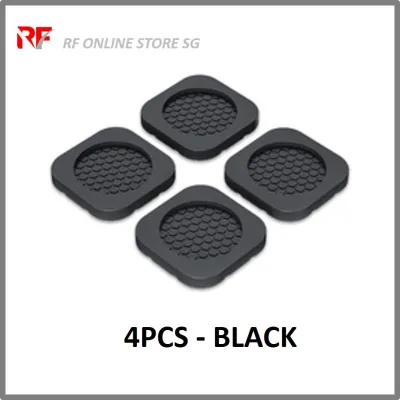
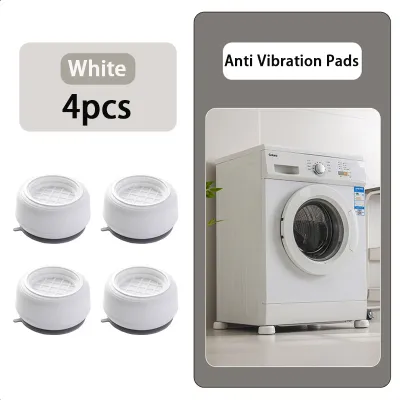
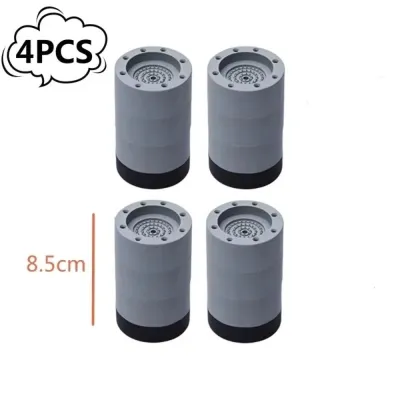
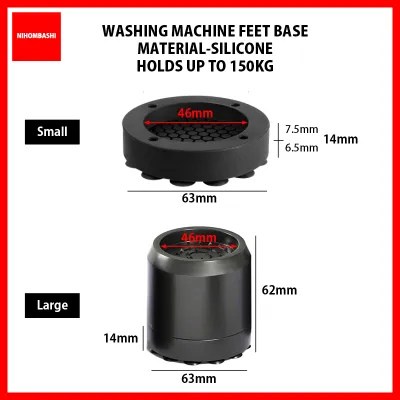
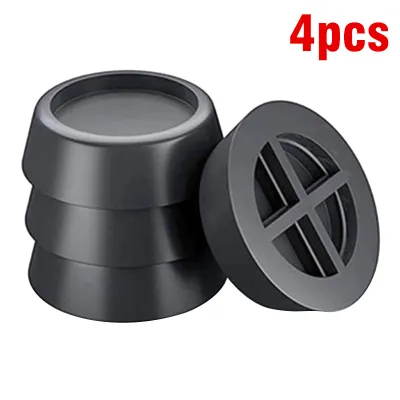
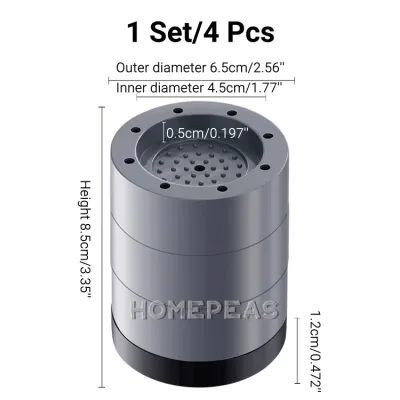
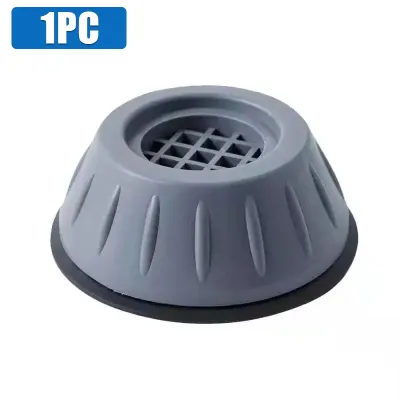
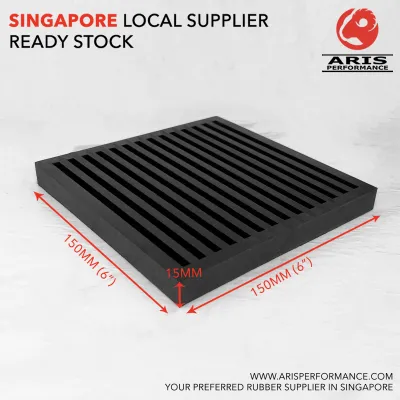
Prices are valid at publication and may change. Please refer to the product page for the latest price.
Conversely, a refrigerator is a heavy, static system. Its primary source of vibration is the compressor and cooling fan, which run almost continuously. This produces a low-frequency, low-amplitude hum. While this vibration is less violent than a washing machine’s spin cycle, it is persistent. Over hours and days, this continuous low-frequency hum can resonate through the building’s structural concrete, creating an annoying background drone in your living areas or the apartment below. The pad required here must focus on isolation rather than shock absorption, acting as a dense barrier that decouples the heavy appliance from the floor.
These distinct mechanical behaviors mean you must look for different specifications on product labels. When shopping, pay close attention to three primary metrics: dynamic load rating, compression resistance, and material recovery. Dynamic load rating indicates how much moving weight a pad can handle without bottoming out under sudden force. Compression resistance measures a pad’s ability to withstand constant, heavy pressure without permanently deforming. Material recovery refers to how quickly and completely the material returns to its original shape after being compressed.
Selecting Pads for Washing Machines: Managing High-Impact Spin Cycles
To manage the high-impact forces of a laundry appliance, the pad’s primary duty is to keep the machine anchored in place while dampening violent vibrations. The most critical feature for this application is surface friction. During a high-speed spin cycle, a washing machine can easily slide across smooth floor tiles if the pads lack sufficient grip. Look for pads made of high-grade, vulcanized rubber or specialized elastomeric polymers. These materials naturally possess high coefficients of friction, ensuring that both the bottom of the pad and the top surface contact area remain firmly anchored to their respective surfaces.

Material resilience and long-term recovery are equally vital. Because a washing machine undergoes repeated cycles of intense impact followed by periods of rest, the pad material must not permanently deform. Avoid cheap, low-density foam or soft plastic pads that flatten out after a few weeks of use. Once a pad loses its elasticity and remains permanently compressed, it can no longer absorb shock, and the vibrations will transfer directly back into the washing machine’s internal components, potentially shortening its operational lifespan.
Before purchasing, you must calculate the required load capacity of the pads. Do not look only at the dry weight of your washing machine, which typically ranges from 60 to 90 kilograms. You must account for the maximum loaded weight, which includes the weight of the dry machine, a full load of wet laundry, and the maximum volume of water held in the drum during a cycle. For a standard 8kg capacity front-load washer, the total operating weight can easily exceed 120 to 140 kilograms. Divide this total estimated weight by four to determine the minimum weight capacity each individual pad must support under dynamic, moving conditions.
Excellent physical design features can also significantly improve performance. Look for pads that feature a deep, cupped top surface or a recessed center surrounded by a raised outer rim. This design securely cradles the existing leveling feet of your washing machine, preventing them from slipping off the edge of the pad during an unbalanced spin. Additionally, a ribbed or treaded pattern on the underside of the pad helps channel away any stray moisture and increases the surface area grip on smooth tiles.
Finally, evaluate the edge thickness of the pad. A thicker pad generally offers better vertical shock absorption, but if the pad is too soft or excessively tall, it can introduce lateral instability. This instability can cause the washing machine to sway excessively from side to side, putting undue stress on the internal suspension springs and dampers. Look for a balanced design: a moderate thickness of 1.5 to 2.5 centimeters, constructed from a highly dense, firm rubber compound that contains vertical movement without allowing excessive lateral swaying.
Selecting Pads for Refrigerators: Supporting Heavy Static Loads
Refrigerators present a completely different engineering challenge. Rather than managing sudden, violent movements, a refrigerator pad must support a massive, unchanging static load for decades. A standard double-door or multi-door refrigerator can weigh anywhere from 80 to over 150 kilograms when empty, and easily exceed 200 kilograms when fully stocked with food, beverages, and ice. Therefore, the absolute priority when selecting an anti-vibration pad for a refrigerator is high static load capacity and exceptional resistance to “compression set”—the technical term for a material’s tendency to permanently deform under constant load.
If you place a soft, highly elastic washing machine pad under a heavy refrigerator, the extreme static weight will quickly squeeze out all the air pockets and compress the material to its absolute limit. Once bottomed out, the pad becomes as hard as the floor beneath it, completely losing its ability to isolate the low-frequency hum of the compressor. To prevent this, refrigerator pads must be made of highly dense materials, such as high-density polyurethane foam, heavy-duty solid neoprene, or specialized industrial-grade vibration isolation cork-and-rubber composites. These materials are engineered to compress only slightly under immense weight, leaving plenty of internal structure to absorb and dissipate low-frequency acoustic vibrations.
Moisture and temperature resistance are also critical factors to consider. Refrigerators are active thermal appliances; they generate heat at the back and bottom while maintaining cold temperatures inside. This temperature differential, combined with Singapore’s high relative humidity, can lead to localized condensation near the base of the appliance. Ensure the pads you choose are made of non-porous, water-resistant materials that will not rot, harbor mold, or break down chemically when exposed to moisture and household detergents.
When assessing pad dimensions, check the overall thickness to ensure it does not interfere with your kitchen’s layout or the appliance’s physical design. Raising a refrigerator even two centimeters can affect its alignment with surrounding cabinetry, block access to overhead storage, or interfere with the clearance of doors. Additionally, many modern refrigerators draw in or exhaust air through a bottom ventilation grille. Ensure the pads do not raise or tilt the appliance in a way that blocks these ventilation pathways, as restricted airflow can cause the compressor to overheat and fail prematurely.
To protect your kitchen flooring, choose pads with a broad, flat base. A refrigerator’s weight is concentrated on four very small leveling feet or rollers. Placing these directly onto tiles can crack the grout or chip the ceramic surface over time. A broad-based pad, ideally measuring at least 6 to 8 centimeters in diameter, effectively distributes this concentrated weight over a much larger surface area, minimizing the risk of floor damage while maximizing the contact area for superior vibration isolation.
Floor Compatibility: Optimizing Grip on Tiled and Concrete Surfaces
The physical environment of your home plays a massive role in how vibrations are transmitted and how well your pads perform. In Singapore, the vast majority of HDB flats and private condominiums feature hard, non-porous flooring, such as ceramic tiles, homogenous porcelain tiles, marble, or polished concrete. While these materials are exceptionally durable and easy to clean, they are highly efficient transmitters of structure-borne noise. When an appliance vibrates against a hard floor, the energy travels instantly through the concrete structural slab, turning your floor into a giant speaker that radiates noise into the rooms below and adjacent to yours.
To combat this, the base texture of your anti-vibration pad must be carefully matched to smooth, hard surfaces. Look for pads with a micro-textured, suction-cup, or treaded bottom design. This textured surface creates a mechanical grip on smooth tiles, preventing the pad from sliding on microscopic dust particles or thin films of moisture. Be cautious of cheap rubber pads made with low-grade plasticizers or recycled rubber of poor quality; under the heavy weight of an appliance, these inferior materials can leach oils over time, leaving permanent yellow or dark scuff marks on your porcelain or marble tiles.
Acoustically, hard floors require a pad with precise density characteristics. If the pad is too hard, it will not isolate the vibration, and the noise will continue to travel through the building frame. If it is too soft, the appliance will rock, creating secondary impact noises as the feet strain against the pads. For multi-story residential buildings, achieving the right balance is essential for maintaining neighborly harmony. Decoupling your appliances with high-quality elastomeric pads can reduce structure-borne noise transmission by a significant margin, turning a loud, rattling spin cycle or deep compressor drone into a barely audible whisper.
Before installing any pads, you must verify the levelness of your floor and clean the surface thoroughly. Sweep and mop the area under the appliance, ensuring all grease, soap scum, and debris are completely removed. Allow the floor to dry fully before placing the pads. Any trapped moisture or dust beneath the pad will act as a lubricant, severely reducing traction and causing the pad to slip during operation, rendering its vibration-dampening design ineffective.
Safe Installation, Leveling, and Long-Term Maintenance
Installing anti-vibration pads under heavy appliances requires caution to prevent personal injury or damage to your home. Never attempt to lift a heavy washing machine or refrigerator alone. Always seek the assistance of another person, or use specialized tools such as an appliance pry bar or a heavy-duty air jack bag. If you are using a mechanical lever, place a thick block of wood or a folded towel underneath the pivot point to protect your tiled floor from cracking under the concentrated pressure. Lift one corner of the appliance at a time, slide the pad directly under the foot, and gently lower the machine back down.
Once all four pads are in place, you must perform a critical step: leveling the appliance. An unbalanced machine is the primary cause of excessive vibration, and placing pads under an unlevel appliance will only mask the symptom temporarily while continuing to strain the machine’s internal parts. Place a spirit level flat on top of the appliance, checking both front-to-back and side-to-side alignment. Adjust the appliance’s built-in leveling feet by screwing them clockwise or counterclockwise until the bubble in the spirit level is perfectly centered. Ensure that all four feet are making firm, equal contact with the center of their respective pads.
To ensure continued performance, establish a regular maintenance routine. Every six months, perform a quick visual inspection of the pads. Look for any signs of physical degradation, such as cracking, tearing, dry rot, or permanent flattening. Push gently on the sides of the pads to verify they still possess some elasticity. Over time, kitchen grease, laundry detergent spills, and household dust can accumulate around the base of the pads, reducing their grip. Wipe the area clean with a damp cloth and mild soap, avoiding harsh chemicals that could degrade the rubber or polymer material.
Finally, always respect the safety boundaries outlined in your appliance’s user manuals. Before finalizing the position of your newly padded appliance, verify that raising its height has not put tension on the water inlet hoses, drainage lines, or power cables. A stretched hose can easily crack or slip off its connection, leading to catastrophic water damage in your home. Additionally, ensure that the appliance still maintains its required ventilation clearances on all sides, particularly for refrigerators that rely on consistent airflow to keep their cooling coils running efficiently. If you are unsure about clearances or weight limits, consult the manufacturer’s official guidelines before proceeding.
Frequently Asked Questions (FAQ)
Can I use the same anti-vibration pads for both my washing machine and refrigerator?
Using a single, generic type of pad for both appliances is generally not recommended because their mechanical demands are fundamentally different. A washing machine requires a highly resilient, high-friction pad designed to absorb rapid, violent, and multi-directional kinetic forces during high-speed spin cycles. A refrigerator, on the other hand, requires a dense, highly solid pad that can support a massive, constant static load without flattening over time. If you use a soft washing machine pad under a heavy refrigerator, it will quickly compress completely, losing all its dampening properties. Conversely, using an ultra-dense refrigerator pad under a washing machine may fail to absorb the lighter, high-frequency vibrations, causing the washer to walk or shake. For the best results, purchase specialized pads tailored to the specific weight and movement profile of each appliance.
Will installing anti-vibration pads void my appliance warranty?
In most cases, placing standard, non-invasive aftermarket anti-vibration pads under your appliance’s feet will not void the manufacturer’s warranty. These pads are considered external accessories, similar to floor protectors. However, there are important exceptions to keep in mind. If the installation of the pads causes the appliance to become severely unlevel, leading to internal mechanical damage, or if the increased height blocks essential ventilation grilles and causes the motor or compressor to overheat, the manufacturer may deny warranty coverage. Always refer to your product manual to ensure you maintain the required clearances, and never modify, remove, or alter the appliance’s original built-in leveling feet to accommodate aftermarket pads.
Community discussion
Share your experience or ask a question. Comments are reviewed before publication.