
Finding the correct height for your desk, dining table, or work surface is essential for maintaining proper ergonomics and preventing physical strain. A high-quality table riser provides a practical, cost-effective solution to elevate your existing furniture, saving you from the expense of purchasing entirely new pieces. However, selecting the right type of riser is not just about adding height; it requires balancing structural stability, weight capacity, leg compatibility, and floor protection.
Fixed and adjustable risers represent two distinct engineering approaches to solving the height problem. Choosing between them depends on whether you require a permanent, ultra-stable lift or a highly customizable, leveling solution.
Quick Answer: Fixed vs Adjustable Table Risers
To determine which option suits your setup, you must evaluate your primary goal, the table’s structural design, and the environment in which it sits.
Products mentioned in this guide
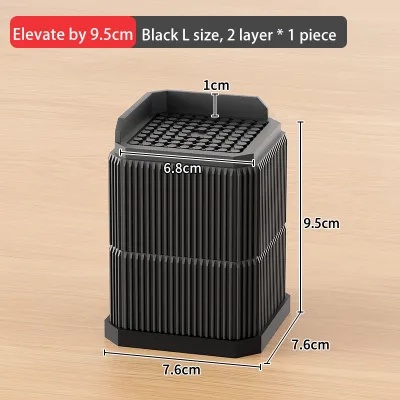
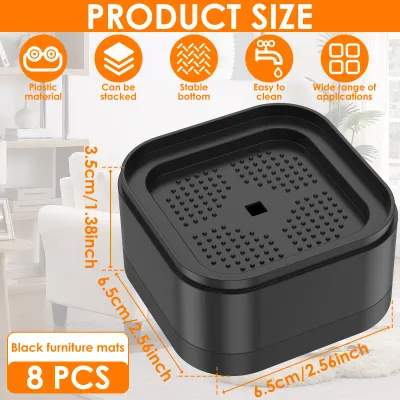
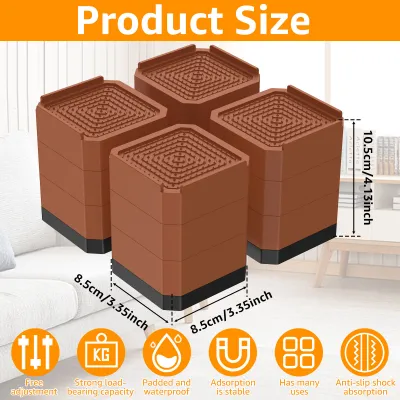
![[SG] 4PCS Adjustable Increase Table Height Foot Pad Furniture Legs Heightening Bed Washing Machine Raiser](https://img.lazcdn.com/g/p/666f1b33c6223679f081148eb8d67da7.jpg_400x400q80.jpg_.webp)
Prices are valid at publication and may change. Please refer to the product page for the latest price.
Fixed table risers are the optimal choice for permanent, heavy-duty applications where maximum stability and load capacity are paramount. These risers are typically solid blocks or heavy-walled cups that elevate your table by a predetermined, unalterable height (such as 2, 3, or 5 inches). Because they lack moving parts, they offer exceptional structural rigidity, making them ideal for heavy solid-wood dining tables, office desks, and workbenches that experience significant lateral forces.
Conversely, adjustable table risers are designed for versatility, precision tuning, and leveling. Utilizing threaded stems, telescopic sleeves, or screw-in feet, they allow you to make micro-adjustments to the height of each individual leg. This makes them indispensable for stabilizing tables on uneven floors—such as tiled surfaces with drainage slopes—or for fine-tuning ergonomics when switching between different chairs or floor coverings.
Ultimately, your choice should be guided by your table’s leg profile, the total weight of the furniture and its contents, and whether you need to correct a sloping floor or simply raise the entire surface uniformly.
Core Differences: How Fixed and Adjustable Table Riser Systems Work
To make an informed decision, it is helpful to understand the mechanical principles that govern both fixed and adjustable riser systems. Each design carries inherent trade-offs regarding structural integrity, ease of use, and long-term durability.

Fixed risers operate on the principle of direct load transfer. Constructed as solid blocks, stacked interlocking cups, or heavy-duty molded pucks, these risers sit directly beneath the table legs. The downward force exerted by the table’s weight is distributed across the broad, solid base of the riser. Because there are no joints, threads, or mechanical connections, there are no weak points that can fail under stress. This simplicity makes fixed risers virtually indestructible and highly resistant to lateral shear forces—the side-to-side wobbling that occurs when you lean on a desk, chop vegetables on a dining table, or type vigorously.
Adjustable risers, on the other hand, rely on mechanical interfaces to vary their height. The most common designs include threaded metal stems that screw into a mounting plate installed on the bottom of the table leg, or telescopic plastic/metal sleeves secured with pins or clamps. While this mechanical complexity provides the convenience of variable height, it introduces potential points of failure. The load of the table is concentrated on the threaded screw or the locking pin rather than being distributed across a solid column. Over time, heavy loads or frequent movement can cause threads to strip, pins to bend, or telescopic joints to loosen, leading to a noticeable wobble.
Furthermore, adjustable risers require precise installation and occasional maintenance. If the threaded stems are not tightened securely or if the table is frequently dragged across the floor, the lateral leverage on the thin metal stems can bend the mounting plates or damage the internal structure of wooden table legs. Fixed risers, by contrast, require no maintenance once positioned, though they lack the flexibility to adapt to changing floor levels or user heights.
Matching the Riser to Your Table Leg Style
The physical shape and design of your table’s legs are critical factors in determining which riser type will perform safely. Using an incompatible riser can lead to instability, slippage, or even structural damage to your furniture.
Square and Rectangular Legs
Square and rectangular legs, common on heavy wooden dining tables and modern minimalist desks, present a wide, flat bottom surface. To support these legs safely, you must select a riser that matches this broad footprint.
Fixed block risers with wide, square recesses are highly compatible with these leg profiles. The recess acts as a protective collar, preventing the leg from sliding off the riser if the table is bumped. Alternatively, if you opt for adjustable risers, you must select heavy-duty leveling pads with a large surface area that fully supports the flat bottom of the leg.
Using narrow, thin-stemmed adjustable risers under wide wooden legs is highly discouraged. A small threaded bolt concentrates the entire weight of the table onto a tiny area in the center of the wooden leg. This concentrated stress can easily split the wood over time or cause the leg to cup and crack. Additionally, small contact points under wide legs create a pivot point, significantly increasing the risk of the table tipping over under lateral pressure.
Round and Tapered Legs
Round, cylindrical, or tapered legs require specialized containment to prevent the leg from shifting or sliding off the center of the riser.
For round legs, cup-shaped fixed risers are highly effective. These risers feature a deep, circular depression that cradles the bottom of the leg, ensuring that any lateral movement is restricted by the walls of the cup. If you prefer an adjustable solution, look for risers that feature contoured, non-slip cradles or deep-socket mounting plates that sleeve over the bottom of the leg.
When dealing with tapered legs—which narrow toward the bottom—measuring the exact diameter of the leg base is critical. If the cup of a fixed riser is too large, a tapered leg may wobble within the recess, compromising stability. If the cup is too small, the leg will not sit flat on the bottom, concentrating the weight on the fragile edges of the cup. Always measure the bottommost point of the leg and select a riser with a matching or slightly larger recess, utilizing non-slip rubber inserts to fill any remaining gaps.
Legs with Casters or Wheels
Tables equipped with casters or wheels pose a unique safety hazard when raised, as the rolling mechanism naturally resists stable positioning.
Standard flat-bottomed fixed risers or basic adjustable pads are entirely unsuitable for wheeled tables. Without a mechanical lock or a deep physical barrier, the wheels can easily roll off the edge of the riser, causing the table to collapse suddenly. To raise a mobile table safely, you must use specialized wheel-cup fixed risers. These risers feature deep, contoured channels specifically designed to cradle the curvature of a wheel, preventing it from rolling in any direction.
If you require an adjustable solution for a table with casters, you must look for locking adjustable caster cups or consider removing the casters entirely. Many casters are attached via a threaded stem that screws into the leg. In these cases, you can unscrew the wheel and replace it directly with a heavy-duty threaded adjustable leveling foot, which provides both height adjustment and superior stability without the safety risks associated with rolling wheels.
Evaluating Stability, Weight Capacity, and Floor Protection
When modifying furniture, safety and floor preservation must be prioritized. Understanding how to calculate weight limits and protect your flooring will prevent costly accidents and damage.
Checking Weight Limits and Load Distribution
Before purchasing any riser, you must calculate the total load it will need to support. This calculation must account for both static weight (the table itself) and dynamic weight (the items placed on the table and the forces applied during use).
To determine the required capacity, first estimate the weight of the table frame and tabletop. Next, add the weight of all items permanently kept on the table, such as computer monitors, books, sewing machines, or heavy kitchen appliances. Finally, factor in dynamic loads, such as a person leaning heavily on the desk or the downward pressure exerted when cutting food.
Once you have a total weight estimate, divide this number by the number of table legs (typically four) to find the minimum load capacity required per riser. However, to ensure a safe margin, it is best to choose risers rated for at least 1.5 times this minimum value.
Fixed solid blocks generally distribute this calculated weight evenly across a broad footprint on the floor, reducing localized pressure. Adjustable risers, particularly those with thin threaded shafts, concentrate the entire load onto a small metal thread. If the table is overloaded, these threads can strip, or the adjustable sleeve can collapse. Always verify the manufacturer’s certified weight limits, and avoid using adjustable risers near their maximum rated capacity.
Matching Riser Material to Your Floor and Table
In Singapore, residential flooring often consists of hard, premium surfaces such as polished marble, ceramic tiles, engineered hardwood, or luxury vinyl tiles (LVT). These materials are highly susceptible to scratching, scuffing, and indentation under heavy furniture, especially in humid environments where moisture can soften wood finishes or trap abrasive dust beneath the table legs.
When selecting a riser, the material of the base that contacts the floor is just as important as the structural material of the riser itself. Do not assume that a product labeled “heavy-duty plastic” or “premium solid wood” is inherently safe for your floors. Instead, look for specific floor-protection features.
For hard floors like hardwood or marble, choose risers equipped with thick, integrated felt pads or soft rubberized bases. Felt pads allow the table to slide slightly without scratching, which is ideal for dining chairs and light tables. Rubberized bases, on the other hand, provide maximum grip, preventing the table from sliding—a crucial safety feature for heavy desks or workbenches on smooth tiled floors.
If your table sits on a thick carpet or rug, a hard plastic or solid wood base with a wide surface area is preferred, as it distributes the weight to prevent deep, permanent indentations in the carpet fibers. Avoid using rubber-bottomed risers on carpets, as the high friction can tear the carpet fibers if the table is shifted.
Height Goals: When to Use a Fixed vs Adjustable Table Riser
Your specific ergonomic goals and the physical layout of your room will heavily influence whether a fixed or adjustable system is more practical.
If your goal is to raise a dining table, study desk, or kitchen island by a substantial, uniform amount to accommodate taller chairs or improve sitting posture, fixed risers are highly recommended. For example, elevating a low desk by 3 inches to align with an ergonomic office chair is best achieved with a solid 3-inch fixed block. This provides a stable, permanent lift that maintains a consistent height, ensuring that your monitor and keyboard remain at the correct ergonomic level without the risk of gradual sinking or shifting.
Conversely, adjustable risers are essential when dealing with environmental irregularities. Older apartments in Singapore, particularly in wet areas like kitchens or balconies, often feature sloped floors designed to facilitate water drainage. Placing a table across such a slope will result in an annoying and unstable wobble. An adjustable riser allows you to extend the legs on the lower side of the slope by precisely the fraction of an inch needed to level the tabletop perfectly.
Adjustable options are also highly beneficial if you frequently change your floor layout. For instance, if you plan to place a thick area rug under your dining table, the legs sitting on the rug will be slightly higher than those on the bare floor. Adjustable risers allow you to compensate for this height difference, ensuring the table remains perfectly level.
When planning your height adjustment, always measure the exact gap between your lap and the underside of the table while seated in your preferred chair. Remember to account for the thickness of any desk mats, seat cushions, or floor coverings, as even a quarter-inch discrepancy can impact your posture and comfort.
Quick Comparison: Fixed vs Adjustable Table Risers
The following table summarizes the key structural differences, advantages, and limitations of both riser types to help you quickly identify the best option for your furniture.
| Feature | Fixed Table Risers | Adjustable Table Risers |
|---|---|---|
| Height Customization | Set, predetermined heights (no micro-adjustments possible). | Highly customizable; allows for precise micro-adjustments. |
| Stability and Rigidity | Excellent; solid construction minimizes lateral wobble and sway. | Moderate; mechanical joints can introduce minor play or wobble. |
| Best Leg Types | Square, rectangular, or round legs with standard flat bases. | Tapered legs, legs with threaded inserts, or uneven leg lengths. |
| Installation Effort | Extremely low; simply lift the table and place the legs into the cups. | Moderate to high; may require screwing, drilling, or fine-tuning. |
| Ideal Use Case | Heavy dining tables, desks, and permanent height increases. | Leveling tables on uneven floors or adjusting for thick rugs. |
Final Decision Framework: Which Riser Fits Your Setup?
To make your final selection, apply this structured decision framework to your specific table and room conditions.
- Choose Fixed Risers if:
- You need a permanent, substantial height increase (e.g., 2 to 5 inches) for ergonomic alignment.
- Your table is exceptionally heavy, such as a solid teak dining table or a steel-framed workbench.
- You prioritize maximum structural rigidity and want to eliminate any potential lateral wobble.
- Your table legs have standard flat, square, or round bottoms that fit easily into recessed cups.
- Choose Adjustable Risers if:
- You need to level a table on an uneven floor, such as sloped tiles or transitioning floor surfaces.
- You require precise, incremental height tuning (less than an inch) to match a specific chair or keyboard height.
- Your table legs already feature threaded inserts designed to accept screw-in leveling feet.
- You frequently move the table or change the thickness of the rugs beneath it.
- Verify First if:
- Your table features unusual, highly decorative, or extremely thin legs that may not fit standard riser cups.
- The total weight of your table and its contents approaches or exceeds standard retail weight limits (typically ranging from S$15 to S$60 for basic to heavy-duty sets, though structural capacity must be verified via manufacturer specifications).
- Your table has a glass top or delicate mortise-and-tenon joints; raising these tables can alter their center of gravity and increase the risk of joint stress. In such cases, or if you are concerned about voiding a manufacturer warranty, consult the furniture manufacturer or a professional carpenter before installing aftermarket modifications.
Community discussion
Share your experience or ask a question. Comments are reviewed before publication.