
Organizing a home office drawer often feels like a losing battle against clutter, where small paperclips, bulky chargers, and long rulers constantly slide into a single chaotic pile. Choosing between adjustable and fixed drawer dividers depends on whether your office inventory changes frequently or remains highly consistent; adjustable dividers offer the flexibility to adapt to shifting tech accessories and stationery, while fixed dividers provide excellent structural stability for a permanent, predictable layout. By understanding how these two systems manage space, handle physical wear, and respond to daily use, you can transform a chaotic drawer into an efficient storage system tailored to your daily workflow.
What are the structural differences between adjustable and fixed drawer dividers?
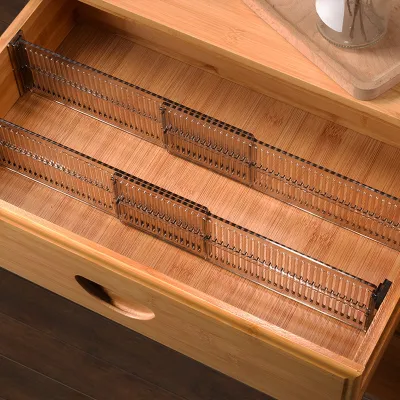
Adjustable drawer dividers rely on movable components or tension mechanisms to alter compartment sizes, whereas fixed dividers feature rigid, pre-set boundaries that remain static once installed. The primary mechanism of adjustable dividers is the spring-loaded tension bar, which features an internal metal spring that exerts outward pressure against the front and back walls of the drawer. Another common adjustable design utilizes sliding tracks or interlocking plastic slats that can be slotted into different grooves along a perimeter frame. These systems allow you to slide the dividing walls left or right, customizing the width of each section on demand.
In contrast, fixed dividers are constructed as single-piece inserts or pre-assembled grids. Common designs include molded acrylic trays with pre-defined compartments, wooden grid inserts with glued or dovetailed joints, and peg-based modular systems where wooden or plastic pegs are inserted into a fixed grid of holes. While peg systems offer some configuration options, they function as fixed boundaries once the pegs are pressed into place, preventing the fluid, tool-free sliding of tension-based models.
Products mentioned in this guide
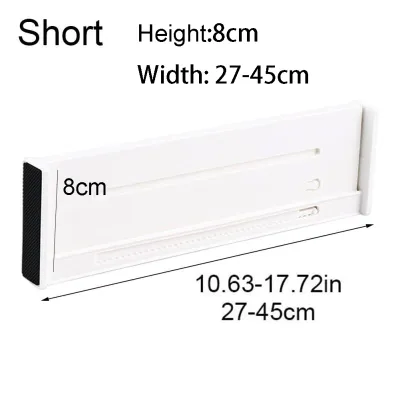
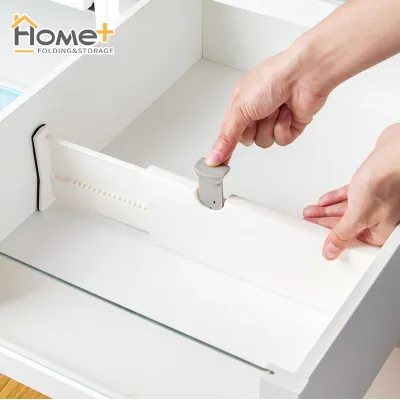
570 Lazada user ratings
This is my 2nd time order this item. it's very good and good quality and practical to use. tgks seller for fast delivery
Put them to good use to organize my t-shirts and singlets and buying more to organize my other clothings in my drawers.
The material is sturdy. This item should help me to organise my undergarments drawer in a better way.
made with very good materials. served its purpose. will buy again.
Solid divided Very sturdy Will get more Thanks seller 👍🏻👍🏻👍🏻👍🏻
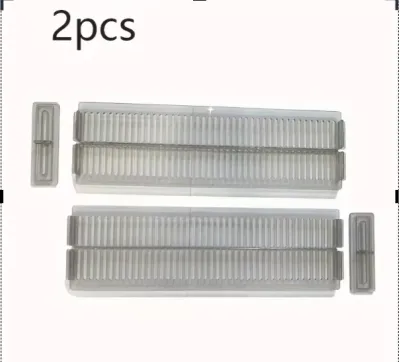
29 Lazada user ratings
🛠️Durability:look fine 👜Portability:light 🎨Design:looks ok 📏Size:erm. ok. yet to use but not sure if it's good. it's a kind of 2pcs which mus…Read full reviewShow less
🛠️Durability:look fine 👜Portability:light 🎨Design:looks ok 📏Size:erm. ok. yet to use but not sure if it's good. it's a kind of 2pcs which must be fixed together inorder to use. but I feel the non slip is weird and funny which had to paste on the drawer and also stopper.
🛠️Durability: Looks ok so far, does the job well 🎨Design: Apt design, can extend as per need , I’ve extended but it can be extended further t…Read full reviewShow less
🛠️Durability: Looks ok so far, does the job well 🎨Design: Apt design, can extend as per need , I’ve extended but it can be extended further too
🛠️Durability:Ok 🎨Design:Ok 📏Size:Ok All is fine except to figure out with the help of instructions to fix it. Hope it works as it claimed.
🛠️Durability:good 👜Portability:good 🎨Design:good 📏Size:perfect perfect size and color, easy to fix. Thank you 😊😊👍👍👍
Item as described, product is useful and functional. Fits well into my wardrobe .Delivery time is good too!
11 Lazada user ratings
I tot there’s 2 sets. The package arrived nicely in a box. It includes 2 large, 2 small pieces with 6 paddings and an instruction manual. Ef…Read full reviewShow less
I tot there’s 2 sets. The package arrived nicely in a box. It includes 2 large, 2 small pieces with 6 paddings and an instruction manual. Effectively it’s 1 set.
Only 1-piece (2plates) set, not as picture shown double set. Not easy to get accurate length adjustment. As per photo of my drawer.
Repeated purchase very good item no complaints happy to buy from Lazada. Item is per listing and is very cheap
Item was as described and delivery was ok. Packaging was properly sealed. Have not tested.
30 Lazada user ratings
some pieces had the last one or two teeth broke off during shipping, but not a big problem from me as the length I required needs the divide…Read full reviewShow less
some pieces had the last one or two teeth broke off during shipping, but not a big problem from me as the length I required needs the dividers to be trimmed.
Received the 2 x 5pcs of drawer partition dividers in good condition. Hope they're as good the reviews I've read.
The product was received in good condition. It helped me to organize my drawer stuff.
Speedy delivery with item arriving neatly packed and as described.
havent use yet

Prices are valid at publication and may change. Please refer to the product page for the latest price.
When evaluating either type for your home office, you should inspect the physical components and material finishes carefully. For adjustable dividers, check the quality of the end-caps; high-density foam or textured silicone pads prevent slipping and protect the drawer’s inner wood from scratches. For fixed dividers, examine the joint construction and material thickness. Thin, vacuum-formed plastic trays can flex or crack under the weight of heavy metal tools, while solid wood or thick acrylic inserts offer a more rigid structure but require precise drawer measurements to fit without rattling.
How do adjustable and fixed dividers accommodate changing office supply inventories?
Adjustable dividers excel at accommodating fluctuating inventories by allowing you to expand or contract compartments as your tools change, while fixed dividers restrict storage to predetermined dimensions that cannot adapt to oversized or irregular items. In a modern home office, your storage needs rarely remain static. You might start the month with standard pens and notebooks, but later acquire bulky tech accessories like external hard drives, coiled USB cables, drawing tablets, or a label maker. Adjustable dividers handle these irregularly shaped items easily because you can slide a tension bar over by a few centimeters to create a custom-sized bay, preventing bulky items from crowding out smaller stationery.

Fixed grids, on the other hand, impose strict spatial limitations. If a fixed wooden insert features compartments that are exactly ten centimeters wide, a twelve-centimeter-wide graphing calculator or a long drafting ruler simply will not fit. This forces you to store larger items diagonally, which wastes valuable drawer space, or relegate them to the top of your desk, defeating the purpose of drawer organization. Fixed grids work best when your inventory consists entirely of standard, small-scale office supplies like paperclips, sticky notes, standard envelopes, and individual pens that fit neatly into small, uniform slots.
To determine if a fixed layout is practical for your workspace, perform an inventory check of your current and anticipated supplies. Lay out all your office tools on a flat surface and measure their maximum width, length, and height. If more than a third of your items are oversized, irregularly shaped, or likely to be replaced by different devices in the future, a fixed grid will likely lead to frustration. If your inventory is highly standardized and unlikely to change, a fixed grid provides a dedicated, permanent home for every single item, making it easier to spot when a specific tool is missing.
Which drawer divider configuration provides better stability during daily use?
Fixed dividers generally offer more reliable stability because their interlocking joints or single-piece molded structures prevent shifting, whereas adjustable dividers can slip or lose tension if the drawer is opened forcefully or subjected to heavy loads. The stability of an adjustable divider depends entirely on the friction between its end-caps and the drawer walls. Over time, repeated opening and closing of the drawer—especially if done with force—can cause spring-loaded dividers to migrate, tilt, or pop out of alignment. This risk increases if the drawer walls are made of smooth, polished laminate or slick plastic, which offer very little grip for the divider’s rubber or foam pads.
Fixed inserts maintain their position through physical containment. A full-drawer fixed insert is sized to match the exact interior dimensions of the drawer, meaning it has nowhere to slide. Even smaller, independent fixed trays tend to stay in place because their solid, multi-compartment structure distributes weight evenly across the drawer floor. To prevent any minor shifting or rattling of fixed inserts, you can place a non-slip silicone liner beneath the tray, which dampens sound and anchors the organizer securely.
Before choosing either option, you must verify your specific drawer dimensions, base materials, and weight limits. Measure the thickness and material of your drawer walls; thin plywood or fiberboard drawer sides can bow outward under the pressure of strong spring-loaded dividers, which not only causes the dividers to lose tension and slip but can also damage the drawer joints over time. Additionally, consider the weight of the dividers themselves. Solid wood fixed grids add significant weight to the drawer, so you must check that your drawer slides are rated to handle both the weight of the organizer and your office supplies without sagging or sticking.
How do cleaning and maintenance requirements differ between the two divider types?
Cleaning adjustable dividers requires detailed attention to tracks, springs, and joint crevices where dust and graphite shavings accumulate, whereas fixed inserts can often be lifted out entirely for a quick wipe-down. In a home office, drawers naturally collect small debris, including pencil shavings, paper dust, eraser crumbs, and ink smudges. Adjustable dividers with sliding tracks or interlocking slots present numerous small crevices where this debris can become trapped. Cleaning these systems requires removing the dividers, which can disrupt your carefully planned layout, and using a small brush or vacuum attachment to clear out the tracks and spring mechanisms.
Fixed wooden or acrylic inserts offer a different maintenance profile depending on how they are mounted. Molded acrylic or plastic trays are exceptionally easy to maintain; you can lift the entire unit out of the drawer, empty the contents, and wash it in the sink with mild soap and warm water. Once dry, the tray slides back into place in one motion. Fixed wooden grids, however, require more care. Because wood is sensitive to moisture, you should avoid washing wooden inserts; instead, wipe them down with a dry or slightly damp microfiber cloth. If the wooden grid is glued directly to the drawer frame, you must clean it in place, which requires reaching into tight corners with a cloth or a soft-bristled brush.
Routine maintenance checks are essential to ensure the long-term usability of both options. For adjustable dividers, periodically check the tension of the springs and inspect the end-caps for signs of wear, dry rot, or sticky residue that could damage your drawer’s finish. For fixed dividers, inspect the joints for any signs of splitting or glue failure, especially if your home office is located in a high-humidity environment where wood naturally expands and contracts.
How can you decide which drawer divider is right for your specific workspace?
Deciding on the right drawer divider configuration requires matching your drawer’s physical dimensions with the specific dimensions and variability of your daily office supplies. To make an informed choice, follow a systematic approach to evaluate your workspace and storage habits.
First, complete a precise measurement of your drawer. Use a metal measuring tape to record the internal width, depth (front to back), and height of the drawer. Be sure to measure at multiple points, as older wooden drawers can warp slightly, resulting in narrower dimensions at the back than at the front. Note any internal obstacles, such as protruding screw heads, drawer slide hardware, or decorative bevels, which can prevent a fixed insert from sitting flat or stop an adjustable divider from making full contact with the wall.
Second, categorize your office supplies into standard and irregular categories. Standard items include pens, pencils, highlighters, sticky notes, and paperclips, which fit neatly into the small, uniform compartments of a fixed grid. Irregular items include laptop chargers, mouse devices, external hard drives, tape dispensers, and scissors, which require larger, more flexible zones. If your inventory is dominated by irregular tech gear, adjustable dividers are the practical choice. If your drawer is dedicated purely to writing instruments and small stationery, a fixed grid is highly efficient.
Finally, consider a hybrid approach if your storage needs are split. You can place a small, fixed acrylic tray at the front of the drawer to hold tiny items like paperclips and staples, while using one or two adjustable tension dividers at the back to secure larger items like notebooks, tablets, or reference books. This combination gives you the structural stability of a fixed organizer for small items alongside the adaptable zoning of adjustable dividers for larger, changing equipment.

Community discussion
Share your experience or ask a question. Comments are reviewed before publication.