
Finding the right balance at your desk often requires adjusting more than just your chair height. When you raise your seat to align your elbows comfortably with your desk surface, your feet may no longer rest flat on the floor. This misalignment can lead to poor posture, restricted blood circulation, and lower back strain over long working hours. An ergonomic footrest serves as the essential bridge to restore proper alignment, ensuring your knees remain at a comfortable 90-degree angle while keeping your thighs parallel to the floor.
Choosing between an adjustable and a fixed desk footrest depends primarily on whether your workspace is a dedicated, static setup or a dynamic, shared environment. Adjustable models offer customizable heights and tilting angles to accommodate different users, changing footwear, or shifting postures throughout the day. In contrast, fixed footrests provide a solid, single-piece platform that delivers reliable stability and simplicity for those who have already measured their ideal setup. Understanding how these two designs interact with your chair, desk, and daily habits is key to selecting the accessory that will best support your physical well-being.
Key Differences Between Adjustable and Fixed Footrests
To make an informed choice, it is helpful to examine the structural differences and mechanical designs of these two categories. Adjustable footrests are engineered with moving parts, allowing users to alter the height, angle, or both. These models often feature telescopic legs, peg-and-groove channels, or dial-operated locking mechanisms that let you raise or lower the platform. Many also incorporate a pivoting platform that tilts forward and backward, encouraging subtle foot movement while sitting. This mechanical complexity makes them highly versatile, though it also means they have more components that require occasional adjustment.
Products mentioned in this guide
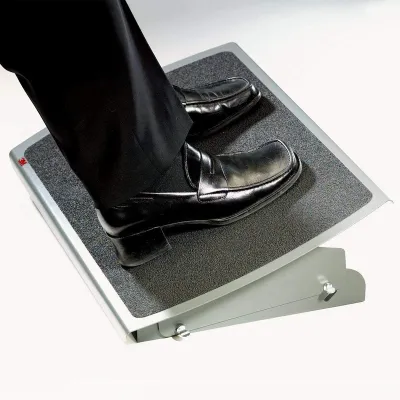
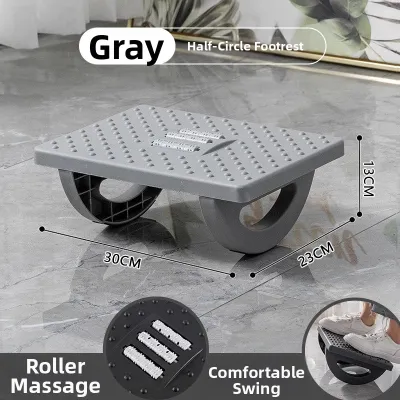
115 Lazada user ratings
It’s a pretty good deal overall, just had to tie it down since it came a bit loose, but the value for the price is still quite nice.
It feels really smooth to the touch, doesn't irritate me, and I've even kicked the habit of crossing my legs. Hehe 😁
Getting ready to buy another one, it's been great for the past two days, especially friendly for shorter people.
It works really well. It helps me stop crossing my legs at work while also providing a nice foot massage.
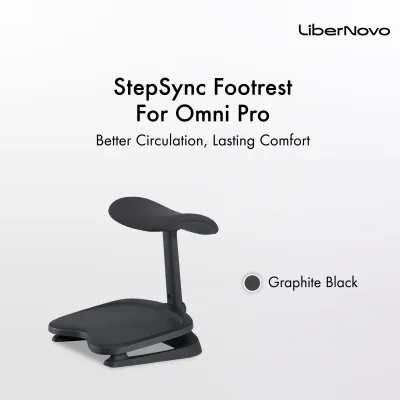
2 Lazada user ratings
Definitely a must have for any chairs as table height may not always be optimal. Great to use too when lay back flat. Comfort:Great comfort …Read full reviewShow less
Definitely a must have for any chairs as table height may not always be optimal. Great to use too when lay back flat. Comfort:Great comfort and pairs perfect with the omni pro Adjustability:Available to different height of users
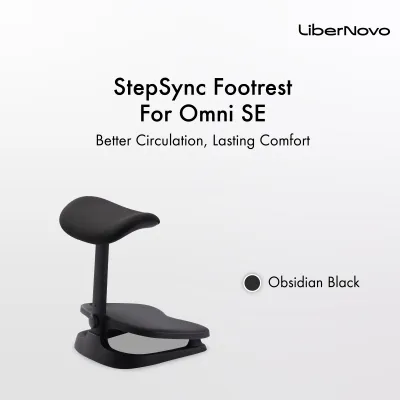
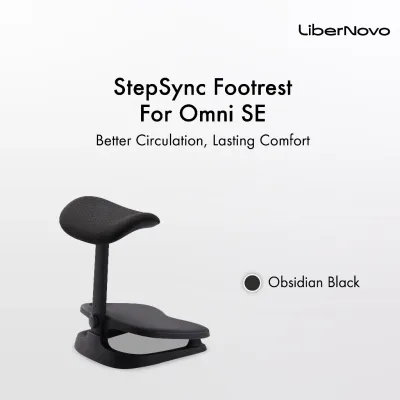
Prices are valid at publication and may change. Please refer to the product page for the latest price.
Fixed footrests, on the other hand, rely on a solid, single-piece construction. They are typically shaped as a wedge, dome, or flat angled platform made from materials like wood, heavy-duty plastic, or firm high-density foam. Because they lack moving parts, there are no dials to turn, hinges to wear out, or joints to squeak. They provide a completely stable, unyielding surface that remains at a constant height and slope. This simplicity makes them exceptionally durable and virtually maintenance-free, though it limits their use to a single, predetermined height profile.
The primary ergonomic goal of any footrest is to support the weight of your legs, thereby reducing pressure on the undersides of your thighs. When your feet dangle or press unevenly against the floor, the blood vessels and nerves in your legs can become compressed, leading to numbness or fatigue. By elevating your feet to a height that allows your knees to bend at approximately 90 degrees, you distribute your body weight evenly across your seat cushion. Whether you achieve this through a highly customizable adjustable model or a precisely sized fixed wedge, the result is a significant reduction in spinal pressure and improved overall comfort.
Comparing Height Range and Tilt Mechanisms
The ability to customize height is the defining feature of adjustable footrests, making them highly adaptable to various physical statures and furniture configurations. Many adjustable models offer a height range spanning several centimeters, allowing you to fine-tune the distance between your feet and the floor. This is particularly beneficial if you wear different types of footwear throughout the week, such as thick-soled shoes on office days and flat slippers or bare feet when working from home. By adjusting the telescopic legs or shifting the platform to a different slot, you can maintain consistent knee alignment regardless of your shoes.

Tilt mechanisms add another layer of customization to adjustable footrests, offering either a locking angle or a free-floating rocking motion. A locking tilt allows you to set the platform at a specific slope that matches the natural angle of your ankles when sitting. A free-floating or rocking tilt, conversely, lets the platform move dynamically as you shift your weight. This rocking action encourages continuous, low-impact movement in your ankles and calves, which helps stimulate blood flow and prevents your joints from stiffening during long, sedentary tasks.
Fixed footrests offer no such mechanical adjustments, presenting a static slope that is permanently set during manufacturing. While this means you cannot alter the angle, many fixed wedges are designed with a gentle, ergonomically tested incline—often between 10 and 20 degrees—that naturally accommodates a relaxed foot position. To determine if a fixed model will work for you, it is crucial to measure your current setup. Sit in your preferred working position with your chair adjusted to the correct desk height, and measure the gap between your feet and the floor. If this gap matches the height of a standard fixed wedge, and you do not require a dynamic rocking motion, a fixed model can provide a highly reliable and stable solution.
Evaluating Portability and Desk-Chair Compatibility
Before purchasing any footrest, you must evaluate how its physical dimensions and weight will fit into your actual workspace. Under-desk clearance is a critical factor, especially if your desk features a low-hanging drawer, a structural crossbar, or a cable management tray. Adjustable footrests, due to their mechanical bases and telescopic legs, often have a larger overall footprint and may stand taller than simple fixed models. You must ensure that raising the footrest will not cause your knees to knock against the underside of your desk or any structural supports.
Portability is another major consideration, particularly for hybrid workers in Singapore who split their time between a home office and a corporate headquarters. If you need to transport your footrest in a backpack or commuter bag, a heavy, mechanical adjustable model is rarely practical. Fixed footrests made of high-density foam or lightweight plastics are far easier to carry, and some foam models even feature integrated handles or removable, washable covers. If your routine involves hot-desking or frequent travel, a lightweight, low-profile fixed wedge is often the most convenient choice.
You must also consider how the footrest interacts with your office chair’s base and casters. Five-star chair bases with wide caster spreads can sometimes collide with wide, rectangular footrests, preventing you from pulling your chair close enough to the desk. Adjustable models with wide, sprawling metal or plastic frames require careful placement to avoid blocking the movement of your chair’s wheels. Measuring the open space between your chair’s front casters when you are tucked into your desk will help you select a footrest footprint that sits comfortably within that zone without causing constant physical interference.
Matching Footrest Types to Your Work Habits
Your daily work habits and physical tendencies should heavily influence which footrest type you choose. If you are an active sitter—someone who constantly fidgets, shifts positions, or stretches their legs while working—an adjustable footrest with a rocking mechanism is highly suitable. The ability to rock the platform back and forth allows you to flex your ankles and engage your calf muscles without interrupting your workflow. This subtle movement can help combat the physical lethargy associated with prolonged sitting, keeping you more alert and comfortable throughout the day.
Conversely, if your work requires intense, static focus and absolute stability, a firm, fixed footrest may be more appropriate. Draftspeople, digital illustrators, or anyone performing precise, detail-oriented tasks often prefer a solid, unyielding surface to anchor their lower body. A fixed wooden or heavy plastic wedge provides a grounded foundation, ensuring that your feet do not slip or tilt unexpectedly when you lean forward to focus on your screen or tablet. This solid grounding can help maintain a stable core posture, reducing fatigue in your upper body and shoulders.
Shared workspaces present another scenario where the choice is clear. If your home office desk is shared with a partner, or if you are setting up a hot-desking station in a corporate office, an adjustable footrest is practically essential. Because people of different heights require different levels of lift to achieve proper ergonomic alignment, a single fixed footrest will inevitably be too high for some and too low for others. An adjustable model allows each user to quickly customize the height and tilt to their personal comfort level at the start of their shift, ensuring everyone receives proper ergonomic support.
Decision Framework: Choose Adjustable or Fixed?
To finalize your decision, weigh your specific workspace constraints, physical needs, and daily routines against the unique characteristics of each footrest type.
Choose an adjustable footrest if you share your desk with other family members or colleagues, or if you frequently change your footwear. It is also the ideal choice if you suffer from poor circulation or joint stiffness and want a rocking mechanism to encourage movement. Additionally, if you are still fine-tuning your ergonomic setup and need the flexibility to experiment with different heights and angles, the versatility of an adjustable model is highly beneficial.
Choose a fixed footrest if you have a dedicated, single-user workstation where you have already measured and verified your ideal height requirements. It is also highly suitable if you prefer a minimalist, low-maintenance aesthetic with no moving parts to squeak or wear out over time. If portability is a priority for hybrid commuting, or if you simply prefer a soft, cushioned surface like high-density foam that allows you to work comfortably without shoes, a fixed model is the practical choice.
Regardless of which type you select, always verify your measurements before making a purchase. Use a tape measure to check the clearance under your desk, the distance between your chair’s front casters, and the exact gap between your feet and the floor when sitting at your correct desk height. Taking these physical dimensions into account ensures that your chosen footrest will integrate seamlessly into your workspace, providing the ergonomic support needed for a comfortable and productive workday.
Frequently Asked Questions (FAQ)
Can I use a fixed footrest with a sit-stand desk?
Yes, you can use a fixed footrest with a sit-stand desk, but its utility is limited to when you are in the seated position. When you transition your desk to a standing height, the footrest must remain on the floor, as standing on a sloped or cushioned footrest can compromise your balance and posture. Because fixed footrests are generally lightweight and lack complex mechanical bases, they are easy to slide or kick aside with your foot when you stand up. This prevents them from becoming a tripping hazard around your workspace while keeping them within easy reach for when you lower your desk back down to sit.
How do I measure the correct footrest height for my chair?
To measure the correct footrest height, start by adjusting your office chair so that your arms and shoulders are ergonomically aligned with your desk. Your elbows should be bent at roughly a 90-degree angle, resting comfortably on the armrests or desk surface without slouching or shrugging. Once your upper body is correctly positioned, look at your feet; if they are dangling or your thighs are pressing hard against the front edge of the seat, you need a footrest. Sit back fully in your chair with your back supported, and use a ruler or tape measure to find the vertical distance from the sole of your foot to the floor. This measurement represents the ideal height or lift your footrest should provide to keep your knees at a comfortable 90-degree angle.

Community discussion
Share your experience or ask a question. Comments are reviewed before publication.