
When organizing a closet or entryway, choosing how to mount your shoe hooks is the difference between a tidy space and a pile of footwear on the floor. Screw-mounted shoe hooks offer the most reliable, long-term hold for daily use, especially when dealing with heavy footwear or high-traffic areas. However, high-quality adhesive shoe hooks provide a viable, damage-free alternative for lightweight shoes on smooth, non-porous surfaces. The ideal choice ultimately depends on your wall material, shoe types, and whether you rent or own your home.
Understanding the Mounting Mechanics
To understand why one mounting method outlasts the other, it helps to look at how they distribute physical stress. Every shoe hook on your wall is constantly fighting gravity, but the way they transfer that load determines their lifespan.
Adhesive shoe hooks rely entirely on surface-level chemical bonding. The adhesive strip creates a microscopic connection with the outermost layer of your wall. This bond is highly effective at handling shear force, which is the downward pull parallel to the wall surface. However, adhesive bonds are weak against peel force—the outward, perpendicular tension that occurs when you pull a shoe off the hook. Over time, repeated peeling forces degrade the adhesive molecules, leading to sudden failure.
Products mentioned in this guide
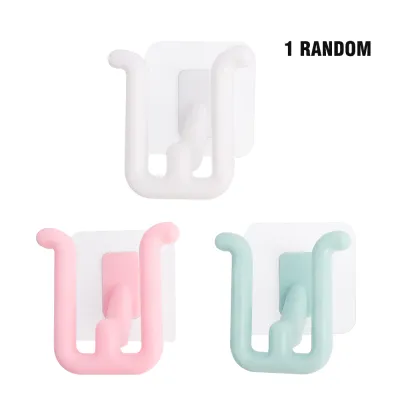
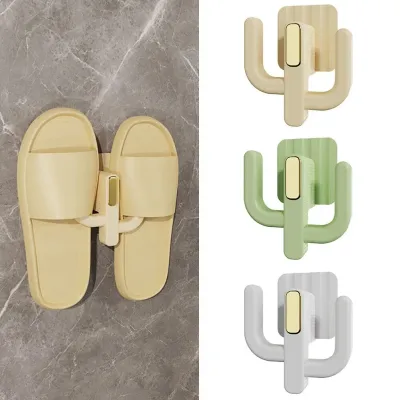
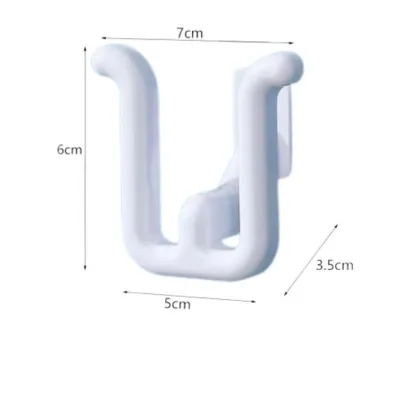
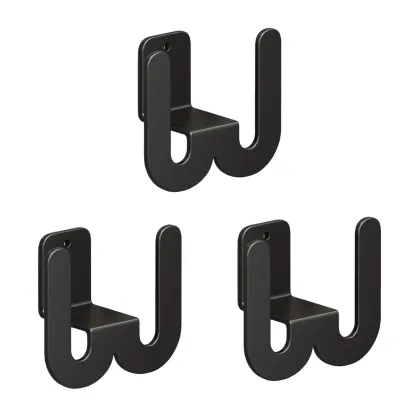

Prices are valid at publication and may change. Please refer to the product page for the latest price.
Screw-mounted shoe hooks utilize mechanical interlock. Instead of clinging to the surface, the screw penetrates deep into the wall substrate, anchoring itself into the drywall, plaster, or wooden studs. The physical threads of the screw grip the surrounding material, distributing both downward shear forces and outward peel forces deep within the wall structure. This mechanical connection does not degrade under normal physical tension, making it highly resilient against the daily tugging and pulling of busy household members.
Every time you grab a pair of sneakers or hang up a heavy set of boots, you introduce dynamic load variations. A static weight rating only tells part of the story; the sudden impact of dropping a shoe onto a hook or yank-removing it creates a momentary spike in force. Screws absorb these dynamic spikes easily because the physical wall material resists the movement. Adhesives absorb these shocks by stretching slightly. If the dynamic force exceeds the elastic limit of the adhesive, the bond fails instantly, sending your footwear to the floor.
Evaluating Weight Capacity and Load Limits
When planning your closet organization, relying solely on the weight limit printed on a product package can lead to messy failures. Manufacturer weight ratings are established under perfect laboratory conditions—usually on pristine, completely flat surfaces at room temperature. To ensure your shoe hooks hold up under real-world conditions, always apply a practical safety margin. A good rule of thumb is to limit the actual load to 50% or 60% of the manufacturer’s stated maximum capacity.

To match your footwear with the right hook strength, categorize your shoe collection by relative weight. Lightweight shoes, such as canvas slip-ons, sandals, and running flats, typically weigh under 0.5 kg per pair. These are excellent candidates for high-quality adhesive hooks. Medium-weight footwear, including leather sneakers, standard heels, and casual loafers, generally ranges from 0.5 kg to 1.2 kg. While some heavy-duty adhesive hooks claim to support this range, screw-mounted options offer much greater peace of mind.
Heavy footwear, such as leather riding boots, steel-toed work boots, and thick-soled platform shoes, easily exceeds 1.2 kg and can sometimes weigh over 2 kg per pair. For these items, screw-mounted hooks are the only reliable choice. Hanging heavy boots on adhesive hooks almost guarantees eventual failure, as the constant high tension accelerates the degradation of the chemical bond.
Before a hook falls off the wall completely, it usually exhibits clear warning signs of mounting failure. For adhesive hooks, look closely for creeping, where the hook slowly slides downward, or a visible gap forming at the top of the adhesive strip. For screw-mounted hooks, warning signs include a slight wobble when touched, a widening gap between the hook base and the wall, or fine drywall dust accumulating on the floor directly beneath the mounting site.
Surface Compatibility and Damage Risks
Your closet wall material determines which mounting method will succeed. Adhesive hooks require smooth, non-porous surfaces to establish a full chemical bond. Ideal surfaces include glazed ceramic tiles, smooth glass, sealed metal panels, polished wood veneer, and flat plastic laminates. If your closet interior is made of melamine-faced particleboard or smooth, painted MDF, adhesive hooks can perform exceptionally well.
Conversely, avoid using adhesive hooks on textured plaster, bare brick, concrete, wallpaper, or freshly painted walls. Paint can take up to a month to fully cure. Applying an adhesive hook to semi-cured paint will bond the hook to the paint layer rather than the wall, causing the paint to peel off under the weight of a shoe.
Screw-mounted hooks are far more versatile but require specific installation techniques. Mounting directly into a wooden wall stud provides the ultimate level of security. When studs are not available, you must use hollow wall anchors, such as plastic expansion plugs or toggle bolts, to distribute the weight across the drywall. For solid concrete or brick walls, a masonry drill bit is required to create a pilot hole before inserting a plastic wall plug.
The risk of surface damage is a major consideration, especially for renters. Removing an adhesive hook incorrectly can tear away large patches of drywall paper and paint. To minimize this risk, stretch the adhesive strip slowly and parallel to the wall. Screw-mounted hooks inevitably leave physical holes. However, these holes are clean, localized, and relatively easy to fill with a small amount of spackling compound and a touch-up coat of paint when moving out.
Installation Effort and Long-Term Maintenance
Achieving a long-lasting hold with adhesive shoe hooks requires meticulous surface preparation. Simply wiping the wall with a dry cloth is rarely sufficient. Clean the mounting area thoroughly with isopropyl rubbing alcohol to remove invisible oils, dust, and residues. Avoid using household glass cleaners or detergent sprays, as they often leave behind a thin, slippery film that prevents the adhesive from bonding. Once the surface is dry, press the adhesive strip firmly against the wall for at least 30 seconds to activate the pressure-sensitive glue.
The most critical step in adhesive installation is the curing time. Even if the hook feels secure immediately, the chemical bond requires time to reach its full strength. Most manufacturers recommend waiting a full 12 to 24 hours before hanging any items. Loading the hook too early disrupts the chemical cross-linking process, significantly reducing its ultimate weight capacity.
Installing screw-mounted hooks requires a power drill, drill bits matched to your wall anchors, a level, a pencil, and a manual screwdriver. While this process takes longer than peeling a backing strip, the physical installation is complete and ready to hold weight immediately—no curing time required.
Long-term maintenance is essential for both systems to prevent unexpected failures. For adhesive hooks, check every few months for creeping or lifting edges, especially in humid entryways. For screw-mounted hooks, check for any slight wobbling or loosening of the screws caused by daily use. A quick turn with a screwdriver can tighten a loose anchor before it damages the surrounding drywall.
Decision Framework: Choosing the Right Shoe Hook
To make the final decision between adhesive and screw-mounted shoe hooks, evaluate your specific living situation, shoe collection, and wall types.
Choose adhesive shoe hooks if you meet the following conditions:
- You are currently renting your home and your lease strictly prohibits drilling holes in the walls.
- Your shoe collection consists primarily of lightweight footwear, such as sandals, canvas flats, and running shoes.
- You are mounting the hooks onto smooth, non-porous surfaces like melamine closet panels, glass, or glazed tiles.
- You want a quick, tool-free installation process and are willing to wait for the adhesive to cure before use.
Choose screw-mounted shoe hooks if you meet these conditions:
- You own your home or have permission to make permanent modifications to the walls.
- You need to store heavy footwear, such as leather boots, heavy sneakers, or work boots.
- Your mounting surface is standard drywall, plaster, or solid masonry.
- You expect high-frequency, daily use where family members will be pulling shoes off the hooks quickly.
- You want an immediate, high-capacity storage solution without waiting for adhesives to dry.
Before purchasing any hardware, always verify your wall material. Tap the wall gently; a hollow sound usually indicates drywall, while a solid, dull thud suggests concrete or brick. If you notice existing paint peeling or cracking, avoid adhesives entirely, as the bond will fail along with the paint. Finally, if you plan to hang wet, muddy, or damp shoes, opt for screw-mounted hooks, as moisture can rapidly degrade standard adhesive backings.
Frequently Asked Questions (FAQ)
Can adhesive shoe hooks safely hold heavy boots?
Adhesive shoe hooks are generally not recommended for heavy boots. Heavy footwear exerts a continuous, high downward shear force combined with a strong outward peel force when the boots are placed on or removed from the hook. This constant tension accelerates the degradation of the chemical adhesive bond, leading to sudden failure. If you must use adhesive hooks for heavier items, always check the manufacturer’s weight limits carefully, apply a generous safety margin, and choose heavy-duty strips designed specifically for high-load applications. For absolute reliability, screw-mounted hooks are the far safer choice for boots.
Do screw-mounted hooks always require wall studs?
No, screw-mounted hooks do not always require wall studs, but they do require proper support. If you are mounting hooks into hollow drywall without a stud behind it, you must use appropriate hollow wall anchors, such as plastic expansion anchors, self-drilling drywall anchors, or toggle bolts. These anchors expand behind the drywall sheet, distributing the weight over a larger surface area and preventing the screw from pulling straight out. Screwing directly into bare drywall without an anchor is highly unstable and will quickly result in the hook pulling loose and damaging your wall.
Community discussion
Share your experience or ask a question. Comments are reviewed before publication.