
To choose between acrylic and plastic shoe boxes for long-term storage, you must balance your desire for visual display against your budget and storage volume. Acrylic offers glass-like clarity and a rigid structure, making it the ideal choice for showcasing premium footwear in low-impact environments. However, standard plastics like polypropylene (PP) or polyethylene terephthalate (PET) provide a more flexible, impact-resistant, and cost-effective solution for high-volume stacking and daily handling.
Beyond aesthetics, environmental factors in your home will dictate the best choice. In humid climates, such as Singapore, the presence of adequate ventilation in the box design is far more critical for shoe preservation than the base material itself. Additionally, if your storage area is exposed to natural light, you must verify the material’s UV resistance to prevent yellowing and degradation over time.
Decoding the Labels: What "Acrylic" and "Plastic" Actually Mean
Navigating product listings on an ecommerce platform can be confusing, as marketing terms often blur the lines between different materials. Understanding the chemical properties behind these labels allows you to make an informed decision based on actual material characteristics rather than promotional claims.
Products mentioned in this guide
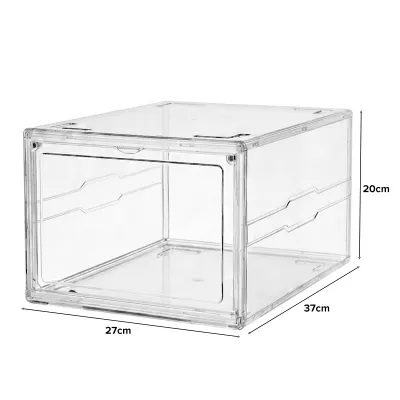
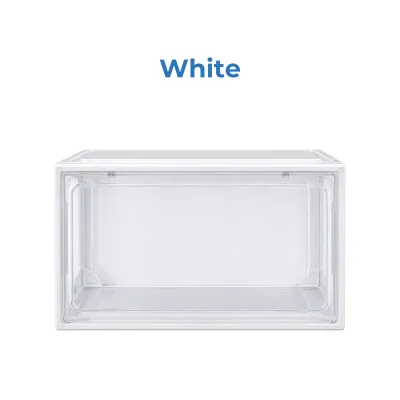
![[2021 NEW] Premium Ultimate Big Capacity Full Acrylic Stackable Magnetic Side Open Display Sneakers Shoes Boxes Sneaker Storage Shoe Rack](https://img.lazcdn.com/g/p/42ac334d1dc8510716de63969699994d.jpg_400x400q80.jpg_.webp)
![[SG STOCK] Ultra Clear High Capacity Shoe Box Stackable Magnetic Acrylic Display Storage](https://img.lazcdn.com/g/p/edf83a690b259345d9b59c0c97e18f3e.jpg_400x400q80.jpg_.webp)
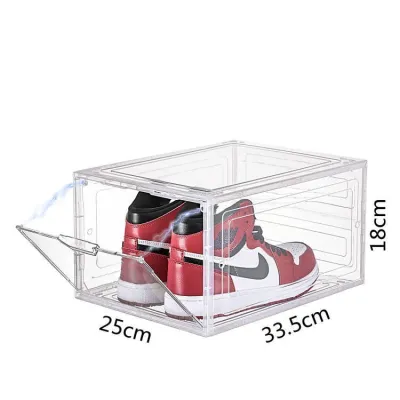
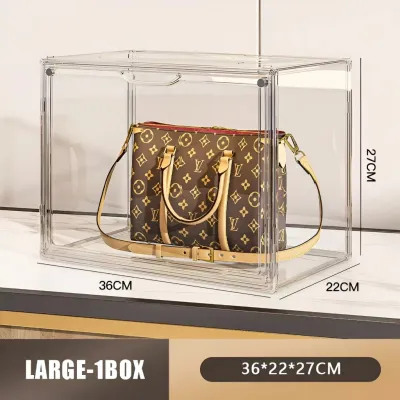
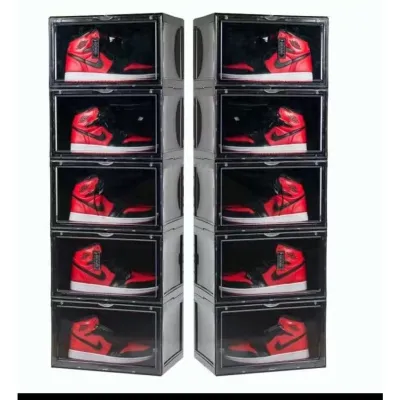
![[Set of 2] Premium Full Acrylic Magnetic Transparent Big Bag Popmart Figurine Shoes Sneaker Case Display Box Cosmetic Storage Organizer](https://img.lazcdn.com/g/p/973fea82ad0b8b4949d2cf4a32785cf9.jpg_400x400q80.jpg_.webp)
Prices are valid at publication and may change. Please refer to the product page for the latest price.
Acrylic is scientifically known as Polymethyl Methacrylate (PMMA). It is a synthetic polymer characterized by its exceptional optical clarity, high tensile strength, and rigid structure. On product labels, manufacturers may refer to it as PMMA, plexiglass, or simply acrylic. When you handle an acrylic box, it feels solid and heavy, mimicking the premium look of glass without the associated fragility.
In contrast, “plastic” is a broad category that usually refers to thermoplastic polymers like Polypropylene (PP), Polyethylene Terephthalate (PET), or Polyvinyl Chloride (PVC) in shoe box construction. PP is highly flexible, lightweight, and resistant to fatigue, making it the standard material for collapsible, folding shoe boxes. PET is clearer than PP and is often used for rigid front panels or lightweight clear bodies. PVC is sometimes used in budget options but is generally less environmentally friendly and can release trace compounds over time.
To confirm what you are actually buying, always inspect the manufacturer’s specifications or the product’s recycling code. Acrylic typically carries the resin identification code 7 (Other), while PP is marked with code 5, and PET with code 1. Checking these details ensures you do not pay premium acrylic prices for a box made of standard molded polystyrene or thin PET.
Long-Term Clarity and Durability: What to Verify Before Buying
Long-term visual appeal is a primary reason collectors invest in clear storage, but different materials respond differently to daily wear and environmental exposure. Before purchasing, you must evaluate how well each material maintains its appearance under your specific storage conditions.

Acrylic is highly susceptible to surface scratches due to its rigid, brittle nature. Even minor friction from sliding boxes against one another or dusting with a dry cloth can create micro-scratches that dull the surface over time. When browsing options, check user reviews for mentions of scratch resistance or look for manufacturers that specify a protective anti-scratch coating.
Standard plastics like PP are much softer and more flexible, meaning they tend to bend rather than scratch deeply under light pressure. However, thin plastic sheets can crease or cloud if bent repeatedly. PET offers a middle ground, providing decent clarity with slightly better impact flexibility than acrylic, though it still scratches more easily than flexible PP.
Yellowing is another major concern for long-term storage, especially in rooms with natural light. Untreated plastics and acrylics degrade when exposed to ultraviolet (UV) radiation, leading to a cloudy, yellowed appearance. To protect your investment, look for product descriptions that explicitly state the material is UV-stabilized or UV-resistant. If this specification is missing, plan to keep your shoe boxes inside a dark closet or away from direct window light.
Maintaining clarity also requires proper cleaning habits. Avoid using harsh chemical solvents, glass cleaners, or alcohol-based sprays on acrylic, as these can cause “crazing”—a network of fine hairline cracks inside the material. Instead, verify that you can clean the boxes using only a soft microfiber cloth dampened with mild soapy water.
Structural Integrity: Evaluating Stackability and Shoe Protection
When storing dozens of pairs of shoes, vertical stacking is essential to maximize floor or closet space. The structural integrity of your boxes determines whether your stack remains stable or collapses under its own weight.
Acrylic boxes feature thick, rigid walls that do not bow or flex under load. This rigidity allows you to stack them several units high without worrying about the bottom boxes warping or crushing the shoes inside. When evaluating acrylic options, check the manufacturer’s specified wall thickness; thicker panels (typically 3mm or more) offer superior load capacity and stability.
Standard plastic boxes, particularly those shipped flat and assembled by folding, rely on their frame design for structural support. While PP is highly durable and virtually unbreakable, a stack of thin-walled plastic boxes can sway or lean if not properly supported. To ensure safety, look for plastic boxes that feature reinforced plastic frames, rigid front doors, and secure interlocking mechanisms.
Interlocking designs are critical for both materials. Check for molded grooves, pegs, or clips that lock the top of one box into the bottom of another. These physical connections prevent the boxes from sliding forward or sideways when you open the doors to retrieve your shoes.
Regardless of the material’s strength, moisture control is the single most important factor for preserving shoes over time. In warm, humid environments, sealed containers trap ambient moisture, creating a breeding ground for mold and mildew that can ruin leather, suede, and canvas. You must verify that the boxes—whether acrylic or plastic—feature built-in ventilation holes or rear vents to promote continuous airflow.
Practical Trade-Offs: Cost, Assembly, and Space Efficiency
Choosing the right shoe box also involves practical considerations regarding your budget, assembly effort, and what happens to the boxes when they are not in use.
Price is often the deciding factor for large collections. Acrylic shoe boxes are premium products, typically ranging from S$15 to S$40 per unit in the local market, depending on the size and brand. If you have fifty pairs of shoes to store, outfitting your entire closet in acrylic represents a significant financial investment. Standard plastic boxes are far more economical, often priced between S$3 and S$10 per unit, making them the practical choice for high-volume storage.
Assembly requirements vary widely between the two types. Acrylic boxes usually arrive fully assembled or require simple slot-in assembly of rigid panels. Once put together, they cannot be easily disassembled or folded down. This means they occupy the same amount of physical space even when empty, which can be a drawback if you move frequently or change your closet layout.
Many standard plastic boxes are designed to ship flat-packed. You assemble them by folding the flexible plastic body and snapping the rigid front and back frames into place. While this assembly process can be time-consuming for large quantities, it offers excellent space efficiency. If you temporarily do not need the boxes, you can collapse them flat and store them in a drawer or under the bed.
The Final Verdict: How to Choose the Right Box for Your Closet
To make your final decision, assess your specific storage goals, the size of your collection, and the physical constraints of your closet space.
Choose Acrylic if…
- You want to showcase a curated collection of premium sneakers, designer heels, or rare footwear where visual display is the primary goal.
- You plan to stack boxes in highly visible areas of your home, such as an entryway or a dedicated display wall.
- You prefer a heavy, rigid feel and do not mind paying a premium price per unit.
- You can place the display away from direct sunlight and commit to gentle cleaning methods.
Choose Standard Plastic if…
- You need to organize a large volume of everyday footwear on a budget.
- You require collapsible storage that can be easily packed away or moved when empty.
- Your storage setup is hidden inside a dark wardrobe or closet where absolute optical clarity is not a priority.
- You want lightweight, impact-resistant boxes that can withstand frequent handling by children or busy family members.
Verify first if…
- The box dimensions accommodate your specific shoe sizes. Measure your tallest high heels or high-top boots and compare them to the internal height of the box.
- Your closet shelves have sufficient depth. Standard shoe boxes can range from 30cm to over 40cm in depth; ensure your wardrobe doors can close completely with the boxes inside.
- The boxes feature adequate ventilation slots to protect sensitive materials like leather from moisture buildup in humid conditions.
Frequently Asked Questions (FAQ)
How do I remove scuff marks from clear shoe boxes?
To clean light scuff marks from clear acrylic or plastic surfaces, start by wiping the area with a clean, dry microfiber cloth to remove loose dust. If the mark persists, apply a small drop of mild dishwashing liquid diluted in warm water to the cloth and gently rub the scuff in a circular motion. Avoid using abrasive sponges, scouring pads, or harsh chemical solvents like acetone or window sprays, as these will permanently cloud the material. If a scratch has penetrated deep into the surface of an acrylic box, it cannot be easily polished out at home; in such cases, it is best to accept the wear to avoid causing further hazy patches around the mark.
Can I store leather shoes in completely sealed plastic or acrylic boxes?
Storing leather shoes in completely sealed, airtight containers is highly discouraged, especially in humid climates. Leather is a natural, porous material that needs to breathe to maintain its structural integrity. Trapping moisture inside an airtight box can lead to mold growth, musty odors, and the deterioration of the leather’s finish. Before storing leather footwear, verify that your chosen boxes have functional ventilation holes or slotted back panels to allow air circulation. Additionally, ensure your shoes are completely dry and clean before placing them inside, and consider adding a small silica gel packet to absorb any residual moisture.
Community discussion
Share your experience or ask a question. Comments are reviewed before publication.