
Finding the right wardrobe 2 door option for a compact HDB bedroom in Singapore requires balancing physical floor space, storage capacity, and the local tropical climate. While custom carpentry offers a seamless fit, mass-market modular options and mid-range design brands provide flexible, cost-effective solutions that do not overwhelm smaller floor plans. The ideal choice depends on your specific bedroom dimensions, layout constraints, and storage habits.
To make an informed decision, you must evaluate how different wardrobe structures interact with your room’s layout and environmental conditions. This guide analyzes the spatial dynamics of HDB bedrooms, provides a step-by-step measurement framework, outlines key material evaluation criteria, and compares the main brand categories available in Singapore.
Why a 2-Door Wardrobe Fits Compact HDB Bedrooms
Modern HDB bedrooms, particularly in newly built BTO flats, present significant spatial challenges. A standard common bedroom typically measures around 9 square metres, while master bedrooms offer slightly more space but must also accommodate larger beds. In these compact environments, a wardrobe 2 door configuration, which usually spans between 80cm and 100cm in width, provides an optimal balance between storage volume and remaining floor space. Opting for a larger 3-door or sliding-door unit often forces awkward bed placements or restricts movement around the room.
Products mentioned in this guide
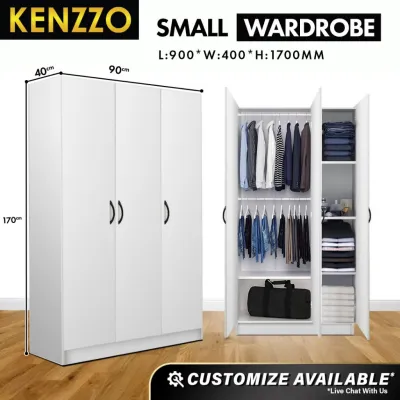
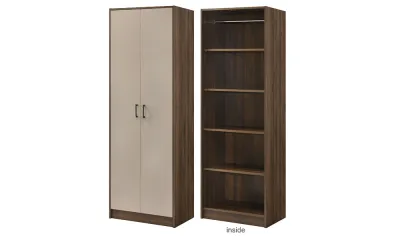
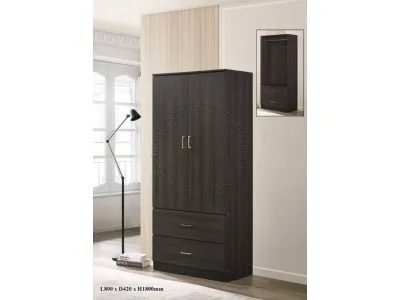
![ASTAR Cheapest SOLID PLYWOOD SOFT CLOSED 2 DOORS WARDROBE CABINET 2 DOOR CUPBOARD WITH ASSEMBLY [SG STOCKS]](https://img.lazcdn.com/g/p/efd8ee451ee07de82971fec42b8c7a1b.jpg_400x400q80.jpg_.webp)
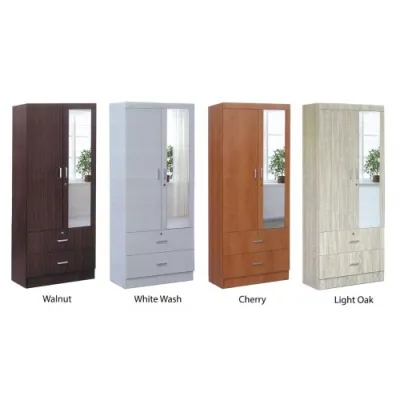
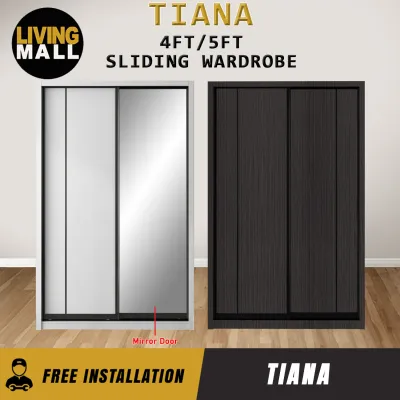
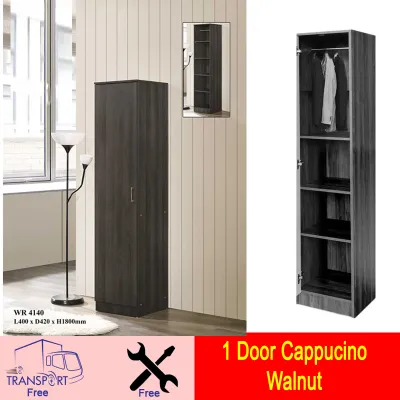
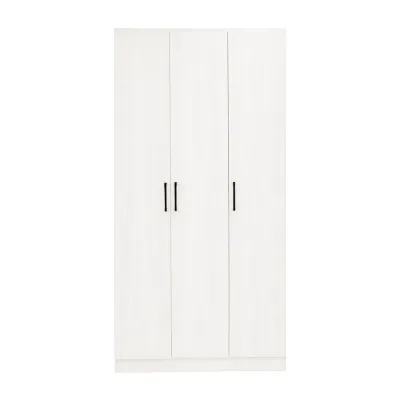
Prices are valid at publication and may change. Please refer to the product page for the latest price.
Visual proportion plays a critical role in how spacious a small bedroom feels. A massive, oversized wardrobe dominates the visual plane, making the ceiling feel lower and the walls more restrictive. A streamlined 2-door unit maintains a balanced visual scale, preserving open wall space and allowing natural light from windows to distribute more evenly across the room. This prevents the cramped, claustrophobic atmosphere often associated with over-furnished bedrooms.
Furthermore, hinged doors on a 2-door wardrobe offer superior accessibility compared to sliding alternatives. Sliding mechanisms inherently block half of the wardrobe’s interior at any given time, which can make organizing and retrieving items frustrating in tight quarters. Hinged doors swing open fully, providing complete visual access to the entire interior simultaneously. This full visibility is invaluable for maximizing and organizing limited storage space efficiently.
Space Planning: Measuring Your HDB Room for a 2-Door Wardrobe
Successful installation begins with precise physical measurements rather than relying on general floor plans. Start by measuring the exact width, depth, and height of the designated wall space using a steel measuring tape. You must account for skirting boards at the base of the wall, which typically project 1.5cm to 2cm and will prevent a standard freestanding wardrobe from sitting completely flush against the wall. Additionally, identify the locations of power sockets, light switches, and internet ports to ensure they remain accessible or are not unsafely covered.

Air-conditioning trunking is another common obstruction in Singapore homes. In many HDB flats, these insulated pipes run along the upper sections of bedroom walls or cut through corners. If your trunking runs along the wall where you plan to place the wardrobe, you must measure the clearance from the ceiling down to the bottom of the trunking. This measurement dictates the maximum height of a freestanding wardrobe or indicates where a custom unit must be modified or boxed around the pipes.
Calculating door swing clearance is vital to ensure the wardrobe does not obstruct daily movement. A standard wardrobe door leaf is approximately 40cm to 50cm wide. You must ensure there is at least this much clear space in front of the wardrobe, plus an additional 50cm of standing space, so you can open the doors and stand comfortably without hitting the bed frame, bedside tables, or bedroom door. If the clearance between the wardrobe face and the bed is less than 90cm, a hinged door may feel restrictive during daily use.
Ceiling heights and overhead fixtures must also be thoroughly checked. Standard HDB ceiling heights hover around 2.6 metres, but false ceilings, decorative cornices, structural beams, or ceiling fans can significantly reduce this clearance. Ensure the wardrobe’s height leaves at least 5cm to 10cm of clearance at the top for assembly if it is built upright. If the wardrobe must be assembled flat on the floor and then raised, calculate the diagonal clearance (the hypotenuse of the wardrobe’s side panel) to ensure it can be stood up without scraping the ceiling.
To prevent costly purchasing mistakes, visualize the wardrobe’s footprint before buying. Use low-tack masking tape to outline the wardrobe’s width and depth directly on your bedroom floor. Leave this tape in place for a few days, walking around the room and opening your bedroom door to test the traffic flow. This physical simulation helps you experience the actual spatial impact of the furniture before it is delivered.
How to Evaluate Wardrobe Brands for Singapore's Climate and Homes
Singapore’s high relative humidity and warm temperatures place unique physical stress on furniture materials. When evaluating wardrobe brands, prioritize material stability and moisture resistance. Standard, untreated particle board or low-grade medium-density fiberboard (MDF) can absorb airborne moisture over time, leading to swelling, warping, and structural sagging. Look for brands that utilize high-density fiberboard (HDF), moisture-resistant MDF, or solid plywood cores.
Pay close attention to the quality of the edge banding and surface finishes. The edges of wardrobe panels are the most vulnerable points for moisture penetration. High-quality laser or polyurethane (PUR) edge banding seals the core material completely, preventing humid air from entering. Melamine or high-pressure laminate (HPL) surfaces offer excellent moisture barriers and are easy to wipe clean, whereas raw or poorly veneered surfaces are more susceptible to moisture damage and mould growth.
Internal layout flexibility is essential for maximizing a compact 2-door wardrobe. Evaluate whether the brand offers adjustable shelving systems with closely spaced peg holes, allowing you to reconfigure shelf heights as your storage needs evolve. Look for modular drawer inserts, pull-out trouser racks, and adjustable hanging rods. A wardrobe that allows you to double your hanging space with two stacked rods or swap shelves for drawers will utilize the internal volume far more effectively than a static, single-shelf design.
After-sales support and warranty terms serve as reliable indicators of a brand’s build quality. A wardrobe is a high-use item subjected to daily physical stress. Check if the brand offers a comprehensive warranty that covers structural integrity, drawer runners, and door hinges. Soft-close hinges and heavy-duty drawer slides are prone to wear; brands that guarantee these components for several years offer superior long-term value. Additionally, verify if the brand provides professional on-site measurement services to eliminate sizing errors prior to delivery.
Finally, research user reviews with a specific focus on delivery punctuality and assembly quality within HDB estates. Flat-pack assembly requires precision; poorly aligned hinges lead to sagging doors that rub against the frame, causing premature wear. Reading about other local buyers’ experiences with a brand’s installation team can help you gauge whether the installers take proper care during the build process or rush through the assembly.
Overview of Furniture Brands Offering 2-Door Wardrobes in Singapore
Mass-Market and Modular Furniture Brands
Mass-market and modular brands are characterized by standardized sizing, flat-pack or modular construction, and highly accessible price points. These international and regional home furnishing retailers design systems where buyers can select a standard wardrobe carcass and customize it with various doors, shelves, and internal organizers. This segment is highly popular among HDB dwellers due to its predictability and immediate availability.
The primary advantages of these brands include transparent, upfront pricing and short delivery lead times, often within a week of ordering. Their extensive online planning tools allow you to design the interior layout virtually before purchasing. Because these systems are produced at scale, replacement parts, additional shelves, or upgraded hinges are easy to source and install years down the road.
However, these standardized dimensions present distinct limitations in compact HDB rooms. Since these wardrobes are typically sold in fixed widths (such as 50cm, 80cm, or 100cm) and standard depths (usually 60cm), they cannot be adjusted to fit awkward wall recesses or sloped ceilings perfectly. This can leave unused, hard-to-clean gaps at the sides or top of the wardrobe, which reduces the overall space efficiency of a small bedroom.
Mid-Range and Design-Focused Brands
Mid-Range and design-focused brands cater to homeowners who prioritize unique aesthetics, premium materials, and distinct design languages. These brands often feature wardrobes constructed from solid wood, high-grade wood veneers, or specialized matte finishes, incorporating design styles such as Scandinavian minimalist, mid-century modern, or contemporary industrial.
These wardrobes elevate bedroom aesthetics and serve as focal design pieces. Solid wood constructions, such as oak, walnut, or teak, offer natural warmth and unique grain patterns that cannot be replicated by synthetic laminates. These pieces are often built with superior traditional joinery, resulting in excellent structural stability and a solid, premium feel when opening and closing the doors.
Despite their visual appeal, these natural materials require careful maintenance in Singapore’s climate. Solid wood is sensitive to rapid humidity and temperature fluctuations, such as those experienced when transitioning from an air-conditioned bedroom at night to a warm, humid room during the day. This environmental stress can cause natural wood to expand and contract, potentially leading to minor warping or joint separation over time. Additionally, design-led wardrobes sometimes prioritize external proportions over internal storage volume, offering fewer customizable shelving options.
Custom and Built-in Wardrobe Specialists
Custom and built-in wardrobe specialists consist of local carpentry firms and dedicated custom furniture brands. They design and fabricate 2-door wardrobes tailored to the exact millimetre of your HDB bedroom, building the unit directly into the wall cavity from floor to ceiling.
This custom approach solves the most challenging spatial issues found in HDB flats. Carpenters can easily box up exposed air-con trunking, build around structural columns, and fit the wardrobe seamlessly into awkward wall recesses. By extending the wardrobe all the way to the ceiling, you maximize vertical storage space, which is ideal for storing seasonal items like luggage or extra bedding, while eliminating dust-gathering gaps on top.
These benefits come with significantly higher financial and time commitments. Custom built-in wardrobes require a larger budget compared to freestanding options and involve longer lead times for design consultations, on-site measurements, workshop fabrication, and final installation. Furthermore, built-in wardrobes are permanent fixtures; they cannot be rearranged or moved to a new home, and modifying the internal layout later can be difficult and costly.
Delivery, Assembly, and HDB-Specific Installation Constraints
Navigating the logistics of delivery and assembly is a crucial step in the purchasing process. HDB estates, especially older blocks or highly dense BTO developments, present specific physical constraints. Narrow common corridors, low lift ceilings, and tight stairwell landings can obstruct the transport of large furniture packages. You should request the maximum packaging dimensions from the wardrobe brand before purchasing and compare them against your estate’s lift door and cabin dimensions. If a package cannot fit into the lift, brands often charge additional manual handling fees per floor to carry the items up the stairs.
During the assembly process, protecting your existing flooring is paramount. Whether your bedroom features vinyl, laminate, parquet, or polished tiles, dragging heavy wardrobe panels can cause permanent scratches or gouges. Ensure the installation team lays down protective cardboard sheets or heavy-duty moving blankets over the entire work area. Additionally, HDB concrete floors are rarely perfectly level; verify that the installers use adjustable leveling feet or high-quality shims under the wardrobe base to ensure the frame is perfectly plumb, which prevents the doors from hanging unevenly or failing to latch.
Handling skirting boards requires careful coordination. A standard freestanding wardrobe pushed against a wall with skirting boards will leave a visible gap at the top, as the base is pushed forward by 1.5cm to 2cm. To achieve a flush fit, check if the wardrobe brand offers a “scribing” service, where installers cut a notch into the bottom rear of the wardrobe’s side panels to accommodate the skirting board. Alternatively, you may choose to remove a section of the skirting board behind the wardrobe, though this is a permanent modification to your room’s finishes.
Finally, you must adhere to HDB renovation guidelines during installation. If you are securing a tall freestanding wardrobe to the wall to prevent tip-over hazards—a practice highly recommended for safety—ensure the installers do not drill into structural reinforced concrete walls or columns without checking the official floor plans. Drilling into non-structural partition walls or brick walls is generally permitted, but securing fasteners into structural columns requires specialized care and compliance with local building regulations.
Frequently Asked Questions (FAQ)
Will a flat-pack 2-door wardrobe fit through standard HDB lifts?
Most flat-pack 2-door wardrobes are distributed in multiple flat, rectangular cartons, which are specifically designed to fit inside standard HDB passenger lifts. However, exceptionally tall models with single-piece side panels exceeding 2.2 metres in length can struggle to clear the low ceiling or narrow door frame of older HDB lifts. Always request the maximum carton dimensions from the retailer before finalizing your purchase. If the packages exceed the lift’s clearance limits, you must notify the delivery team in advance, as manual staircase carrying typically incurs additional service fees per floor.
Should I choose a freestanding or built-in 2-door wardrobe for my HDB?
This decision depends on your budget, lifestyle, and how long you plan to reside in the property. Freestanding wardrobes offer excellent flexibility, lower upfront costs, and can be easily rearranged or moved to a new home if you relocate. However, they do not maximize vertical space and can leave hard-to-clean gaps around the unit. Built-in wardrobes optimize every square centimetre of your room, provide a seamless aesthetic, and eliminate dust traps, but they require a higher budget, involve longer installation times, and cannot be moved once installed. Freestanding options are ideal for renters or temporary layouts, while built-in models are best for long-term homeowners looking to maximize storage.
How can I prevent mould inside my wardrobe in a humid climate?
To prevent mould growth in Singapore’s humid climate, always ensure your clothing is completely dry before storing it inside the wardrobe. Leave a small gap of 2cm to 5cm between the back of the wardrobe and the bedroom wall to promote natural air circulation. Avoid overpacking the interior, as tightly packed clothes restrict airflow and trap moisture. Place disposable calcium chloride moisture-absorbing tubs or reusable silica gel packs on shelves and inside drawers, replacing them regularly once they fill with water. On dry, breezy days, leave the wardrobe doors open for a few hours to ventilate the interior, particularly in bedrooms that do not run air-conditioning regularly.
Community discussion
Share your experience or ask a question. Comments are reviewed before publication.